Philips Advertising Feature

A brave new world: AI-driven approach to diagnostics

Sponsored by  The NHS is one of the UK’s most cardinal institutions. It is also combating unprecedented pressures of managing ever-increasing demand with severely limited resources. People are living longer. Chronic and lifestyle-related diseases are on the rise. Trusts and hospitals are operating with a national staffing shortfall of 100,000 doctors, nurses and specialists — a gap expected to grow exponentially over the next ten years. If something does not change soon, doctors will be less able to diagnose and treat illness in time. Without action, we are at risk of triggering an even larger national health crisis than the one we are already facing. Recruitment, retention and training programmes are essential for addressing these staffing shortfalls.
The NHS and the cancer challenge

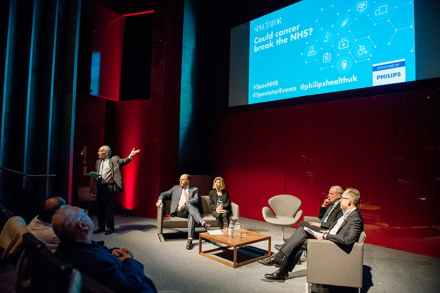
Newly detected cancer cases and the number of people living with cancer are on the increase[i]. Affecting over 14 million lives each year, it now accounts for approximately 15% of all deaths globally[ii]. At a recent panel event hosted by Philips and The Spectator, the challenge this disease presents to the NHS, what should be done to alleviate pressure and how patient outcomes can be improved were discussed in detail. The clear consensus was that earlier diagnosis is key. However, with stretched resources and a declining workforce, the UK continues to lag behind its Western European peers with regard to cancer diagnosis times[iii] and, in turn, survival rates. This raises the question, how do we design a healthcare system that facilitates early diagnosis?