Philip Marsden

William Blake still weaves his mystic spell

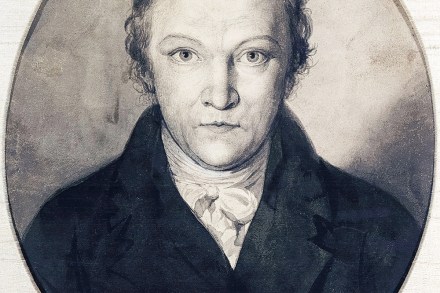
Everyone has their own William Blake and each age finds something new in the ocean of his work: revolutionary Blake, Christian Blake, humanist Blake, Jungian Blake, Freudian Blake, free-love Blake, hippy Blake, occult Blake, eco-Blake. The only time that missed out was his own – then he was mad, delusional and ignored Blake. Philip Hoare brings the fizz of his own sensibility to bear on the work of a man whose progeny of artistic spin-offs multiply with each passing generation. The result is a book that is neither Blake biography nor critical analysis nor legacy-tracing nor personal odyssey but a capacious mixing of them all. As the author of Leviathan or, The Whale, and Albert and the Whale and the film Hunting for Moby-Dick, Hoare begins by giving us whale Blake.

The Coromandel coast under threat

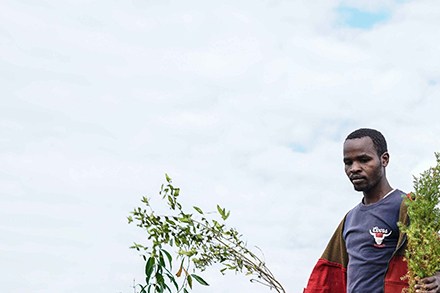
This is a remarkable book by a remarkable man. Based on the Coromandel coast at Chennai in south-eastern India, Yuvan Aves is an active naturalist and an ardent activist. Still in his twenties, he teaches outdoor classes, he campaigns and he notes down the movements and habits of invertebrates, birds and fauna in his local wetlands and littoral. All his observations and the wider thoughts on ecology that make up Intertidal are given added heft and poignancy by the searing account of his childhood which begins the book. His father was a philandering no-hoper whom his mother left for another man. That man was even worse. He took against the young Aves and subjected him to regular beatings, forcing him to scrape the blood from the walls when visitors were coming.

Philip Marsden: Under A Metal Sky

34 min listen

My guest in this week's Book Club podcast is Philip Marsden, whose new book Under A Metal Sky: A Journey Through Minerals, Greed and Wonder looks in thrilling and surprising detail at the wonders that are to be found beneath our feet. On the podcast he takes me through the meanings that rocks and metals have had through human history, from the bronze age, via the alchemist's quest for the philosopher's stone, to the present day.

Whoever imagined that geology was a lifeless subject?

Rocks are still and lifeless things, and geologists are men with beards whose emotional bandwidth is taken up with an unnatural attachment to cherts and clasts and the chill beauty of the subducted lithosphere. Such is the stereotype. The academic geologist and New Yorker contributor Marcia Bjornerud has managed to go a fair distance towards dispelling it. In her previous book, Timefulness, she wrote for the general reader and with persuasive lyricism about readjusting our focus to thinking in geological time.

The amazing aerial acrobatics of swifts

It happens usually in the second week of May, between about the 8th and 12th (this year it was earlier, the 2nd): a distant sound, building as it approaches, and then the doppler dip as the first of the returning swifts screeches past the roof of our Cornish farmhouse. It’s the opening bracket of the summer months, one that closes with their departure just 12 weeks later. But it is a reminder, too, that while we might think of our house as home to two adult humans, two teenagers and a dog, it is also the habitat for several nesting swifts, swallows, house sparrows, pipistrelle bats, mice, occasional winter rodents and all manner of buzzing, creeping invertebrates, as well as the billions of microbes and bacteria that survive our admittedly liberal regime of cleaning.

The Hope Diamond brought nothing but despair

Nothing is less animate than a stone. There is little of significance in the random compounds that make up the Earth’s surface. They are useful, yes – for building, for metals and chemical yields – but they’re just stones. Yet throughout human history, the pebbles at our feet have exerted a fascination that goes far beyond the utilitarian. In Lapidarium, Hettie Judah delivers 60 far-reaching essays that explore the bizarre and revealing relationship between people and rocks. It begins with ochre, a ferrous pigment derived from clay and used in the earliest known example of expressive painting – a few lines on the wall of Blombos cave in South Africa, made 70,000 years ago.

It’s the fisherman who’s truly hooked

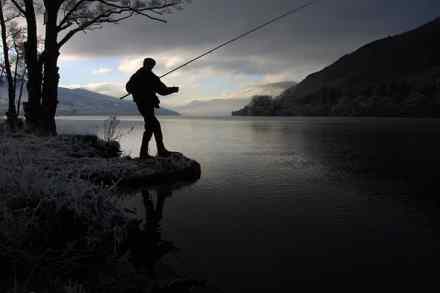
Trying to catch fish with rod and line is a pursuit that, for many, goes far beyond the pleasant passing of a few leisure hours, the diverting indulgence of a hobby. It becomes little short of a reason for existence, an end for which the other bits of life are merely the means. I have never been so afflicted, being a casual sea-angler, but I look upon those who are with profound curiosity. Like deep religious faith, such zeal might sometimes look cranky, but there is much to envy too. ‘Fishing simply sent me out of my mind,’ confessed the Russian writer Sergei Aksakov. In The Lightning Thread, David Profumo traces the course of his own colourful, fish-obsessed years. They begin in Scotland when he’s seven, with a brown trout and a worm.

The life cycle of the limpet teaches universal truths

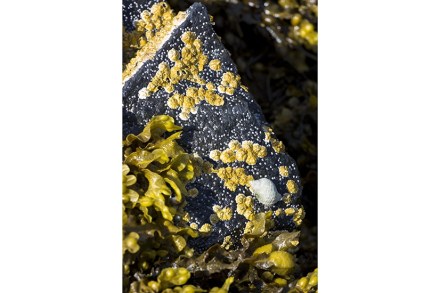
Adam Nicolson is one of our finest writers of non-fiction. He has range — from place and history to literature and ecology, from the friendship of Wordsworth and Coleridge to the poetics of Homer, from the archaeo-ethnography of his own Hebridean island to the hardy and threatened lives of seabirds. To each he brings a vigorous curiosity and intellect, coupled with an emotional receptivity that ruffles the surface of his prose. Now he has turned his attention to the foreshore of Scotland’s west coast, and a particular point on the northern edge of the Sound of Mull — near Rubha an t-Sasunnaich —with its weeds and its wracks and its shelled and glutinous sea-creatures. Building a series of berms, he creates rock pools.

Surrounded by sea and sky: the irresistible draw of islands

Holiday islands, desert islands, love islands, islands of eternal youth, siren islands, islands filled with screaming demons. Of all the earth’s topographic features, islands are the most elastic, the most adept at accommodating the wilder projections of our imagination. Why it should be so is a question that has exercised writers from D.H. Lawrence to Oscar Wilde, Annie Dillard to Adam Nicolson. The cultural geographer John Gillis identifies it as a curiously western trait, an extension of the metaphysical thirst for definition, the need to cut everything up into discrete entities in order to understand it. Island Dreams is Gavin Francis’s own contribution to the debate, based on his decades-long attraction to islands.

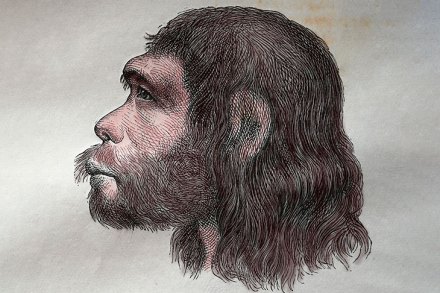
Is it possible that Neanderthals had a spiritual life?

When I studied anthropology back in the early 1980s, Neanderthals were still largely the bulk-browed brutes of yore, grunting in smoky caves and loping across the tundra. Their vanishing from the fossil record some 40,000 years ago was a result of competition, along with a little interbreeding, with our own forebears. The story, as I received it then, retained something of the racially hierarchical views at large when the first fossilised bones were recovered in Germany, from near the Neander river, in 1856. Neanderthals were made extinct by an altogether smarter creature. It was inevitable — the clue was in the name: Homo sapiens. Neanderthals have come a long way since.

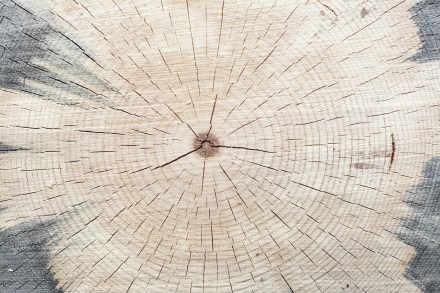
Tree-ring analysis has solved many historical mysteries

History is only as good as its sources. It is limited largely to what has survived of written records, and in prehistory to random fragments unearthed by archaeologists and paleontologists. Climate history is no different. As the effects of global warming accelerate, it becomes ever more urgent to reassemble what we can of the atmospheric conditions of the past to gather evidence from wherever it may be. Glacial ice cores are one place, with their frozen snapshots of long-ago air and traces of ash and pollen and greenhouse gases such as carbon dioxide or methane. Other climate proxies include the annual accretion of stalagmites, the growth of corals and the incremental layers of bone in the ears of fish.

Bogs and fogs

In his poem ‘Eden Rock’, Charles Causley conjures up a dreamy memory of a childhood picnic ‘somewhere beyond Eden Rock’. He reported later: ‘Somebody asked me the other day where Eden Rock is —I mean I have no idea, I made it up! “Dartmoor,” I said — that’s always a safe answer.’ As southern England’s largest expanse of unenclosed land, Dartmoor has always been a good place to lose things: dangerous prisoners, children on their Duke of Edinburgh’s Awards, military manoeuvres. It has also swallowed up voluminous amounts of parliamentary time, ministerial reports, public enquiries and arcane legislation — all of which centres on one simple question: what’s it for?

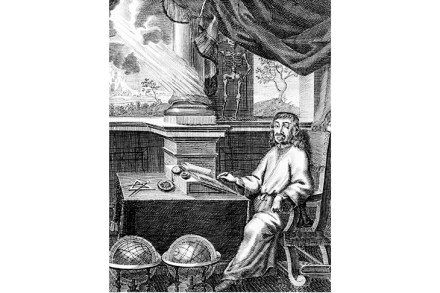
Home was not where the heart was for the Enlightenment’s intellectuals

Emily Thomas is a distinguished academic philosopher who has ‘spent a lot of time by herself getting lost around the world’. Here she takes a trip to the wastes of Alaska and uses it to launch an extended meditation on a compelling question: what does it mean to travel? What is the significance of our urge to set off around the globe — not for trade, not to fight or conquer, but for its own sake? By narrowing her remit thus, Thomas begins in 17th-century Europe, with the restless spirit of the Enlightenment. So we have no Pytheas, no Odysseus, no Marco Polo, no Ibn Battuta. Travel in her specific sense began as the prodigal child of science. It was about investigation, learning, the compulsion to explain, to understand and systemise.

Ideas are history

Wallace Stevens called it ‘the necessary angel’. Ted Hughes thought it ‘the most essential bit of machinery we have if we are going to live the lives of human beings’. Coleridge described its role a little more vigorously: ‘The living Power and prime Agent of all human perception… a repetition in the finite mind of the eternal act of creation in the infinite I AM’. The imagination is the subject of Felipe Fernández-Armesto’s latest grand sweep of a book. Not a historian to dwell on individual kings, queens or battles, he has identified the creation of ideas as the driver of history, the imagination as their source and the pool of evidence the past 800,000 years.

The king of trees

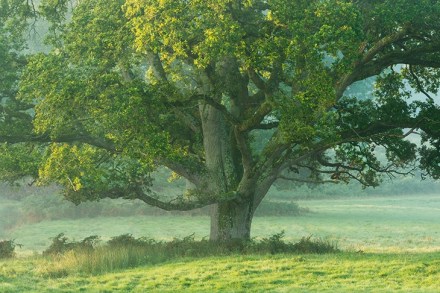
Over the past couple of years, I’ve been planting up much of the pasture on our small Cornish farm with native hardwood trees, mainly oak. I now know I needn’t have bothered. As soon as the grass stops being cut, little oaks spring up of their own accord. This last dry summer in particular has seen dozens appear, tiny three-leaved stalks that push through the sward with their multi-layered greens beautifully tinged with reddish anthocyanin. It gives the impression that if everywhere were simply left, and if there were no browsing beasts, it would be a matter of decades before all open country reverted to its post-glacial pre-neolithic state of wild oakwood.

Dreams of the green room

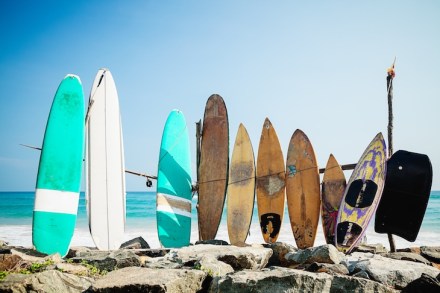
Surfing has come of age. Like rock and roll, it was once strictly for young people, edgy and alternative and physically way too demanding for anyone over the age of 27. But those young people grew up and they’re still at it. For millennials it’s hard to maintain a sense of cool when your parents are heaving their boards into the same breaks and when, according to the marketing people, there are upwards of 35 million surfers worldwide, in a sector that’s worth at least $10 billion per year. Now comes the season of the surfing memoir. The 2016 Pulitzer Prize for Biography was won by the very brilliant Barbarian Days: A Surfing Life by William Finnegan.

Creature comforts

As naturalist, educator and writer, John Lister-Kaye was for many years a voice in the wilderness. In 1976, when nature conservation was still considered a benign eccentricity, he moved into a crumbling estate in the Scottish highlands. Taking as its credo a text from Gavin Maxwell —‘I am convinced that man has suffered in his separation from the soil and from the other living creatures of the world’ — he set up the Aigas Field Centre. Since then, tens of thousands of people have visited it. Schoolchildren and adults alike have been encouraged to share his wonder for the natural world.

Over hill and dale

When it comes to speaking of foreign affairs, Rory Stewart is one of the few MPs who does not peddle bland abstractions. Many of his parliamentary colleagues inhabit a blah-blah land where terms such as ‘peace process’ and ‘international community’ have meaning. An upbringing in the Far East, where his father was a diplomat, as well as years spent in Iraq and Afghanistan, have given Stewart direct experience not only of nations but of town quarters, villages and individuals. Walking was his preferred method in Afghanistan, where he tramped across the country with a dog and a Punjabi fighting stick. The dog couldn’t keep up and died, but here for his latest tramp the Punjabi dang comes out again.

Following the fickle fish

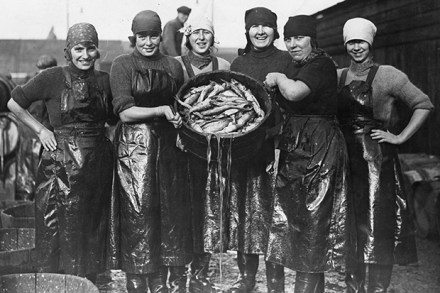
Fish stories come in two varieties: the micro-version of a hundred riverside bars, blokeish boastings of rod-and-line tussles with individual fish in which man and beast are fairly evenly matched. Then there is the macro-version, the one that tells of the fate of entire stocks — the cod of the Grand Banks, the European hake, the bluefin tuna of the Mediterranean, the haddock of the Atlantic, the whale everywhere. In this version, technology and greed have the upper hand and the narrative invariably moves from scenes of boundless plenty to ones of catastrophic scarcity. Donald S. Murray’s Herring Tales is one of these. As a native of Lewis, a Gaelic speaker, he recalls Stornaway crammed with herring boats; you could cross the harbour on their decks.

First ash dieback, then the world’s scariest beetle

The ash tree may lack the solidity of oak, the magnificence of beech or the ancient mystique of yew. In terms of habitat it may support fewer species of fauna, insect and fungus than other trees. It may, in this country at least, occupy a smaller cultural space than many of its woodland neighbours: according to Oliver Rackham, the combined works of Shakespeare, Wordsworth and Tennyson mention oak 134 times, pine 113 times and ash just 23. But with its delicate compound leaves, the pale bark and the swoop of its lower branches (likened by the writer and environmentalist Roger Deakin to the arc of a diver), ash is the prettiest of our common trees. Its timber has peculiar qualities. Both malleable and strong, it was favoured by spear-makers and wheelwrights.