Peter Pomerantsev

Peter Pomerantsev is senior fellow at Johns Hopkins University. His books include Nothing is True and Everything is Possible: Adventures in Modern Russia.

Lisa Haseldine, Matthew Parris, Damian Thompson, Peter Pomerantsev, Chas Newkey-Burden & Catriona Olding 

41 min listen

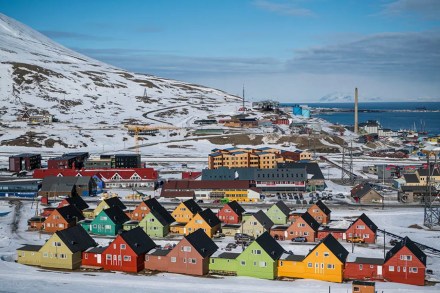
On this week’s Spectator Out Loud: Lisa Haseldine reports from Svalbard; Matthew Parris reflects on the Iran crisis during Holy Week; Damian Thompson assesses how Pope Leo XIV is quietly reshaping the Vatican; Peter Pomerantsev reviews Jack Watling’s Statecraft; Chas Newkey-Burden provides his notes on marathons; and finally, from Provence, Catriona Olding reflects on comfort and companionship. Produced and presented by Patrick Gibbons.

With no coherent strategy, Britain seems perpetually adrift in the world

The British state seems perpetually befuddled. Every international crisis catches it in its sudden glare like so many headlights trained on a nervous rabbit hopping hopelessly around a motorway. One moment Russia is invading Ukraine, then Hamas attacks Israel, Israel flattens Gaza, America knocks out Venezuela, then attacks Iran, while all the time China leers over Taiwan. Each new event leaves us spinning. Whose side are we on? What do we want? How do we get it? We use grand words to navigate our way in the confusion: ‘the special relationship’; ‘the national interest’; ‘the rules-based order’. But if these once signified some grand story we could all relate to they now feel empty and confusing.

The anti-Semitism algorithm

From our US edition

The White House argues that it is committed to stamping out anti-Semitism in America – on campuses especially. Absent from the discussion, however, are the roles of China, Russia and Iran in fueling Jew-hatred across the US during the height of last year’s student protests and beyond. Organizations in Beijing, Moscow and Tehran have been secretly supporting protests in New York, waging covert online campaigns and cyberattacks and manipulating algorithms to help make Americans more anti-Semitic and to fan discord and violence. These dictatorial regimes have no genuine interest in the rights of any victims in the Middle East. Despite their supposed support of Palestinians, Russia and China have slaughtered and oppressed Muslims when it suits them in Chechnya, Crimea and Xinjiang.

anti-Semitism

Inside Russia’s repression of Ukraine’s churches

From our US edition

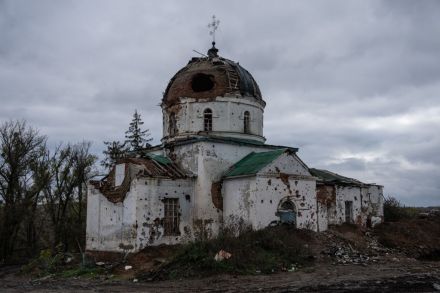
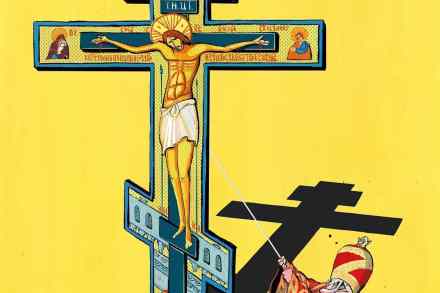
Vladimir Putin celebrated Palm Sunday by murdering over 30 civilians in Sumy with two missiles laced with shrapnel to maximize mortalities. But it’s not only rocket fire that will endanger Ukrainians over the Easter weekend. Inside the occupied territories, any worshipers outside of the Kremlin-controlled Orthodox Church under the Moscow Patriarchate are in danger.  Since Russia’s invasion, more than 67 pastors and other faith leaders have been killed by the invaders. There are over 100 known cases of interrogations, forced expulsions, imprisonments, and arrests, and more than 700 houses of worship have been destroyed or expropriated. And these are just confirmed figures: the censorship on the occupied territories means the real number is likely much higher.

Play Putin at his own game by ‘nightmaring’ his world order

From our US edition

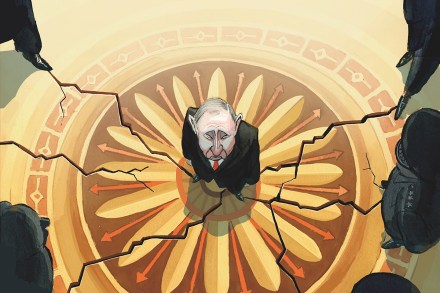
There’s a delicious Russian verb that derives from the criminal underworld: “koshmarit,” literally “to nightmare someone.” It usually denotes how authorities give criminals, or anyone they dislike, so much relentless hassle from so many different angles they bend them to their will. Vladimir Putin, always keen to bring mafia language into politics, was the first Russian statesman to make use of it in public – he once instructed his authorities to stop “nightmaring” the business community. I keep returning to that word when I think of how Putin’s own foreign policy could be restrained to make real the Reaganite slogan that helped Donald Trump win the election: “peace through strength.

nightmaring

SAS betrayal, the battle for Odesa & in defence of film flops

48 min listen

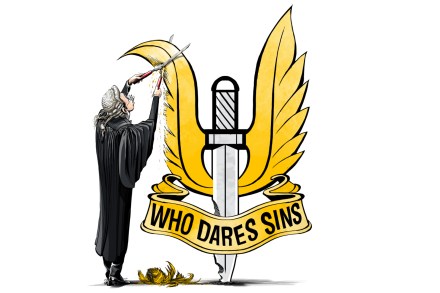
This week: SAS SOS The enemy that most concerns Britain’s elite military unit isn’t the IRA, the Taliban or Isis, but a phalanx of lawyers armed with the European Convention on Human Rights (ECHR), writes Paul Wood in The Spectator. Many SAS soldiers now believe that if they kill a terrorist during an operation, they’ll spend decades being hounded through the courts. Paul speaks to former SAS soldiers who say that stories of men being ‘dragged back to be screamed at in interview rooms’ are ‘flying around the canteens now’. Soldiers feel like ‘the good guys have become the bad guys – and the bad guys are now the good guys’. This is hurting morale and may eventually hit recruitment.

Besieged Odesa is still caught in a conflict of identities

How can you break the mental manacles of an empire that has occupied not only your physical world but also your education, publishing, media, high culture and popular entertainment? In his endearing memoir of Odesa, Undefeatable, Julian Evans quotes the Ukrainian author Viktoria Amelina, who describes growing up in post-Soviet Ukraine surrounded by all things Russian. She attended a Russian school, acted in children’s Russian theatre, listened to Russian rock and prayed in a Russian Orthodox church: ‘There was an entire system in place that aimed to make me believe that Moscow, not Kyiv, was the centre of my universe.’ When she was 15, Amelina felt flattered to be invited to Moscow for a Russian language contest. She was thrilled to be interviewed on state television.

Peter Pomerantsev: How To Win An Information War

44 min listen

My guest on this week's Book Club podcast is Peter Pomerantsev. Peter's new book How To Win An Information War: The Propagandist Who Outwitted Hitler tells the story of Sefton Delmer, the great genius of twentieth-century propaganda. Peter tells me about Delmer's remarkable life, compromised ethics, and the lessons he still has to offer us.

Lies about the Katyn massacre added insult to the horror

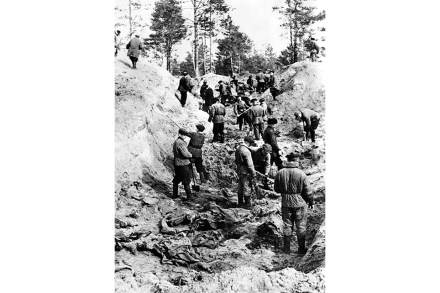
On 5 March 1940, as the USSR stamped its authority on a Poland it had partitioned with Hitler, Stalin signed a decree to murder 14,700 Polish officers in the woods by Katyn. These ‘hardened, irremediable enemies of Soviet power’ were not informed of their sentence and simply shot in the back of the head, a form of execution favoured by the secret police, the NKVD, for whom this method was just part of bureaucratic procedure. NKVD forgers changed the dates on the documents found in the dead officers’ pockets at Katyn When the Nazis turned on the Soviets in 1941 and marched east, they found the mass grave.

My case against Russia’s war criminals

Lviv My favourite hotels in Lviv were all booked out over the weekend. The world’s justice elite were in town for a gathering on how to hold Russia accountable for its crimes. The US Attorney General and the Chief Prosecutor from The Hague, as well as President Volodymyr Zelensky, were there. It was an apposite location. In the early 20th century Lviv was home to the lawyers Raphael Lemkin and Hersch Lauterpacht, who later gave us a language to define modern evil by coming up with the concepts of ‘genocide’ and ‘crimes against humanity’ respectively.

Cross to bear

40 min listen

In this week’s episode: How are the people of both Russia and Ukraine processing the war? Our Russia correspondent Owen Matthews writes in this week’s Spectator that he has been stunned at how easily some of his Russian friends have accepted the Kremlin’s propaganda. He joins the podcast to explain why he thinks this is, followed by journalist and author of This Is Not Propaganda, Peter Pomerantsev, who has travelled to Kyiv to celebrate the festival of Passover. (00:48) Also this week: Is Rishi Sunak politically incompetent? Until recently Rishi Sunak was a favourite to succeed Boris Johnson, but this week his popularity plummeted to new lows.

I can feel my heart hardening as the war goes on

Palm Sunday in Perugia. Umbrians were scuttling around with twigs and leaves, but I was in town to celebrate another faith. It was the annual International Journalism Festival, which hasn’t been ‘annual’ for the past two years due to Covid. Happy reunions were applauded with the sound of countless clinking glasses, but the mood was often mournful. In the first panel I was on, the moderator, Natalia Antelava, asked for a moment of silence for the 18 journalists already killed in Ukraine. Among them was Oksana Baulina, a former colleague of Natalia’s at Coda Story news platform, where I am also a contributing editor. Oksana was Russian.

From salivating dogs to mass indoctrination: Pavlov’s sinister legacy

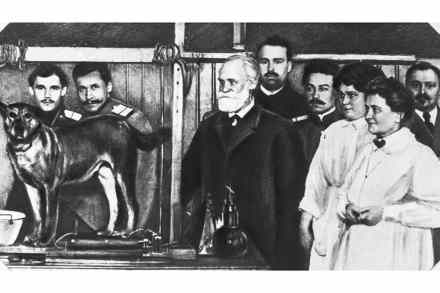
When two post-Soviet supermodels committed suicide in the noughties, both throwing themselves off high buildings in New York and Kiev, the trail into what made them so depressed led to a ‘personality development’ organisation in Moscow that offered ‘trainings’ that would help ‘find your truer self’. The moment you entered the dark Stalinist gothic theatre, filled with dozens of other ‘students’, you were under the control of the ‘life coach’. Drawing confusing pictures on a whiteboard, he would talk quickly and loudly about ‘transformation’. Then came days of non-stop psychiatric-style exercises. People went on stage and were instructed to recite their most traumatic past experiences.

Russian memoirs are prone to a particular form of angst

Perhaps the secret to understanding Russian history lies in its grammar: it lacks a pluperfect tense. In Latin, English and German the pluperfect describes actions completely completed at a definite point in the past... Early Russian had such a tense, but it was erased. This grammatical lack costs its speakers dear. Russian history never becomes history. Like a stubborn page in a new book, it refuses to turn over. Thus wrote the Soviet dissident and writer Igor Pomerantsev, my father, during his exile in London in the 1980s. When I returned to Russia in the 2000s I had the sense that beneath the Potemkin democratic veneer, Putin’s Russia was actually a case of history repeating, and retrod my parents’ route back to England.

The power of disinformation is that it’s so readily believed

On 27 November 1960 African and Indian diplomats visiting the UN in New York opened their mail to find a leaflet from the Ku Klux Clan: A foul stench spreads out from the East River and hangs over New York like a pall — the greasy sweat of the Black Races and the Yellow Races of Asia which have invaded the United Nations. It is enough to make every White Protestant American vomit. It ended with a threat: the delegates better stay close to the UN buildings and the ‘brothels of Harlem, and not defile the hotels and restaurants of the White City’. FBI officers investigating the correspondence noted a couple of oddities. First, some of the language was off: it called for delegates to be ‘tanned and feathered’ rather than ‘tarred and feathered’.

Punks vs. Putin

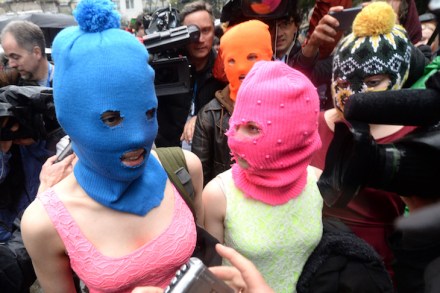
What makes for meaningful political protest? In regimes where ideology was taken seriously (such as the Soviet Union or America during the Cold War), dissidents and dissenters could target rulers’ political ideas, whether communist or capitalist. But in regimes where ideology is used more to distract than indoctrinate (such as Putin’s Russia or Trump’s America), directly opposing the leaders’ ‘narrative’ (one which can change, depending on political expedience) risks playing right into their game.