‘We must defend our territory’: on the frontline of Europe’s migrant woes
From our US edition
Paul Wood reports from Lampedusa, Africa’s gateway to Italy
Paul Wood was a BBC foreign correspondent for 25 years, in Belgrade, Athens, Cairo, Jerusalem, Kabul and Washington DC. He has won numerous awards, including two US Emmys for his coverage of the Syrian civil war
From our US edition
Paul Wood reports from Lampedusa, Africa’s gateway to Italy
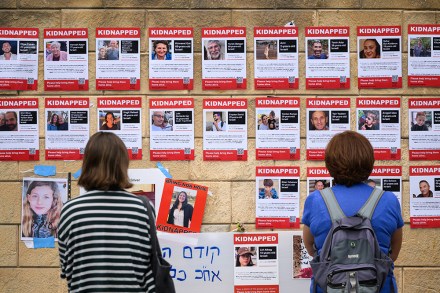
The last message that Shaked Haran saw from her father was just after 7.30 a.m. on the Saturday of the Hamas attacks in Israel. Her parents were in the safe room of their house in Kibbutz Be’eri, just outside the Gaza Strip. The message said that ‘masked terrorists’ were ‘swarming’ everywhere. ‘We don’t think we’ll
23 min listen
This week Paul Wood delves into the complex background of the Middle East and asks if Iran might have been behind the Hamas attacks on Israel, and what might come next (01:11), James Heale ponders the great Tory tax debate by asking what is the point of the Tories if they don’t lower taxes (13:04)
53 min listen
This week: Paul Wood writes for The Spectator about the role that Iran potentially played in the Hamas attack on Israel over the weekend. He says that it is unlikely that the proscribed terrorist group acted alone and joins the podcast alongside Uzi Arad, former national security advisor to Israeli prime minister Benjamin Netanyahu. (01:22) Also this
A little more than a week before Hamas carried out its Operation Al-Aqsa Flood, the US National Security Advisor, Jake Sullivan, said: ‘The Middle East region is quieter today than it has been in two decades.’ Sullivan was expressing a consensus view, one apparently shared by the Israeli government. Then came the attacks of last
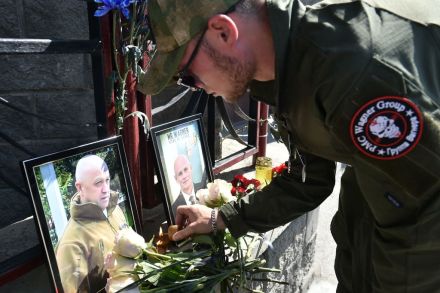
As the first reports came in that Yevgeny Prigozhin had been killed, I spoke to Marat Gabidullin, who was a senior commander in Prigozhin’s mercenary army and for a time his personal assistant for military affairs. Gabidiullin is living in exile in France and well known as a bitter critic of Prigozhin – he was
18 min listen
This week: Isabel Hardman examines our curious obsession with glucose monitoring gadgets (01:03), Paul Wood wonders what exactly went on between Putin and Prigozhin (07:11), and Alexandra Shulman shares the contents of her weekly diary (12:15). Produced and presented by Linden Kemkaran.
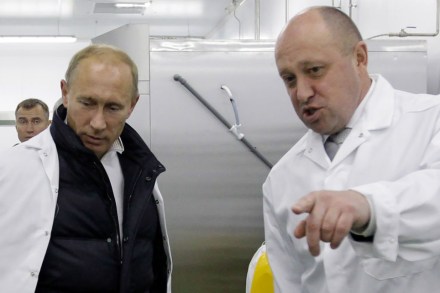
In the absence of facts, it’s hard to understand what got into Yevgeny Prigozhin. I spoke to the former oligarch Mikhail Khodorkovsky about Prigozhin and Putin and their odd relationship. He says that criminality unites and explains the pair. Prigozhin went to prison for almost ten years, for robbery. The legend is that he opened the
Up until this point, it was possible to believe that Putin was tolerating, or even orchestrating Yevgeny Prigozhin’s increasingly outspoken attacks on the military leadership and ‘the elites’ in Moscow. Vladimir Putin himself didn’t seem especially pleased with his generals. Only a few days ago, he turned his back on his defence minister, Sergei Shoigu,
21 min listen
This week: James Heale takes us through the runners and riders for the conservative nomination for mayor of London (1:00), Paul Wood discusses how Saudi Arabia is trying to buy the world (06:02), and Hermione Eyre reads her arts lead on the woman who pioneered colour photography (12:51). Produced and presented by Oscar Edmondson.
35 min listen
This week: For her cover piece, The Spectator’s political editor Katy Balls writes that Boris Johnson could be attempting to spearhead an insurgency against the prime minister. She joins the podcast alongside historian and author Sir Anthony Seldon, to discuss whether – in light of the Privileges Committee’s findings – Boris is going to seriously up the
What do you get for the man who has everything? Saudi Arabia’s ruler, Mohammed bin Salman, is said to have a $500 million yacht, a $450 million Leonardo painting and a $300 million French château. Now he’s acquired a new bauble: American golf. Saudi Arabia’s Public Investment Fund (PIF) has negotiated a controlling interest in
Beirut, Lebanon The secret police tail was impossible to miss but easy to lose. Two men in Saudi national dress – white thobe and chequered shemagh – drove a large black American saloon slowly behind me as I walked on the baking hot road. I turned into a shopping mall and they parked outside, not
Lanfranco Cirillo, architect and interior decorator to the Russian elite, is shaking his head in horror. ‘Absolutely not. No.’ He is answering my question about whether he put a gold toilet and even a gold toilet brush into a villa he built that the Russian opposition says belongs to President Vladimir Putin – and which
Mashhad is Iran’s holiest city; it has the country’s most important shrine. It’s not the place for an Iranian woman to walk around without a hijab. But in September, Katayoun began leaving hers at home, going out with her head uncovered to join the daily protests against the country’s theocratic regime. A policeman struck her
22 min listen
This week: Paul Wood writes about meeting Syria’s underground drug lords (0:30) Mary Wakefield warns us of the perils of psychoactive drug therapy (10:30) and Melissa Kite defends her friend who has been excluded from AA (17:13).
Lebanon Abu Hassan puts down his Kalashnikov and reaches into a pocket on his bodywarmer to hand me a small white pill. ‘Here,’ he says in Arabic, ‘a gift. This’ll keep you awake for 48 hours.’ He grins and adds in English: ‘Good sex!’ The pill is Captagon, an amphetamine known as ‘the poor man’s
41 min listen
In this week’s episode: For the cover of the magazine, Paul Wood asks whether Putin could actually push the nuclear button in order to save himself? He is joined by The Spectator’s assistant online editor Lisa Haseldine, to discuss (01:03). Also this week: Why is there violence on the streets of Leicester? Douglas Murray writes about this
At the start of the war in Ukraine, I was given a recording made by the Ukrainian intelligence services. It was described as an intercepted call from an officer at Russia’s nuclear missile base in Siberia to a relative in Kyiv. The line crackles and a man speaks in Russian: ‘I don’t know what I
The Queen and Prince Philip had written their names in the visitors’ book at a country house where I was a weekend guest; my hostess, a member of a family with a long and storied lineage, had been an intimate of the Royal Family for decades. But at dinner, I nearly choked on my Beef