Paul Wood

Paul Wood was a BBC foreign correspondent for 25 years, in Belgrade, Athens, Cairo, Jerusalem, Kabul and Washington DC. He has won numerous awards, including two US Emmys for his coverage of the Syrian civil war

Black flags and Christmas lights: a letter from Beirut

Blue and white Christmas lights twinkle over the shops near my apartment in Beirut’s Christian quarter; pricy boutiques display elaborate nativity scenes. But people are having trouble getting into the festive mood. ‘Do you think the war will come here?’ asks my landlady nervously, not for the first time. There is no rush to battle,

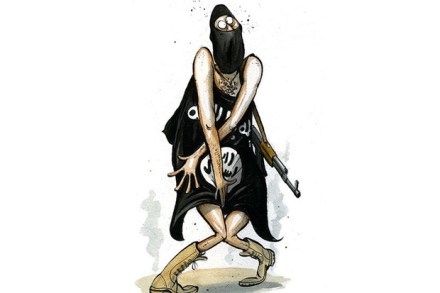
How Islamic State commanders squeeze their hostages for every penny

 Turkish/Syrian border ‘They asked $5,000 to $10,000 for every move they made. Emirs are making a living by such means’ It was Abouday’s heavy metal T-shirt that started the trouble. Two jihadis at a checkpoint said the fire-breathing dragon showed he was a devil worshipper. In fact, he worshipped only Metallica, but he did not realise

The foreign hostage market is worth millions to Islamic State

The horrific situation in Syria and Iraq means both aid workers and reporters are urgently needed, but as the awful murder of British hostage, David Haines shows, it’s now virtually untenable for any foreigner to try to help. As Paul Wood wrote after the murder of Steven Sotloff, hostage taking has become a $100 million

Baghdad notebook: “Things were better in Saddam’s time”

In the passport queue at Baghdad airport, my heart sinks. This place vies with Cairo for the title of most venal airport in the Middle East. Our luggage is minutely examined by the Mukhabarat, or secret police, then customs. Early morning becomes mid-afternoon. Our papers (scrupulously in order) lie unattended on a desk. Eventually, a

‘We are one body’

Near Damascus ‘Remember: what we do, we do for God,’ said the rebel commander to the huddle of his men at the foot of the mountain. They divided up their ammunition. They had so little — one clip’s worth was shared between two Kalashnikovs. They set off, a line of men stretching into the dark,

‘If no one helps us, we will turn to the devil’

Homs province Between the distant pop of the mortar when it’s fired, the pressure wave, and the roar of the blast five or six seconds later when it lands, the rebel fighters recited the Shahadah, the Muslim declaration of faith. ‘There is no God but Allah and Mohammed is his messenger.’ ‘We do this in

Revolution or civil war?

Homs, Syria Hassan the smuggler got on his motorbike and disappeared up a dirt track that led from Lebanon into Syria. He did not return and an hour or so after nightfall we heard long, echoing bursts of automatic fire. Hassan had been captured by a Syrian Army patrol, said one of the villagers. No,

Can they take Tripoli?

Into battle with Libya’s middle-class rebel army Nafusa mountains, Libya ‘My people, did you forget what you got from this tyrant Gaddafi? Only pain, death and humiliation!’ The commander of the Tripoli Brigade was rallying his men at a rebel base not far from the frontline in the western mountains. ‘Stand up, in his face,

Blood price

Sangin, Afghanistan ‘You don’t want to end up on a bracelet or on a fucking T-shirt. If you see people that need to die, kill them,’ said the US Marine Corps sergeant, briefing the convoy about to leave. It was night and we were setting off along the main road out of Sangin. Highway 611

Yemen is a lesson in the limits of Western power

It is 3 a.m. in the Yemeni capital, Sana’a, and the Horse Shoe nightclub is a tableau to inflame the Jihadi heart with rage. To thumping music, Yemeni prostitutes cavort with fat, thuggish-looking local men. The tables are dotted with bottles of single malt costing $500 each (almost a year’s wages for the average Yemeni).

Operation ‘Go Nuts’ is a success so far — but for how long?

Paul Wood says that Israel’s ‘shock and awe’ in Gaza caught Hamas off-guard and was a ferocious demonstration of willpower. But the Islamist organisation is far from finished A couple of months ago in Gaza, I found myself sitting across a table from a young Palestinian woman who had volunteered to become a suicide bomber.

The Sunni side of Tikrit: progress in Iraq

A little after 2 a.m., in the small town of ad Dawr, south of Tikrit, Captain Ahmed of the Iraqi army was leading his troops on one of their regular arrest raids. Half a dozen men from one particular house were dragged out, hands bound with plastic flexi-cuffs, and lined up. But the man they’d