Paul Johnson

Debt bomb: the £100 Billion problem nobody talks about

21 min listen

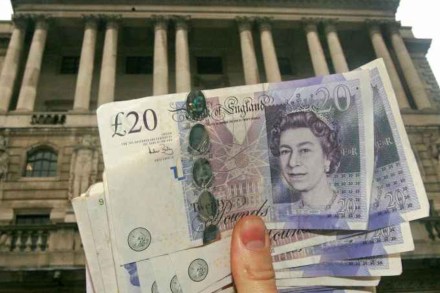
There is an area of public spending nearly double what Britain spends on defence, more than policing borders or our streets. It's servicing the costs of what Britain has borrowed in the past. The growing debt bomb is continuing to climb with real consequences for the taxpayer. Michael Simmons takes a look at the data and speaks to the economist Paul Johnson about what political measures the government will have to take to tackle Britain's debt crisis, what it means for the taxpayer and why the reviving modern monetary theory movement is nonsense.

Debt bomb: the £100 Billion problem nobody talks about

Politics or economics – which is Labour worst at?

11 min listen

It’s been another bruising week for the British economy. New GDP figures reveal that growth has almost flatlined, inching up by just 0.1 per cent between July and August – a sign, many fear, that the UK is drifting into deeper malaise. With the budget less than a fortnight away, can the Chancellor square the circle of sluggish growth, tax pressures and a restless Labour party? James Heale speaks to Tim Shipman and Paul Johnson about the mounting economic uncertainties, the Treasury’s lack of a clear tax strategy, and the political doom loop the government now finds itself in. Are Labour’s early missteps catching up with them – and will the coming budget steady the ship or spark a fresh crisis? Produced by Oscar Edmondson and Megan McElroy.

The coming crash, a failing foster system & ‘DeathTok’

45 min listen

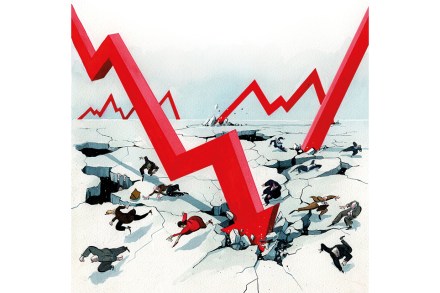
First: an economic reckoning is looming ‘Britain’s numbers… don’t add up’, says economics editor Michael Simmons. We are ‘an ageing population with too few taxpayers’. ‘If the picture looks bad now,’ he warns, ‘the next few years will be disastrous.’ Governments have consistently spent more than they raised; Britain’s debt costs ‘are the worst in the developed world’, with markets fearful about Rachel Reeves’s Budget plans. A market meltdown, a delayed crash, or prolonged stagnation looms. The third scenario, he warns, would be the bleakest, keeping politicians from confronting Britain’s spendthrift state. We need ‘austerity shock therapy’ – but voters don’t want it.

Why is Britain’s economy so unhealthy?

20 min listen

The Spectator’s economics editor Michael Simmons is joined by the outgoing boss of the Institute for Fiscal Studies Paul Johnson and the CEO of the Resolution Foundation Ruth Curtice to understand why Britain’s economy is in such a bad place. Given it feels like we are often in a doom loop of discussion about tax rises, does this point to a structural problem with the British economy? And why are the public’s expectations so out of line with the state’s capabilities? Michael, Paul and Ruth talk about whether it’s fair for Labour to claim they’ve been ending austerity, the extent to which the effects of the covid-19 pandemic are still being felt and if tax rises are inevitable.

Why I believe in God

Paul Johnson, the historian, journalist and author has died at the age of 94. He wrote a column for The Spectator from 1981 to 2009. The piece below is from our 2012 Christmas issue. Rest in peace. My belief in God is not philosophical. It is not rooted in metaphysics or reason. It springs from the heart and the senses. It is practical. Every Sunday I attend the 11 o’clock Mass at the Jesuit church in Farm Street, Mayfair. I have been doing this, intermittently, for decades. For me, Farm Street is the centre of English Catholicism and brings back memories of my boyhood at Stonyhurst, the ancient Jesuit boarding school in Lancashire. The Mass is in Latin, and is sung to music written mainly in the baroque centuries. The sermons are brief and sinewy in the Jesuit manner.

School’s out: the true cost of classroom closures

35 min listen

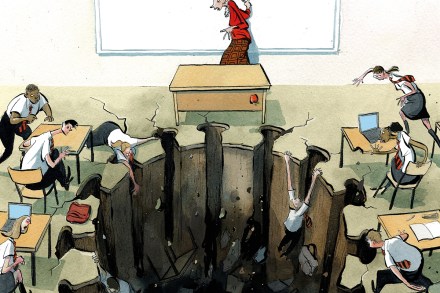
Schools have been closed for almost three months - what is the true cost of these closures on pupils (1:00)? Plus, have Brexit negotiations started looking up (13:15)? And last, are the statue-topplers of Rhodes Must Fall going about their mission the wrong way (22:45)?With teacher Lucy Kellaway; the IFS's Paul Johnson; the Spectator's political editor James Forsyth; the FT's public policy editor Peter Foster; journalists Tanjil Rashid and Nadine Batchelor-Hunt.Presented by Cindy Yu.

‘The end of austerity keeps slipping out of view’: The IFS’s Budget verdict

Yesterday’s Budget was more about the OBR’s forecasts than it was the Chancellor’s policy decisions. The forecasts for productivity, earnings and economic growth make pretty grim reading. One should never forget of course that these are just forecasts. But they now suggest that GDP per capita will be 3.5 per cent smaller in 2021 than forecast less than two years ago in March 2016. That’s a loss of £65 billion to the economy. Average earnings look like they will be nearly £1,400 a year lower than forecast back then, still below their 2008 level. We are in danger of losing not just one but getting on for two decades of earnings growth. The knock on effects on forecast borrowing are obvious – it will be pushed up.

The IFS backs Philip Hammond in National Insurance row

Philip Hammond is under pressure over his National Insurance contributions hike. More than a dozen Tory MPs have so far criticised the plans and Downing Street has refused to rule out a rethink. But the Chancellor does still have some allies; the IFS has just thrown its weight behind the plans. Here's what its director, Paul Johnson, had to say: 'Spring Budgets seem to be going out with something of a whimper. Yesterday’s was one of the smallest I can remember in pretty much every dimension – number of policies, scale of policies and size of fiscal impact. I’m not complaining, mind. There will be another Budget in November and the whole point of moving to a single fiscal event a year was to avoid the temptation to do too much fiddling.

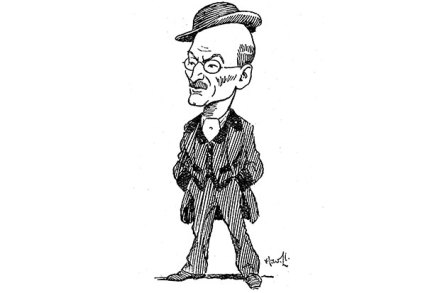
Spectator Books of the Year: Paul Johnson on Citizen Clem

John Bew’s biography of Clement Attlee, Citizen Clem (Riverrun, £30), is a winner, though it might have been improved by cutting. Attlee was a more interesting man than people supposed. He read an average of four books a week, wrote a good deal of verse and almost made a movie. He was acerbic. The sharpest letter I received during the six years I edited the New Statesman came from him. My consolation was that he regularly received similar rebukes from his fierce wife, Violet, delivered verbally. The book I most relished was Edgar Peters Bowron’s Pompeo Batoni: A Complete Catalogue of his Paintings, two volumes in a boxed set (£195).

A deeply stricken country

When, many years ago, I finished reading Cecil Woodham-Smith’s fine and tragic The Great Hunger, I swore never to read another book about the Irish famine of 1845-9. But they continue to be published, and they do not always agree. Tim Pat Coogan’s The Famine Plot: England’s Role in Ireland’s Greatest Tragedy, whose title says everything about the book, claims that ‘fully a quarter’ of Ireland’s population died of starvation or emigrated. John Kelly’s The Graves Are Walking puts the proportion at one third. There is a huge difference between one third and one quarter. Which is correct? There is also much emotion.

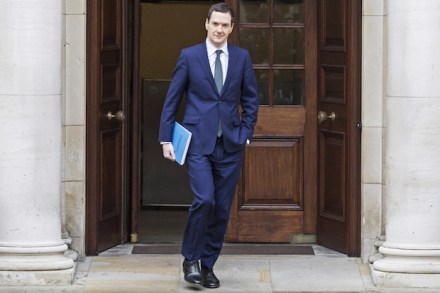
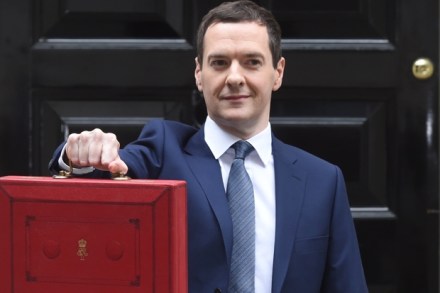
This is not the end of ‘austerity’ – the IFS verdict on George Osborne’s Autumn Statement

This is not the end of ‘austerity’. A swathe of departments will see real terms cuts. On the other hand there is no question that the cuts will be less severe than implied in July. The gap with what one might have expected based on the Conservative manifesto is substantially greater. How has Mr Osborne done that whilst keeping to his surplus target in 2019-20? He has banked some changes in forecasts for lower debt interest payments and higher tax revenues. That was lucky. By adding some tax increases he has made some of his own luck. He's going to need his luck to hold out. He has set himself a completely inflexible fiscal target – to have a surplus in 2019-20. The forecasts will change again, and by a lot more than they have over the past few months.

Spectator books of the year: Paul Johnson on a good year for biographies

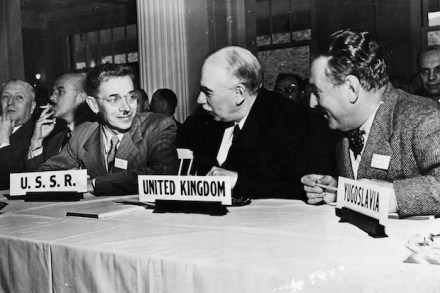
This has been a good year for biographies, especially of all-rounders. Hugh Purcell did a lot of digging to uncover the nine lives of that secretive man John Freeman. A Very Private Celebrity (Robson Press Biteback, £25) lists them as follows: pre-war advertising executive, wartime officer (Monty called him ‘the best brigade major in the Eighth Army’), postwar MP, Labour minister, Bevanite rebel, TV interviewer, top-line diplomat and ambassador in Washington, DC, media mogul and star academic at a US university — all first-class of their kind — and fascinating to read about. Richard Davenport-Hines is equally vivid in Universal Man: The Seven Lives of John Maynard Keynes (Collins, £18.99).

The IFS’s verdict on George Osborne’s ‘deeply disappointing’ Budget

In the March Budget – and, indeed in the Conservative manifesto - we were promised budget balance by 2018-19. That magic moment has now been shifted back a year. In part, that reflects a gentler than planned path for spending cuts, including welfare spending cuts. The gentler path does not however represent a let up in the overall scale of cuts – other than for defence. Spending in unprotected departments (those other than health, overseas aid, schools and, now, defence) will still have fallen by about a third in real terms over the ten years to April 2020. The Budget was certainly not short on measures. The scorecard shows net tax increases of £6.

‘Expect cuts on a colossal scale’ – the IFS verdict on George Osborne’s Autumn Statement

Some of yesterday’s biggest announcements were not from the Chancellor at all, they were from the independent Office for Budget Responsibility. Robert Chote and his team announced two big changes to the public finances. The first was a really substantial downgrade to expected tax revenues. It’s the fall in expected revenues of nearly £8 billion this year which accounts for the disappointing fall in the size of the deficit. Look out just three years to 2017-18 and the shortfall hits £21 billion. This lack of buoyancy in tax revenues, associated with poor earnings growth, looks like being a continued cause for concern.

Spectator books of the year: Paul Johnson on Henry Kissinger, Arthur Miller and Dior

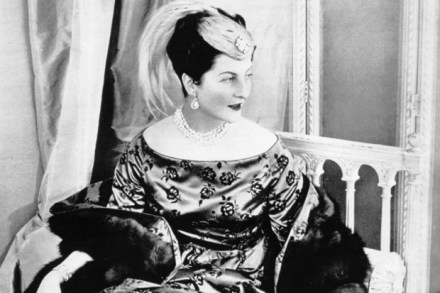
Monsieur Dior: Once Upon a Time by Natasha Fraser-Cavassoni (Pointed Leaf Press, £47.50) is the most exotic book I have seen this year. It came in a box, with a slinky silk ribbon. The text, by Antonia Fraser’s fashion-expert daughter, is excellent, but it is the superb photos which make the book. They show Dior dressing some of his most famous clients — film stars, royalty — and many have never been published before. The perfect present for a lady friend. Poor old Dior was a nice man, adored by his staff, but he had a short career at the top. He couldn’t resist rich food and died of a heart attack following overeating. Colliding Worlds: How Cutting-Edge Science is Redefining Contemporary Art by Arthur I. Miller (W.W. Norton, £22).

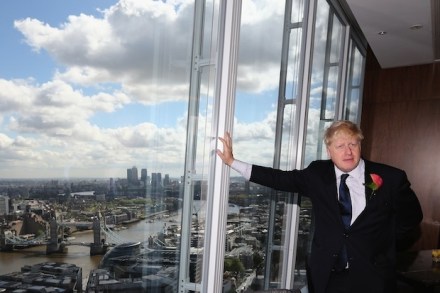
Paul Johnson’s diary: Boris would make a great PM – but he must strike now

I feel an intense antipathy for Vladimir Putin. No one on the international scene has aroused in me such dislike since Stalin died. Though not a mass killer on the Stalin scale, he has the same indifference to human life. There is a Stalinist streak of gangsterism too: his ‘loyalists’ wear masks as well as carry guns. Putin also resembles Hitler in his use of belligerent minorities to spread his power. Am I becoming paranoid about Putin? I hope not. But I am painfully aware that he would not matter if there was a strong man in Washington. As it is, President Obama is a feeble and cowardly man who makes even Jimmy Carter seem bold by comparison. He is running down America’s strategic capabilities while giving anaemic moral lectures.

The Story of the Jews, by Simon Schama – review

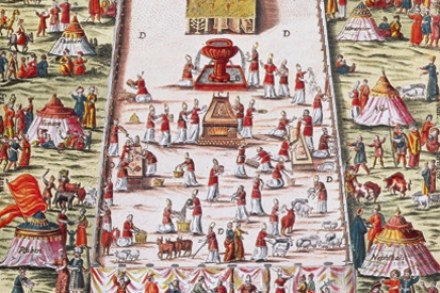
The recorder of early Jewish history has two sources of evidence. One is the Bible. Its centrality was brought home to me by David Ben-Gurion when I went to see him in Jerusalem in 1957. He had a big Bible on his desk, and banged it repeatedly with his fist: There, it’s all there, the past, present and future of the Jewish people. God? Who knows God? Can you believe in someone you don’t know? But I believe in the Bible. [Bang, bang.] The Bible is a fact. [Bang.] A record and a prophecy. [Bang.] It’s all there, Mr Johnson. Read your Bible, understand your Bible, and you won’t go wrong about the Jews. [Final bang.] Simon Schama, being a learned scholar as well as a proud and sensitive Jew, is not so sure.

Paul Johnson reviews ‘C.S. Lewis: A Life’, by Alister McGrath

C.S. Lewis became a celebrity but remains a mysterious figure. Several biographies have been written, not to much avail, and now Alister McGrath, a professor of historical theology, has compiled a painstaking, systematic and ungrudging examination of his life and works. Despite all the trouble he has taken, his book lacks charm and does not make one warm to his subject. Lewis was an Ulsterman, and prone to the melancholy of his race, though without their bitter prejudices. The principal figures in his life were all unattractive. First was his father, whom Lewis disliked intensely and felt horrible guilt about his lack of love.

Reason to believe

My belief in God is not philosophical. It is not rooted in metaphysics or reason. It springs from the heart and the senses. It is practical. Every Sunday I attend the 11 o’clock Mass at the Jesuit church in Farm Street, Mayfair. I have been doing this, intermittently, for decades. For me, Farm Street is the centre of English Catholicism and brings back memories of my boyhood at Stonyhurst, the ancient Jesuit boarding school in Lancashire. The Mass is in Latin, and is sung to music written mainly in the baroque centuries. The sermons are brief and sinewy in the Jesuit manner. The congregation is a cross-section of Catholicism in England today, from old recusant families to Poles and Irish. Among these people I feel at home, happy and safe.

Apologia pro vita sua

Any fair-minded person who has looked into the matter knows that Conrad Black was wrongly convicted. Indeed under English law he would not have been prosecuted at all, I believe, and had he been so, the judge would have thrown the case out on the first day on the grounds that the pre-trial publicity had hopelessly prejudiced the case. He would then have jailed some of the hostile commentators until they had purged their contempt. However, it is just as well that Black has decided to describe exactly how and why he was wrongly convicted. He does so in fascinating detail, and in language which is always lively and sometimes achieves a kind of wild distinction. He has a genuine gift — almost a genius — for multisyllabic abuse.