Paul Burke

Paul Burke is an award-winning advertising copywriter

Is this how the ad industry dies?

A few nights ago, I sat down to watch a movie on Amazon Prime. At the beginning, it said, ‘This film is brought to you ad-free by Hyundai’ and I found myself overcome with gratitude. I was going to be spared the usual slew of irritating, unskippable intrusions. And, thanks to a South Korean car manufacturer, I could now enjoy this film uninterrupted. A second later, I thought: ‘Wait a minute. This is insane.’ I've spent my entire working life in advertising and I’m proud to have done so. I loved being part of a business revered and respected for its creative ingenuity and cultural clout. It was great to hear people say, ‘The ads are better than the programmes’ but I haven’t heard anyone say that for years.

The truth about Peter Mandelson’s strategic genius

So Peter Mandelson, arch manipulator and shadowy Svengali has finally run out of road. This time his political career really has ended in disgrace. Throughout his decades in, and out, of politics, Mandelson was a divisive figure, but there was one part of his character that friends and foes agreed on: Mandy was a strategic genius. I beg to differ. Mandelson was more like a dull and unimpressive civil servant who was almost laughably overrated In 1997, I was working in a big ad agency and on Labour’s election campaign. I wrote a few of their ads and some of their party political broadcasts and had occasional dealings with Mandelson.

Why the McDonald’s AI commercial flopped

From our US edition

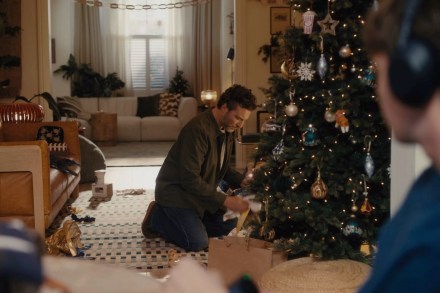
Be afraid, be very afraid. That’s what we’d been told in the advertising and commercial production industry. AI is coming for your job. It’ll be faster than you, more creative than you and certainly more cost-effective than you. Well, if the McDonald’s new – but swiftly deleted – Christmas ad was anything to go by, we haven’t, for the moment, got too much to worry about.    The completely AI ad was produced for the Netherlands but thanks to YouTube, has been been met with a mix of ridicule and revulsion all over the world. Ridicule because its images are so badly rendered and revulsion because those images are also quite creepy and disturbing.  https://www.youtube.com/watch?

Why the McDonald’s AI ad flopped

Be afraid, be very afraid. That’s what we’d been told in the advertising and commercial production industry. AI is coming for your job. It’ll be faster than you, more creative than you and certainly more cost-effective than you. Well, if the McDonald’s new – but swiftly deleted – Christmas ad was anything to go by, we haven’t, for the moment, got too much to worry about.    The completely AI ad was produced for the Netherlands but thanks to YouTube, has been been met with a mix of ridicule and revulsion all over the world. Ridicule because its images are so badly rendered and revulsion because those images are also quite creepy and disturbing.  https://www.youtube.com/watch?

The mystery of Baileys

December is when about 90 per cent of Baileys consumption takes place, and yet nobody really knows why. I used to work at an ad agency called Young & Rubicam, and we had the Baileys account. We’d spend all year writing ads to persuade people to drink it at some point – any point – between January and November, but to no avail. Baileys was never intended as a Christmas tipple Baileys introduced more summery variants: strawberries and cream flavour, apple strudel, even ‘Baileys colada’. For these, we wrote ads featuring happy drinkers in straw boaters, German lederhosen and loud Hawaiian shirts, but the British public gave a big thumbs-down to all of it. Come 1 December, however, they’d again start caning Baileys, overwhelmingly favouring its original flavour.

The lost art of the British sex comedy

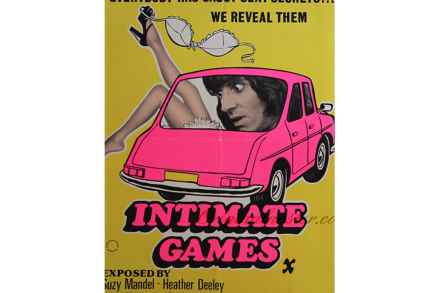
Today, would have been the 80th birthday of the long-forgotten actress named Mary Millington. Blonde, petite and delicately beautiful, she was the undisputed queen of an equally forgotten genre of cinema – the 1970s British sex comedy. There’s even a blue plaque in Soho celebrating Mary and her most successful film, Come Play With Me. Seamy cinemas in Soho were the natural home for Millington’s films but they were also shown in ABCs and Odeons all over the country. When I was at school, I worked at my local Odeon, which had three screens. Upstairs in screen one, you could see the big new release. Downstairs in screen two, last week's big new release. And, hidden away in screen three, British sex comedies.

The John Lewis ad is terrible because it’s trying to be cool

Once upon a time, there were two kinds of people in two different kinds of office jobs. In Zone A, there were writers, artists, producers, directors and photographers. People affectionately known as ‘creatives’.  In Zone B were the accountants, solicitors, bankers and civil servants. Zones A and B co-existed quite happily in their own separate worlds. Each had very little understanding of what the other zone did, but they had a great deal of respect for the other side, as they knew it was something they couldn’t do themselves. Then something awful happened. The people in Zone B decided to colonise and codify the happy Zone A workplaces. In short, they wanted to play with the cool kids.

Why I don’t like gigs

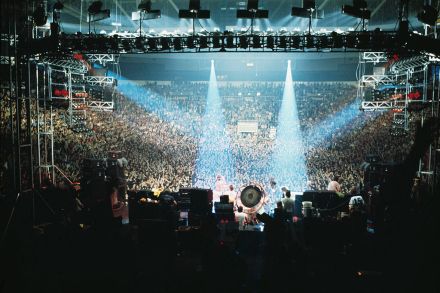
I’ve been obsessed with music and collecting records ever since I can remember. I even played a lot of those records at clubs all over the country. And since I grew up in London in the 70s and 80s, a mere bus ride away from the Roundhouse, the Rainbow and the Hammersmith Odeon, you can imagine how many gigs I went to. Well actually, I went to hardly any. Because I have a shameful confession to make – I don’t like gigs. Never have, never will. Unfortunately, Live Aid changed everything. Gigs became huge, overblown and fiendishly expensive When I went along to my first one, aged 15, I truly believed that it would herald a lifelong love of live music. The Who were playing a secret gig at the Kilburn State.

My brief career as an ‘Eye in the Sky’ airborne reporter 

I was watching Slow Horses the other night and as usual, there was some sort of terrorist-related mayhem which had brought London to a standstill. But there was also a little anachronism. Hovering over the gridlocked traffic was a light aircraft, once commonly known as an ‘Eye in the Sky’ that used to fly above London in the morning rush hour to report on the traffic for local radio stations. They haven’t been a thing for about 25 years but when Heart first started in the mid-90s, I was their airborne traffic reporter.  I’d always loved radio and had foolishly imagined that this might be the way to get my broadcasting career off to a flying start. Being part of the breakfast show on a brand new radio station, what’s not to love?

Is this the end of black over-representation in advertising?

The advertising industry, so painfully obsessed with ‘diversity’ in TV commercials, has been publicly criticised for a lack of diversity in TV commercials. We’ve been here before. But this time, everyone in advertising will be delighted about the criticism. They – we – all know that for many years, there’s been an unrealistic overrepresentation of black people in TV ads. Well, this has now been measured, proved and published in a report commissioned for Channel 4. It asserts that while black people account for around 4 per cent of the UK population they appear in more than 50 per cent of commercials.   But because of the terror of somehow appearing racist in a business addicted to the vanity of virtue, nobody had the courage to do anything about it.

Meghan Markle would be the perfect DJ for Magic Radio

Meghan Markle has been offered her own show on Magic Radio. After the Duchess of Sussex claimed the station was one of the things she missed most about the UK, Magic’s content director revealed: ‘We had conversations with the Sussex team and if the duchess would like to add radio presenter to her CV there is an offer on the table.’ The station added that it had ‘been in with her team and offered her a show.’ Of course it has. If you know anything at all about UK radio, this was almost inevitable.

Angela Rayner is no working-class hero

First of all, some poverty top trumps: I’m one of five kids. My mum was a cleaner and my dad was a labourer but only when he was well enough to labour. For much of my childhood, he wasn’t, so we had to subsist on state benefits, free school meals and clothes that arrived in bin bags from the local church. My childhood was scarred by poverty and petty crime. However, before you reach for the violin, it was a childhood leavened by love and laughter which I wouldn’t have swapped for the world. Not least because, all these years later, it’s given me a natural understanding of Angela Rayner and why working-class voters are the ones who really cannot abide her.

Ad-land’s diversity obsession is seriously backfiring

There was a time when people of colour were not adequately represented in British TV commercials. For many years, despite the UK’s growing black and Asian population, there were too few people matching that description in the commercial breaks. Advertisers’ commitment to diversity has quite often been a commitment to discrimination In the programmes surrounding those breaks, it was the same. Even in the late 1990s, when so many British corner shops were owned by Asians, the one in Coronation Street was owned by Alf Roberts in his white grocer’s coat. British advertisers, quite rightly, decided to correct this imbalance. Trouble was, they all did it – or overdid it – at exactly the same time.

The pensioner Intifada

To anyone brought up in the seventies and eighties, the fact that so many Palestine Action protestors are themselves in their seventies and eighties is the least surprising fact of the year. These people were the original ‘Boring Old Hippies,’ those dreary teachers and lecturers whom so many of us had to suffer the first time round. Since age confers a harmlessness on everyone, it was rather sweet to see them again, enjoying one last stab at rebellion before marching off to that Great Student Demo in the Sky. And yet when I was growing up, these ‘rebels’ were the very people we rebelled against. Musically, we couldn’t bear their Pink Floyd, their early Genesis and those heavy slabs of prog rock inspired by the Hobbit-y tosh of Tolkien.

Sydney Sweeney has saved advertising

I’m only surprised it’s taken so long. And that anyone could possibly be surprised by it. ‘Beautiful girl appears in ad campaign for fashion brand’ is hardly a revolutionary concept and yet, since Sydney Sweeney appeared in a new campaign for American Eagle and lit up the internet, there’s been quite a lot of confected surprise, shock and outrage. How could a brand use a beautiful woman to sell jeans in 2025? The question they should be asking is how could this not happen? American Eagle shares have gained 10% today (adding $200 million of market cap) after unveiling a new ad campaign fronted by Sydney Sweeney.Based ad campaigns are back, and wokery is gasping for breath.Take note Jaguar. pic.twitter.

Spare us from podcast host plugs

I’ve spent most of my working life producing radio commercials. You might expect me to say this, given my job, but when hosts read out ads on their own podcasts, I find it embarrassing. On commercial radio and television, viewers and listeners have always understood that the ads pay for the programmes and they’re fine with that – on one condition. The ads must be separated from the programmes in a commercial break. This has always been the unspoken agreement between advertisers and their audiences: a programme might be interrupted but at least it stays honest to itself. Podcast hosts are trashing this time-honoured contract when they read out the ads themselves.

What my Irish passport means to me

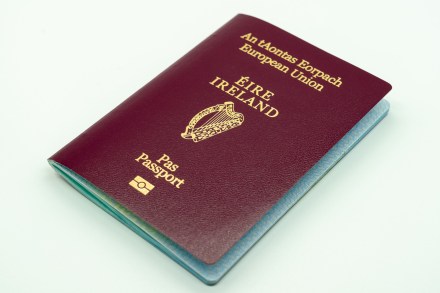
I’m now officially Irish – the proud recipient of a shiny red passport. It arrived, with the luck of the Irish, in time for St Patrick’s Day. But as I gaze fondly at the words ‘European Union’ and ‘Ireland’ embossed in gold on the front, I do feel the awkward guilt of the hypocrite. I may have voted Remain just to avoid any upheaval but I’ve never been much of a fan of the EU. And while I’m in the confessional box, I should perhaps mention that I’m not even properly Irish – my mum was English. I’ve seldom visited the green fields of Erin and have never finished a whole pint of Guinness. So I’m afraid Paddies don’t come more plastic than me.

Why are women so unromantic?

If you’ve bought a card for your partner this Valentine’s Day, I would guess you’re more likely to be a man. This is because men are generally more romantic than women, which is something that’s widely known but seldom acknowledged. It’s actually quite a serious issue. According to a female counsellor I once interviewed, one of the most frequent causes of marital discord – and sometimes divorce – is unromantic women. Not convinced? Think of heterosexual couples you know. Who would you say is the more romantic of the two? Now think of your favourite romantic songs. The vast majority will be paeans of love for a woman, written and sung by a man.

How bus travel lost its magic 

At the former Chiswick Works in west London, I recently celebrated the Routemaster’s 70th birthday. I owe my existence to this majestic mode of transport. My mum was a conductress on a Routemaster – the No. 16 – which cut a merry swathe from Cricklewood to Victoria, right through the centre of London. My dad, like a lot of young Irishmen, had arrived in London in the 1950s to help rebuild a city still recovering from the second world war. Every morning, he’d catch the first bus from his digs off the Edgware Road to various building sites. One morning he got chatting to the young clippie, and married her a few months later. ‘Open the front door,’ he’d say to me years later, ‘and the whole world’s outside.

Why I used to hate Good Friday

If you’re of a certain age and you were brought up Catholic, you’ll remember ‘Good Friday’ as the most awful misnomer. It was the most miserable day in the Catholic calendar – the day we commemorated the death of Our Saviour. Any display of happiness or cheer was strictly forbidden on Good Friday. A dark pall of gloom would descend every year and engulf Irish Catholic strongholds like Kilburn, Cricklewood, Wealdstone and Wembley. These normally convivial communities that had coalesced around Irish pubs, dancehalls and the Catholic Church were suddenly subject to a blanket ban on all forms of pleasure. Watching TV, playing records in the house or football in the park were all stringently prohibited because Good Friday was a day devoted to solemnity.