Paul Burke

Paul Burke is an award-winning advertising copywriter

The BBC’s betrayal of Steve Wright

Radio is my favourite medium. Always has been. It doesn’t shout ‘Look at me! Look at me!’ in the way newspapers and screens do. Radio informs and entertains as you drive a car, paint a ceiling or perform open-heart surgery. And there was no finer, more creative and more enduring radio entertainer than Steve Wright, who died on Monday. His afternoon show made Radio 1 in the 1980s. When Wright moved to Radio 2 in the late 1990s, it was a stroke of genius by the station’s then controller Jim Moir, reviving Steve’s – and Radio 2’s – anarchic glory. There, The Big Show remained a hugely popular and always evolving stalwart of the schedule.

The strange psychology of dog owners

I’m writing this in a coffee shop. I write most things in coffee shops but I’ve never been to this one before. As I paid for my latte, I noticed the sign (below). Never mind Brexit or Palestine, I can’t think of an issue that will divide the nation like this will. People will immediately take sides and, like Brexit or Palestine, I think we all know which side will be the more voluble. And it won’t be the side who sigh with relief and think, ‘at last!’ The British are famously a nation of dog lovers but has that love has gone a little too far? The Pope certainly thinks so. Last year, he incurred the unholy wrath of dog owners by declaring that ‘dogs now sometimes take the place of children’.

David Bowie: the man who fooled the world

In 1973, everyone loved David Bowie. Album buyers had put Ziggy Stardust, Aladdin Sane and Hunky Dory high in the charts, while singles buyers had bought similar success for ‘Drive In Saturday’, ‘Life on Mars’ and ‘Sorrow’. Then right in the middle of this, he released ‘The Laughing Gnome’. In truth, he probably didn’t. It was a twee little novelty song recorded six years earlier, featuring Bowie duetting with the eponymous gnome. Nobody could believe that Bowie had recorded it – less still that he’d written it – but the more you know about him, the less surprising it seems. In fact, ‘The Laughing Gnome’ says more about David Bowie than anything else he did. It was early evidence that he would do anything to be famous.

For one night only, I was back on the DJ decks

Hard to imagine now but I was once a hot club DJ. I now need to go to bed on the same day I got up but once upon a time – in fact, hundreds of times upon a time – I dropped big tunes at famous clubs including Le Beat Route, the Camden Palace and Stringfellows. I was knee-deep in cocaine and hookers but had no interest in either. My only interest was the glory I gleaned from filling a dancefloor with shiny, happy people. Being irredeemably shallow and easily flattered, I faux-reluctantly agreed Playing clubs was relatively easy. Revellers were keen to dance, especially those who arrived, shall we just say, ready-stimulated.

My terrible evening on a stand-up comedy course

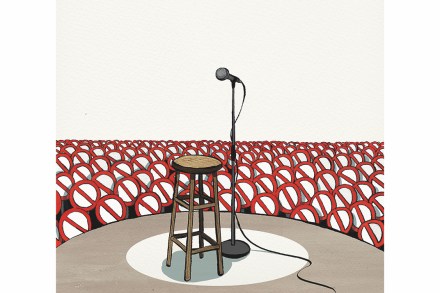
A few years ago, I abandoned a five-year counselling course after just 40 minutes. Apparently, I couldn’t have a refund from the community college but could transfer to another course. I may have a writer’s fascination with finding things out but I have a strange aversion to being taught. Looking at the long list of courses available to me, all I could see were things I didn’t want to be taught. Computerised Accounts and Book Keeping, Burlesque Dancing and The Art of the Burgundian Netherlands. I wasn’t looking for a hobby and there was barely anything on that list that came close to piquing my interest.  A more unprepossessing bunch of human specimens would be hard to imagine There was, however, one course that caught my attention: Stand-Up Comedy.

I hated counsellor training

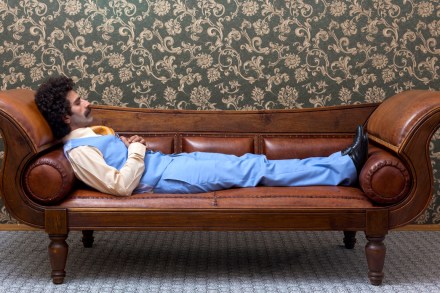
In practically every respect, I’m a useless human being. This is not the vanity of false modesty – I really am worse than most people at most things. I've never picked up a musical instrument, a golf club or a foreign language; I can barely boil an egg and would find it almost impossible to paint a wall without stepping back and kicking two and a half litres of emulsion all over the carpet. The course was not for me or anyone remotely like me. In fact, it was all a bit public sector Yet I thought, in terms of life experience, that I’d make quite a good counsellor. I was one of five children with a father too sick to work. We lived on benefits, had free school meals and our clothes arrived in bin bags from the local church.

The pointlessness of being early

We all know that the saddest words in the English language are ‘too late’. We also know that ‘procrastination is the thief of time’ and that ‘punctuality is the politeness of kings. However, since this piece was published a couple of weeks ago, many have got in touch to point out that, very often, ‘the tidy’ are also ‘the early’. Their irrational obsession with being tidy is matched by an equally irrational terror of being late. They’re missing out on the joy of spontaneity, the thrill of uncertainty and of going with the flow I’m not advocating a slack attitude to timekeeping. If you’re late for your train, your plane or your appointment at the Palace to receive your OBE, you really will miss it.

The tyranny of the tidy

A few years ago, James Delingpole and I were two-fifths of ‘The Manalysts’ a clique of agony uncles employed by a women’s magazine. The idea was to provide five answers to each problem from five disparate standpoints. James was the trenchant intellectual, I was (supposedly) the metrosexual adman and the other three were a practising psychotherapist, a blokey builder from Essex and a gloriously camp hairdresser. The great fallacy about untidy people is that we’re always losing things A fair few of our correspondents were, unsurprisingly, complaining about a boyfriend or husband’s untidiness but I remember being struck by how many wrote in to bemoan the very opposite – the strain of living with someone tyrannically tidy.

Punk’s fake history

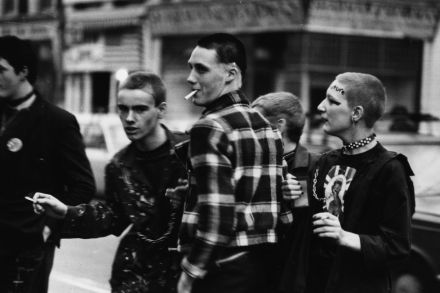
If you were born after 1970 and don’t remember punk, you’ve almost certainly been misled by people who do. You’ve probably been told – through countless paean-to-punk retrospectives, documentaries and newspaper culture pages ­– that it was a glorious, anarchic revolution that swept all before it. I can tell you first-hand that it wasn’t. Punk was as middle-class as a Labrador in a Volvo. It was invariably the posher kids who abandoned Pink Floyd, Genesis and Yes Far from being hugely influential, punk was a passing fad that made little impression on the charts and left the lasting legacy of a spent firework.

What skinheads did for reggae

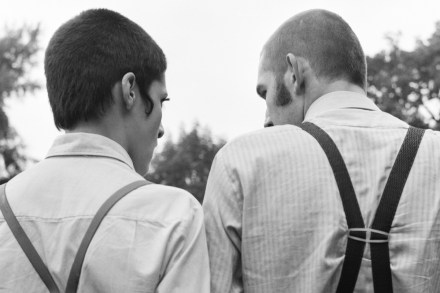
Let’s play a game of word association. I’ll start: ‘skinhead’. Hmm. I think I can guess which words instantly occurred to you: ‘thug’ perhaps, ‘hooligan’ probably and possibly even ‘racist’? Yet for anyone who remembers the original incarnation of skinheads, another word will always spring to mind: ‘reggae’. If you believe that Britain’s love affair with reggae began in the late 1970s with Bob Marley, I’m afraid you’re out by several years and several million record sales. It began in the late 1960s with a happy confluence of Caribbean immigrants, Trojan Records and skinheads.

Just do it

Am I allowed to mention Nigel Farage? Of course I am, this is The Spectator, and its readers enjoy analysing all kinds of people and ideas, even those they find unpalatable. Readers of Campaign, however, aren’t quite as broad-minded. Campaign is the trade magazine of the advertising industry, and when it published an interview with Farage some of its readers went into meltdown. Why? Surely Farage is the ideal subject for Campaign. He’s connected with millions of loyal consumers in ways other brands can only dream of. You’d think that people in the advertising world would want to hear how he did it, given that building brands and connecting with people are exactly what they’re supposed to do.

The new elite: the rise of the progressive aristocracy

40 min listen

On the podcast this week:  In his cover piece for The Spectator, Adrian Wooldridge argues that meritocracy is under attack. He says that the traditional societal pyramid – with the upper class at the top and the lower class at the base – has been inverted by a new culture which prizes virtue over meritocracy. He joins the podcast alongside journalist and author of Chums: How a tiny caste of Oxford Tories took over the UK, Simon Kuper, to debate (01:04).  Also this week:  In the magazine, ad-man Paul Burke suggests how the Tories should respond to Labour’s attack adverts. Released last week, the adverts have caused a stir for attacking the Conservative's recent record on curbing child abuse, and accuses Rishi Sunak directly of negligence on the issue.

How the Tories should respond to Labour’s attack ad

When I was writing ads for Labour’s 1997 election campaign, I’d never have presented an idea as factually, creatively and strategically wrong as Labour’s recent ‘attack ad’ on Rishi Sunak. If I had, I’d have been the one under attack for failing to understand the simple principles of advertising. What you need when writing any ad is calm, dispassionate advocacy rather than silly, partisan evangelism Let’s start with the first and most obvious one: ‘Don’t tell lies.’ Labour’s ad suggests that the Prime Minister would be quite happy to let sex offenders go unpunished. Nobody – not even the person who wrote it – believes this to be true and it’s the reason the ad could only appear online.

How the rebels plan to finish off Boris

45 min listen

In this week’s episode: Is the Prime Minister a dead man walking? Spectator Political Editor James Forsyth and MP Jesse Norman who expressed no confidence in Monday's vote discuss the future of Boris Johnson and the Conservative Party. (00:45)Also this week:Why is there so much virtue signalling in modern advertising? Spectator Columnist Lionel Shriver and veteran copywriter Paul Burke discuss its origins, its prevalence, and its effectiveness. (20:20)And finally:Is the dinner party dead? Gus Carter writes in The Spectator this week about how he is never invited to any. He’s joined by Mary Killen to give him some tips on planning a sophisticated bash on a budget.

How the Tories can salvage ‘Brand Boris’

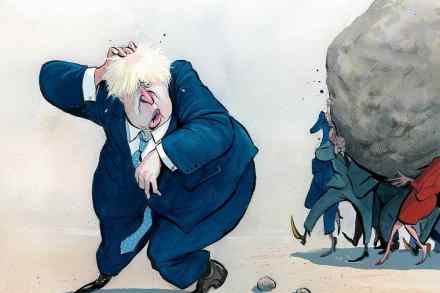
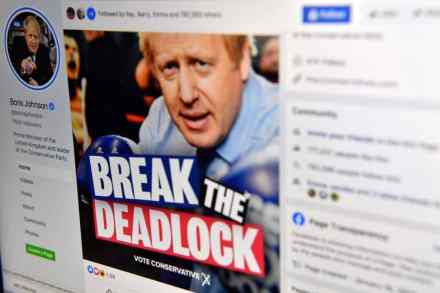
Brand Boris is in trouble. It wasn't long ago that Boris Johnson could do no wrong, having won his party a thumping majority at the last election. Even when some mishap played out in public – like being stranded on a zip wire or falling in a stream – the public still seemed to love this irrepressible japester. Now Brits are more likely to boo than cheer him. Despite winning a Tory vote of confidence this week, he looks like a bruised and battered boxer who’s just struggled to a narrow points victory. Is there any way for him to rebuild his brand? The advertising industry has involved itself successfully in politics ever since Saatchi & Saatchi helped propel Margaret Thatcher into Downing Street.

Of course cycling is right-wing

Three cheers for Jeremy Vine. At last someone has pointed out that cycling in cities is inherently right-wing. Full disclosure: I’m a cyclist. I may not own a square inch of fluorescent or Lycra apparel; I may not terrorise motorists with violently bright and flashing lights but I’ve been riding a bike around London since I was a child. However, whereas Jeremy celebrates the right-wing triumphalism of cycling — asserting that he and other cyclists 'are acting out of primal selfishness' — I’m mortally embarrassed by it. Cycling is the exclusive preserve of the very few and the very able. As for cycle lanes, which pander to a tiny and privileged elite at the expense of the vast majority, they’re undemocratic and wrong.

Britain’s advertising industry has effectively been nationalised

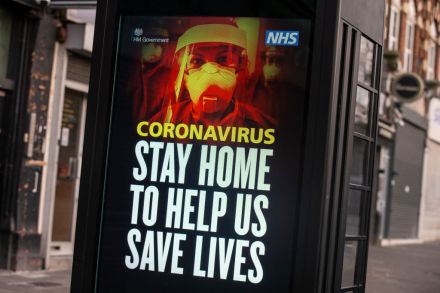
Has the advertising industry been nationalised? It certainly looks that way. The run-up to Christmas is usually the time for UK advertisers to spend big. But not this year. While the John Lewis Christmas ad has been greeted with some fanfare, this is the exception, rather than the rule in 2020. Companies whose businesses have been shuttered and whose customers are locked down see little point in spending money on advertising. In any recession, one of the first things to be cut is the advertising budget.  However, there seems to be one mighty paymaster propping up a lucky few ad agencies: the government.

Would Alan Parker have made it today?

‘Hello, is that Paul?’ ‘Yes’ ‘This is Alan Parker. I've just read your new book. I thought it was terrific and I want to talk to you about it. Are you free for lunch next week?" ‘Yes!’, I practically yelled. The following week, I found myself sitting opposite one of my advertising and film-making heroes, the creator of magnificent films like Bugsy Malone, Midnight Express and Mississippi Burning. Surely, he wanted to turn my book into an Oscar winning movie. As you’ve probably worked out, that wasn’t the case. He’d just called cut on his illustrious movie-making career, had written his first novel and wanted me to take a look at it. He very kindly said that he liked my ‘easy’ style of writing. ‘Easy?

Keir Starmer is an excellent Labour leader, which is why he’ll never be PM

We’ve all been very impressed, haven’t we, by Sir Keir Starmer’s performances at Prime Minister’s Questions? His calm, precise and forensic dismantling of Boris Johnson has drawn praise from all quarters. Quite right too. An effective Leader of the Opposition is vital to any democracy and at last, we seem to have one. An eminent QC with the courage to ask the tough questions and put our blustering PM on the rack. There are, inevitably, some petty quibblers who aren’t quite so Starmerstruck. They feel that the hindsight-fuelled bullying of a man still recovering from a near-death experience, and the castigating of a government forced to face horrendous economic and societal problems, weren't particularly courageous.

Why I regret inventing the innocent smoothie brand

We all have secrets which, when we remember them, shroud us in shame. I’m afraid I have a particularly dark one that I’m forced to remember almost every day of my life. Twenty years ago, I was a working in a big London ad agency with a smart and ambitious young man named Richard Reed. I liked him a lot and it was clear that he wouldn’t be constrained by the advertising industry forever. Sure enough, he came to me one day and announced that he and some friends were starting a business, making fruit smoothies called ‘Fast Tractor’. Richard explained that they’d chosen Fast Tractor because the tractor that transported the fruit from field to fruit crusher was fast. Or something.