Patrick Allitt

America has a long tradition of voter fraud

Donald Trump was making modern political history even before he fell ill in the final stretch of his election campaign. By suggesting the result could be fraudulent — and therefore invalid — the incumbent President was menacing the fragile framework that, for more than 200 years, has eased the transition from one administration to another. There has been nothing like it in living memory, other than Trump’s previous allegations of voter fraud after his 2016 win. But the United States certainly does have a history of dodgy politics — electoral fraud was as American as apple pie throughout the 19th and into the early 20th century. Since then it has been, mercifully, much less corrupt than it was before the 1920s.

COVID-19 vs the American spirit of resistance

From our US edition

If the coronavirus were as deadly as the bubonic plague, which killed about a third of the population of Europe in the 1340s, there would be no doubt about the need for extreme measures. But this virus spares far more people than it kills, and is sometimes mild to the point of invisibility, even as it proves lethal to others. It’s almost as though nature had calibrated the virus exactly to the point where risk-avoiders saw the lockdown as vital for survival while risk-accepters saw it as so economically destructive as to be worse than the disease itself. America is polarized not just politically but in its attitude to risk.

resistance

America is socialist, dummy

From our US edition

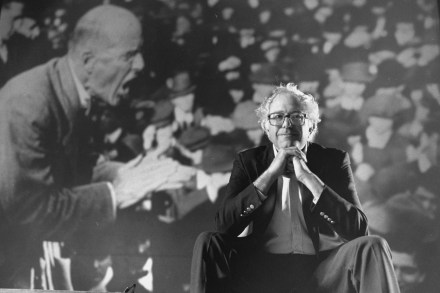
It’s widely agreed that Bernie Sanders fell short in the Democratic primary because he described himself as a socialist. As a movement, socialism has never had mass appeal in America. Even at its strongest, in 1912, it garnered fewer than one million votes for presidential candidate Eugene Debs, who was trounced by Woodrow Wilson. More often, Americans have used the word ‘socialism’ as a synonym for communism, to signify everything America doesn’t stand for. Pundits put Sanders’s failure down to his attempts to give the word a positive spin. On the other hand, a dispassionate glance at American history shows that Uncle Sam has already gone a long way down the road of democratic socialism.

socialist

Lessons from the Johnson impeachment

From our US edition

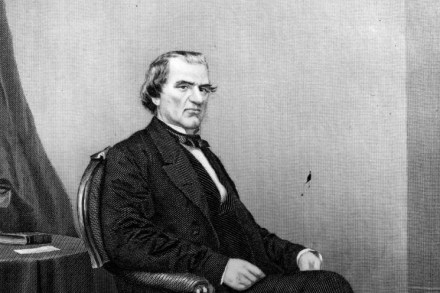
The first time Congress impeached a president was in 1868.  The president was Andrew Johnson, a man almost as surprising to find in the White House then as Trump is now. Johnson, a Tennessee Democrat with a taste for hard liquor, had been the only southern senator to stay loyal to the Union when the Confederate slave states broke away in 1861, provoking the Civil War.  President Abraham Lincoln was a Republican but he ran for re-election in 1864 as a 'Unionist', and adopted Johnson as his running mate, hoping to pick up northern Democrats’ votes. The scheme worked and Lincoln won. Johnson was so drunk at his swearing-in as vice-president early in 1865 that his speech made no sense and he had to be led away by embarrassed friends.

andrew johnson

Election recounts are a sign of a healthy democracy

From our US edition

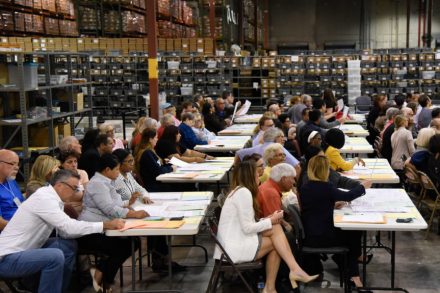
All over America, election recounts are in progress. Is it a sign that democracy just doesn’t work as well as it used to? On the contrary, it’s a sign that Americans are more earnest now than ever before about getting the results right. Despite sharp polarization, nearly everyone believes that the candidate with the most votes should in fact take office. Thousands of men and women are working to make sure the count is accurate. They know that, all over the world, democracies fail when the losers refused to accept the verdict of the electorate, or when the winner abolishes the system that brought him to power. From their earliest schooldays they’ve had drummed into them the idea that fair elections are sacrosanct, their nation’s bedrock.

election recounts

Trump’s inside man

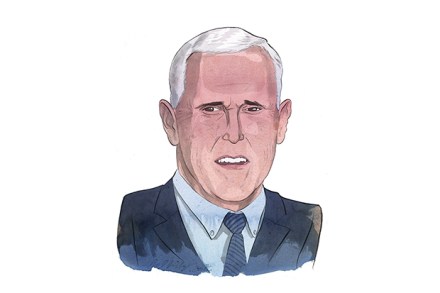
Let’s take stock. Donald Trump, until last week, had never done a government job or held an elected office. He ran for president as a kind of anti-politician, ignoring the conventional wisdom about how to win. Amazingly, he won. It was, in its way, an impressive feat, overturning much conventional wisdom. Still, there’s no getting around the fact that, as president, he’s got to be political and must surround himself with politicians. Mike Pence, his vice-president, may turn out to be the most important of the lot. The two men did not previously know one another, but have become friends over the past five months, and recognise each other’s merits. They are a study in opposites.

How the Mormons dumped Trump

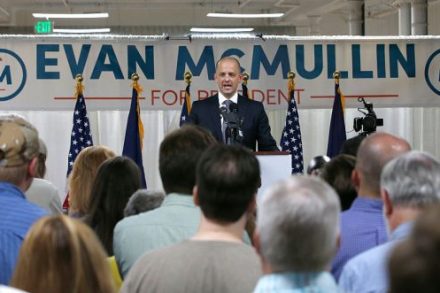
Evan McMullin is running for president of the United States. A Mormon from Utah, a former CIA undercover agent, he represents what the Republican Party ought to look like this year but does not. Convinced, like many of his co-religionists, that Donald Trump is a disgrace, he speaks with quiet confidence about restoring dignity and respect to American conservatism. So far he’s on the ballot in just eleven states, and showing most strongly in the Rocky Mountains. He may actually win in the Mormon stronghold of Utah. He’s just forty years old and his running mate, Mindy Finn, a Jewish high-tech entrepreneur and conservative feminist, is only 36.

Hillary will beat Trump. But her presidency will be hamstrung just like Obama’s

The more you study history, the more you realise how hopeless it is to try predicting the future. Even sophisticated polling can’t prevent surprises like the two recent whoppers in the UK: the wrong prediction of a razor-thin margin for David Cameron in 2015, followed by the wrong prediction of a Brexit defeat in this summer’s referendum. I’m a history professor. If anyone knows better than to make predictions, it’s me. Nevertheless, I predict that the Democratic Party will win the presidency and the Senate in November, but will continue as minority party in the House of Representatives. Let me explain why.

The women who paved the way for Hillary’s bid for the White House

If Hillary Clinton wins she will be the first female president of the United States, taking over from the first black president. But who were her predecessors, paving the way to women’s full participation in national politics? Votes for American women began in the Wyoming Territory in 1869. Wyoming, amid the Rocky Mountains, is remote, cold, and high. Its population was tiny in the 1860s; men outnumbered women six to one. The advocates of female suffrage hoped they could create a little favourable publicity, encouraging more single women to head their way. When Wyoming became a state, in 1890, its women’s right to vote was written into the new state constitution. Meanwhile, in 1872, Victoria Woodhull had become the first woman to run for president, on the Equal Rights ticket.

Death of an anti-feminist

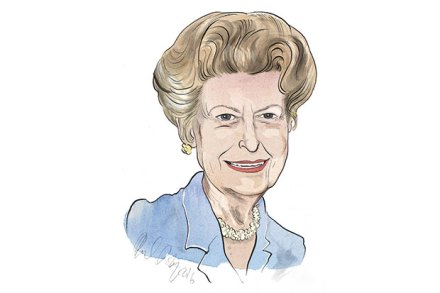
Phyllis Schlafly could have been America’s number one feminist. She graduated from good universities, wrote important books on serious topics, was an outspoken orator and political organiser, didn’t let her life be defined by her husband’s career, and stood up to bitter abuse from her opponents. In reality, however, she was America’s leading anti-feminist. Her death this week, at the age of 92, marks the passing of an organisational and publicity genius who did all she could to fight against the spirit of the age. When passage of the Equal Rights Amendment to the US constitution seemed imminent and inevitable in the mid-1970s, she created a democratic grassroots pressure group, ‘StopERA’, that managed to kill it once and for all.

The Donald Trump phenomenon is nothing new in American politics

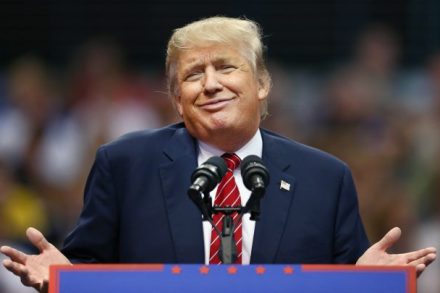
It's hard to find someone who doesn't have a strong opinion about Donald Trump. But it's worth lowering the emotional temperature for a moment, taking a step back, and looking at him through the eyes of history. Has there ever been a presidential candidate like Trump? Here I’ll confine myself just to the last twenty-five elections (1916-2012), during which time the Democrats ran eighteen different candidates for president, and the Republicans seventeen. So apart from the soundbites is there anything really different about the Donald? First, Trump has never run for office. The last time a major party ran a candidate who had never entered an election was in 1952 when the Republicans nominated Dwight Eisenhower.

Is there any hope for the two worst problems in America: racial mistrust and gun crime?

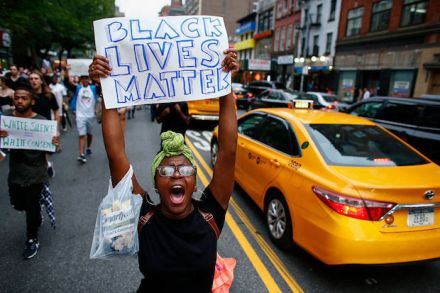
The Dallas shooting brings together two of the worst problems in American politics: racial mistrust and guns. It also shows that both problems are intractable. Most Americans like the idea that if something’s wrong they can fix it. Hard experience suggests otherwise. First, race. The old heritage of slavery, followed by a century of segregation and the continuing reality of widespread racism, often makes the rhetoric of equality and democracy ring hollow. White fear of blacks is common, and has contributed this year to Donald Trump’s success. Second, guns. The Constitution’s Second Amendment gives citizens the right to bear arms.

Is America headed for tyranny? It is when the other side’s in charge…

For the last 50 years Americans have been decrying the increase of presidential power whenever the party they oppose is in office.  Republicans hated to see Kennedy and Clinton throwing their weight around, while Democrats deplored the ‘imperial presidency’ of Nixon and Reagan. F.H. Buckley, a Canadian law professor now working in Virginia, explains why presidents have become so powerful. He adds that it’s not just an American problem. Prime ministers in Britain and Canada have also grown more powerful at the expense of their countries’ parliaments, but to a lesser, and less menacing, degree. He argues that American conditions today are very different from those foreseen by the founding fathers when they wrote the constitution in 1787.

How America’s shale gas revolution makes Putin ever weaker

[audioplayer src="http://traffic.libsyn.com/spectator/Untitled_2_AAC_audio.mp3" title="Anne Applebaum and Matthew Parris debate the Ukraine-Russia situation"] Listen [/audioplayer]Once or twice every century something good happens to Russia, but then another long night of suffering closes over the great Asian wastes. In 1917, the Russians managed to overthrow their hated Czar and proclaim a democracy. It only lasted a few months before being swept away by a much worse autocracy, which stayed in power until 1991. The sudden prospect of post-Soviet freedom was accompanied by the promise of long-delayed prosperity, as the liberated nation began to develop its vast resources, one of which was natural gas.

America’s right still hates Hillary Clinton. And it still can’t stop her

 Atlanta, Georgia Who thinks Hillary Clinton is the nastiest woman in the world? The American Spectator once called her ‘the Lady Macbeth of Arkansas’ while US News and World Report described her as ‘the overbearing yuppie wife from hell’. But that was back in the nineties. Surely such vitriol is a thing of the past? No. The founders of ‘StopHillaryPAC’ say on their website that they want to ‘save America from the destructive far-left liberal cancer’ that Mrs Clinton represents. Do they wish her actual harm? Well, they plan to ‘STOP Hillary dead in her tracks’ but, you know… just politically. They’re not the only ones.

Revenge of the Clintons

Republicans turn pale with horror at the idea that Hillary Clinton might be the next president. She is the screeching harridan of their nightmares, made worse by her penchant for centre-left social policies. But they had better face up to the fact that no woman has ever been better placed to take the top job. Sixty-five now, she will be no older in 2016 than Ronald Reagan was when he moved into the White House. In the next week or so, Hillary will stand down as Secretary of State. She tells interviewers that she’s looking forward a break from public life. But nobody who knows anything about her believes it. Before her concussion late last year, she completed a farewell tour constructed to remind everyone that she is the logical next leader of the free world.

Right thinking

David Frum has spoken for American conservatism for a generation – now he despairs of it David Frum has been a major force in American conservatism for more than 20 years. He was a speechwriter in President George W. Bush’s first administration and is said to have coined the phrase ‘axis of evil’. In the last few years, however, he has fallen out with the leading conservative magazine, National Review, the leading conservative think tank, the American Enterprise Institute, and the leading conservative TV network, Rupert Murdoch’s Fox News. He is an active political blogger at Newsweek and The Daily Beast, where he regularly deplores Republican intransigence and bloody-mindedness.

Elephant trap

The Republican voters of Iowa could not make up their minds. Months of flirting with different candidates preceded their decision to give Rick Santorum a moment in the sun. Hardly able to believe his own good luck, he could not help knowing, even in the euphoria of his virtual dead heat with Mitt Romney for first place, that he too would probably sink back into the obscurity from which he had only just emerged. He told his astonished supporters, gathered in a ballroom in Johnston, Iowa, ‘I’ve survived the challenges so far by the daily grace that comes from God.’ Romney remains the presumptive Republican candidate, having won in Iowa by eight votes, but suddenly Santorum looks like the principal alternative.

Travel Extra: Cruise – Breaking the ice

Alaska is best seen by ship, says Patrick Allitt – just so long as you choose the right season For two thirds of every year Alaska is a nightmare of ice and darkness. For 16 or 17 weeks, by contrast, it’s one of the most beautiful places on earth, and anyone who can find a way to get there should seize the opportunity. John Muir, the pioneering American environmentalist, cautioned young people not to see it too early in their lives because ‘the scenery of Alaska is so much grander than anything else of its kind in the world that, once beheld, all other scenery becomes flat and insipid’. So much of the country is inaccessible by road that the best introduction to Alaska is by ship.