Oliver Wiseman

Biden should pay a high price for inflation

From our US edition

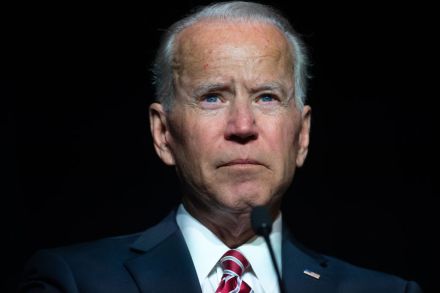
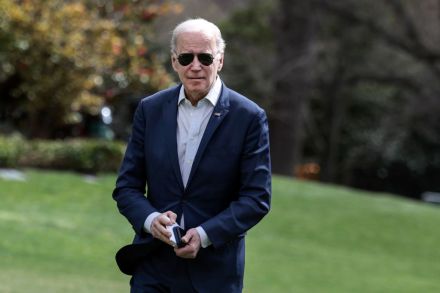
Biden deserves to pay a high price for inflation Tuesday started exactly as badly for Joe Biden as the White House knew it would. The Bureau of Labor Statistics this morning announced that consumer prices rose 1.2 percent in March and were up 8.5 percent over a year earlier. That is the fastest rise in forty years. The numbers reveal the problem with the administration’s effort to blame inflation on Russia. “Putin’s price hike” is only part of the story. Prices for all items except for food and energy rose by 6.5 percent year on year.
budget

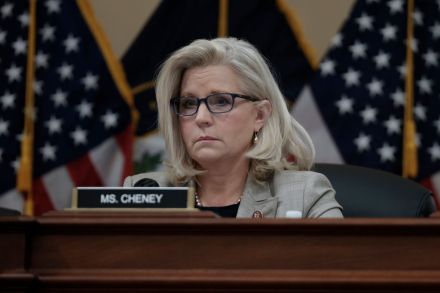
Can Liz Cheney buy her way to victory?

From our US edition

The White House has a lot riding on Macron versus Le Pen In recent weeks, a Marine Le Pen surge turned the French presidential election from a procession for Emmanuel Macron to something a lot less straightforward. The election has reportedly been the subject of much nervous White House attention. It’s not hard to understand why. A Le Pen win would be both a major big-picture blow for Biden’s geopolitical ambitions and would have a more immediately destabilizing effect on the West’s response to Russia’s invasion of Ukraine. It would also strike at the heart of the European project.

cheney

When Covid returns to Washington

From our US edition

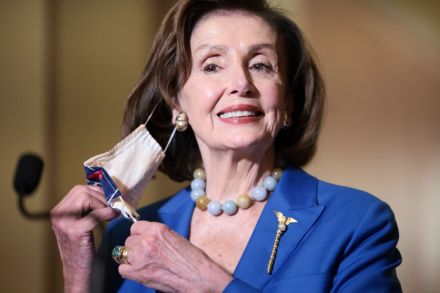
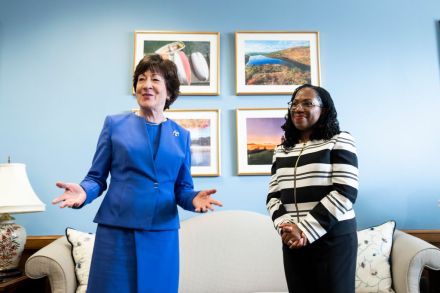
When Covid comes to town There’s a hot, must-have new accessory among Washington’s political elite this spring: a positive coronavirus test. Several recent swish DC get-togethers appear to have been super-spreader events and anyone who’s anyone is getting two red stripes on their antigen tests these days. The Gridiron dinner, one of the top tickets in town, is, some think, the source of the outbreak. Its attendees are dropping like flies. Among the contagious A-listers: commerce secretary Gina Raimondo and Attorney General Merrick Garland. Other big names who have tested positive include House Speaker Nancy Pelosi, Senator Susan Collins of Maine and Senator Raphael Warnock of Georgia. That’s the bad news. But the good news is two-fold. First, everyone seems to be just fine.

Here comes Justice Jackson

From our US edition

How to lose the immigration debate With immigration getting more and more attention, Texas governor Greg Abbott has sought his moment in the limelight with an eye-catching proposal for what to do with illegal migrants when they are intercepted at the border. In a response to the White Houses’s decision to lift Title 42, the pandemic-era health order that empowered border agents to turn migrants away, Abbott announced that his state “is providing charter buses to send these illegal immigrants who have been dropped off by the Biden administration to Washington, DC.” Migrants relocated from the border to Texan cities like San Antonio, Abbott said, would be put on buses, driven north and dropped off at the Capitol.

Barack is back

From our US edition

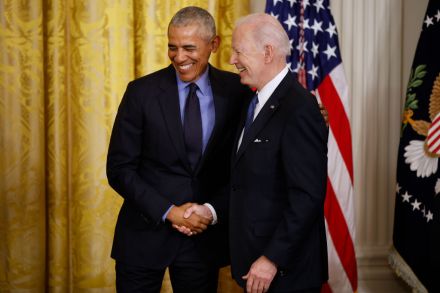
Barack is back Reunions with old friends can be nourishing, joyful occasions. But they can also be awkward: uncomfortable reminders of past differences, full of signs of how far you have drifted from one another. Barack Obama’s return to the White House for the first time since leaving office to pal it up with his one-time right-hand man felt more like the latter — though it was President Biden who appeared more uncomfortable than his old boss. At an event to lavish praise on the Affordable Care Act, Obama’s biggest legislative achievement, the 44th president jokingly referred to Biden as the “vice president” before adding: “That was a joke.

The loneliness of Merrick Garland

From our US edition

The loneliness of Merrick Garland Merrick Garland is not a popular man. The attorney general has been disliked on the right ever since he issued a memo last year villainizing parents protesting school board meetings. But he now faces growing criticism from the left for what many Democrats consider an overly ponderous approach to January 6 prosecutions. Having spent the Trump years lamenting a loss of norms and claiming to want positions of power to be filled with sober, responsible characters, Democrats are growing impatient with an attorney general who follows exactly that approach. Why, they ask, hasn’t there been more butt-kicking and name-taking with regard to the riot at the Capitol? And, in particular, why isn’t Trump feeling the heat? Among the “lock him up” crowd?

Fresh shock at Russian atrocities

From our US edition

Russian atrocities shock Washington Washington was, once again, focused on events in Ukraine this weekend. And for good reason. Horrifying evidence of possible war crimes emerged in Bucha and other towns near Kyiv that had been under Russian occupation. The images of mass graves, evidence of torture and the bodies of civilians, shot with their hands tied behind their back, sparked fresh outrage more than a month into the war. “Concentrated evil has come to our land,” said Ukrainian president Volodymyr Zelensky in a televised address this weekend. “Murderers. Torturers. Rapists. Looters. Who call themselves the army. And who deserve only death after what they did.

Biden sings the border blues

From our US edition

Biden’s border blues Democrats used to talk a lot about America’s southern border. The Trump administration’s handling of migrants crossing into the US was central to their moral case against the former president. But after Biden entered office, it didn’t take long for border security to become a major political liability for the president and his party. In fact, there are now few things the administration appears more uncomfortable talking about than the border. Consider, for example, the great Kamala Harris non-border visit debacle of 2021. Or the unease with which Biden officials this week entertained the possibility of lifting the pandemic-era measures that border agents have been using to turn away tens of thousands of migrants.

Why Biden won’t save the Democrats

From our US edition

Why is Biden’s pivot to the center so half-hearted? Every so often, a snippet of news, an anecdote or data point crops up and puts the obsessions and hang-ups of America’s political class in perspective, instead offering a clarifying reminder of what voters actually care about. The latest NBC news poll is one such piece of evidence. In a helpful framing of voters’ priorities ahead of the midterms, the survey asks whether support for a list of policies will make them more or less likely to back a given candidate. The most popular policies (i.e.

Susan Collins and the return of ‘bipartisanship’

From our US edition

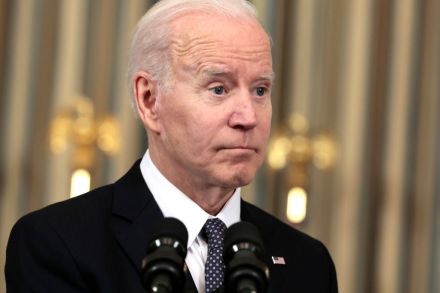
Biden’s magic budget fools no one It’s easy to get too excited about a president’s budget. OK, maybe not. But it’s certainly possible to read too much meaning into the fiscal plans issued by the White House. So it is with Joe Biden’s record-setting $5.8 trillion budget, published this week. As Jonathan Bydlak writes for the site, the documents aren’t the law, and even in a functioning Washington, they are only the start of the budget process. In a dysfunctional Washington, they are good for little more than messaging. What is the message of Biden’s budget? “Its significance is limited to telling us what we already know: the administration wants to spend — a lot,” writes Bydlak. The White House has spun this budget as a pivot to the center.

Biden-Reagan comparisons are ‘preposterous’

From our US edition

The ‘preposterous’ comparison between Biden and Reagan Among the most shameless displays of water-carrying for Joe Biden since his Saturday regime-change gaffe is the suggestion, floated by some apparently without embarrassment, that the president’s Warsaw address resembles a speech made by one of his predecessors in Berlin in 1987. According to Sunday’s Politico Playbook AM, “some foreign policy experts are already comparing [Biden’s speech] to Ronald Reagan’s famous ‘Mr Gorbachev, tear down this wall’ address.” On Twitter, Bill Kristol liked Biden’s call for regime change to Reagan’s memorable line, arguing that both were considered “gaffes” by the foreign policy establishment.

The gaffe heard around the world

From our US edition

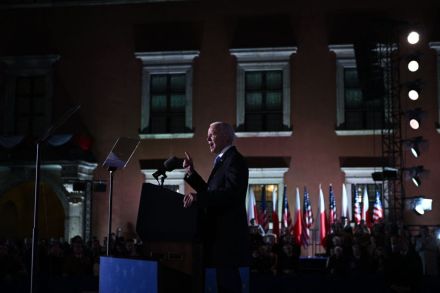
The gaffe heard around the world Michael Kinsey famously wrote that “a gaffe is when a politician tells the truth — some obvious truth he isn’t supposed to say.” When Biden went off-script in his address in Warsaw this weekend, he didn’t state an “obvious truth” about the world as it exists, but as he would like it to be. “For God’s sake, this man cannot remain in power,” Biden said of Vladimir Putin in a moment of irresponsible candor. Clean up on aisle Biden! The White House row-back was about as swift as Will Smith’s right palm: “The president’s point was that Putin cannot be allowed to exercise power over his neighbors or the region,” said one White House official. “He was not discussing Putin’s power in Russia, or regime change.

The Covid test

From our US edition

The Covid test A spike in Covid cases in Europe has professional Covid worriers worrying. Is America ready, asked the New York Times this week, quoting an epidemiologist lamenting that the country has chosen to “forget” rather than “do the hard work” since the last peak. Another accuses policymakers of “wearing rose-colored glasses instead of correcting our vision.” If a new wave does arrive on these shores, professional pandemic-watchers will complain about our complacency and accuse policymakers of once again falling short. The real question though, is what the rest of us will do. Thankfully, the signs point to the hypochondriacs being ignored. A new Pew poll finds that voters see Covid as just the fifteenth most important issue.

Why David Mamet went right

From our US edition

How did David Mamet spend the pandemic? The answer, as anyone familiar with the prolific, brilliant playwright and screenwriter would probably have guessed, is that he wrote. “I’ve been writing a lot of essays lately,” Mamet, seventy-four, says when we meet at his Santa Monica home on a cool January evening. “Because, you know, I don’t want to go and sit on a park bench. I’m a writer.” A collection of essays written during the tumultuous plague years is published this month by Broadside, an imprint of HarperCollins. Recessional: The Death of Free Speech and the Cost of a Free Lunch is combative, challenging, witty, and, as the title suggests, its prevailing mood is as dark as the “terrible” period in which it was written.

Mamet

Biden touches down in a changed Europe

From our US edition

Biden touches down in a changed Europe According to national security advisor Jake Sullivan, Joe Biden’s trip to Europe is an “opportunity to coordinate on the next phase of military assistance to Ukraine. He will join our partners in imposing further sanctions on Russia and tightening the existing sanctions to crack down on evasion and to ensure robust enforcement.” The president is in Brussels today for a NATO pow-wow and will head to Poland tomorrow. On this trip, as with the rest of the Biden administration’s diplomatic response to the Russian invasion of Ukraine, the emphasis is on unity. This White House has, more than anything else, sought to present a united front with European allies throughout the crisis. But are the cracks in that unity starting to show?

Jackson’s patriotic rebuke

From our US edition

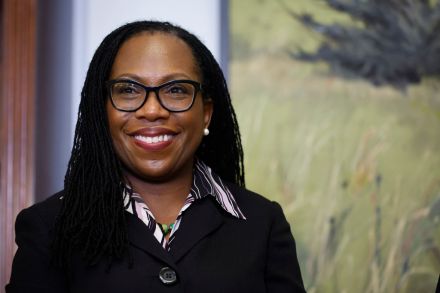
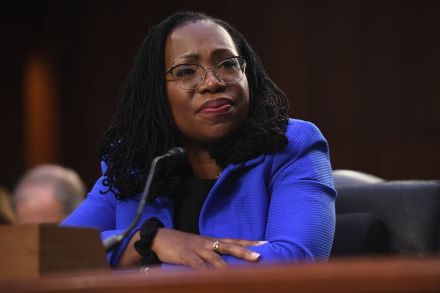
Judge Jackson’s patriotic rebuke to the left As confirmation hearings for Supreme Court nominee Ketanji Brown Jackson enter their third day, coverage has focused more on the questions she has been asked than the answers she has given. Whether it’s Josh Hawley’s scrutiny of Jackson’s sentencing for sex offenders or Ted Cruz quizzing her on Critical Race Theory, the most bad-blooded argument over this week’s Senate drama has concerned the legitimate parameters of these presidential hopefuls’ questioning. To bypass that mostly unedifying debate, and instead to focus on Jackson’s answers, has been a heartening experience. Ever since she was introduced by Biden at the White House last month, Jackson has seemed a reassuringly earnest, patriotic and accomplished figure.

The Republicans have a candidate problem

From our US edition

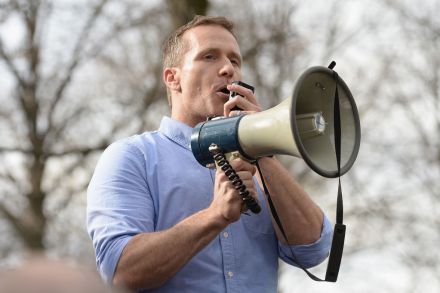
The Republicans have a candidate problem Republicans are worried about Eric Greitens. And rightly so. The front-runner in the Missouri Senate primary faces alarming accusations of violence from his ex-wife. In a sworn affidavit filed yesterday as part of a custody lawsuit, she details multiple allegations of serious physical and psychological abuse. Greitens was hardly squeaky clean before Monday’s affidavit. He resigned as the state’s governor in 2018 following allegations of sexual assault. The latest accusations have led to calls for him to drop out of the race to fill the vacancy created by Roy Blunt’s retirement.

Biden’s European balancing act

From our US edition

Biden’s European balancing act Joe Biden will head to Europe later this week for a series of emergency meetings with Western leaders. In addition to attending a trio of summits in Brussels — one between NATO leaders, one for the G7, and a special session of the European Council, Biden will travel to Poland. Of the trip to Ukraine’s neighbor, Jen Psaki said in a statement Sunday: “He will hold a bilateral meeting with President Andrzej Duda. The president will discuss how the United States, alongside our allies and partners, is responding to the humanitarian and human rights crisis that Russia’s unjustified and unprovoked war on Ukraine has created.

No showdown over KBJ?

From our US edition

No showdown over KBJ? Recent Supreme Court nominee hearings have been box office Washington events. But there’s little to suggest that, when Ketanji Brown Jackson appears before the Senate Judiciary Committee next week, the event will be anything but a low-key and temporary distraction from the war in Ukraine. But the likelihood of a confirmation process that fails to capture much attention isn’t just a product of the enormity of what is happening elsewhere in the world. It’s also because, in Brown Jackson, the White House appears to have chosen a difficult-to-get-outraged-about jurist. Yes, she’s liberal (as you would expect), but she’s also steady, reasonable and consensus-oriented in disposition.

Biden follows Warren’s lead on inflation

From our US edition

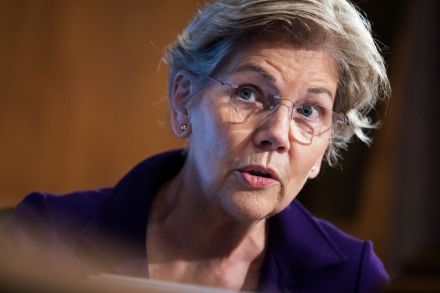
Biden follows Warren’s lead on inflation During the last presidential cycle, Massachusetts senator Elizabeth Warren was feted by the prestige media as the evidence-driven technocrat with a plan to fix American capitalism. Despite the glowing coverage (and New York Times endorsement), her campaign demonstrated little electoral appeal outside the “Democratic Hill Staffer” demographic and promptly bombed. Warren has always occupied space on the left of the Democratic Party, but since her 2020 defeat, she has slid further from the center and traded her technocratic “I’ve got a plan for that” style for a more explicitly populist message. She is presumably positioning herself to be the progressive standard-bearer as eighty-year-old Bernie Sanders fades from view.