Oliver Johnson

Oliver Johnson is a professor of information theory and the director of the Institute for Statistical Science at the University of Bristol. He is the author of Numbercrunch: A Mathematician's Toolkit for Making Sense of Your World and the Logging the World Substack.

The Covid inquiry is Brexit redux

Yesterday saw the latest performance of one of the longest-running dramas in town. In many ways, the Covid inquiry felt very much like a slightly unnecessary reboot (Matrix Resurrections style) of Cummings’s appearance at the Parliamentary Science and Technology Committee back in May 2021. We didn’t learn a lot yesterday that we didn’t know then, for all that the political correspondents tried to breathlessly repackage ‘revelations’ about Boris Johnson not understanding life expectancy that we’d known about since July 2021.  But to me, Cummings’s appearance was actually a remake of an even earlier drama. The 2019 Channel 4 programme Brexit: The Uncivil War was bookended by exactly this scene.
Covid cases are falling – but don’t think it’s all over

The official Covid-19 dashboard has turned green and cases appear to have peaked, at least for now. You hear a lot of people say 'cases don't matter', but they are a leading indicator of hospitalisations and deaths — and so a peak in cases (if confirmed by the ONS survey) should lead to a peak in hospitalisations in future weeks. So, is that it? Are we done? It would be unwise to estimate the R numbers for a few days. Not because I'm disappointed that numbers are falling, but because you can't do linear regression on non-linear data. And there is still a lot of uncertainty. However, for the first time in 18 months, there's been a fall in cases that can't be easily explained by a national lockdown. That's great news.

Has South Wales reached herd immunity?

Few topics during the Covid pandemic have caused more controversy than the Herd Immunity Threshold, the level of immunity at which the virus can no longer spread through a population even once social distancing is relaxed. Confident past predictions that Sweden or India had reached this have been swept away by sizeable second waves, and certainly we cannot tell from graphs of falling cases alone that herd immunity has been achieved. However, considering the latest data, I believe it is worth asking whether parts of the UK have passed the Herd Immunity Threshold. The answer may be 'not quite yet', but it can be useful to think why. Essentially, herd immunity should be possible given enough infections and vaccinations, conditions that may apply in parts of South Wales, for example.

Covid’s endgame

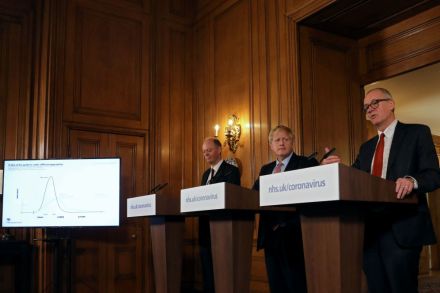
The Pfizer vaccine’s approval by UK regulators marked what many hope is the beginning of the end of the coronavirus crisis. That was certainly the impression Boris Johnson was keen to convey during his Downing Street press conference on Wednesday. The Prime Minister, however, warned the British people to avoid being overly optimistic. Deputy chief medical officer professor Jonathan Van-Tam went even further: ‘I don’t think we’re going to eradicate coronavirus,’ he said, ‘I think it’s going to be with humankind forever.’ If professor Van-Tam is correct, what can we expect to happen in our battle against the virus in the coming weeks and months?

Why the north-west Covid spike is alarming

It can be hard to keep track of the progress of the epidemic as the daily cases, hospitalisations and deaths often seem to tell a contradictory story. Each suffers from random noise, delays and incompleteness in reporting, and arguments about how exactly they should be compiled. However, the total number of Covid-19 patients in hospital in the north-west has recently been growing in a disturbingly consistent way – and justifies the strict new rules which have been brought in today in the region. On 26 August, the number of hospitalised Covid patients in the region reached a low of 77. Five weeks later, this number has grown to 612 – an eightfold increase.

Are we really seeing a second European spike?

You've probably seen the graphs, cases are way up in France, even higher than the first wave, and yet deaths hardly seem to be up at all. Yet if you compare the latest number of deaths recorded, 130 for the week ending 3 September, they’re slightly higher than the 123 deaths in the week in March when the country locked down.  Meanwhile, in the UK, cases continue to rise with just under 3,000 new infections announced over the last two consecutive days. The deputy chief medical officer said last night that the rise is deeply concerning and that Brits had ‘relaxed too much’. Should we be panicking? Are we about to see another spike in hospitalisation and the inevitable corresponding spike in deaths?

How worried should we be about a second wave?

Now that we are two months past the peak of the UK coronavirus epidemic, many fear the emergence of a second wave of the disease and remain anxious about any evidence that reopening the country has gone too far. For this reason media headlines like ‘Germany's R number rockets again - from 1.79 to 2.88’ (Sky News) and ‘UK coronavirus cases no longer falling, ONS figures show’ (the Times) are amplified very quickly. But how worried should we really be by these headlines? By now, we have become familiar with the R number (the average number of people that each infected person will themselves infect) and are alert to the danger of it being greater than 1. However, we have likely spent less time thinking about how the value is found.

Is it really necessary for schools to be closed?

With Primark open, parents can once again buy cut-price school uniforms for their children. Whether those children will get to wear them before they grow out of them is an open question. The government has abandoned plans to get all primary school children back into the classroom before the end of term, and Matt Hancock has questioned whether secondary school children will even be back in September. But was it necessary to close schools at all? The Imperial College Report 9 of 16 March is credited with changing the government’s coronavirus policy and sending the country into lockdown. Yet the report did not really press for closing schools. Its data suggested that taking this action would only reduce total deaths by between 2 and 4 per cent.

How to read coronavirus graphs

Dominic Cummings placed a job advert back in January calling for data scientists, statisticians and modellers. Since then, the coronavirus epidemic has made all of us 'weirdos and misfits' in our growing obsession with data. Everyone now has opinions on the latest coronavirus statistics, whether it's South Korean test numbers, German fatality rates or Italian regional differences. The latest data visualisations get shared widely across the internet. But how should we make sense of them? To a professional mathematician like me who gives lectures about probability and uncertainty, the rise of the epidemic modellers is somewhat bewildering. Compared to the problems I normally work on, modelling the epidemic is both incredibly easy and unbelievably hard.