Nikki Da Costa

Why the Lords doesn’t have to accept the Assisted Dying Bill

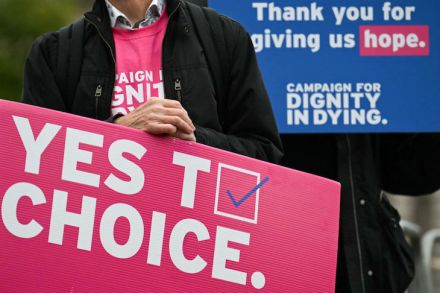
In an effort to hasten the Assisted Dying/Suicide Bill on to the statute books, Esther Rantzen and Lord Falconer have offered a novel interpretation of the role of the House of Lords. Falconer suggested that the Lords must 'uphold' what 'the Commons have decided to go ahead with'. Meanwhile, Rantzen said of Parliament's upper chamber: 'Their job is to scrutinise, to ask questions, but not to oppose.' Someone like Rantzen may be forgiven for playing so loose with conventions, but a former Lord Chancellor may not. Labour’s manifesto made no reference to assisted suicide nor assisted dying The reality is that both the House of Commons and the House of Lords play an equal role in the passing of legislation, except when it comes to matters of financial privilege.
Will parliament be able to stop the next PM leaving without a deal?

Since the referendum we have seen a steady escalation of the battle between the Commons and the government over Brexit. It will reach new heights in the run up to October 31st – as the new prime minister seeks to negotiate with the EU and maintain his room for manoeuvre by keeping no deal on the table, and those ardently opposed to no deal find more and more creative ways to stop it from happening. The question is: who will win? Much depends on the way the Commons seeks to prevent no deal, the options available to the prime minister in responding, and crucially, the political cost associated with each option.

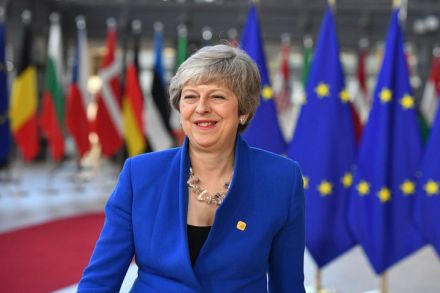
Can Britain really leave the EU before the European elections?

Last Thursday the Prime Minister told MPs that 'if we were able to pass a deal by 22 May, we would not have to take part in European elections and, when the EU has also ratified, we would be able to leave at 11pm on 31 May.' Her point – since picked up by ministers – was to ram home to Leave supporting MPs that 'the date of our departure from the EU, and our participation in the European parliamentary elections' was down to them. But is it realistic to think this timetable can be met? Can the government deliver? In my view, this would require a level of legislative aggression from government, and a certainty of numbers, not seen in this parliament.

The Speaker is no longer impartial: here’s how May should take back control

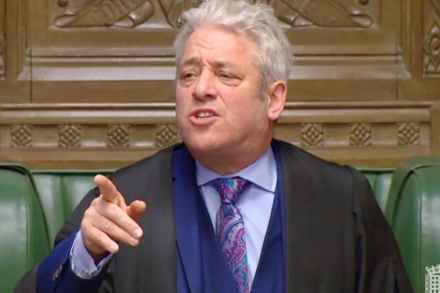
Almost 400 years ago, in 1642, Speaker Lenthall famously declared 'I have neither eyes to see nor tongue to speak in this place but as the House is pleased to direct me, whose servant I am here.' That tradition died yesterday. Speaker Bercow took the powers of the House for himself, ruling that it could not make a decision about holding a third Meaningful Vote, and that he had instructed the Table Office not to accept such motions. This is extraordinary – while the Speaker has the power to rule motions and amendments in order, he has no power to prevent the tabling of them. Yet how can the parliamentary clerks refuse someone who is to all extents and purposes their boss?

Grieve’s Brexit amendment could destabilise British government for years to come

How can backbenchers take back control of Brexit? The latest plan is by Dominic Grieve who would (according to leaks) amend it to the Prime Minister’s new mystery Brexit plan which is being put to a vote on 29 January. As you might expect from Grieve, a QC, it’s well put-together. It identifies a weak point in Britain’s constitutional architecture, and proposes to take a shot. If he hits his target, it might not just take down Brexit but a whole lot more besides. His amendment does not advocate for a particular policy, only against no deal. The Commons gave parliament permission for no-deal when it endorsed Article 50, so Grieve seeks to rescind that permission. He also aims to secure additional power for use in the future.

Boles’s crazy plan

At first, it seems fanciful. A backbench MP, Nick Boles, proposes to take power away from the government and place it in the hands of MPs, to prevent a no-deal Brexit. Can one backbencher usurp power in this way? It’s ambitious. But under the British system, government reports to parliament, not the other way around. Usually the distinction is moot, because government can control the Commons. But when that control collapses, every kind of mischief becomes possible. Until a couple of months ago I was director of legislative affairs under Theresa May in No. 10, where it was my job to look at parliamentary procedures. It’s quite a minefield.

The threat of a Brexit coup in Parliament is real – and terrifying

Today’s Sunday Times splash – about a ‘coup’ being plotted by Tory rebels to take over Brexit – looks and feels like it was dreamed up in No. 10. It wasn’t and the story shouldn’t be dismissed because of that. The Speaker’s actions last week have changed the calculations: something previously judged procedurally impossible (for rebels to call the shots in parliament) is now a genuine risk. In my view, it risks the very stability of the government. The story so far: that Dominic Grieve and Oliver Letwin are seeking a way to seize control of business in the Commons, so that backbench motions take precedence over government motions. This matters because, until last week, a whole load of options were unthinkable.