Nicholas Farrell

Nicholas Farrell

Nicholas Farrell is the author of Mussolini: A New Life (Weidenfield & Nicolson/Orion Phoenix)

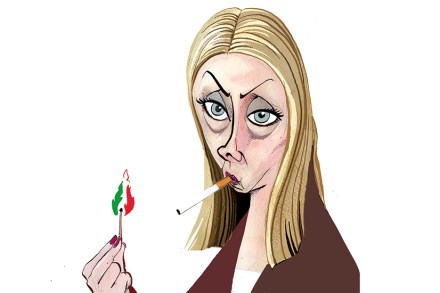
Could Giorgia Meloni become Italy’s next prime minister?

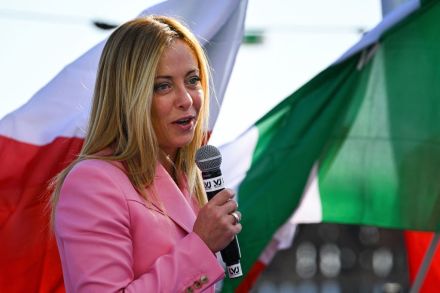
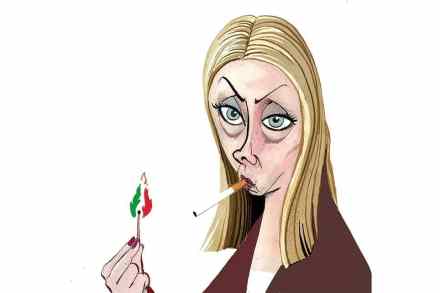
At the last Italian general election in 2018 the right-wing populist party, Fratelli d’Italia, got just 4 per cent of the vote. Last Sunday, at local elections in around 1,000 cities and towns, it led the coalition of the right to victory in nine out of 13 major cities which were won in the first round of voting, including Palermo and Genoa. A further 13 where no one got more than 50 per cent go to a second ballot on 26 June. Overall, right-wing candidates got 44 per cent of the vote compared to 42 per cent for left-wing candidates. But the key significance of the results is that they confirm Fratelli d’Italia has replaced the radical right Lega, led by Matteo Salvini, as the leading party of the Italian right.

Boris is a saint compared to ‘Bunga Bunga’ Berlusconi

It was only a matter of time before someone really twisted the knife in and compared Boris ‘partygate’ Johnson to Silvio ‘Bunga Bunga’ Berlusconi. Rory Stewart, who is now an ex Tory and was rejected in the leadership contest won by Boris, has done just that. The British Prime Minister’s sins, he claims, make Britain feel like ‘Berlusconi's Italy’. Sorry Rory: no they don’t. The truth is that compared to Berlusconi, Boris is as pure as the driven snow. Yes, BoJo may once have invented a quote in an article for the Times, and he is all too often economical with the actualité on money and much else besides. But he has never been charged, let alone convicted, of a criminal offence, as far as we know.

Italy’s hostility to Nato is building

Ravenna, Italy The war in Ukraine has caused an unholy convergence of the left and right in Italy. While there is nothing formal so far about this alliance of enemies, it nevertheless threatens to destroy the unity of Nato. The most high-profile participant is -Matteo Salvini, leader of the Lega – the party with the second-highest number of MPs in Italy’s parliament – which is invariably defined as ‘far right’. Salvini, who has been one of Vladimir Putin’s strongest supporters outside Russia, condemned the invasion of Ukraine and has now come out as a pacifist. He opposes Finland and Sweden joining Nato, or sending more arms to Ukraine, on the grounds that both would make peace less likely.

Lionel Shriver, Kate Andrews and Nicholas Farrell

20 min listen

On this week's episode, we'll hear from Lionel Shriver on if western populations would fight to defend their homeland in the way we have seen the Ukrainians have. (00:53)Next, Kate Andrews on the real reasons behind the rise in the cost of living. (09:17)And finally, Nicholas Farrell asks if the war in Ukraine will boost populism? (13:50)Produced and presented by Sam HolmesSubscribe to The Spectator today and get a £20 Amazon gift voucher.

The war in Ukraine may benefit the populist right

Ravenna, Italy Ever since Russian tanks rolled into Ukraine, it’s been widely assumed that Europe’s right-wing populists are finished. Figures such as Marine Le Pen, Matteo Salvini and Viktor Orban have all been cast as Putin’s useful idiots – defending his nefarious deeds because they saw him as a vital ideological ally. Now that Putin’s craven cruelty can no longer be excused, it’s argued, time is up: both for their sordid dance with Putin and for them. ‘The invasion has already done huge damage to populists all over the world who prior to the attack uniformly expressed sympathy for Putin,’ writes Francis Fukuyama in a recent essay. But what if this prevailing analysis is mistaken?

Do Russians support Putin’s war?

Everyone is calling the conflict in Ukraine Putin’s war and insisting that it has nothing to do with the Russians themselves. The nightmare would end – they tell us – if only Vladimir Putin were to disappear in a coup. They used to say the same thing not only about Adolf Hitler but also Benito Mussolini. Yet both the Fuhrer and the Duce would have been as powerless as the speakers at Hyde Park Corner if they had not enjoyed the willing consent of a critical mass of Germans and Italians.

The pointless tyranny of Italy’s Covid pass

While most European countries, especially Britain, are relaxing their Covid restrictions, Italy which has the toughest of the lot, this week made them tougher still – even though the data shows they are futile. Perhaps it is because Italy is a country where fortune tellers and faith healers are a multi-billion pound industry that it has the most draconian vaccine passport regime in Europe. Either way, mass psychosis blinds its politicians and people from the truth. In the UK, bogus claims by government scientific advisers about the need for, and benefits of, lockdowns were in the end convincingly demolished and The Spectator played a significant role in the process. It is high time that similar bogus claims about vaccine passports are debunked as well.

James Heale, Leah McLaren, Nicholas Farrell

22 min listen

On this week's episode, we’ll hear from James Heale on the Zac Goldsmiths’ secret shadow cabinet. (00:49)Next, Leah McLaren on Covid in Canada. (07:20)And finally, Nicholas Farrell on the march of the Italian Wolves. (13:58)Produced and presented by Sam HolmesSubscribe to The Spectator today and get a £20 Amazon gift voucher:spectator.

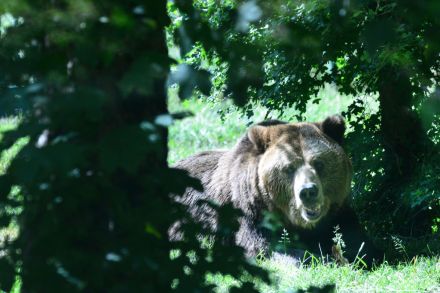
Are wolves stalking us on the school run?

Dante's Beach, Ravenna The other morning, my wife Carla was driving home after the school run in her battered old Renault Trafic people-carrier when through the fog she saw what looked like a wolf. It was ambling across the fields, which were covered in white ice. The wolf was only about 50 metres away, so she pulled over and took a picture, which she texted to the local dog rescue centre. She then followed the animal as it continued on its way, parallel to the road, in the direction of our house. Eventually it vanished in the fog about half a mile from our front door. ‘Yes, it’s a young wolf,’ said the man from the rescue centre when my wife spoke to him on the phone. ‘You can tell it’s a wolf from its tail,’ he explained.

Sergio Mattarella is Italy’s captive president

Ah, those Italians! Italy's parliament spent last week trying and failing to elect a new president in seven secret ballots. Then, in the eighth ballot on Saturday evening, by a huge majority it re-elected the old one – Sergio Mattarella – against his will. Mattarella, 80, formerly of the post-communist Partito Democratico (PD) and now an independent, had repeatedly said he did not want to serve a second seven-year term. He had even moved out of the Quirinale – the presidential palace – and into a flat elsewhere in Rome. He was not actually a candidate because there are no formal candidates in an election for an Italian president whose powers, though limited, are often of crucial importance.

Mario Draghi and the murky quest to find Italy’s next president

In ancient Rome, a diviner called a haruspex would observe the entrails of sacrificed sheep and poultry, especially their livers, to deduce the will of the gods. But even the finest haruspex would have a hard time deducing the will of the 951 parliamentarians and 58 regional delegates – the so-called grandi elettori – whose task this week is to elect Italy’s 13th president. Italian presidents, who serve for seven years, have largely ceremonial powers and their election is normally of little importance. This time, however, depending on the result, there could be at least one and possibly two seismic knock-on effects.

Katy Balls, Nicholas Farrell, Lisse Garnett

23 min listen

On this week's episode, we'll hear from Katy Balls on who may take Boris Johnson’s place if he resigns. (00:49)Next, Nicholas Farrell on the potential return of Silvio Berlusconi. (06:21)And finally, And Lisse Garnett on what’s it like to date and influencer. (18:00)Produced and presented by Sam HolmesSubscribe to The Spectator today and get a £20 Amazon gift voucher:spectator.

Can anyone beat Berlusconi to the Italian presidency?

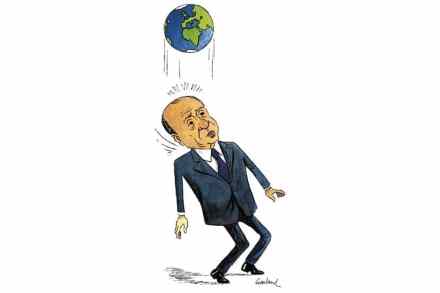
Silvio ‘Bunga Bunga’ Berlusconi was a populist before the word became all the rage. An almost comically divisive figure, he makes spectacular off-the-cuff remarks which thrill his supporters and leave his enemies apoplectic. He called Barack Obama ‘tanned’. He advised a teenage girl that her best bet in life was to ‘marry a rich man’, and once said it is ‘better to stare at pretty girls than be gay’. In an interview with Boris Johnson and me in The Spectator in 2003, he insisted that the fascist dictator Mussolini did not kill his opponents, merely ‘sent them on holiday to the islands’. I wonder if Boris remembers that now.

Why is Bilbo Baggins a fascist favourite?

If you were asked to think of a perfect fascist, never in a month of Sundays would you suggest Bilbo Baggins of Bag End. Hobbits such as he, after all, grow no more than four feet tall and have slightly pointed ears and a round jovial face. Their feet have leathery soles and are covered with brown fur. They hardly ever wear shoes, let alone jackboots. Hobbits dress in bright colours, favouring yellow and green, definitely not black; and though capable of great courage and amazing feats in the proper circumstances, they are a little shy. No creature, surely, could be further removed from the macho 'new man' with which the founder of fascism, Benito Mussolini was determined to replace the fascist class enemy: the pipe and slippers middle classes?

The Covid revolts: Europe’s new wave of unrest

33 min listen

In this week’s episode: Just who is protesting new Covid rules in Europe? In The Spectator this week we have three articles that cover the riots and protests all over Europe about new covid policies. Two of them report the scene on the ground in different countries. Lionel Barber and Nick Farrell write respectively about the situations in Holland and Italy and talk on the podcast about why this is happening now and how much more it could escalate. (00:45)Also this week: Is China having its own hand and the #MeToo moment?A spotlight has been shined on China in recent days, due to the troubling series of events surrounding the Chinese tennis player Peng Shuai.

Why are Europe’s far-right parties so opposed to compulsory vaccination?

Dante’s Beach, Ravenna Thanks to soaring infection rates in Europe, the war against Covid has entered a new phase, with the prospect of tougher restrictions and compulsory vaccination. Tens of thousands marched in protest through the streets of Vienna and Brussels at the weekend, with many chanting ‘Freedom’ and ‘Down with Dictatorship’. Prominent in their ranks were supporters of the far right, a.k.a. fascists. It is easy enough to understand why libertarians of the right such as Boris Johnson, and many, though by no means all, Tories would oppose the suspension of the fundamental civil liberties of the unvaccinated. But far-right fascists?

Reports of the demise of Italian populism are greatly exaggerated

Britain’s newspapers have called the results of the local elections in Italy the death of populism. The Times, for example, grandly proclaims that the Italian elections this week ‘appear to have brought down the curtain on an experiment in anti-establishment politics that inspired populist movements around the world.’ The Guardian, meanwhile, wonders joyfully if what has occurred signals ‘a renaissance’ for the left. I am sorry to have to ruin the party but yet again the mainstream media have got it wrong. The fact that the Italian left, whose main component is the post-communist Partito Democratico (PD), retained Milan plus Bologna and Naples, where the left has governed for donkey’s years, is neither here nor there.

Italy’s draconian vaccine laws are terrifyingly popular

In early August, Italy banned the unvaccinated from most forms of social life, then most forms of travel and now most forms of work. The unvaccinated are pariahs. Yet unlike in France, say, where hundreds of thousands have taken to the streets to protest against compulsory vaccine passports, in Italy hardly anyone has protested against 'Il Green Pass' which is now the most draconian in Europe. The Italians have never been especially keen on liberty, and as a result liberty has never flourished in Italy. This, I think, explains why this removal the basic liberties – or rights, if we must – of unvaccinated Italians by Italy's unelected premier Mario Draghi is so hugely popular.

Churchill did admire Mussolini

In his ruthless demolition of Geoffrey Wheatcroft's new Churchill biography in last week's Spectator, the historian Andrew Roberts pours scorn on the ‘insinuation that Churchill had fascist leanings in the 1920s’ as it is not supported by ‘any actual evidence (for there is none)’. Well, however justified his hatchet job of Wheatcroft's book is in general, Roberts is deeply mistaken about Churchill and fascism. Like so many in the 1920s and well into the 1930s, from all sides of the political divide, Churchill was a fervent admirer of the former revolutionary socialist Benito Mussolini and the fascist movement which he founded in 1919.

Why are only Italy’s ‘far right’ opposing vaccine passports?

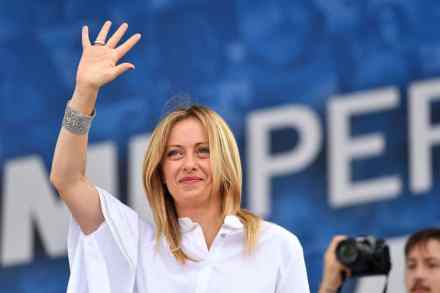
Dante’s Beach, Ravenna Here is your starter for ten. Which Italian political party believes that individual liberty is sacred? Answer: the party invariably defined by the international media as ‘far right’ or ‘fascist’ and jointly Italy’s most popular party in the opinion polls: in other words, the Fratelli d’Italia (Brothers of Italy). Here in Italy, birthplace of fascism, the 44-year-old leader of the right wing Fratelli d’Italia – Giorgia Meloni – has been busy promoting distinctly anti-fascist values. In defence of human liberty, she has spoken out passionately against the decree issued on 22 July by Italian premier Mario Draghi which will introduce the ‘Green Pass’ to Italy.