Niall Ferguson

Niall Ferguson

Niall Ferguson is the Milbank Family Senior Fellow at the Hoover Institution, Stanford University and a Bloomberg Opinion columnist

Not even close: how Trump confounded the pundits

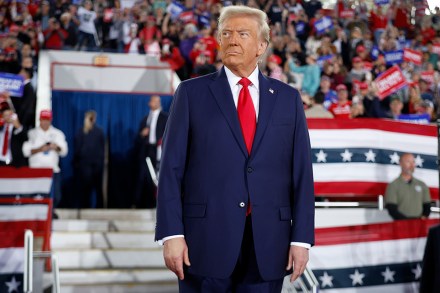
It was supposed to be close. On the eve of election day, Donald Trump was up just 0.1 per cent in the RealClearPolitics polling average. FiveThirtyEight projected a tiny Trump advantage. PredictIt had Kamala Harris ahead. A celebrated pollster ran 80,000 simulations, and Harris won 50.015 per cent of them, versus 49.985 per cent for Trump. And it made some sense to expect a close result. With the exception of Barack Obama’s victories, every US election since 2000 has been close. In two cases, 2000 and 2016, the winner didn’t win the popular vote, which before then hadn’t happened since 1888, when Benjamin Harrison beat Grover Cleveland.
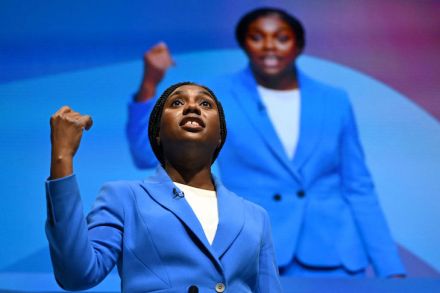
Why Kemi was the right choice

A version of this article was originally published in last week’s issue of The Spectator. What set Margaret Thatcher apart from so many other Conservatives in the 1970s was that she had read Friedrich von Hayek. In Richard Cockett’s Thinking the Unthinkable – his indispensable account of the intellectual origins of Thatcherism – he describes how Thatcher used to pull a copy of Hayek’s The Constitution of Liberty out of her handbag, declaring, ‘This is what we believe.’ Charles Moore shows in his definitive biography just how widely Thatcher read in the period before she became prime minister. Karl Popper, Frédéric Bastiat, John Maynard Keynes, Edmund Burke, Joseph Schumpeter, Alexis de Tocqueville, Alfred Marshall, C.S.

Why would British universities want to be like Harvard?

A visit to Jerusalem last week reminded me of the enduring value of sociology as a discipline, despite its lamentable politicisation in recent times. The founders of sociology – I think especially of Max Weber – would have been fascinated by Israeli society. In their politics, Israeli citizens are deeply divided: there are 12 parties represented in the current Knesset, of which seven belong to the governing coalition. One regularly encounters protestors outside government buildings, but no two groups seem to be shouting the same slogans. And yet Israelis are growing together more than they are coming apart – and not just because of the 7 October attacks.

Christmas Special 2023

70 min listen

Welcome to this festive episode of the Edition podcast, where we will be taking you through the pages of The Spectator’s special Christmas triple issue.  Up first: What a year in politics it has been. 2023 has seen scandals, sackings, arrests and the return of some familiar faces. It’s easy to forget that at the start of the year Nicola Sturgeon was still leader of the SNP! To make sense of it all is editor of The Spectator, Fraser Nelson, The Spectator’s political editor Katy Balls, and Quentin Letts, sketch writer for the Daily Mail. (01:06) Next: The story that has dominated the pages of The Spectator in the latter half of this year is of course the conflict in Gaza.

Students annoyed their elders in the 1930s, too

Astriking generation gap in the western world has been revealed by the responses to the 7 October atrocities in Israel. Noting in these pages the surge in pro-Palestinian sentiment among young people on both sides of the Atlantic, my old friend Douglas Murray worries that ‘When it comes to Palestine, the kids aren’t all right’. Murray is correct to say that something has changed. He is also correct that it is mainly a phenomenon in the English-speaking world. In the UK and the US, young people are far less well-disposed towards Israel than a decade ago.

Niall Ferguson: Why AI won’t kill you and what Sam Altman got wrong

33 min listen

Celebrated historian Niall Ferguson, author of 17 books including Civilisation, a biography of Kissinger, a biography of the Rothschild family and Doom: The Politics of Catastrophe comes into to discuss AI. He recently wrote that the AI doomsdayists, including those behind the petition for a six month moratorium on AI development, should be taken seriously. But some of them think humanity’s end is around the corner. Niall and Winston discuss whether or not they are correct.

Trump’s second act: why he can still win, in spite of everything

47 min listen

This week: Having been found guilty of sexual assault, is Donald Trump still in the running for the White House? In his cover piece, Niall Ferguson says he could still defy gravity. He joins the podcast alongside Jacob Heilbrunn, editor of The National Interest. (01:00)  Also this week: Journalist Andrew Watts interviews the Reverend Canon Dr Jason Bray, the Bishop of St Asaph’s ‘deliverance minister’, or the Anglican priest charged with exorcising evil spirits. They both join the podcast. (17:50).  And finally: Author and journalist Sophia Money-Coutts writes about the British women opting for Danish sperm donors to conceive. She joins us on the show, along with Annemette Arndal Lauritzen, CEO of the European Sperm Bank.  (34:07).

Trump’s second act: he can still win, in spite of everything

Everyone knows F. Scott Fitzgerald’s famous line from the end of his unfinished novel The Last Tycoon: ‘There are no second acts in American lives.’ But Fitzgerald wasn’t talking about second chances. He meant that, unlike in a traditional play – where Act I presents a problem, Act II reveals the complications and Act III resolves it all – Americans want to skip Act II and go straight to the resolution. The more I think about it, the more I think the Joe Biden presidency is Act II – and Donald Trump is not the last tycoon. He’s Act III. He’s the next president. The campaign of lawfare against him has already begun to backfire Democratic strategists think otherwise.

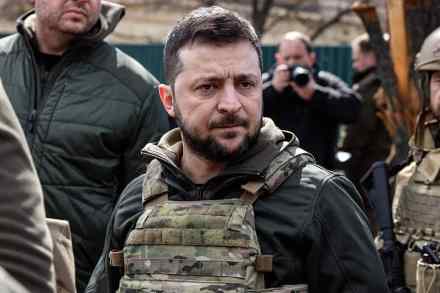
Volodymyr Zelensky is a hero of our time

When the Queen died, I was on my way to Kyiv. My mind focused on the war in Ukraine, I found myself uncharacteristically lost for words when I was asked to comment. I took refuge in the complexities of the journey, which involved a delayed flight from Rome to Lublin, a frantic drive to Chelm on the Polish-Ukrainian border, and then an overnight train through western Ukraine. It was a good excuse. The reality was I could think of nothing to say. I couldn’t have done an interview even if I’d been trapped in Broadcasting House. Kyiv was, as NBC’s roving war correspondent Richard Engel had forewarned me, more exuberant than you might expect a capital city at war to be.

How science fiction novels read the future

From our US edition

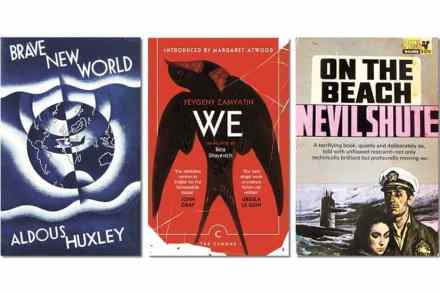
The pandemic is not quite over, but we are getting used to its inconveniences. What disaster will be next? An antibiotic-resistant strain of the bubonic plague? Climate collapse? Coronal mass ejection? Will the next catastrophe be natural — perhaps a massive volcanic eruption, the likes of which we have not seen for more than two centuries, since Tambora in 1815? Or will it be a manmade calamity — nuclear war or a cyberattack? And might we inadvertently descend into a new form of AI-enabled totalitarianism in our efforts to ward off such calamities? To all these potential disasters it is impossible to attach more than made-up probabilities. So what can we do about them? The best answer would be that we should strive to imagine them.

science fiction

Vlad the Invader

35 min listen

In this week’s episode: What does Putin really want for Russia?For this week’s cover story, Niall Ferguson writes about how Putin seems to be trying to recreate the Russia of the Past, while this week's diary by Timothy Garton Ash says the West has misunderstood his intentions, Niall and Timothy join the podcast along with Mary Dejevsky a columnist for the Independent. (00:48)Also this week: Should there be women-only spaces on trains? Jeremy Corbyn suggested it when he was Labour party leader and now Scotland seems to be flirting with the idea. Mary Wakefield says in this week’s Spectator that although she enjoys the idea of lady carriage, it doesn’t make much sense.

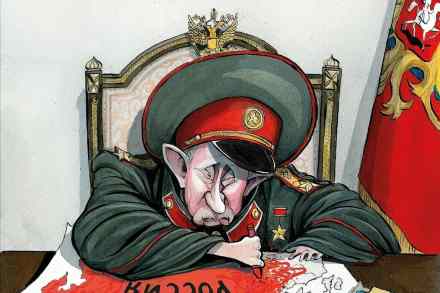
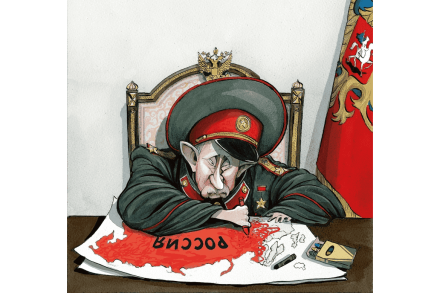
Vlad the Invader: Putin is looking to rebuild Russia’s empire

‘War’, in Prussian military theorist Carl von Clausewitz’s most famous dictum, ‘is nothing but a continuation of politics with the admixture of other means.’ A generation of Democrats — the American variety, but also European Christian and Social Democrats — have sought to ignore that truth. Appalled by the violence of war, they have vainly searched for alternatives to waging it. When Vladimir Putin ordered the annexation of Crimea in 2014, Barack Obama responded with economic sanctions. When Putin intervened in the Syrian civil war, they tried indignant speeches. When it became clear that Putin intended a further and larger military incursion into Ukraine, Joe Biden and his national security team opted for sanctions once again.

The predictive power of science fiction

The pandemic is not quite over, but we are getting used to its inconveniences. What disaster will be next? An antibiotic-resistant strain of the bubonic plague? Climate collapse? Coronal mass ejection? Will the next catastrophe be natural — perhaps a massive volcanic eruption, the likes of which we have not seen for more than two centuries, since Tambora in 1815? Or will it be a man-made calamity — nuclear war or a cyberattack? And might we inadvertently descend into a new form of AI-enabled totalitarianism in our efforts to ward off such calamities? To all these potential disasters it is impossible to attach more than made-up probabilities. So what can we do about them? The best answer would be that we should strive to imagine them.

The China model: why is the West imitating Beijing?

26 min listen

In this week’s podcast, we talk to the author of our cover story, eminent author, historian and broadcaster Niall Ferguson, who advances the theory that the West and China are in the throes of a new cold war which the Unites States is on course to lose, should the Biden administration continue to following Beijing’s lead on apparently everything from lockdown to digital currencies. Joining the debate is Dr Leslie Vinjamuri, from Chatham House. (01:05) ‘All of the features of Cold War I are here today which is why I have been speaking for a couple of years about Cold War II’ - Niall Ferguson. Next up, Laura Freeman writes in the magazine this week about the fake facades she has been increasingly noticing while out and about in London.

The China model: why is the West imitating Beijing?

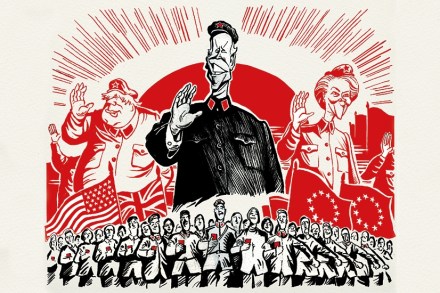
‘There’s an osmosis in war, call it what you will, but the victors always tend to assume the… the, eh, trappings of the loser,’ says one of the officers in Norman Mailer’s The Naked and the Dead. ‘We might easily go fascist after we win.’ Americans have long been haunted by the notion of the osmosis of war. Throughout the First Cold War, a recurrent theme of liberal and conservative commentary was that there was a kind of convergence taking place, causing the United States to resemble — at least in some respects — its Soviet antagonist. That all nuclear superpowers would end up as slave states had been George Orwell’s grim prophecy in the article that coined the term ‘Cold War’, as well as in Nineteen Eighty-Four.

The tech supremacy: Silicon Valley can no longer conceal its power

From our US edition

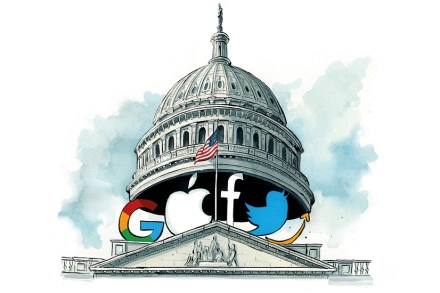
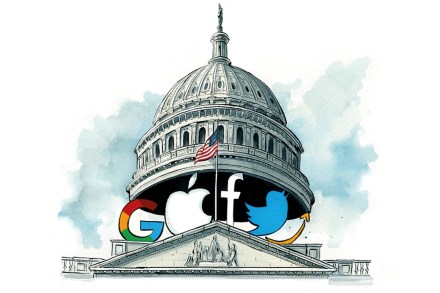
‘To see what is in front of one’s nose needs a constant struggle,’ George Orwell famously observed. He was talking not about everyday life but about politics, where it is ‘quite easy for the part to be greater than the whole or for two objects to be in the same place simultaneously’. For years before the 2020 election, nearly all American conservatives were in favor of standing up to Big Tech — but most were also against changing the laws and regulations enough to make such a stand effective. And yet the threat from Silicon Valley was literally in front of our noses, day and night: on our cell phones, our tablets and our laptops. Writing in the London Spectator more than three years ago, I warned of a coming collision between Donald Trump and Silicon Valley.

tech

The tech supremacy: Silicon Valley can no longer conceal its power

36 min listen

Joe Biden won the US election, but is Big Tech really in power? (00:45) Churches are allowed to open during lockdown, but should they? (13:20) And can comfort eating and cosy socks replace human connections? (25:50)With historian Niall Ferguson; New York Times editorial board member Greg Bensinger; Father Jonathan Beswick; The Very Reverend Peter Howell-Jones; journalist Laura Freeman and psychology professor Dr Shira Gabriel.Presented by Lara Prendergast.Produced by Max Jeffery, Sam Russell and Matt Taylor.

The tech supremacy: Silicon Valley can no longer conceal its power

‘To see what is in front of one’s nose needs a constant struggle,’ George Orwell famously observed. He was talking not about everyday life but about politics, where it is ‘quite easy for the part to be greater than the whole or for two objects to be in the same place simultaneously’. The examples he gave in his 1946 essay included the paradox that ‘for years before the war, nearly all enlightened people were in favour of standing up to Germany: the majority of them were also against having enough armaments to make such a stand effective’. Last week provided a near-perfect analogy.

Corona wars: will either Trump or Xi win?

44 min listen

Historian Niall Ferguson writes in this week's cover piece that, even before coronavirus, the Cold War between America and China was already getting underway. With the current pandemic, animosity between the two superpowers has only increased. So when it comes to the geopolitics of the 'corona wars', who will win? Niall tells Cindy on the podcast that it may not be either; that when it comes to pandemics, city-states actually do better than empires. That's the Taiwans, the South Koreas, and the Singapores. He's joined on the podcast by Gerard Baker, the editor at large of the Wall Street Journal.

Why Trump and Xi might both lose the corona wars

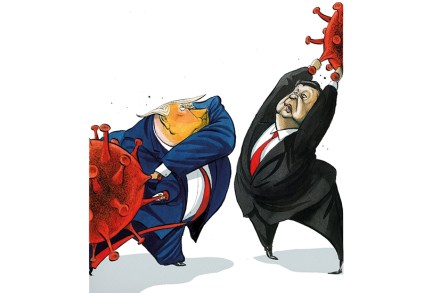
The Covid-19 pandemic came along just as Cold War II was getting under way between the United States and the People’s Republic of China — the superpowers of our time — with the European Union and a good many other US allies quietly hoping to be non-aligned. Far from propelling Beijing and Washington towards détente in the face of a common enemy, the new plague has only intensified the Cold War. For the first time, China’s campaign of disinformation has been on a Russian level, with wild anti-American conspiracy theories being disseminated by senior Foreign Ministry officials.