Neil Clark

We must never ban the Grand National

This is not the piece about the Grand National that I expected to write. I had planned to write one saying how the old magic of the race had gone, that the changes made to it in recent years had removed almost all the drama and the excitement. But let’s be honest. Yesterday’s race was a cracker. It was indeed a ‘throwback’ to the old days especially on the first circuit, when two of the leading fancies (Grangeclare West and Panic Attack) departed early on and other runners were soon separated from their riders. There were loose horses getting in the way, outsiders running huge races and one of those outsiders – the 28-1 shot Jordans – made a valiant dash for glory as the field headed for home.

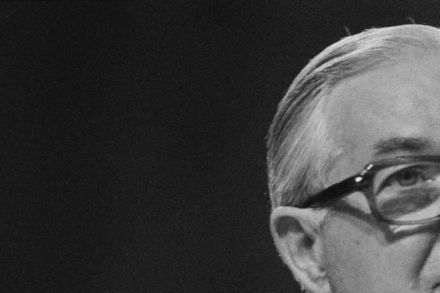
James Callaghan was Britain’s most underrated PM

The famous dictum – that all political lives end in failure- was certainly true of James Callaghan. The man who became Prime Minister exactly 50 years ago today, will be forever associated with the so-called Winter of Discontent – a disastrous wave of strikes in late 1978 and early 1979 which effectively brought down his minority Labour government. This left the door of Number 10 wide open for Margaret Thatcher, who then – according to the dominant narrative – sorted the whole thing out. Indeed, people’s memories of that period – and its vivid imagery of the rubbish piling up high in Leicester Square, and pickets here, there and everywhere – were such that it was nearly 20 years before the electorate trusted Labour to govern again.

Who is looking out for Britain’s salmon and frogs?

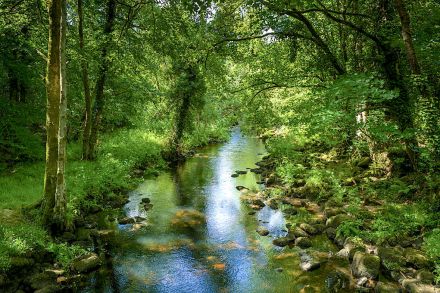
Whatever happened to British ecology? I was thinking that when I read two reports in the Times this week, both pretty depressing. The first concerned a new study, based on maps, which suggests that England and Wales have lost almost a third of their grasslands, including wildflower-rich meadows, over the past 90 years. The second was about the ‘catastrophic’ collapse in the number of juvenile salmon in Dorset’s River Frome, described as ‘one of the country’s most important rivers for the species.’ Rivers that had ‘tens of thousands of salmon in the 1980s’ today reportedly have only a few hundred. The head of fisheries at the Game and Wildlife Conservation Trust was quoted as saying that salmon ‘could disappear from our UK rivers in the next 30 years.

Why I’ve changed my mind about climate change

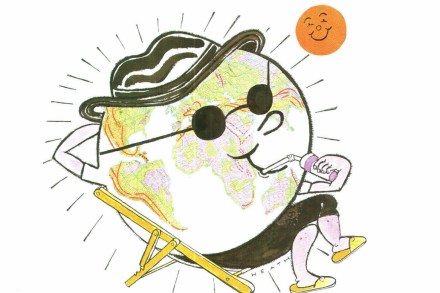
Here we go again. Another blistering heatwave. Just a few days after the last one. Like many, and probably like a lot of Spectator readers, I was a moderate climate change sceptic a few years ago. The whole ‘climate emergency’ thing came across as hysterical and alarmist. There seemed to be a clear agenda to get us to do things which would adversely affect the enjoyment of our lives. So the natural reaction was to go the other way and dismiss it as a load of hot air about hot air. But after yet another scorchingly hot summer – and we’re barely in mid-July yet – I think such positions are no longer credible. We still get hardcore sceptics tweeting that ‘it’s called summer’, and not really that hot, but come on, who are you kidding?

Bring back Whitsun!

Bank Holidays are like buses- you wait ages for one before they all come along at once. Tomorrow will be our fourth state-mandated day off since the 18th April. It might be another golden opportunity to head to B & Q and buy bags of compost. But isn't it all a bit much? Don’t get me wrong. I love Bank Holidays, and I think we should have more of them. But why do so many of them come in an April and May cluster? After tomorrow we have nothing till late August - and then no more until Christmas. Reinstating Whit Monday would be a welcome affirmation that we are not ashamed of our Christian heritage Why is this? In the late 1960s and early 1970s, we substituted the old Whit Monday Bank Holiday, which often fell in June, with a new, secular ‘Late Spring Bank Holiday'.

Democracy dies in Romania

If the vote in the first round goes the wrong way, cancel the second round. If the ‘wrong’ candidate is still likely to win the rescheduled election, then detain him before he can register to stand and then ban him. Then hold the election again, this time with a stronger ‘independent’ candidate who with media support can defeat the ally of the ‘wrong’ but more popular candidate you have banned. This is exactly what has happened in Romania. If ‘democratic values’ trump democracy then you open the door to barring candidates who espouse the ‘wrong’ positions, according to the powers that be Democratic? Well, if it happened in an ‘official enemy’ country, we can be sure ‘centrists’ would be falling over themselves to denounce it.

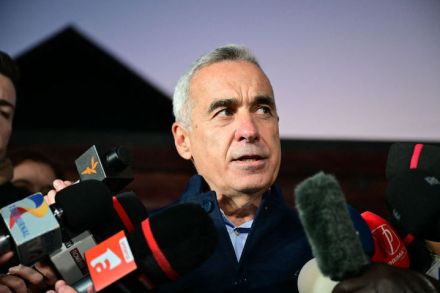
There’s a simple explanation for Calin Georgescu’s ‘shock’ triumph in Romania

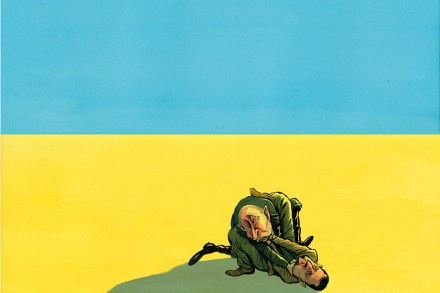
On a bus journey in Transylvania last summer, I got talking to a young Romanian man who works in Yorkshire and who had been back home visiting his relatives. He told me how hard it had become for Romanians, particularly elderly people like his grandmother, to make ends meet with inflation so high. He blamed the war in Ukraine for the massive spike in energy prices and said that the conflict 'needs to end soon'. With times so hard, he told me that some people were becoming resentful of handouts to Ukrainian refugees. I thought of my bus conversation when I saw the BBC report that a 'Far-right, pro-Russian candidate' had taken a 'surprise lead in Romania's presidential election'.

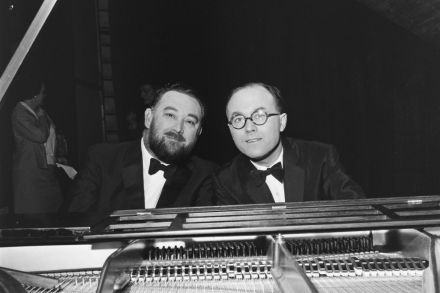
The genius of Flanders and Swann

War has had its apologians ever since history began,From the times of the Greeks and Trojans when they sang of Arms and the Man,(But if you ask me to name the best, sir, I’ll tell you the one I mean,Head and shoulders above the rest, sir, was the War of 14-18) If you’ve never heard Michael Flanders’s rollickingly good version of Georges Brassens ‘La Guerre de 14-18’ – an ironic take-down of the industrial-scale slaughter of the first world war, then you’re missing a treat. I first heard Flanders and Swann in my schooldays: I loved ‘The Gnu’, ‘The Hippopotamus Song (Mud, mud glorious mud)’ and ‘Misalliance (The Honeysuckle and the Bindweed)’.

The forgotten genius of Dennis Price

This month marks the 50th anniversary of the sad death of the actor Dennis Price, star of the classic 1949 black comedy Kind Hearts and Coronets, regarded by many to be the greatest British film of all time. Price was only 58 when he died from cirrhosis of the liver and complications following a broken hip, in a public ward of Guernsey’s main hospital. In the same way his co-star Alec Guinness stole the limelight in Kind Hearts, so the shock break-out of the Arab-Israeli Yom Kippur war did the same on the day of his death. His debts caused him to ‘beat a strategic retreat’ to the Channel Islands where the booze was cheap and the taxman couldn’t bother him Price’s demise may not have been front-page news in 1973 but the sense of loss of all who knew him was great.

James Heale, Lisa Haseldine and Neil Clark

19 min listen

This week: James Heale reads his politics column on why the Tories should fear the Greens (00:56), Lisa Haseldine outlines some of the changes to Russia's school curriculum (06:04) and Neil Clark extols the joys of non-league football (13:02).   Produced and presented by Oscar Edmondson.

Real football fans watch non-League football

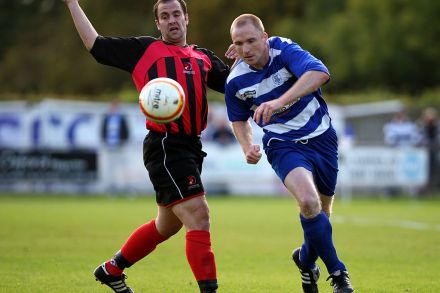
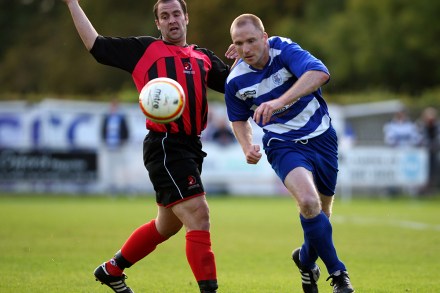
Oxford City vs Rochdale at Court Place Farm doesn’t have quite the same ring as Chelsea vs Liverpool at Stamford Bridge, but last Saturday’s match was important all the same. At this level, you feel part of the match, which never happens in an executive box at the Emirates ‘The Hoops’, Oxford’s oldest football club, founded in 1882 when Gladstone was prime minister and Old Etonians won the FA Cup, were playing their first ever home game in the fifth tier of English football. Rochdale, whose 102-year membership of the Football League ended in May, were playing their first away game in the Vanarama National League.

What Britain can learn from Romania

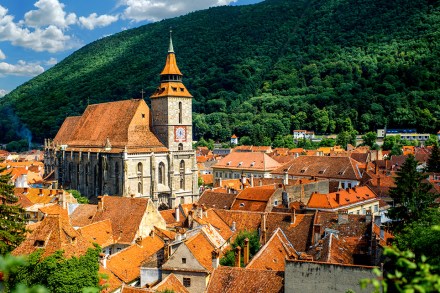
Romania gets a bad rap here, associated as it often is with organised crime. In recent years around half a million Romanians have settled in the UK, making them the fourth largest group of foreign-born residents. But the irony is that as Romanians head to Britain in search of a higher standard of living, we Brits should really be booking our flights to Romania to remind us of how our country once was. Romania has everything: fascinating medieval towns, unspoilt countryside, vibrant major cities and a 150-mile coastline. There are even still horses and carts on the roads. But the appeal is more than that: it’s the spirit of the place. If you want to go back to 1988 or even 1978 then a Wizz Air flight east is like a time-machine.

How will it end?

42 min listen

On the podcast this week: How will the war on Ukraine end? This is the question that Russia correspondent Owen Matthews asks in his cover piece for The Spectator. He is joined by Rose Gottemoeller, former deputy secretary general of Nato, to discuss whether the end is in sight (01:02). Also this week: Matthew Parris interviews the theologian and ethicist Nigel Biggar on the legacy of Empire. They have kindly allowed us to hear an extract from their conversation, printed as a dialogue in this week's issue. They discuss Nigel's motivations for writing his controversial new book Colonialism: A Moral Reckoning, and reconsider the economics of colonialism (18:52).

In praise of greyhound racing

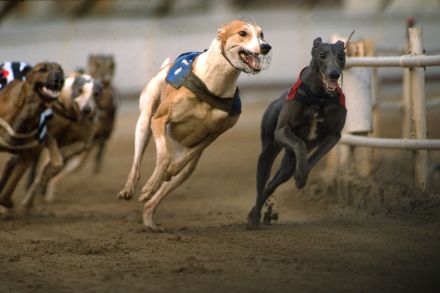
I feel strangely and disproportionately elated when Number 2 dog, Ballyblack Bess, powers home strongly to win the 20.03 race. It’s a Monday evening in January in the greyhound stadium in Blackbird Leys, Oxford. I only won £9 but I’m pleased I came because an evening at the dogs is still great old-fashioned fun. The punters love it, as do the dogs, so it’s devastating that the RSPCA has demanded it be banned. They’ve teamed up with two other leading charities, the Dogs Trust and the Blue Cross, to request that it’s phased out over a five-year period. But the RSPCA is – excuse the pun – barking up the wrong tree. The main objection to the sport was always about what happened to the dogs once their racing careers were over.

The enduring appeal of ’Allo ’Allo!

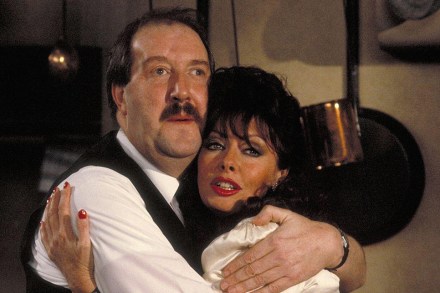
If you think your life is stressful it’s good to reflect on what poor René Artois went through each week in ’Allo ’Allo!, the 1980s BBC sitcom set during the German occupation of France. RAF pilots hidden in his mother-in-law’s cupboard upstairs, German officers in the café downstairs, Herr Otto Flick of the Gestapo likely to limp in at any moment – and all the time trying to serve drinks and juggle a sex life that would have exhausted even Errol Flynn. ‘I have to be nice to the Germans, they are my customers, they are winning the war, so if I am not nice to them they will shoot me,’ René would say. ‘I have to be nice to the Resistance, otherwise they will shoot me for being nice to the Germans.

Katy Balls, Rachel Johnson and Neil Clark

21 min listen

On this week's episode: Katy Balls has written about what foreign policy would look like under a Liz Truss government (0:34). Rachel Johnson young boys and men can learn from the Lioness’s victory (06:50) and Neil Clark writes about Jim Corbett’s tiger hunting stories (12.34). Presented and produced by Natasha Feroze.

What we can all learn from Jim Corbett’s tiger tales

‘The word “Terror” is so generally and universally used in connection with everyday trivial matters that it is apt to fail to convey, when intended to do so, its real meaning.’ Thus begins the third chapter of The Man-Eating Leopard of Rudraprayag (1947), part of the Man-Eater series by the great Anglo-Indian hunter and naturalist Jim Corbett. I was reminded of Corbett and his wonderful books when reading last week that human-assaulting tigers are once again on the prowl in Nepal, with 104 attacks and 62 people killed in the past three years. Conservation efforts have seen tiger numbers rise three-fold since 2010, but with that good news comes the bad news of increased danger to humans.

The danger and glory of the Isle of Man TT

It’s around 8.10 on a lovely warm summer’s evening on the Isle of Man and the sidecar practice session in the 2022 TT – Tourist Trophy – is about to begin. The announcer at the grandstand asks the sidecar riders to get ready to race in ten minutes. There is the sound of engines revving up, great excitement and then… nothing. There has been an incident in the TT Supersport qualifying session at Ballagarey, it turns out, and other races are suspended. It’s not until around 11 p.m. that we learn the terrible news. A 29-year-old Welshman called Mark Purslow has been killed following a crash on his 600 Yamaha. He had just recorded his fastest ever TT lap, reaching an average speed of 120.

Nothing brings people together like a coach holiday

Amid all the Covid-19 coverage, it’s hardly surprising that the collapse of a coach-tour operator last week didn’t make too many headlines. But the end of Shearings, the largest such operator in Europe, could mean the end of coach holidays in the UK, and if that happens, something very special will have been lost. Coach holidays are unique. They engender a sense of camaraderie which is so hard to find nowadays in our very atomised world. You begin the week as strangers, waiting for the departure bay number of your coach to be called out, and end it exchanging addresses.

Václav Klaus: The lies Europe tells about Russia

Václav Klaus has made a habit of saying things others shy away from saying, but it doesn’t seem to have done him much harm in the popularity stakes. Quite the opposite: the 73-year-old ardently Eurosceptic free-marketeer has legitimate claims to be regarded as the most successful ‘true blue’ conservative politician in Europe over the past 25 years. He was, after all, prime minister of the Czech Republic from 1992 to 1998 and then his country’s president for a further ten years, from 2003 to 2013. So when we meet after a typically hearty Serbian lunch — at the International Science and Public Conference in Belgrade — I am keen to ask if he has any advice for David Cameron and the British Conservative party.