Michael R. Auslin

Michael R. Auslin is an historian at Stanford’s Hoover Institution and the author of The Patowmack Packet, a history blog.

Freedom is still the Revolutionary War’s legacy

From our US edition

When the first shot rang out at dawn on Lexington Green, a decade of frustration and growing alienation between the American colonies and the British government boiled over into armed conflict. By the time the British staggered back into Boston on the evening of April 19, 1775, having fought a running battle for twenty-five miles from Concord’s North Bridge and losing at least 73 killed, the American Revolution had begun. Like many turning points in history, the encounter at Lexington Green was not planned. British troops acting on the orders of General Thomas Gage were on their way to capture arms and munitions stored by the Massachusetts militia when they ran into Lexington’s “Minutemen” drawn up on the Green.


The George Washington Presidential Library at Mount Vernon is a DC treasure

From our US edition

The political pyrotechnics in Washington this summer have been so blinding as to blot out everything else happening in the national capital. The inside job that forced President Joe Biden out of his re-election campaign and the meteoric rise of Vice President Kamala Harris to be the Democratic nominee, all in the shadow of Donald Trump’s return to the national stage, have fascinated Washington like nothing since the Watergate scandal, exactly fifty years ago.  Yet even as Washingtonians focus on blood sport of politics, it is too easy to forget that the city is filled with far more edifying activities than the gladiatorial clashes in the political arena.

mount vernon

America’s Summer of Discontent, 250 years ago

From our US edition

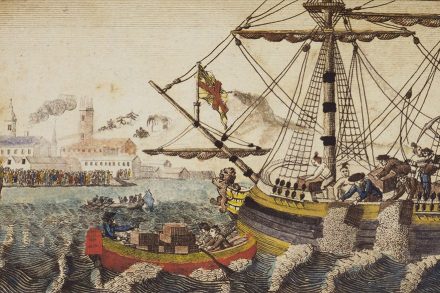
In the summer of 1774, large numbers of American colonists, from Massachusetts Bay down to the Virginia Tidewater, were disaffected and angry. For a decade, they had felt increasingly oppressed by Great Britain, ever since London had imposed duties on various exports to America to help pay for the costs of the victorious Seven Years’ War.  The Stamp Act of 1765 and the 1767 the Townshend Acts, which added duties on lead, glass, tea and other items, became hated symbols of imperial power. The colonists considered the duties to be taxes levied by Parliament, and while they acknowledged Britain’s right to regulate trade, they balked at the presumption by British lawmakers to directly tax them.

discontent

Eighty years later, World War Two is fading from historical memory

From our US edition

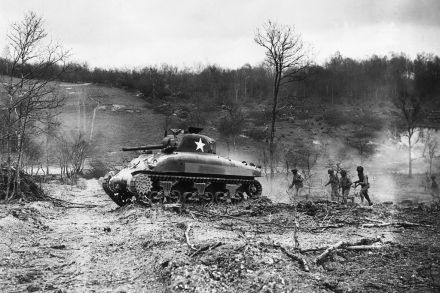
With worries about inflation, the war in Ukraine, and tension over Taiwan, it's easy for Americans to forget that we are now deep into the four-year period marking the eightieth anniversary of World War Two. Last December marked eighty years since the day of infamy at Pearl Harbor, while this June passed the date of the critical victory at Midway. In a little less than two years, it will be eight decades since the greatest invasion in history, on D-Day. Soon after will follow commemorations of Hiroshima and Nagasaki and both VE and VJ Days. Each year, living memory of that global struggle continues to fade, with the passage of both time and the Greatest Generation.

world war two

Welcome to the age of nuclear blackmail

From our US edition

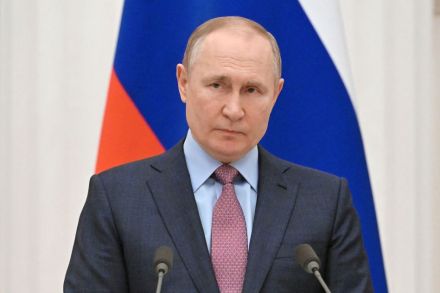
Vladimir Putin’s recent announcement that he was not bluffing about using nuclear weapons against the West in his war on Ukraine is one of the strongest indications yet of the risks the liberal world now faces in opposing authoritarian aggression. In the face of Russian aggression, or in committing the United States to defending Taiwan, as President Joe Biden did yet again recently, Washington and its partners face the possibility of direct confrontation with the world’s most powerful, nuclear-armed militaries. For the first time in a generation, Western powers risk being checked by adversaries willing to threaten massive conventional and nuclear warfare. The era of cost-free intervention to uphold the liberal world order is over.

nuclear

What does Ukraine really mean for Taiwan?

From our US edition

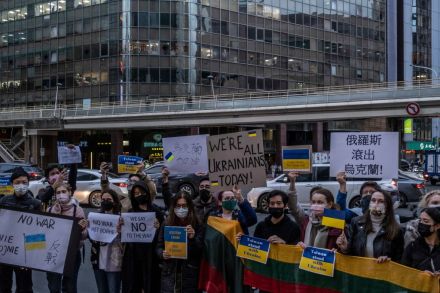
No one should think that Vladimir Putin’s invasion of Ukraine means that Xi Jinping will decide to use force against Taiwan anytime soon, if ever. China is not Russia, nor Taiwan Ukraine. Yet neither should policymakers presume that Beijing will not be influenced by what happens on the other end of Eurasia. Washington must consider whether and how Putin’s aggression has raised the stakes in defending Taiwan from the People’s Republic of China. At the least, US strategists will seriously have to assess whether a global environment in which norms of international behavior are regressing may serve to spur Beijing to military action that once seemed unlikely.

taiwan

The China reckoning

From our US edition

Fifteen years ago, I remarked to an acquaintance over lunch that it looked like China might eat America’s lunch in naval power. My interlocutor, a person well-known in leadership positions in the China studies community, scoffed at my comment. Over the next few years, he never missed an opportunity to ridicule my wild-eyed prediction. I often wonder what he thought in February 2021 when, less than a month after becoming president, Joe Biden warned US senators that if America didn’t “get moving, [China is] going to eat our lunch.” I claim no credit for prescience, just a historian’s sensitivity to trends over time. The fiftieth anniversary of President Richard Nixon’s visit to China falls in February 2022.

china

Ending our corporate dependence on China

From our US edition

In the toxic world of American politics, the bipartisanship showed by the House of Representatives last week in overwhelmingly passing a bill to stop the import of Chinese products made with forced labor from Xinjiang is a rarity. The 428-1 vote on the Uyghur Forced Labor Prevention Act, the second in as many years, is the clearest indicator yet of how a new era in American relations with the People’s Republic of China (PRC) is developing. It's one where national security and moral concerns find common ground in opposing the oppressive and predatory policies of the Communist Party of China (CPC).

taiwan china

America needs more than ‘guardrails’ with China

From our US edition

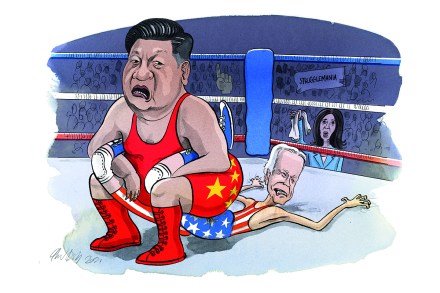
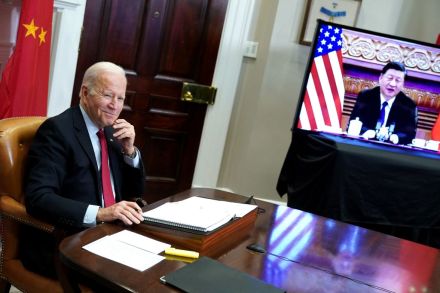
As recently as a week ago, there was talk that Monday night’s virtual summit between President Joe Biden and Chinese Communist Party general secretary Xi Jinping was an opportunity to “reset” the US-China relationship. By the time the two leaders sat down in front of their video screens, the summit had been downgraded to a “meeting” and the White House made clear that little concrete agreement, and no breakthrough, was to be expected. The meeting lived down to expectations, uneasily combining a more sober and realistic US assessment of the parlous state of bilateral ties with what seems a return to a pre-2017 model of surface bonhomie and references to the “the long-term work that we need to do together,” according to a senior US official.

xi

The Sino-American War of 2025

From our US edition

Washington DC, 2030 The reasons why the United States and the People’s Republic of China (PRC) avoided total war, let alone a nuclear exchange, during their armed conflict in the autumn of 2025 remain a source of dispute. What is clearer is why the Sino-American Littoral War broke out, and what course it took. The United States lost part of its position in Asia, while China found its gains an unexpected burden. The resulting cold war between the United States and China became the defining feature of geopolitics in the Asia-Pacific in the middle of the 21st century.

sino

Biden should embrace Britain’s new Indo-Pacific strategy

From our US edition

While final negotiations on the UK’s relationship with the EU continue to drag, No. 10 is moving rapidly to expand Britain’s role in the Indo-Pacific, returning ‘east of Suez’ after a half-century absence. Tied to this goal, Prime Minister Boris Johnson unveiled a modest, yet real, increase in Britain’s defense spending last month, totaling some $21.25 billion and pledging to once again make Great Britain the foremost naval power in Europe. Johnson’s budget announcement sets the stage for implementation of London’s long-awaited ‘Integrated Review’, which is touted as the most significant strategic reassessment of the UK’s diplomatic and security policies since the end of the Cold War.

indo-pacific

President Trump’s support for Taiwan is welcome

From our US edition

Over the coming weeks, a battle between Washington and Beijing over the inclusion of Taiwan as an observer at the World Health Organization will rage, reflecting the struggle between the People’s Republic of China and the United States over control over international institutions. Yet it also reveals the reality of the new cold war between the two countries, and the shift in focus of attention to ground-level tactics at the expense of grand strategies. Long forgotten in the shadow of China’s rise and the intensification of both contact and competition between the PRC and the United States has been the island nation of Taiwan.

taiwan

Geopolitical jockeying in a time of pandemic

From our US edition

You might think a global pandemic and the worst crisis since World War Two would lead to a welcome, if temporary tamping down of military activity in already tense and contested environments. Yet even as the novel coronavirus ravages the world, old fashioned geopolitical jousting continues in Asia, reminding us that the passing phase of COVID-19 will simply return much of the world to the status quo ante of great power competition. In a strange way, the ongoing military activities and geopolitical jockeying of China and the United States in Asia’s vital waterways is almost comforting.

south china sea

China’s war on Islam

From our US edition

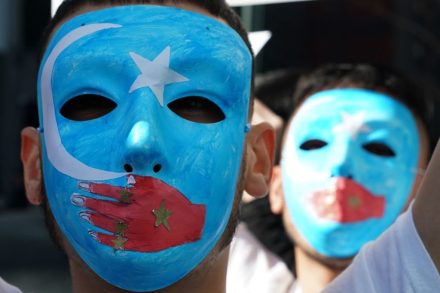
The Reuters photo could be mistaken for a shot of one of America’s ‘supermax’ prisons, the ones where the most dangerous criminals are held. An endless green security fence, topped with coils of barbed wire, punctuated by soaring octagonal guard towers with 360-degree views, all fronting what looks like a massive concrete wall or side of a building. Yet the Chinese workers walking outside the fence give away the truth. The picture is not of a US prison, but rather a Chinese ‘re-education’ center in vast Xinjiang, in the country’s far west. According to research by the Australian Strategic Policy Institute, there are 28 such massive detention camps in Xinjiang, most built within just the last several years.

uighurs