Michael Collins

Dr Michael Collins is Associate Professor of Modern British History at UCL. He was one of the commissioners on the Independent Commission for Equity in Cricket’s report.

England have a spring in their step ahead of the Afghanistan match

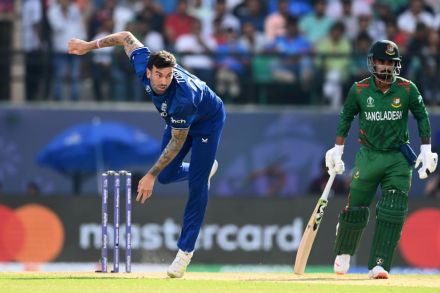
England looked fortified by their Himalayan break on Tuesday, bouncing back from a depressing defeat to New Zealand, to despatch Bangladesh by a margin of 137 runs in Dharamshala. In hindsight, England were conspicuously superior and the match a little one-sided, with Bangladesh’s batting intimidated by the steepling bounce achieved by the very tall Reece Topley, who had replaced Moeen Ali’s off spin. But make no mistake, Bangladesh are a more than decent team who, on their day, can beat any international side. They surprised England in the 2015 World Cup and pipped India as recently as last month. With pressure on England, the Dharmshala match had the potential for a shock defeat.
Can the England cricket team regain their composure?

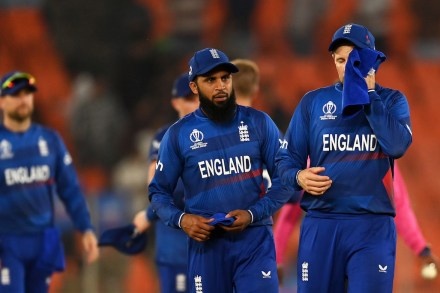
Last Thursday’s opening game of the Cricket World Cup saw England roundly thrashed in Ahmedabad, by what looked on paper to be a fairly average New Zealand.  Posting a stuttering 282 for nine off 50 overs, England threatened to dominate but too often threw wickets away. Jonny Bairstow clipped the second ball of the innings off his legs for six, Root hit a typically fluent and mostly composed 77, and Jos Buttler showed glimpses of the form that made him one of the IPL stars of his generation.  The Barmy Army is still gamely selling pricey tour packages for the semi-finals in Mumbai and even the final This apparent batting ease, however was coupled with sloppiness.

Ian Botham should take cricket’s problems more seriously

Lord Botham – chair of Durham County Cricket Club and a life peer appointed by Boris Johnson in 2020 – has challenged the findings of the Independent Commission for Equity in Cricket (ICEC) report, which highlighted cricket’s elitism and class-based inequalities, as well as widespread discrimination in terms of ethnicity and gender. Admitting that he had only read ‘bits’ of it, Botham nonetheless dismissed the report as ‘nonsense’, which he claims he ‘threw on the floor’. Ironically, the report was only published online. One assumes he has a well-stocked printer. Botham’s main complaint seems to be that he wasn’t central to the process. ‘No one’s interviewed me, no one asked me for my thoughts’, he said.

Yet more death in Venice

From our US edition

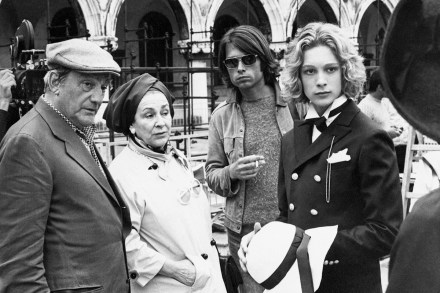
The inspiration for the object of Aschenbach’s infatuation in Thomas Mann’s Death in Venice was acknowledged by the author some years after publication, and the subject of a biography a century later (The Real Tadzio by Gilbert Adair). He was a Polish boy the writer ogled from a distance in 1911 while holidaying with his wife at the Grand Hotel des Bains in Venice. Less is known of the teenager who played the role in Luchino Visconti’s 1971 film of Mann’s novel. For years the director trawled the Continent in pursuit of the right actor for the part. It was a search that had eluded the other major directors who had attempted to bring the book to the screen: John Huston, Joseph Losey, Franco Zeffirelli. Visconti finally found 15-year-old Björn Andrésen in Stockholm.

death venice