Mary Wakefield

Mary Wakefield

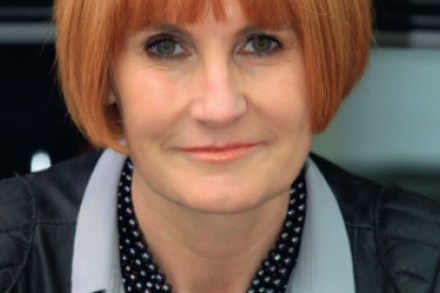
Mary Wakefield is commissioning editor of The Spectator.

Calling Paddock a ‘lone wolf’ isn’t racist

It’s been nearly two weeks since Stephen Paddock committed mass murder in Las Vegas and the FBI is still casting about pitifully for clues. Why did he do it? Not even his girlfriend knows, though it’s said he claimed to have been simply ‘born bad’. Plans are afoot to put up billboards urging anyone who ever met Paddock to come forward. There’s something touching about billboards in the internet age. Perhaps because there are no answers in the offing, in place of them has swelled a great wave of outrage, not, oddly, about America’s gun laws, but about race.

Savage beauty

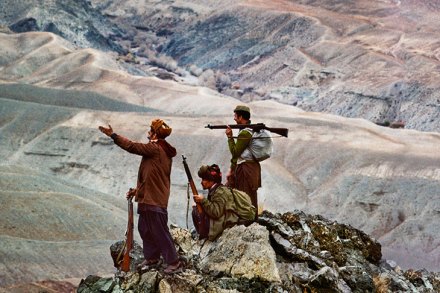
Could it, at times, be frustrating to have taken one of the world’s most famous photographs? Steve McCurry’s ‘Afghan Girl’ (1984) is, according to the Royal Geographic Society, the most recognised photo on the planet. You can summon it to mind in a trice: a beautiful young refugee of about 12, her head covered with a rough red shawl, stares out at the camera with those pale green eyes. But what Steve McCurry’s vast, World Atlas-sized new retrospective portfolio shows is just how many other, perhaps even better, photographs he’s taken of the country over the past 40 years; how many other Afghan girls there are in the shadow of that green-eyed superstar. One portrait of a child in blue-grey taken in Ghazni six years later is especially intense.

Gentrification is far from our biggest problem

The late afternoon sun fell on the anomalous pine trees of Gillett Square, London N16, and on the wooden decking below, giving it a fleeting look of lunch in the Alps. To the east, just visible at the far end of Gillett Street, the Kings-land Road ran its usual choppy course: hipsters and the homeless, Jamaicans and Turks, Vietnamese up from the Shoreditch end and the odd Haredi Jew heading north to Stamford Hill. Gillett Square is Hackney’s great regeneration project. Once a disused car park full of drunks and dealers, after 25 years of funding drives and architects, bulldozing, building and PR, it’s now Dalston’s ‘town square’.

Sir Peter Hall (1930–2017) on Harold Pinter, actors and making love

Sir Peter Hall has died at the age of 86. He spoke to The Spectator in 2009: Even at 78 and from a distance, Sir Peter Hall has the look of an alpha male. There he is about 100 or so feet away, advancing towards me across the polished boards of his rehearsal room; head forward, bear-like, with the lonely charisma of a boxing champ. As he passes, the younger members of the Peter Hall Company fall back smiling, deferring. He’s king here, a Lear (act one). He pauses to pat a gamine young beauty on the arm, stroke his beard, pull his plump lips into a roguish grin — then moves on to the table where his lunch and I are waiting. One small sandwich, one large pile of lettuce.

Oh brave new gender-fluid world…

Later this year, the Advertising Standards Authority will reveal to the world their list of rules designed to wipe out ‘gender stereotyping’ in TV ads. I’m already looking forward to it because the ASA’s first thoughts on the matter, published in July, were fascinating. An ad for baby milk which showed a girl growing up to be a ballerina was deemed quite unacceptable; KFC got flack for featuring one man teasing another for not being manly enough. Stereotypes on TV contribute to ‘unequal outcomes’ in reality, explained ASA’s chief exec. Of course no one wants boys and girls to feel forced to conform — some boys are feminine, some girls boyish — but that wasn’t the issue here.

My son and the back-crackers of Harley Street

All along Harley Street, charlatans and medical experts have set up side by side with no obvious way to tell them apart. The same wide steps lead up to the same glossy front doors, all with prestigious brass knobs. Each separate house is itself a layered stack of quacks and docs: radiology one floor above absence healing, flower therapy down the corridor from paediatric ENT. The magnificent Harley Street address confers a blessing on every dubious therapy. Perhaps it has a placebo effect all of its own. I know the street quacks well, or used to. My mother had a horror of antibiotics and would pack us off to Harley Street’s alternative therapists. I remember a mournful young Russian who was said to have treated astronauts.

The end of brotherly love

You can never completely leave a religious cult, as this strange and touching memoir demonstrates. Patterns of thinking, turns of mind, will linger with and haunt former members long after they escape. Rebecca Stott was born in 1964 into the Brethren, a low-church sect that had broken away from the Anglican church in the early 19th century and then broken away from itself, bifurcating into factions as movements set on purity and unity usually do. Cult is a strong word, but Stott’s branch of the Brethren really earned it. Her great grandfather, a sail-maker, joined the Brethren in Eyemouth, a fishing village not far from where I grew up in Northumberland. Back then the Brethren there was founded on frustration with the tax-collecting Kirk.

The strange case of my first love and the stolen Stradivarius

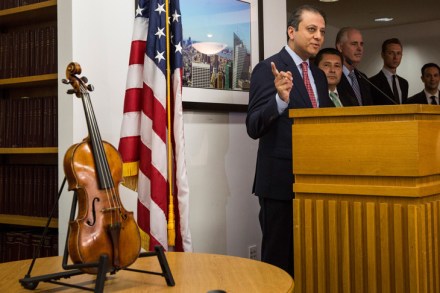
Because I’d been reading about Stradivarius on the bus home, my helpful iPhone suggested a related story: the Totenberg Ames Stradivarius, stolen and ‘silent for decades’, was to be played again in concert. Idly, on the hot top deck of the 38, I read on. Roman Totenberg, the celebrated Polish-American violinist, was 70 when his beloved Strad was taken back in 1980. He’d spent the evening playing Mozart at the Longy school of music in Cambridge, Mass, and when he left his dressing room to glad-hand fans, a former student slipped in and sloped off with the fiddle. The police had their suspicions, but these were the days before CCTV and nothing could be proved — so the Totenberg Ames Strad sank into three decades of obscurity.

Why do nurses quit? Because they care | 3 July 2017

Sometimes, on Sundays, I visit Richard, a friend who’s 95 and lives alone. The idea originally was that I’d be doing Richard a favour, but the truth is he cheers me up far more than I do him. I visit because I like him, but as the weeks go by, I’m afraid I’ve also developed a grim curiosity about what it’s like to be in your nineties. Meals-on-wheels, crumbling knees, hernias, cannulas, the way a day dissolves into unintended naps… ‘Can’t we talk about something more cheerful?’ says Richard, as we sit knee to knee. But I’m obsessed, like a tourist taking notes on some awful country they must one day go to.

Lessons in love and loss

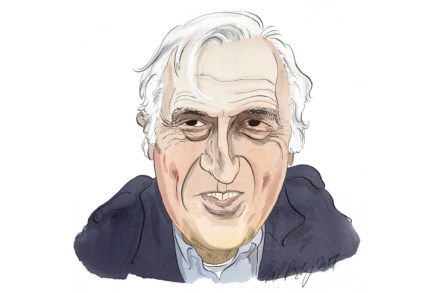
Some of the time, most of the time, it’s tricky to believe in God. There’s just too much that’s sad — and behind it all, the ceaseless chomping of predators. Then sometimes the mist lifts and just for a moment you can see why the saints insist that everything’s OK. There’s a documentary out now, Summer in the Forest, that for a while cleared the mist for me and made sense of faith. It tells the stories of a group of men and women with learning disabilities who live alongside volunteers without disabilities in Trosly-Breuil, a small French village north of Paris. The community is called L’Arche — The Ark — and it was founded 53 years ago by a French-Canadian former naval officer, Jean Vanier.

There’s no need to tell children about terrorists

Saturday evening in Durham. My in-laws and I had just begun our usual postprandial shout about Donald Trump when my niece appeared at the door, pale and serious. ‘There’s been another terrorist attack in London,’ she said. ‘I’m scared.’ The veins of the men in my husband’s family run with a sort of event-activated coolant. No one asked what had happened or how many were dead. My father-in-law said: ‘Don’t be daft. What’s there to be scared of?’ His brother added: ‘You’re more likely to be killed by cows.’ This, though not strictly true, is less ludicrous than you might imagine. Some 90 Brits were killed by terrorist attacks in the 15 years from 2000, whereas 74 were killed by cows. The cows did the trick.

Why do nurses quit? Because they care

Sometimes, on Sundays, I visit Richard, a friend who’s 95 and lives alone. The idea originally was that I’d be doing Richard a favour, but the truth is he cheers me up far more than I do him. I visit because I like him, but as the weeks go by, I’m afraid I’ve also developed a grim curiosity about what it’s like to be in your nineties. Meals-on-wheels, crumbling knees, hernias, cannulas, the way a day dissolves into unintended naps… ‘Can’t we talk about something more cheerful?’ says Richard, as we sit knee to knee. But I’m obsessed, like a tourist taking notes on some awful country they must one day go to.

At the cutting edge

There’s a graveyard inside Henry Marsh’s head, though you’d never guess it to look at him. There he sits in his elegant flat in a small castle on a small island in the Oxford Thames: 67, attractive, restless. There he sits with the world all around him: Persian rugs, French tapestries, Japanese prints and his beautiful blonde wife (the anthropologist Kate Fox) in a separate flat below. But the ghosts of past patients are never far away. Henry Marsh is a brain surgeon, celebrated for his skill in operating on patients under just local anaesthetic. He’s famous also for his astonishing memoir Do No Harm, to which he’s now written an equally remarkable sequel, Admissions.

Who dares face down the teenage gangsters?

The baby, unbothered by diesel fumes, enjoys an outing down the main road through London N1. Each passing bus is marked by a fat and pointing finger: ‘There!’ On the way to our local park last Thursday, we had just begun to cross the road, pointing up at the green ‘walk’ man, when a scooter tore straight through a red light and cut across in front of the pram. ‘What the hell?!’ I shouted and raised an angry hand. To my surprise, instead of speeding off, the driver jammed on his brakes and skidded round to face me. He was a boy of about 15 or 16, black, slight, and snarling with fury. He said: ‘You want to start? You really wanna start this?’ The baby and I were mid-road.

The mad, bad crusade against ‘cultural appropriation’

It’s usually best to ignore the indignant fury of the 21st-century young. We’re used to them now, these snowflakes, posing as victims (though they’re mostly middle-class), demanding ‘safe spaces’, banning books and speakers. Best to rise above them, deadhead the camellias. Attention, especially from the press, acts on entitled millennials like water on gremlins — they start proliferating and develop a taste for blood. But then sometimes they go too far. Ten days ago, the Whitney museum, on the New York bank of the Hudson, opened its biennial exhibition of contemporary American art. It’s an exciting show, full of vim and diversity.

The mad, bad war on ‘cultural appropriation’

It’s usually best to ignore the indignant fury of the 21st-century young. We’re used to them now, these snowflakes, posing as victims (though they’re mostly middle-class), demanding ‘safe spaces’, banning books and speakers. Best to rise above them, deadhead the camellias. Attention, especially from the press, acts on entitled millennials like water on gremlins — they start proliferating and develop a taste for blood. But then sometimes they go too far. Ten days ago, the Whitney museum, on the New York bank of the Hudson, opened its biennial exhibition of contemporary American art. It’s an exciting show, full of vim and diversity.

Redemption for the Ripper

In the autumn of 1888 London was in a state of terrified excitement over Jack the Ripper. There had never been a killer like this in England before, wrote Meredith Townsend and Richard Holt Hutton, the joint editors of The Spectator. They congratulated the British public on not succumbing to the continental habit of lynching (‘In Naples the doctors would have perished, in Berlin the Jews’) but warned that ‘this devil’ might never be caught. By January 1889, Townsend and Hutton were calling for an end to all the ‘morbid interest’ in the Ripper’s crimes.

What will you do in the gene-editing revolution?

The only time I ever saw a wolf in the wild, a small one, I was so frightened that I closed my eyes. It was a useful insight into the depths of my own cowardice. Every day, with each new story about the exciting breakthroughs we’re making in genetic engineering, I feel that same shameful urge to shut my eyes. Far faster than anybody thought, we’re working out the genes responsible for all manner of traits in all creatures great and small. Far more easily than anyone expected, we’ve moved from standard gene therapies to figuring out how to actually edit our own DNA, to ferret around inside living cells, snipping out duff genes and replacing them. Until recently it was mostly mice at (or under) the cutting edge of this new technology.

Why wouldn’t our NHS saints help a dying man? | 11 February 2017

We all think pretty highly of ourselves these days, free from old-fashioned ideas about sin. We’re good people. And yet… I read in a letter in a local newspaper recently a description of an event in the writer’s own home which shows that we might also be becoming monsters. The letter-writer, Jane, was a lady in her late fifties who cared at home for a husband, Fred, with terminal brain cancer. As Jane’s letter explained, Fred had fallen recently on to the bathroom floor, and as she was unable to lift him, she telephoned for help. Seven medics arrived and rushed to the scene. All seven then stalled. Though Fred was not obese, though there were seven of them, they told Jane that they were not allowed to help him up.

Why wouldn’t our NHS saints help a dying man?

We all think pretty highly of ourselves these days, free from old-fashioned ideas about sin. We’re good people. And yet… I read in a letter in a local newspaper recently a description of an event in the writer’s own home which shows that we might also be becoming monsters. The letter-writer, Jane, was a lady in her late fifties who cared at home for a husband, Fred, with terminal brain cancer. As Jane’s letter explained, Fred had fallen recently on to the bathroom floor, and as she was unable to lift him, she telephoned for help. Seven medics arrived and rushed to the scene. All seven then stalled. Though Fred was not obese, though there were seven of them, they told Jane that they were not allowed to help him up.