Mary Dejevsky

Mary Dejevsky is a writer, broadcaster, and former foreign correspondent in Moscow, Paris and Washington.

The Tories are on the verge of a surprise Westminster comeback

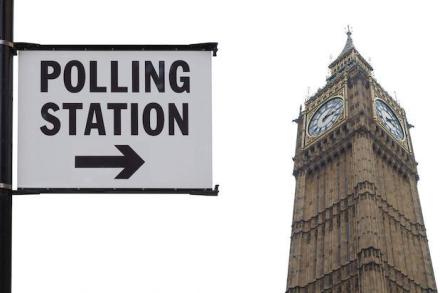
Four years ago, the unthinkable, for many Westminster residents, happened. Control of the council was won for the first time ever, and convincingly, by Labour. As a Westminster voter for more than 20 years, I had expected that the council would in time flip to Labour; the leftward trend was clear – but not so soon, more likely at the next elections in 2026. In the event, Westminster was caught up in the great shift that swept Labour to power in its general election landslide in 2024. Helped along by some boundary changes, the result was a council made up of 31 Labour to 23 Conservatives. Westminster used to be a byword for clean streets.

Why flats are better than houses

Flats have been getting a bad rap recently. There is the promised leasehold reform being stuck in the legislative and legal process; the many service charges spiralling far beyond inflation; the post-Grenfell Tower cladding issues blighting sales in hundreds of blocks across the country.To all these negatives must now be added an admission that the value of many flats is plummeting, especially in London – a turn of events which is prompting wildly conflicting responses. On the one hand, are those hailing the price falls with glee – whether as evidence that prices have long been inflated, that investment in property, as in the stock market, can go down as well as up, or as nemesis for greedy housebuilders and investors.

The Mandy files have shown the grubby side of the British state

It is one thing to glimpse the inner workings of government during extraordinary times. But it is another, and many times more telling, to gain a glimpse of the workings of government at – relatively – ordinary moments. This is what the first tranche of released papers relating to the appointment of Peter Mandelson as HM ambassador to the United States has provided, and it should provide more food for thought than it probably will. The old boys’ network may have died a death but there are plenty of ways to elevate people into high-paying or prominent positions on the public payroll Take, for a start and most obviously, the way that top appointments are made.

How did Starmer misjudge Mandelson so badly?

If there is anything less edifying than the newly-released emails implicating Lord Mandelson in some very bad behaviour, it is the stream of politicians and others in the UK piling in on the already disgraced peer. Mandelson was never to be trusted, we are told; he should never have been allowed to return to a public position, where his reputation and that of the government and the country were bound up with each other. We should remember, of course, that a good number of those suggesting police action and demanding he be stripped of his peerage, include some of the very people responsible for his repeated comebacks, including his most recent, if short-lived, resurrection as our man in Washington DC.

Can Peter Mandelson survive his association with Jeffrey Epstein?

What a difference 48 hours can make. On Saturday afternoon, Lord Mandelson, the UK ambassador to the United States, was treading the green and pleasant lawns of Ditchley Park near Oxford, where he was giving the annual lecture to an audience made up for the most part of the great and the good of UK foreign policy. The landscape was quintessential England, it was a perfect late summer day, with golden light. Mandelson’s subject, nicely timed for ten days before the US President’s second state visit, was ‘Britain and America in the Age of Trump – and Beyond’.

This could be far worse than axing the winter fuel payment

You won’t find me mounting the barricades in defence of the winter fuel payment, though I’ll miss the pleasant surprise when it landed in my bank account sometime before Christmas. I do, though, have a bit of a bone to pick with those well-heeled and often still lucratively-employed pensioners who dusted off their metaphorical loud-hailers (in the form of letters to newspapers and social media posts) every autumn to protest that they didn’t need it, that it was a waste of taxpayers’ money, and that they a) gave it to charity, b) spent it on Christmas presents or c) ordered another case of good wine.

Who will save Britain from the blight of e-scooters?

A few days ago a pedicab (or rickshaw), decked out in luminous pink, collided with a red London bus in the early hours of the morning. Three people were hurt, two seriously. I won’t delve into the rights and wrongs of what happened; you can see a partial video on social media and there are reports the pedicab was stolen. This is not about one particular accident but about the perils on the streets of London and other cities, occasioned by wildly incompatible vehicles competing for space, by ever more reckless riders and drivers, but above all by the disgraceful and potentially lethal lack of interest shown by the authorities – any authorities.

The joy of flying will never die

The golden era of flying is over: rowdy passengers, greedy airlines and miserable airports make travelling nowadays rather grim. The Air India crash in June, which claimed the lives of all but one of the 242 people aboard and 19 others on the ground, has also made many passengers rather jittery, not least because questions remain over what caused the fatal crash. But despite it all, I still love flying. Almost no one on board took the slightest notice. They were too busy watching their devices From the very first time I flew to Düsseldorf in the late 1960s for a Christmas stay with friends, I was hooked.

Junior doctors won’t stop striking? Sack them

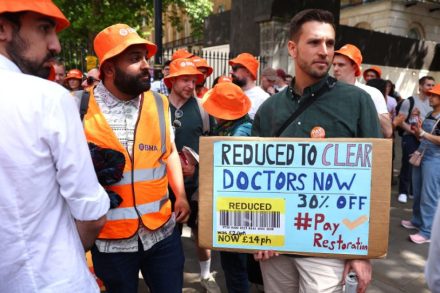
The medics we knew and loved as 'junior doctors' were redesignated 'resident doctors' as part of their last pay settlement in September. If this was intended to boost their (already considerable) 'self-esteem', however, it seems not to have produced any maturing of their professional attitude. Less than a year after ending their last strike, they are balloting on striking again, in pursuit of a pay rise of 29 per cent (repeat, 29 per cent, no decimal point) to add to the 22 per cent they wrung out of the newly-elected Labour government. In a questionable attempt to increase the franchise, the British Medical Association (BMA) launched a free three-month membership offer halfway through the six-week voting period.

Why are women expected to love chocolate?

‘What? You don’t like chocolate?’ The British Airways attendant almost shouted at me in incomprehension as she was passing out little packets of chocolate digestives. I had had the temerity to ask (in economy, of course) whether there might be any other biscuits on offer. To which she had responded with a concerned enquiry about allergies. No, I said, I am not allergic. I just don’t like chocolate. I can’t say I was surprised by the attendant’s reaction. Any suggestion that you might not share the current appetite – nay, fetish – for chocolate and you are treated as though you’re inexplicably withdrawing yourself from the cultural mainstream. This applies particularly to women. In the event that a man declines chocolate, this tends to pass without comment. So be it.

Is £250 a year enough for you to have a pylon ruining your view?

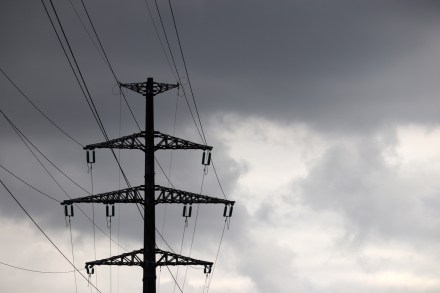
As part of its plans to streamline the planning process for much-needed infrastructure, the government has confirmed that it intends to give people a discount on their energy costs if they have new power pylons or other energy infrastructure built near their property. Outlining the plan, the housing and planning minister, Alex Norris, said that the discount could amount to £250 a year – around 12 per cent of the average household’s energy bill – for those living within 500 metres of new or upgraded structures. ‘If you’re making that sacrifice of having some of the infrastructure in your community, you should get some of the money back,’ he said.

The problem with scrapping leasehold

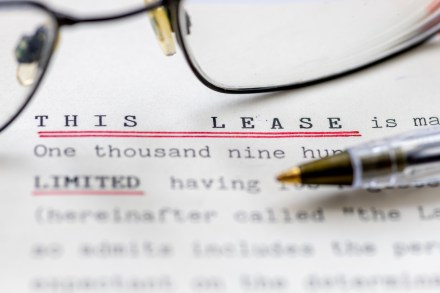
Like most non-renting flat-dwellers, I call myself a home-owner or owner-occupier, but that isn’t quite true. I don’t own my flat; I am a leaseholder. What I bought was the right to occupy it for however many years are left on the lease – and as the lease runs down, the flat is worth less and less. Conversely, this is why, if you were so minded, you could find a prime London flat for a (relative) pittance if the lease has only a few years to run, and why long leases generally come with a premium.

Peter Mandelson has become a liability

Well, that didn’t take long, did it? Less than a month after presenting his credentials to President Trump, His Britannic Majesty’s Ambassador in Washington was being accused by an MP in the House of Commons of ‘freelancing on US TV’. The UK armed forces minister, Luke Pollard, had earlier distanced himself from comments made by Lord Mandelson, saying ‘that’s not government policy’.  Both were referring to a typically mellifluous performance by Mandelson on ABC’s popular Sunday politics talk-show, This Week. The presenter was another master of fluent politics-speak, George Stephanopoulos, one-time spokesman for the Clinton White House turned media pundit, and the conversation flowed with amicable ease.  So where had our newly minted ambassador gone wrong?

Will Potsdam swing right?

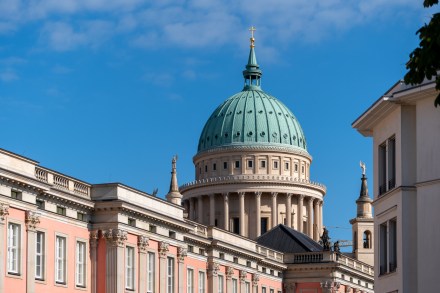
Guten Tag – or, as they more often say in these less formal times, Hallo – from constituency number 061, otherwise known as Potsdam, a city of parks, palaces, film studios and Prussian-ness. For the British, Potsdam will always be the place where the victorious Allies met to carve out the zones of Germany’s occupation – a division which led to Germany becoming two separate countries. After reunification in 1990, Potsdam was designated the capital of the state of Brandenburg. The Potsdam vote will be a test of both the left and far-right’s capacity to broaden its appeal In so far as many German cities have a complicated history, the history of Potsdam, less than half an hour from the centre of Berlin, is more complicated than most.

Can our justice system handle cases like Lucy Letby’s?

Could Lucy Letby, the UK’s most notorious child-murderer, be innocent? The question has rumbled on ever since her convictions for the killing or attempted killing of 14 babies while a neo-natal nurse at Chester Hospital. It is a question that was given more substance this week by a panel of specialists, whose evidence forms the basis of an application from her lawyers to the Criminal Cases Review Commission (CCRC), which could allow an appeal.  The matter of Letby’s guilt or innocence is not the only question raised by this case, however. Another, which has so far lurked mostly in the background, concerns nothing less than the quality of the English judicial process. Should an appeal succeed, this question would spring into the foreground.

Have you been mis-sold a car loan? Probably not

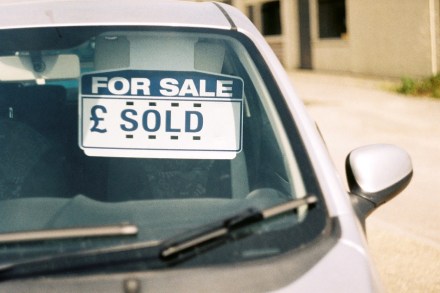
You would be hard put to find a doughtier defender of British consumerdom than me. I don’t flinch from returning things that don’t work or don’t fit. I have successfully challenged supermarket bills as well as a fine for driving down a poorly signposted low traffic neighbourhood. So I’m no shrinking violet when it comes to consumer rights. Even for me, though, there comes a point where the buyer has to bear some responsibility. And that point is reached with the cash cow of the hour – historical car loans. As of a court judgment last month, the position is this: if you bought a car from a dealer with a loan between 2007 and 2021, you may find a bonus, or even a cancellation of the loan, winging your way in the form of ‘redress’.

My failed attempt to game GP appointments

Nearly 20 years may have passed, but a good number of people will still recall the exchange between a salt-of-the-earth member of the public, Diana Church, and the then-prime minister, Tony Blair. The year was 2005, the occasion a pre-election edition of BBC Question Time, and the issue at hand? Well, plus ça change – the hoops patients had to go through to see an actual GP. Mrs Church had asked the PM whether something could be done about a system that required her to book an appointment no more than 48 hours in advance. That’s right, no more than (not no less than) two days before.

Is Lord Mandelson cut out for Washington?

Is Lord Mandelson being ‘lined up’ as the UK’s next ambassador in Washington? The news that the Labour party’s arch-Blairite and one-time spin-doctor extraordinaire may be in the running for what is seen as the UK’s top diplomatic job has generated an immediate and impassioned reaction, much of it hostile. Some of this is because Mandelson is viewed as the epitome of New Labour. While others are concerned by the political and personal baggage Mandelson would inevitably bring with him.  Some of the very qualities that made him so successful in the UK and in Europe had the opposite effect in the US Now it cannot be excluded that this is no more than a kite-flying exercise on the part of No.

Labour should be very wary of backing more 20mph zones

Urban speed limits of 20mph and the traps for unwary drivers known as Low Traffic Neighbourhoods (LTNs) really shouldn’t be elevated to the level of national politics. It may be an exaggeration to describe all politics as local, but such small-scale traffic edicts certainly are, and not just because central government has a myriad of other things to do.

How hard is it to design a hotel room?

I belong to a generation of foreign correspondents whose first move, on entering a hotel room, was not to turn down the bed or to check (hopefully) for hot water, but to examine the phone, screwdriver in hand. Could you detach it from its socket? Could you open it up to get at the wiring? Did you have a compatible adaptor, and even if you did, could the line transmit data back to your editor in London? The rooms had recently been redone, according to the owner’s redesign, and this entailed removing the tables There were more than a few times when I whisked my long-suffering husband out of an otherwise more than acceptable hotel back on to the rain-drenched road in pursuit of communications.