Mark Mason

Mark Mason talks about trivia via books, articles, guided walks and the pub.

Opening salvos …

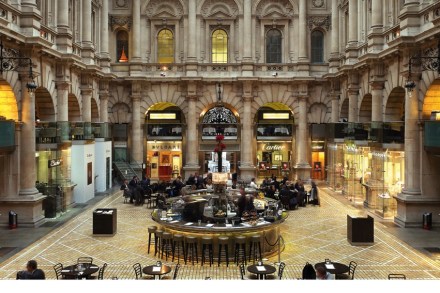
When a man is tired of Johnson, he’s liable to vote for Livingstone. Boris has decided to head Londoners off at the pass by writing a book about them, or rather about 18 of their famed predecessors. From Boudica and Alfred the Great, through Shakespeare and Robert Hooke to Winston Churchill and Keith Richards, we meet people who shaped the city of their birth and/or residence. The stories of both the subjects and the city are brilliantly told. It just so happens that, in passing, we learn such facts as ‘London’s buses are carrying more people than at any time in history’. When Boris visits the Midland Grand Hotel he notes that the traffic outside is ‘flowing smoothly’.

Music while you write

Today is the 20th anniversary of the death of Freddie Mercury. A couple of thoughts about him, one related to reading, the other to writing. Reading first. I’ve just finished Lesley-Ann Jones’s brilliant biography of the singer (Freddie Mercury, The Definitive Biography), and have been thinking that it’s exactly the sort of tribute Mercury himself would have wanted. Gloriously populist, never taking itself too seriously, but nonetheless full of perceptive and moving insights into the contradictions and flaws of a truly charismatic star. Jones’s status as a showbiz journalist who knew Mercury means there are lots of fascinating details. The trademark mike stand came about when a normal one fell apart during a gig ...

Reading more than just the menu

Do you read at mealtimes? And if so, what? The fact you’re looking at this blog in the first place leads me to believe you may be a fan of books. And while there is the odd person around who doesn’t like food, they are just that – odd. Surely most of us would agree with CS Lewis that ‘eating and reading are two pleasures that combine admirably.’ In fact for many, having something to read when you’re eating alone is a necessity. Nothing worse than the old torture of being stuck at breakfast with only the cereal packet separating you from boredom. You try and manufacture some interest in the fact that Rice Krispies offer 740 kilojoules per 30g serving, but it’s just not happening. Lewis was picky in his choice of mealtime reading.

It’s so annoying

So why do people feel compelled to start every sentence with ‘so’? We live in the Age of So. Dot Wordsworth commented on it in these pages recently, though was lost for an explanation. The phenomenon was illustrated on Radio 5 Live’s Drive programme a while back, when Peter Allen interviewed Steve Robertson of BT OpenReach about the expansion of superfast broadband. Allen: ‘What will actually happen?’ Robertson: ‘So, what will happen is that we’re either going to be taking fibre to their home or to their business...’ Allen: ‘And how expensive is all this?’ Robertson: ‘So, we’ve already committed two and a half billion pounds...

Back to the future | 27 October 2011

Something truly incredible has happened in a village near me. A new bookshop has opened. I know – staggering, isn’t it? But I promise you, I’ve seen it with my own eyes. Even been inside. It’s called the Open Road Bookshop, in Stoke by Nayland, close to the Suffolk/Essex border. Pretty little place (both the shop and the village). Sells secondhand books. That’s it – just books. No café, no multimedia community info-hub, no sideline in pottery or bric-a-brac. Admittedly the owner, Dave Charleston, has done things rather well. Plenty of books, covering just about every subject you could think of, and they’re beautifully displayed (cricket ball as a bookend for the cricket books, a pipe doing the same for those on smoking ...

Bookends: Circling the Square Mile

You want the two-word review of this new book about the City? ‘London porn.’ For those of you with more time, The City of London by Nicholas Kenyon (Thames & Hudson, £40) is as comprehensive a photographic record of London’s financial centre as you could wish for. If a building is impressive or important, or has been either of those things in the last 2,000 years, it’s here, together with details of its design, construction and role in the capital’s history. There are also maps and illustrations, working together to tell the story of how this small plot of land became a magnet for the world’s bean-counters. It’s not just Mammon that gets a look-in, either; churches and livery halls and pubs are covered too.

In praise of the footnote

What’s the future for the footnote? Seems a strange question to ask about such an antiquated device. But modern technology, I think, could see a renaissance for that tricky little beast lurking at the bottom of the page. The thought has occurred because I’m currently reading one of those books (a real one, that is, a “dead tree” version) whose footnotes are all at the end, rather than on the page they relate to. Annoying, because each time you reach one you have to flick forward a couple of hundred pages. Most of the notes, it’s true, are just source citations, giving no additional information. But the odd one is a ‘proper’ footnote, containing a juicy little fact or anecdote. Can’t risk missing those, can you?

Bookends | 17 September 2011

One day in the late 17th century, goes the legend, a French monk named Pierre called out to his colleagues: ‘Brothers, I am drinking stars!’ The French for ‘monk’ is Dom. Pierre’s surname was Perignon. He had invented champagne, and the world had changed forever. Which explains the appear-ance, over 300 years later, of Champagne: A Global History by Becky Sue Epstein (Reaktion Books, £9.99). The Perignon tale is in there, along with many more lively and engaging stories from the history of sparkling wine (which, Epstein assures us, goes back much further than those three short centuries).

Bookends: Beaded bubbles

Mark Mason has written the Bookends column in this week's issue of the magazine. Here it is for readers of this blog: One day in the late 17th century, goes the legend, a French monk named Pierre called out to his colleagues: ‘Brothers, I am drinking stars!’ The French for ‘monk’ is Dom. Pierre’s surname was Perignon. He had invented champagne, and the world had changed forever. Which explains the appear-ance, over 300 years later, of Champagne: A Global History by Becky Sue Epstein. The Perignon tale is in there, along with many more lively and engaging stories from the history of sparkling wine (which, Epstein assures us, goes back much further than those three short centuries).

Token gestures

Charity might begin at home, but worrying about charity begins at Waitrose. Those little green tokens they give you with your receipt — nice touch, I used to think. If the store won’t give me any of my money back by way of a loyalty card, at least they’ll give it to someone I can vote for, by dropping the token into one of three compartments in a big clear plastic box by the exit. Each compartment relates to a local charity. New line-up every month, new chance to feel good about yourself. But no good deed goes unpunished, so it didn’t take long for doubts to creep in. There was the whole concept of Waitrose donating to charity, for a start. Given their prices, shouldn’t they be aiming a little higher than the local playground?

Music, moonlight and dahlias

The words that echoed constantly in the back of my mind as I read this book were from Paul Simon’s song ‘Train in the Distance’: ‘the thought that life could be better is woven indelibly into our hearts and our brains’. The words that echoed constantly in the back of my mind as I read this book were from Paul Simon’s song ‘Train in the Distance’: ‘the thought that life could be better is woven indelibly into our hearts and our brains’. Paul Hollander’s thesis is that modern America’s ultra-individualism has led its citizens to expect perfection in every aspect of life, relationships included. Which means that Uncle Sam and Auntie Samantha are in for a few disappointments.

Bookends | 27 August 2011

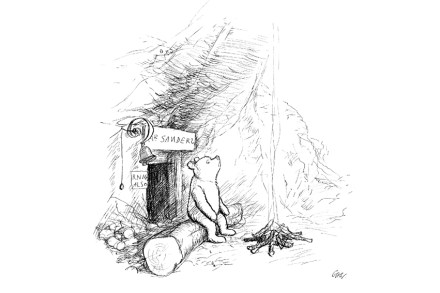
‘Owl?’ said Pooh. ‘What’s a biography?’ ‘A biography,’ replied Owl, ‘is an Important Book. Such as an Interested Person might read. Anyone who is interested in the real-life toys which inspired you and Piglet and the others, for instance, might be tempted to read The Life and Times of Winnie the Pooh by Shirley Harrison.’ ‘Is that the one you said was published by Remember When at nineteen pounds ninety-nine?’ asked Pooh. ‘The very same,’ answered Owl. Then he fixed Pooh with a Meaningful Stare. ‘But — and I say this with regret — it is a temptation they should probably resist.’ Pooh looked sad. ‘Really?’ Owl nodded.

Bookends: Pooh-poohed by Owl

Mark Mason has written the Bookends column in this week's magazine. Here it is for readers of this blog: ‘Owl?’ said Pooh. ‘What’s a biography?’ ‘A biography,’ replied Owl, ‘is an Important Book. Such as an Interested Person might read. Anyone who is interested in the real-life toys which inspired you and Piglet and the others, for instance, might be tempted to read The Life and Times of Winnie the Pooh by Shirley Harrison.’ ‘Is that the one you said was published by Remember When at nineteen pounds ninety-nine?’ asked Pooh. ‘The very same,’ answered Owl. Then he fixed Pooh with a Meaningful Stare.

Watch your step

Why can’t we have traffic laws for pedestrians? Imagine you’re driving down Piccadilly one day. Suddenly, without the slightest warning, you brake to a halt, causing the car behind to smash into you. Or you change lanes without indicating, right into the path of someone who’s overtaking. Or you change direction completely, executing a perfect one-eighty into the oncoming traffic. What sort of punishment would you expect? Forget points on your licence, you’d be scratching the days on your cell wall. Yet repeat these crimes in their two-footed versions on Piccadilly’s pavement and no one will say a thing. Not to your face, that is. Inside it’s different. Inside they’re dreaming of attaching you to the nearest lamppost à la Mussolini.

A heart made to be broken

Very useful in modern conversation, Oscar Wilde. Not for the quotable quips — everyone knows those already. His real value comes when you’re trying to guess someone’s sexuality. ‘He can’t be gay,’ someone will say of whoever is under the microscope, ‘he’s married with two kids.’ You hit them with the reply: ‘So was Oscar Wilde.’ It’s hardly surprising that so many people are unaware of Mrs W’s existence, or that those who do tend to forget about her, given her husband’s status as poster boy for the Two Fingers to Convention party. You’d be forgiven for thinking that Oscar was a Victorian Alan Carr, standing in the middle of Piccadilly belting out ‘Sing If You’re Glad To Be Gay’.

Bookends: Lowe and behold

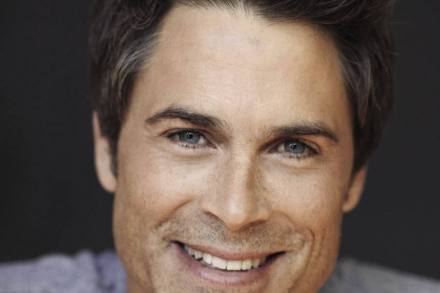
It is 1979. You are a 15-year-old boy starring in a hit US television show. You’ve seen the crowds of screaming girls outside the gates as you arrive for work, and are therefore very excited to have received your first fan letter. You open it eagerly and begin to read: ‘Dear Mr Rob Lowe, You are a great actor. Can you please send me an autographed photo of yourself? If possible in a bathing suit or in your underwear. Sincerely, Michael LeBron. #4142214 Pelican Bay Prison.’ It is 1979. You are a 15-year-old boy starring in a hit US television show. You’ve seen the crowds of screaming girls outside the gates as you arrive for work, and are therefore very excited to have received your first fan letter.

Bookends: Lowe and behold | 10 June 2011

Mark Mason has written the Bookend column in the latest issue of The Spectator. Here it is for readers of this blog. It is 1979. You are a 15-year-old boy starring in a hit US television show. You’ve seen the crowds of screaming girls outside the gates as you arrive for work, and are therefore very excited to have received your first fan letter. You open it eagerly and begin to read: ‘Dear Mr Rob Lowe, You are a great actor. Can you please send me an autographed photo of yourself? If possible in a bathing suit or in your underwear. Sincerely, Michael LeBron. #4142214 Pelican Bay Prison.’ Anyone who thinks of Lowe as Action Man made flesh (blandly handsome, zero personality) will be pleasantly surprised by his autobiography, Stories I Only Tell My Friends.

A touch of clarse

There aren’t many things on which John Humphrys is undecided, but one of them shows itself nearly every time he presents the Today programme. It’s a trait shared by many broadcasters, and indeed people from all walks of life, and constitutes one of the great social barometers of our time. It’s the inability to decide whether your ‘a’s should be long or short. If your upbringing conditions you to pronounce ‘grass’ to rhyme with ‘ass’ rather than ‘arse’ — if, in short, you’re a non-posh non-Southerner — there is a temptation, on moving to London, to lengthen your ‘a’s in order to fit in.

Bookends: Double trouble

Mark Mason has written the Bookend column in this week's issue of the Spectator. Here it is for readers of this blog. In the summer of 2003, in a bar in Malta, George Best was approached by a man holding a paper napkin and a pen. ‘It’s been my childhood dream,’ said the man, ‘to have George Best ask me for my autograph.’ Best obliged. As so often, his fame was so great that it turned normality upside down. The star’s own phrase was that fame ‘turns the dial up’.

Bookends: Unbalanced chorus

Imagine a 77-year-old woman hanging around, say, Leicester bus station, telling people about her life. She confides her belief that she is under surveillance by the military. She maintains that she can ‘see the reality of the web of synchronicity in my life’. Showing off her special jewellery that ‘helps balance the chakras’, she reveals that ‘because I had a high metabolism and moved around a lot, I had no real [weight] problem until I was about 50’. Imagine a 77-year-old woman hanging around, say, Leicester bus station, telling people about her life. She confides her belief that she is under surveillance by the military. She maintains that she can ‘see the reality of the web of synchronicity in my life’.