Mario Naves

Reconciling dreams with reality

From our US edition

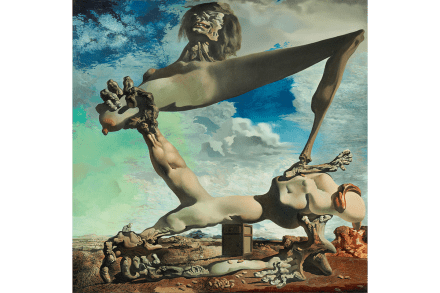
Should you be waiting in line at the Philadelphia Museum of Art to see the exhibition Dreamworld: Surrealism at 100, don’t be put off by “Tête” (1974), a sculpture by Joan Miró that is big and ugly and plopped down directly at the entrance. Be aware that Miró’s true métier was painting; “Tête” was cranked out long past his prime. You can’t blame an old man for cashing in on his reputation, particularly when his formative years were burdened by poverty. You can blame a curator for including a flagrant piece of product as a how-do-you-do to a centennial celebration.
Surrealism

Rauschenberg is a bore

From our US edition

Pity the security guard at the Guggenheim who must patrol the gallery in which Robert Rauschenberg: Life Can’t Be Stopped is installed. Mounted in commemoration of the artist’s centennial – Rauschenberg was born in Port Arthur, Texas, in October 1925 – Life Can’t Be Stopped includes “Revolver II” (1967), a set of plexiglass discs with images overlaid. A cord leads from the back of this contraption to a pedestal on which there is a control panel – a set of buttons placed in proximity to the viewer. These switches set the plexiglass discs in motion, and they beg to be pushed. On my trip to the museum, visitor after visitor was shushed away from “Revolver II” with the age-old plaint: “Please don’t touch the art.

Is Hilma af Klint overrated?

From our US edition

At the corner of Manhattan’s Tenth Avenue and 22nd Street, there is a mural by the Brazilian artist Eduardo Kobra. Situated over the landmark Empire Diner, Kobra's painting reimagines Mount Rushmore as a paean to art stardom or, depending on how one looks at these things, the tragically hip and perpetually overrated.  Kobra supplants George Washington, Thomas Jefferson, Abraham Lincoln and Theodore Roosevelt with the graffiti artists Keith Haring and Jean-Michel Basquiat, the Mexican fabulist Frida Kahlo and the melanin-deprived panjandrum of Pop, Andy Warhol. These cultural icons loom over the crowds supping on blistered shishitos and tuna tartare inside the diner.

Murillo the masterful

From our US edition

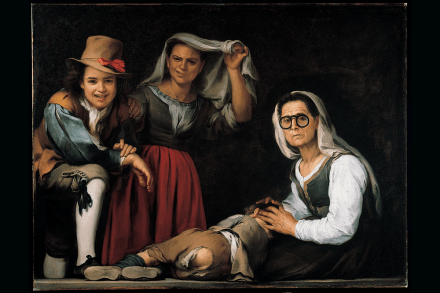
Murillo: From Heaven to Earth, an exhibition at the Kimbell Art Museum in Fort Worth, Texas, is, at its core, a cunning display of institutional braggadocio. How much better to amplify a mainstay of the permanent collection — that would be “Four Figures on a Step” (c. 1658-60) — than to mount a show dedicated to the artist responsible for it? “Four Figures on a Step” is, if not Murillo’s masterpiece, then a distinctive painting all the same. It is distinctive because it is odd: though attempts have been made to peg the image as some-or-other lesson in morals, the canvas has consistently resisted explication. The title, a bland descriptor superimposed by an outside source, points up how the picture’s thematic basis remains firmly contained within its own peculiar logic.

Murillo

Dawn party

From our US edition

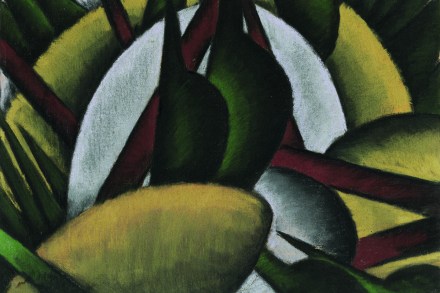
What a difference a century makes. That’s the upshot of At the Dawn of a New Age: Early Twentieth-Century American Modernism, an exhibition at The Whitney Museum of American Art culled from its own holdings. In-house ventures can sometimes come off as so much house-cleaning, an opportunity to air out the storage racks and take stock of inventory. Which is, in fact, exactly what Whitney curator Barbara Haskell has done. But by adding select loans from other institutions and private collections, she’s put together a show that has its own Gestalt. Though the fervor of artistic innovation has a limited shelf life, the work on display here continues to radiate a klutzy, almost childlike audacity. There’s a naivete at the heart of At the Dawn of a New Age, and it is winning.

dawn

Chroma chameleon

From our US edition

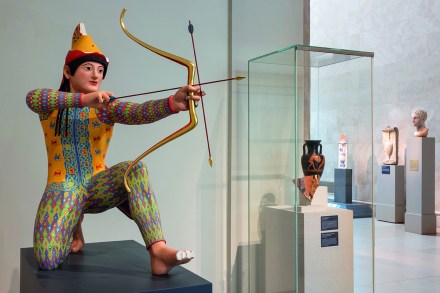
"Who knew the Greeks had such bad taste?” This comment was overheard at the preview for Chroma: Ancient Sculpture in Color, a head-turning exhibition at the Metropolitan Museum of Art. This slight wasn’t targeted at the current denizens of Greece, but, rather, their ancestors of yore. You remember the type: chiton-clad Athenians — let’s not forget the ladies in their peploi! — sauntering through the agora, pondering the nature of reality or, perhaps, the role of hoi polloi within a democratic society. They’re the folks whose aesthetic sensibilities were found wanting, at least to one denizen of twenty-first-century museum culture. What most of us know about life in antiquity is, I dare say, as broadly conceived as the above description.

chroma

SoHo’s downtown drawings

From our US edition

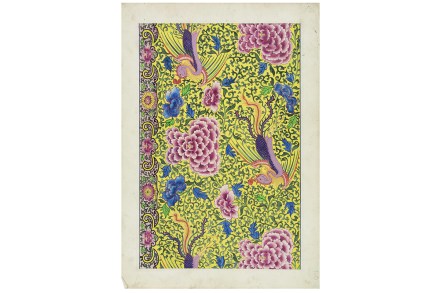
Pity the poor Drawing Center. Founded in 1977 — or, rather, “born into the petri dish of the SoHo art scene in the 1960s and 1970s” — the Center was the pet project of Martha Beck, a former curator at the Museum of Modern Art. She felt that the medium of drawing, being underserved by the arts establishment, needed its own specialized venue. Over the years, this downtown gallery has proved its mettle, mounting a variety of historical and contemporary exhibitions, as well as making a point of reaching out to working artists, some of whom later went on to greater recognition. But that petri dish? It’s changed mightily since the heyday of industrial lofts rented on the cheap.

ornament

Deep water Winslow

From our US edition

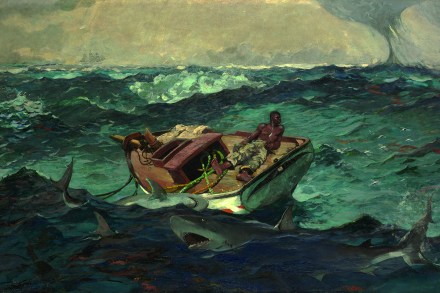
The advance buzz on Winslow Homer: Crosscurrents wasn’t good. “Woke Winslow” — that’s how observers, online and through the grapevine, pegged the Metropolitan Museum of Art’s new exhibition of paintings and watercolors by Winslow Homer (1836-1910). The stalwart purveyor of maritime adventure and manly pursuits, woke? One glance at the enlarged black-and-white photo displayed at the front end of Crosscurrents — a blurred portrait of Homer in his Maine studio — makes clear that the fusty man with the impatient glare is no one’s idea of a social-justice warrior. Looks aren’t everything, of course. Truth to tell, Homer’s art does touch upon important aspects of American history.

winslow homer

Blues for Pablo

From our US edition

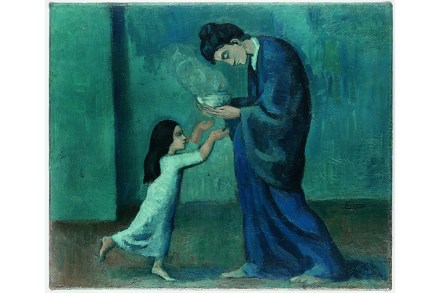
What is there left to say about Picasso? This question, posed by a colleague apropos of Picasso: Painting the Blue Period, an exhibition on display at the Phillips Collection in Washington, DC, is inevitable. There are few cultural figures whose life and accomplishments have been as exhaustively accounted for as the man born — take a breath! — Pablo Diego José Francisco de Paula Juan Nepomuceno María de los Remedios Cipriano de la Santísima Trinidad Ruiz y Picasso. Innumerable exhibitions, books, scholarly tracts and films have been devoted to this relentlessly protean artist. Even after his death almost fifty years ago — Picasso died in 1973 at the age of ninety-one — he looms large in the public consciousness.

picasso

Kandinsky’s colors

From our US edition

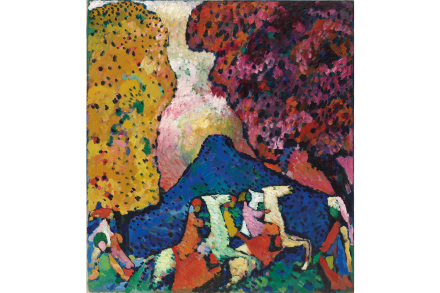
The paintings of Vasily Kandinsky (1866-1944) have never looked quite as good as they do, right now, at the Solomon R. Guggenheim Museum in New York City. It’s worth mulling why that is. I mean, Kandinsky is old news, right? He’s a mainstay in the common consciousness of those who make art their livelihood, and the paintings remain on view at any institution that presumes to untangle the story of Modern art. Given the current vogue for politics and inclusivity, Kandinsky seems an unlikely figure for reappraisal: he’s a tough nut to enlist for this or that cause. As for excluding him from the canon — forget it. Dead white male though he may be, Kandinsky is immovable. Granted, his status as the first abstract painter has been called into question.

kandinsky