Marcus Nevitt

The traitor who gives Downing Street a bad name

Samuel Pepys didn’t much like the subject of Dennis Sewell’s new biography. Sir George Downing (1623-84) was for a short time Pepys’s boss at the Exchequer, during which period the diarist observed that his employer was ‘so stingy a fellow I care not to see him’. Despite being one of the richest men in Restoration London, Downing’s parsimony was legendary and was the subject of one of the Diary’s most celebrated comic anecdotes. Having recently purchased a country estate in Cambridgeshire, Downing learned that it was customary for the landowner to host a Christmas dinner for the poor of the parish.

Charles I at his absolutist worst

Sometime after the Long Parliament met in November 1640, a seamstress living in London called Katherine Chidley decided that she didn’t much like the way that a man was telling her how to do her Puritanism. So, taking advantage of the recent collapse in traditional censorship controls, she published a pamphlet, The Justification of the Independant Churches of Christ (1641), which challenged the writings of Thomas Edwards, a preacher, heresiographer and polemical hardman of English Presbyterianism. Over the course of 80 tightly printed pages, Chidley contended that Edwards’s religious vision was an authoritarian and sexist misreading of God’s plans for his people.

Owen Matthews, Matthew Parris, Marcus Nevitt, Angus Colwell and Sean Thomas

31 min listen

On this week’s Spectator Out Loud: Owen Matthews reads his letter from Rome (1:21); Matthew Parris travels the Channel Islands (7:53); Reviewing Minoo Dinshaw, Marcus Nevitt looks at Bulstrode Whitelocke and Edward Hyde, once close colleagues who fell out during the English civil war (15:19); Angus Colwell discusses his Marco Pierre White obsession, aided by the chef himself (21:26); and, Sean Thomas provides his notes on boredom (26:28).  Produced and presented by Patrick Gibbons.

Friends fall out in the English civil war

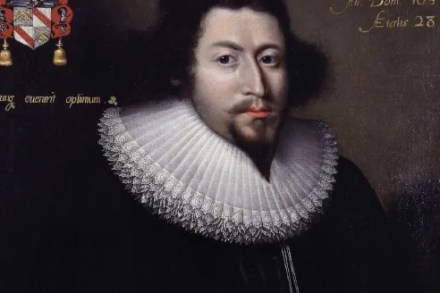
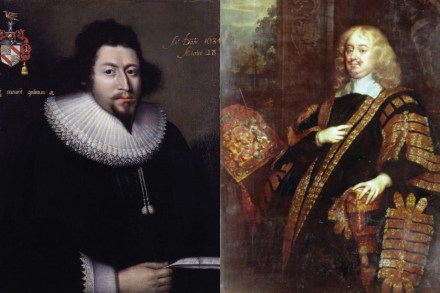
In April 1636, two aspiring lawyers, eager to make their way in the world, corresponded about the state of affairs in London. ‘Our best news,’ wrote Edward Hyde, the future Earl of Clarendon, ‘is that we have good wine... the worse is that the Plague is in town and no Judges dye.’ The recipient of this letter was Bulstrode Whitelocke, a fellow member of the Middle Temple, who, like Hyde, would go on to write an indispensable contemporary chronicle of the British civil wars of the mid-17th century. What makes the intimate, wry irreverence of Hyde’s missive seem startling in retrospect is that the two men ended up on opposite sides of the revolutionary political gulf opened up by that conflict.

Why were the security services so obsessed with the Marxist historian Christopher Hill?

What did the great Marxist historian Christopher Hill think of orgies? Michael Braddick’s splendid and judicious biography doesn’t ponder this question. However, it strikes me as worth posing since, for a three-week period in the winter of 1978, an ensemble of actors (including the future Hollywood star Bob Hoskins) could be found naked at the National Theatre simulating group sex in Hill’s name. The actors were performing in Keith Dewhurst’s radical stage adaptation of Hill’s masterpiece of 17th-century popular history The World Turned Upside Down (1972) and were embodying what it might have been like to be enthusiastic members of one of the radical millenarian sects at the centre of Hill’s study.

The flowering of enlightenment under Oliver Cromwell

In 1651, the poet Andrew Marvell was working for the parliamentarian military hero Sir Thomas Fairfax, tutoring his daughter Mary on Fairfax’s Nun Appleton estate near York. When he wasn’t delivering language lessons to his young charge, Marvell was busy composing one of the most astonishingly experimental poems of the 17th century. Opera in the 1650s first seeded the idea that women might be able to act and entertain for money in public ‘Upon Appleton House’, dedicated to Thomas Fairfax, is, on the one hand, just another variety of early modern patronage poem in which a writer praises a member of the aristocracy and their values in return for favour or reward. From another perspective, the poem is profoundly avant-garde.

William Cash, Marcus Nevitt, Nina Power, Christopher Howse and Olivia Potts

31 min listen

On this week’s Spectator Out Loud: William Cash reveals the dark side of Hollywood assistants (1:12); Marcus Nevitt reviews Ronald Hutton’s new book on Oliver Cromwell (7:57); Nina Power visits the Museum of Neoliberalism (13:51); Christopher Howse proves his notes on matchboxes (21:35); and, Olivia Potts finds positives in Americans’ maximalist attitudes towards salad (26:15).  Presented and produced by Patrick Gibbons.

How weird was Oliver Cromwell?

One of the most notorious episodes in the siege of Drogheda, when more than 3,000 Irish people were killed by an English army headed by Oliver Cromwell, came when Cromwell and his troops chased a renegade band of the enemy up into the steeple of St Peter’s church. When the fleeing detachment of soldiers refused to surrender, Cromwell ordered that the steeple be burned. We know that this is true because, in addition to the corroborating evidence, Cromwell wrote a 1,500-word letter about the events back to the House of Commons on 17 September 1649, exulting that he had even heard one of the trapped men screaming: ‘God damn me, God confound me, I burn, I burn.’ That telling sadistic detail reveals much about both the writer and the addressee of the letter.

Disgusted of academia: a university lecturer bewails his lot

There’s a beautiful moment in I Am the Secret Footballer (2012), a Guardian column turned whistle-blower memoir, when the anonymous author is momentarily freed from an enveloping depression caused by his career as a professional sportsman. He’s at Anfield to play against Liverpool in one of the biggest games of the season when he picks up a pristine, unused football before a warm-up drill and, inexplicably, sniffs it. With that inhalation he’s transported from the corruption, pressure, scandalous abuse and monstrous egos of elite sport and for a few seconds becomes a kid uncontainably excited at the prospect of kicking a new ball around his council estate.

The farming year in 18th-century Sussex

You may (or may not) already know this, but researching the long 18th century in 2023 is rarely a life-affirming, paradigm-shifting conversation over wine with Plato in the groves of academe. It is seldom, even, a couple of tins of warm lager on the train home after guesting on an episode of Start the Week. It is sometimes, though, sitting in an archive transcribing the traces of long-vanished lives, conscious of the passing of time, quietly excited but still wondering if any of this actually matters, whether the partial recovery of someone else’s life really is the fullest way of living your own.

Rocked by rebellion: the short, unhappy reign of Edward VI

As Tory writers reflected on the safe passage of the Stuart dynasty through the Exclusion Crisis of 1679-81, an anonymous author urged contemporaries to learn the lessons of English history. The Rebels Doom (1684) offered some thumbnail sketches of various unsuccessful rebellions and attempted revolutions that had threatened the monarchy since the reign of Edward the Confessor, in order to show ‘the Fatal Consequences that have always attended ... Disloyal Violations of Allegiance’. The writer paused especially over one Tudor insurrection from 1549, in which 10,000 rebels from Devon and Cornwall took up arms against the administration of Edward VI and besieged the city of Exeter, but were ultimately crushed by forces led by Lord John Russell.

A botched coup: the desperate Cato Street conspiracy

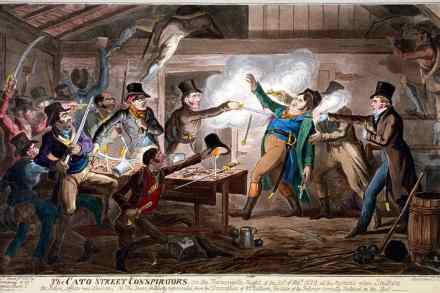
Almost half of the terrorists hadn’t even turned up. Still, on the night of 23 February 1820, 25 men, including a butcher, several shoemakers and a cabinet maker, met in a hayloft on Cato Street, just off the Edgware Road in central London. Led by the semi-respectable son of a tenant farmer, Arthur Thistlewood, their plan was to assassinate the prime minister Lord Liverpool and his cabinet, who were thought to be dining together at the Grosvenor Square mansion of Lord Harrowby, the president of the privy council.

How fears of popery led to a century of turmoil in ‘the land of fallen angels’

Stuart England did not do its anti-Catholicism by halves. In the late 1670s and early 1680s, a popular feature of London’s civic life were the annual Pope-burning pageants which took place every 17 November to commemorate the accession of Elizabeth I and the nation’s historic deliverance from the forces of international Catholicism. In 1679, one contemporary estimated that 200,000 people watched the spectacle, as a series of floats wound through London’s thronged streets bearing oversized effigies of Roman Catholic clergy, nuns, Jesuits and the Pope to be tipped into a bonfire at Temple Bar or Smithfield with lavish firework accompaniment.

Oliver Cromwell: ruthless in battle – but nice to his men

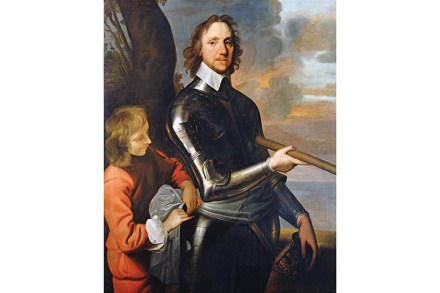
One of the first retrospective accounts of Oliver Cromwell’s early career, Andrew Marvell’s ‘An Horatian Ode upon Cromwell’s Return from Ireland’ (1650), maintained that its subject was difficult to capture. Perhaps the finest political poem in the English language, it was written shortly after Cromwell’s return from a brutally successful military campaign overseas, which witnessed infamous atrocities at Drogheda and Wexford. It celebrates Cromwell as a victorious military commander, a supernatural epic hero who burns through the air, destroying all who block his path to establishing England as the greatest nation on Earth.

When sedition was rife in 18th-century London

Researching the seditious literature of earlier periods is seldom suspenseful, pulse-quickening work. For every thrill of archival discovery, there are countless hours of slow, methodical, sometimes crushingly unproductive labour aimed at uncovering the individuals and agencies behind books that, as clandestine productions, were primarily designed not to surrender such secrets. The underground networks behind dissident pamphlets in 17th- or 18th-century England, for example, frequently hid their own involvement by withholding the names of authors, printers and places of publication from their title pages, leaving puzzling blanks or laughable fictions in their stead.

The real villain of the House of York was Richard III’s elder brother

Trying to describe the outcome of the Wars of the Roses — the fall of the House of York — in genre terms has long been an uncertain business. When Shakespeare completed his first tetralogy with Richard III, which ends with the collapse of Yorkist hopes at Bosworth Field, the printers of the earliest quarto editions of the play were confident that the work they were hawking was The Tragedy of King Richard the Third.

The man who invented modernity Marcus Nevitt

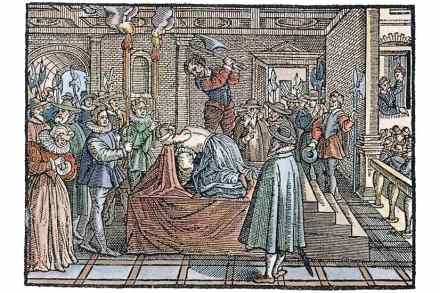
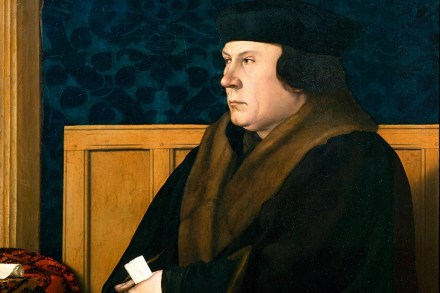
The final moments of Hilary Mantel’s magnificent Wolf Hall see its central protagonist, Thomas Cromwell, trying to banish ghosts. Assailed by memories of his orchestration of the execution of his rival Thomas More, the sight of his head on a block, the ‘sickening sound of the axe on flesh’, Cromwell turns to two sources of solace to improve his mood: the welfare of his household and — oddly, but characteristically —admin.

Another Eden

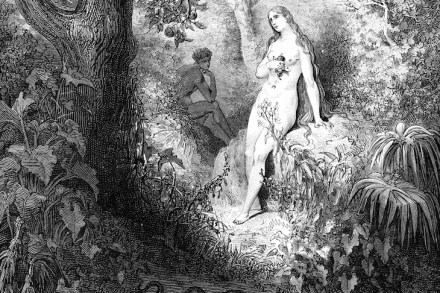
In December 1996 Martin Amis told listeners of the BBC’s Desert Island Discs what would relieve his solitude were he to end up cast away in paradise with one piece of music, a luxury and a book for company. He chose Coleman Hawkins’s version of the jazz standard ‘Yesterdays’ as his only record — seduction music, he suggested — and opted for the luxury of an unlimited Sky Sports subscription package. Amis’s preferred book, in this company, sounded similarly butch: John Milton’s Paradise Lost as edited by Alastair Fowler for the Longman Annotated English Poets series in 1968.

Restoration man

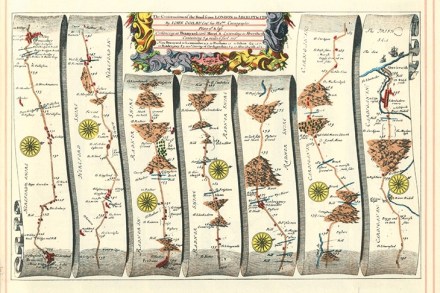
Given that he wrote and published some of the most stunningly handsome books of the 17th century, John Ogilby has not been served well by literary history. The Fables of Aesop (1651), the first complete English translation of Virgil (1654), a two-volume edition of the Authorised Version of the Bible (1660) plus vernacular versions of the Iliad (1660) and Odyssey (1665) were all magisterial folios, produced with the clearest of type, the widest of margins and on the heaviest of paper. Ogilby wrote specifically for those with deep pockets and fine libraries, an elite book-buying public who could afford translations illustrated with copious and expensive engravings.

One scorching summer long ago

It was the brightest of futures; it was the End of Days. Three hundred and fifty years before Brexit, England experienced a series of epochal events which forced subjects to rethink their relationships with each other, their political leaders and their European neighbours. In the space of a tumultuous 12 months England endured the devastation of plague, the most humiliating of naval defeats at the hands of the Dutch, and the catastrophe of a Great Fire which transformed its capital city forever.