Madeleine Kearns

Why No. 10 should be polling ‘culture war’ issues

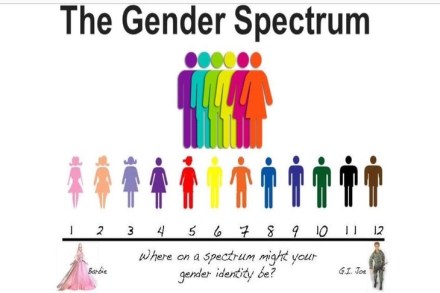
Notwithstanding this week’s excitement, millions of Brits are fed up discussing Brexit, Brexit and nothing but Brexit. They want to know when we’re going to address some other important issues. Issues like identity politics. And transgenderism. So-called 'culture war' issues. If reports are to be believed, No. 10 have been trying to find out what yer-man-on-the-street thinks about these issues ahead of an impending general election. (No. 10 denies this, of course.
Jeffrey Epstein isn’t the only one sexualizing children

From our US edition

Jeffrey Epstein, the billionaire charged with sex trafficking minors, was found injured in his Manhattan jail cell on Thursday. Either Epstein did this to himself or – far from his private jets and mansions – he encountered the honor of thieves. It’s understandable to not feel any sympathy for a wealthy and powerful man who exploited and abused children in the most disgusting of ways. However, it’s worth considering whether characters like Epstein have become scapegoats for something in which we are all complicit. Over 10 years ago, Epstein was charged with the sexual abuse of underage girls, but managed to use his money and influence to wiggle out of a long sentence and keep off the sex offender’s list.

sexualizing

Women are fighting back against Scotland’s gender identity policies 

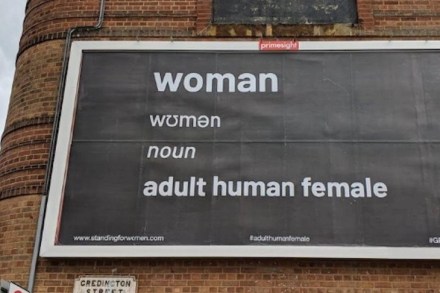
Is a ‘woman’ an adult human female or a person who identifies as such? This is the question I asked Nicola Sturgeon at the United Nations earlier this year. But, oddly, she wouldn’t answer it. Instead the first minister of Scotland explained that, as ‘an ardent, passionate feminist,’ women’s concerns about how gender self-ID laws might harm them are ‘misplaced.’ The day after Sturgeon’s UN address, in a leaked online conversation, three female SNP MSPs complained that Sturgeon’s remarks proved that she was ‘out of step’ with the party.

The ruling on Caster Semenya is a common sense compromise

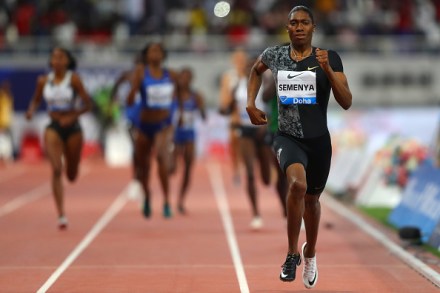
Was the Caster Semenya ruling fair? It’s an emotional case that has sparked debate across the world. Born with a disorder of sex development (DSD), the South African runner was raised female and has never thought of herself as anything else. But on Wednesday, the Court of Arbitration for Sport (CAS) ruled to uphold the International Association of Athletics Federation’s (IAAF) regulations for female athletes with DSDs. In order to compete in the women’s category, the court decided, Semenya must take drugs to lower her testosterone levels. Whichever way you look it - and there are a lot of ways of looking at it - it’s a no-win situation. Sports is divided into two divisions, male and female, to reflect the two sex categories that most of us fall neatly into.

Don’t tell the parents

How can we help transgender children? This is a question greatly exercising politicians and many are confused about what to do. In Scotland, children are now expected to ‘demonstrate an understanding of diversity in sexuality and gender identity’. The Scottish government supports a new classroom resource that tells primary school children that they may consider themselves to be a boy, a girl, or neither. ‘You know who you are,’ it explains. What guidance are teachers given? I found out two years ago when I was one of the 3,000 teachers and classroom assistants from across Scotland dispatched for training by LGBT Youth Scotland, a campaign group.

Fr Morris won’t be the last priest to be expelled from campus for having the ‘wrong’ beliefs

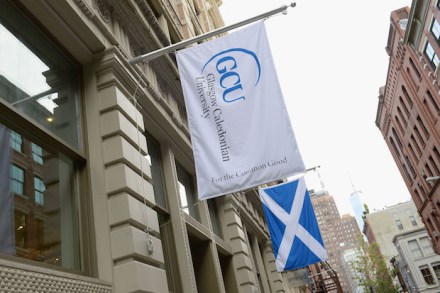
In her column in this week’s Spectator, Mary Wakefield writes about Father Mark Morris, who was fired from his post in Glasgow Caledonian University for having a prayer meeting in response to a recent gay pride march. Mary Wakefield points out that there is more to this story than meets the eye. She’s not alone in wondering: How can a priest be dismissed for stating the Catholic Church’s position (and off-campus besides)? And why have we returned to the days where clergymen are expelled from campus, on ideological grounds? The case of Fr Morris is worth examining because he’s the first clergyman to be caught up in the new campus intolerance.

Review: My Fair Lady

From our US edition

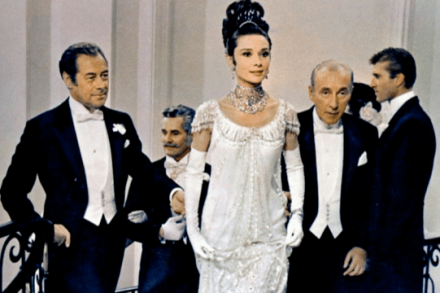
Draggle-tailed guttersnipe. Squashed cabbage leaf. Bilious pigeon. These are some of the insults hurled at Eliza Doolittle by Professor Henry Higgins in My Fair Lady. The musical is undergoing a Broadway revival this season, the first in 25 years, with Lincoln Center Theatre’s production directed by Bartlett Sher. Sexual politics may be under the spotlight, in keeping with Lerner and Loewe’s original, yet it's the British class system takes centre stage. Set in London, at the turn of the 20th century, My Fair Lady is the story of a flower-selling street urchin, Eliza Doolittle, as she becomes the willing subject of a social experiment conducted by ‘speech scientist’ Henry Higgins. It’s the tale of a self-made woman.

Catholics can cope with ‘cultural appropriation’

The Met Gala is among the most iconic nights of the fashion calendar. Every year, A-list celebrities flock to New York City to attend the annual fundraiser for the Metropolitan Museum of Art’s Costume Institute. There’s always a theme. This year it was, 'Heavenly Bodies: Fashion and the Catholic Imagination.' Getting into the spirit of things, Rihanna took to the red carpet with a jewel-encrusted papal hat and robe, showing off lots of boob and leg. Olivia Munn wore a gold and sparkly 'chainmail dress' – inspired by the crusades, naturally. Actress Lena Waithe (don’t worry, I hadn’t heard of her either) showed up in a rainbow pride cape; a statement which, I'm sure, is considered quite radical in certain circles.

‘Toxic masculinity’ is a toxic phrase

To tackle London’s murder problem, Sarah Jones, Labour Party and Croydon Central MP, told the BBC that a ‘public health approach’ is needed. This, she says, involves going into schools and teaching ‘what it is to be a man.’ Quite so. Masculinity can and ought to be taught. But is this really a job for schools? A recent article in the New York Times, entitled, ‘Boys to Men: Teaching and Learning About Masculinity in an Age of Change’ thinks so. It discusses how to address what is often referred to as ‘toxic masculinity’ - a phrase applied to the notion of ‘manning up’, ‘growing a pair’; the idea that men are socially conditioned to be aggressive and dominant.

Robert Burns’ #MeToo moment

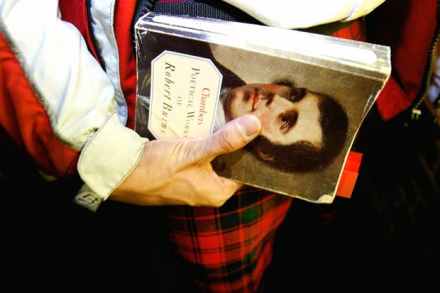
A year ago, I sang ‘Ye Banks and Braes’ by Robert Burns at the annual Scottish banquet at Manhattan’s University Club. Afterwards, my dinner partner, an American chap, asked me what it was about. Regret, I said. Just look at the last line. But my false lover stole my rose [virginity]. And ah! He left the thorn [unwanted pregnancy] with me.  The American is a feminist metropolitan, and so responded with due sensitivity. ‘Burns must have really understood women,' he said. I agreed. From Burns’ love letters, it is evident that he used his way with words to climb inside their heads and, from there, into their beds. Burns fathered a number of illegitimate children. In 18th-century Scotland, a relationship with him could be truly ruinous.

As a trainee teacher, I saw the damage the SNP is inflicting on Scottish education

Once one of the best in the world, Scotland’s education system has been steadily marching backwards for the past ten years. From the outside, it seems baffling: why, given that Scottish spending per pupil is among the highest in the world, are things going so wrong? From the inside, it’s far easier to understand. You can explain it in three words: Curriculum for Excellence. I’d heard stories about it before I started training as a teacher. By the time I qualified — in April last year — how I wished I’d listened to them. The story starts in 2010, when the new system was introduced with four aims: to create ‘confident individuals’, ‘successful learners’, ‘responsible citizens’ and ‘effective contributors’.

Class struggle

Once one of the best in the world, Scotland’s education system has been steadily marching backwards for the past ten years. From the outside, it seems baffling: why, given that Scottish spending per pupil is among the highest in the world, are things going so wrong? From the inside, it’s far easier to understand. You can explain it in three words: Curriculum for Excellence. I’d heard stories about it before I started training as a teacher. By the time I qualified — in April last year — how I wished I’d listened to them. The story starts in 2010, when the new system was introduced with four aims: to create ‘confident individuals’, ‘successful learners’, ‘responsible citizens’ and ‘effective contributors’.

Unsafe spaces

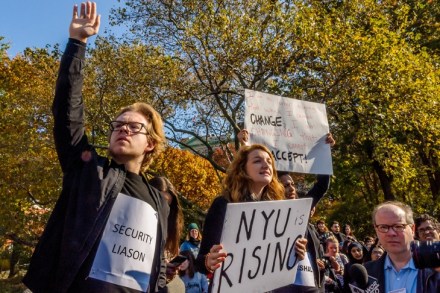
As a child in Glasgow, I learned that sticks and stones might break my bones but words didn’t really hurt. I’m now at New York University studying journalism, where a different mantra seems to apply. Words, it turns out, might cause life-ruining emotional trauma. During my ‘Welcome Week’, for example, I was presented with a choice of badges indicating my preferred gender pronouns: ‘he’, ‘she’, ‘they’ or ‘ze’? The student in front of me, an Australian, found this hilarious: ‘Last time I checked, I was a girl.’ Her joke was met with stony silence. Later I realised why: expressing bewilderment at the obsession with pronouns might count as a ‘micro-aggression’.