Madeleine Feeny

Double trouble: As If, by Isabel Waidner, reviewed

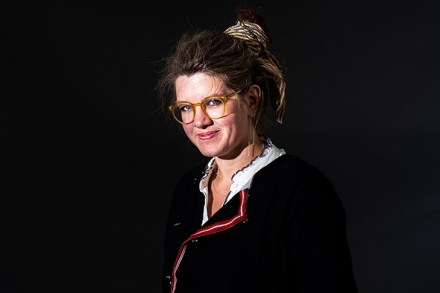
I think I’d be pretty hostile if I met my doppelganger – living proof of my mediocrity. My fragile ego even balks at being told I’m reminiscent of someone else. But, drawn as they are to the uncanny, authors just love doppelgangers. In As If, Isabel Waidner makes a playful contribution to the literary tradition, following in the footsteps of Dostoevsky, Kafka and Beckett. Waidner is the German-British author of four previous novels, including Sterling Karat Gold, which won the Goldsmiths Prize. They are non-binary, and known for experimental writing. Many recent novels, such as Miranda July’s All Fours, imagine middle-aged women abandoning their lives, but lately the male midlife crisis, while going strong in society, has been somewhat neglected in fiction – until now.
Absinthe and the casual fling: Ex-Wife, by Ursula Parrott, reviewed

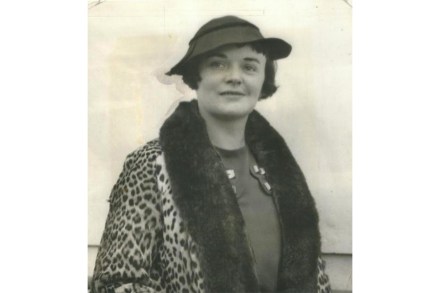
‘Ex-wives like us illustrate how this freedom for women turned out to be God’s greatest gift to men,’ quips Patricia, the flapper heroine of the American novelist Ursula Parrott’s 1929 bestseller, which, republished nearly a century later, reveals striking contemporary resonances. Both timeless and unmistakably of its time, this candid portrait of marital breakdown, and the life of a girl about town in Jazz Age New York, took the US by storm at a moment when dawning sexual liberties jostled with lingering Victorian values. Parrott married in 1923, before birth control was legal, and had a son in secret, against her husband’s wishes. She left him with her family, until her husband discovered his existence and divorced her.

My brilliant friend and betrayer, Inigo Philbrick

‘Inigo has never asked me not to write this book, but I had come to wonder whether I would have had the courage to write it were he not imprisoned,’ confesses Orlando Whitfield in his coruscating memoir of his friendship with Inigo Philbrick. He was the art dealer whose meteoric career exploded in spectacular style when he was convicted, aged 35, of wire fraud in 2022. Imagine Whitfield’s alarm on hearing that Philbrick had been released from prison in time for publication. By ‘flipping’ art works, Philbrick increased his earnings from ‘£35k a year to £35k a month’ Philbrick, who owes $86,672,790 in restitution payments, will have ample opportunity – and cash incentives – to give his side.

Doctor in despair: Tell Her Everything, by Mirza Waheed, reviewed

‘No one dies without regrets,’ says Doctor Kaiser Shah in Mirza Waheed’s melancholy third novel, an exploration of guilt through the eyes of a doctor haunted by his past, which won the Hindu Prize for Fiction 2019 and was nominated for two further prizes in Asia. While both Waheed’s previous novels – The Collaborator, a Guardian First Book Award finalist, and The Book of Gold Leaves – deal with the turbulent recent history of his homeland, Kashmir, Tell Her Everything tackles the moral cost of a professional choice that compromises personal ethics. Set between India, London and an unnamed oil monarchy, it tells the story of the regretful doctor, now retired in London and living in a luxurious Thameside flat.

An authentic portrait of gay love in small-town Britain: The Whale Tattoo reviewed

In Jon Ransom’s debut novel, water seeps into the crevices between waking and dreaming, flooding the narrator Joe’s consciousness. Set in the liminal landscape of Norfolk’s tidal wetlands, it’s an urgent, roiling tale of gay love, suppressed traumas and lives cut short. A working-class writer with no formal education, Norfolk-raised Ransom wrote the first draft on his phone on a bus. Muswell Press has launched it to considerable acclaim, including an appearance at Damian Barr’s Literary Salon. After a whale washed up on a beach tells Joe Gunner that death will stalk him wherever he goes, he leaves home. But two years later he returns, to a town haunted by ghosts, some living, some dead.

A tale of forbidden love: Trespasses, by Louise Kennedy, reviewed

Kenneth Branagh’s Oscar-winning recent film Belfast chronicles the travails of a Protestant family amid sectarian conflict in 1969. Louise Kennedy’s much hyped first novel, set outside Belfast in 1975, explores the same tensions from a different perspective. Like her protagonist Cushla, Kennedy’s Catholic family owned a pub in a Protestant-majority town, and Trespasses captures how it feels to be outnumbered and under scrutiny. Kennedy’s career is enough to inspire anyone. A chef for 30 years, she only began writing at 47, but her ascent since is far from typical: nine publishers fought over her debut short story collection The End of the World is a Cul de Sac and she has twice been shortlisted for the Sunday Times Audible Short Story Award.

Dystopian horror: They, by Kay Dick, reviewed

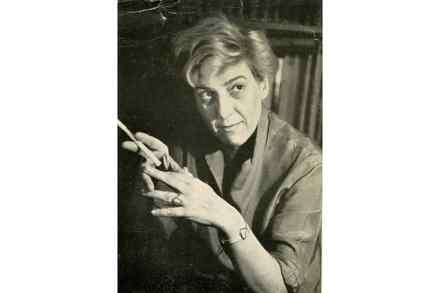
Her name has faded, but the British author and editor Kay Dick once cut a striking figure. She lived in Hampstead with the novelist Kathleen Farrell for more than 20 years, among a mid-20th-century literary set that included Stevie Smith and Ivy Compton-Burnett. Her most acclaimed novel was The Shelf, the story of a lesbian affair which drew heavily on her own life and circle. In 1977, she published They, a dystopian horror quite unlike her other work. It won the South-East Arts Literature Prize but soon went out of print, where it remained until a literary agent chanced on it in a charity shop. Reissued with an introduction by Carmen Maria Machado, another master of the uncanny, They makes its second entrance, into a world that has caught up.

The view from the Paris bus — an appreciation of everyday life

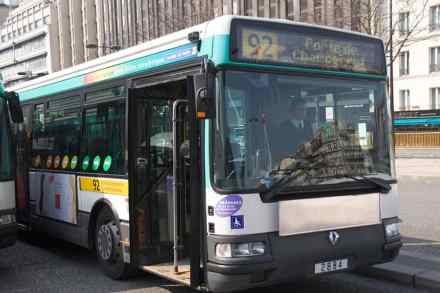
Many would say the commute was one thing they didn’t miss in lockdown. But when Lauren Elkin was ‘yanked out of the public sphere and resituated, inescapably, in the private’, she felt nostalgic for the bus’s incidental intimacy. The Franco-American writer and translator revisited notes made on her iPhone between September 2014 and November 2015, after she pledged to ‘observe the world through the screen of my phone, rather than to use my phone to distract myself from the world’. The diary entries record biweekly journeys between her home in Paris’s fifth arrondissement and the university where she taught in the seventh. These private jottings take shape as No.

The young bride’s tale: China Room, by Sunjeev Sahota, reviewed

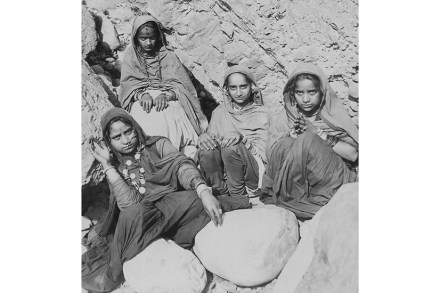
Sunjeev Sahota’s novels present an unvarnished image of British Asian lives. Ours Are the Streets chronicles a suicide bomber’s radicalisation, and its Booker-shortlisted successor, The Year of the Runaways, follows illegal immigrants in Sheffield — where Sahota now lives, having been raised in Derby by Punjabi-born parents. China Room, his most autobiographical work to date, mines his adolescence in deprived 1990s Chesterfield and imagines that of his great-grandmother in rural Punjab. In 1929, a 15-year-old girl is married to one of three brothers. On a remote farm, Mehar shares confined quarters with the best china and two other veiled brides —each competing to conceive a son first.

And then there were five: The High House, by Jessie Greengrass, reviewed

In 2009 Margaret Atwood published The Year of the Flood, set in the aftermath of a waterless flood, a flu-like pandemic that almost extinguishes human life. Twelve years ago such apocalyptic visions still felt speculative. Today, Jessie Greengrass’s new novel, The High House, imagining a near future in which civilisation is engulfed by an actual watery flood, does not. It feels chillingly inevitable. The author of a prize-winning short story collection and Sight, a novel shortlisted for the Women’s Prize for Fiction 2018, Greengrass grew up partly in Devon and lives in Berwick-upon-Tweed. Her affinity with the countryside permeates this book, in which nature is both sublime and implacable.

Problem parents: My Phantoms, by Gwendoline Riley, reviewed

Gwendoline Riley’s unsentimental fiction hovers on the edge of comedy and bleakness, and has drawn comparisons from Jean Rhys to Albert Camus. First Love, her fifth novel, put a toxic relationship under the microscope, winning the Geoffrey Faber Memorial Prize in 2017 and being shortlisted for five others, including the Women’s Prize for Fiction. Expanding on one of its strands, her sixth book zeroes in on child/parent dynamics. In My Phantoms, Bridget, an academic, reflects on her relationship with her late father and mother. Glimpses of her suburban upbringing reveal a mother miserably yet willingly shackled to convention. When Bridget asks Helen why she married the monstrous husband she left seven years later, she’s told: ‘It was just what you did.

Scenes from an open marriage: Luster, by Raven Leilani, reviewed

One of Barack Obama’s favourite books of 2020, Raven Leilani’s debut comes acclaimed by a literary Who’s Who that includes Zadie Smith, the author’s teacher at New York University. Five months after Luster became an instant New York Times bestseller, it hits British shores on a tsunami of hype that might grate if the novel weren’t so blindingly good. A feat of narrative voice and supple, rhythmic prose, Luster plunges us into the acerbic psyche of Edie, a millennial New Yorker wading through the early-twenties quagmire: student debt, primitive flatshare, artistic ambitions on hold. At the publishing house that pays her meagre wage, grateful diligence is expected of a ‘token’ black hire, yet Edie’s has worn thin.

Opposites attract: Just Like You, by Nick Hornby, reviewed

Babysitters are having a literary moment. Following Kiley Reid’s debut Such a Fun Age, Nick Hornby is the latest author to mine the potential for blurred lines and crossed boundaries bred by the employer-childminder dynamic. Throw race, class, sex and Brexit in the mix, and you have a juicy plot that’s both vintage Hornby and totally contemporary. Hornby has been chronicling north London’s romantic and cultural obsessions since 1992, and Just Like You doesn’t stray from home turf. It is 2016 and Joseph, a black 22-year-old from Tottenham, works Saturdays at an Islington butcher. While enduring the innuendos of drooling white women, he meets pretty, unaffected Lucy, who asks him to babysit her sons.