Loyd Grossman

Dining out in Mysore

From our US edition

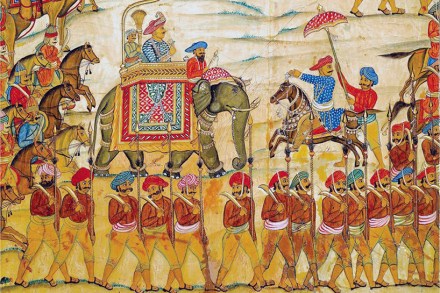
Long before “decolonization” was a glint in the eyes of left-leaning political scientists, Hyder Ali, an upstart mercenary soldier turned sultan of Mysore, and his nepo baby son, Tipu Sultan, fought four bloody wars to keep the British from controlling the south of India. If wars were like soccer league tables, the Hyder/Tipu team would have come out on top with an enviable record of three wins to one loss. That loss was the final match otherwise known as the Fourth Anglo Mysore War, in which Tipu was defeated by the inspired generalship of the future Duke of Wellington. Tipu died in battle and the general was soon comfortably billeted in his late adversary’s summer palace.
A glutton’s guide to Venice

From our US edition

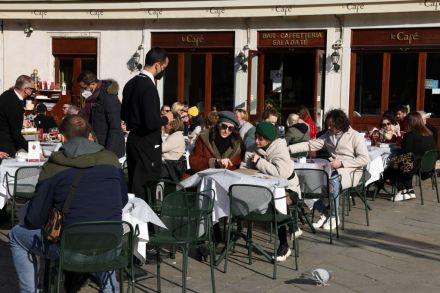
I have been writing about restaurants that are in or near cultural landmarks: museums, opera houses, historic sites. This column is an exception, as it is about one of the few restaurants in the world that is a cultural landmark in its own right: Harry’s Bar. It is an even more remarkable fact given that the restaurant is in the midst of probably the most culturally dense city in Europe, Venice. I must declare that I have eaten at Harry’s at least once, sometimes twice, on every one of the many trips I have made to Venice since 1977. I love it. Not everyone does – or maybe it’s more accurate to say that not everyone gets it. I took a friend there on his first visit and he complained that “the chairs are too low, the drinks are too small and the prices too high.

venice

Go to Cicoria for the food, stay for the opera

From our US edition

Smart Italian restaurants in cultural destinations are like buses: you wait ages for one and suddenly two come along at once. I recently praised Locatelli at London’s National Gallery. Returning to the city, it is the turn of Cicoria at the Royal Ballet and Opera, Covent Garden; a joint under the aegis of Angela Hartnett, well-known for her upscale restaurant Murano in Mayfair, her casual chain Cafe Murano and her frequent appearances on the box. Surprisingly few of the world’s great opera houses have given much thought to catering, although things are improving. I ate very well recently at Madrid’s Teatro Real and you can push the boat out with caviar at the Met in New York.

cicoria

In praise of the Acropolis Museum Café and Restaurant

From our US edition

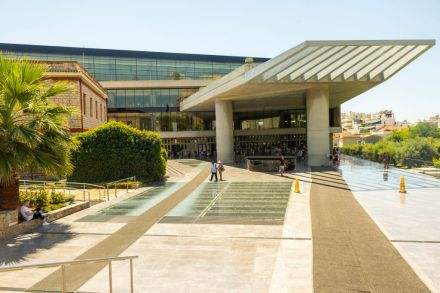
In the global poker game of cultural repatriation – otherwise known as who nicked what from whom – the Greeks seriously upped the ante with the opening of the Acropolis Museum in 2009. This lavish display of archaeological treasures in a light-filled building designed by the Swiss architect Bernard Tschumi is, alongside the recently opened Grand Egyptian Museum in Cairo, an exemplar of such a building’s mission to educate and inspire. In the tradition of polemic buildings, it is also a $200 million plea to return the Elgin Marbles from the British Museum to Greece.

Acropolis

Locatelli has entered the premier league of museum dining

From our US edition

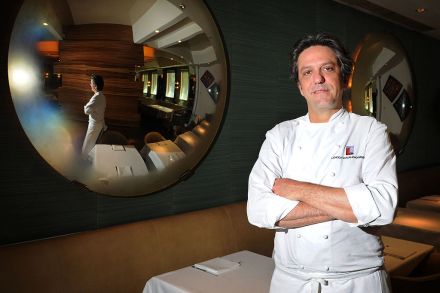
Does your museum feel tired and run down? Is the entrance unwelcoming? The bookshop shabby? The restaurant a mere café? If so, call Annabelle Selldorf, the German-American architect whose talent and sensitivity have made her the go-to person for reviving weary museums. Her recent transformation of the Frick in New York has been widely acclaimed and she will soon start work on the Wallace Collection in London. But the latest masterwork has seen Selldorf sprinkle her fairy dust on the Sainsbury Wing of London’s National Gallery. Those with long architectural memories will recall how in 1984, the then Prince of Wales christened the proposed new wing of the Gallery “a monstrous carbuncle on the face of a much-loved and elegant friend.

Locatelli

How to café hop like a Parisian

From our US edition

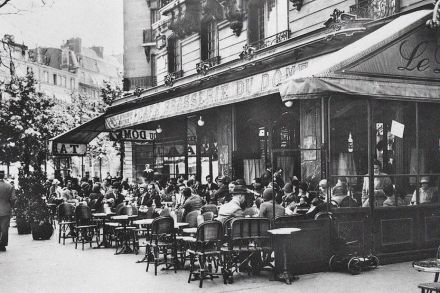
You will be familiar with the 1930s line, “Whenever I hear the word culture, I reach for my gun.” Whenever I hear the word culture I reach for the nearest restaurant. Culture makes me hungry and there is no better place to post-mortemize the latest exhibition or concert than from a comfortable seat in a local joint. For 19th-century progressives, railway stations were the most in-your-face examples of a new and better world. “The railway station is the highest monumental and artistic expression of the industrial and commercial genius which so specially characterizes the era in which we live,” César Daly proclaimed in 1861.

Café

With Loyd Grossman

24 min listen

Loyd Grossman is a man of many talents: from appearing on our screens as the host of MasterChef and Through the Keyhole, to crafting a beloved line of pasta sauces. Loyd has left his mark on both the culinary and cultural worlds. On the podcast, Loyd talks to Lara about hazy memories of ‘sipping a Shirley Temple cocktail aged 6 or 7’, the secret behind his pasta sauces, and why he loathes school meals.

Loyd Grossman, Tanya Gold, Harry Halem, Angus Colwell, Philippe Sands and Michael Simmons

45 min listen

On this week’s Spectator Out Loud: Loyd Grossman pleads to save Britain's cathedrals, as he reads his diary for the week (1:31); Unity Mitford is a classic case of aristocratic anti-Semitism says Tanya Gold (7:47); looking ahead to another Strategic Defence Review, Harry Halem warns that Britain is far from prepared for the era of AI warfare (12:42); 'the worst echo chamber is your own mind': Angus Colwell interviews philosopher Agnes Callard (24:24); reviewing Prosecuting the Powerful: War Crimes and the Battle for Justice, by Steve Crawshaw, Philippe Sands argues that while the international criminal justice system was prejudiced from the start the idea was right (31:01); and, Michael Simmons contradicts the Pope and declares that gossip is good for you (41:21).

I’m becoming too old to hold a Les Paul

My beloved 1967 Gibson Les Paul Goldtop guitar is now locked away until December at the earliest. For the past eight years, I have had the terrifying privilege of dragging my axe (as we guitarists call our instruments) on stage to perform in a series of Christmas gigs (as we musicians call such performances) with the celebrated prog rock band Jethro Tull. Ian Anderson, who leads the band, has for years generously staged a series of pre-Christmas concerts to raise funds for English cathedrals. Our 42 cathedrals are some of the greatest expressions of creativity, imagination and hope (more on that later) which our nation has ever produced. They are also mostly bloody freezing, although this year the magnificent, but sadly underrated, Bristol cathedral approached cosy conditions.