Leyla Sanai

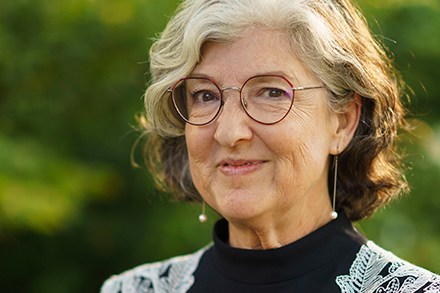
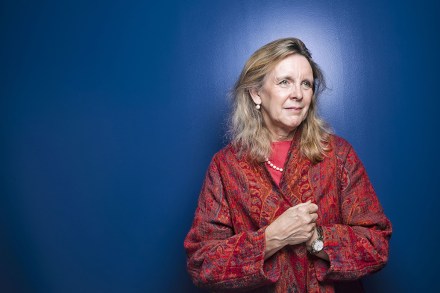
Dr Leyla Sanai is a Persian-British writer and retired doctor who worked as a physician, intensivist, and consultant anaesthetist before developing severe scleroderma and antiphospholipid syndrome

The harm of dwelling on a traumatic past

Back in the 1970s, people in Britain were mystified by the enthusiasm of Americans – especially New Yorkers – for shrinks. Since then, the vogue for therapy has spread and advice from non-experts on surviving divorce, bereavement and bankruptcy is now commonplace and not always insightful. By contrast, Gwen Adshead, a psychiatrist who has specialised in trauma, is invariably rewarding. Her previous book, The Devil You Know (2021), on the minds of violent criminals, was written with Eileen Horne, a former drama producer – as is Unspeakable. I wasn’t entirely sure why Adshead needed a collaborator here, being so obviously well-read. There are references to Homer, Shakespeare, Dante, Keats and Yeats, along with C.S. Lewis, T.S.

Tales of quiet intensity: The News from Dublin, by Colm Toibin, reviewed

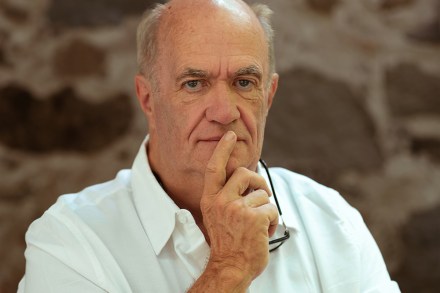
Colm Toibin is a master of understatement, his work characterised by great emotional intelligence coupled with redoubtable restraint. This is his third anthology of stories, following Mothers and Sons (2006) and The Empty Family (2010). He fills the gaps between words – what he doesn’t say – with as much meaning as the prose. Familiar themes emerge. There is the Irish diaspora in the US (as in Brooklyn and Long Island); the Catalan Pyrenees (the setting for ‘The Long Winter’ in Mothers and Sons); and Argentina (as in the novel The Story of the Night). Feelings of exile and being an outsider are aroused, while Catholicism still taps on the shoulders of those long lapsed.

Sabotage in occupied France: The Shock of the Light, by Lori Inglis Hall, reviewed

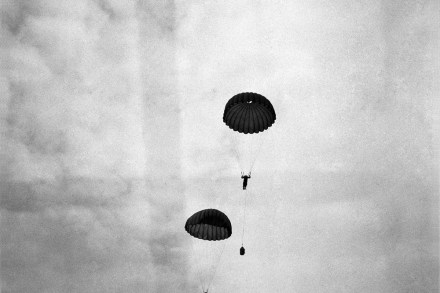
The courage of women dropped into Nazi-occupied Europe in order to work for Special Operations Executive (SOE), was immense. Trained as spies in Britain, they were tasked with sabotage and subversion of Nazi military rule and operated covertly with Resistance fighters and other British agents. It was a hugely risky job. Thirty-nine entered occupied France in this way, mostly by parachute. Imagining their experiences seems to be a rite of passage for many esteemed novelists – off the top of my head I can think of William Boyd, Sebastian Faulks, Simon Mawer and Kate Quinn. I have read and enjoyed their books, but there is often a sense of the protagonists being superhumanly lucky: beautiful, outspoken, brave, and able to glide through the espionage.

The doctor who wanted me dead

On New Year’s Eve, at about 3 p.m., I phoned for an ambulance. The pressure sore on the weight-bearing surface of my right amputation stump – one of three on that stump – had torn open, exposing bone: specifically, the cut end of the fibula. Although it was a pain to have to go into A&E, it wasn’t unusual. I had last been discharged from hospital a week before in Glasgow for infection of said pressure sore. The first two of my armoury of autoimmune illnesses – scleroderma, antiphospholipid syndrome, hypothyroidism, autoimmune uveitis and Sjögren’s syndrome – have caused me to have hundreds of hospital admissions over the past 26 years, and around 45 to 50 operations in theatre.

Revenge of the invisible woman: Other People’s Fun, by Harriet Lane, reviewed

Do you have one of those friends who is uncannily conscious of the most subtle signs of insincerity; who quietly witnesses selfish and narcissistic behaviour and drily expresses their observations with devastating wit in a few well-chosen words? Well, Harriet Lane is like that friend, and you don’t have to know her to enjoy her deliciously bitchy awareness of fakery. Her first novel, Alys Always (2012), told the story of a silently sour sub-editor who seizes her chance to better her lot through a tragedy. She inveigles her way into the life of a recently bereaved male writer and exploits the situation to enjoy new-found power and material benefits.

A Faustian pact: The School of Night, by Karl Ove Knausgaard, reviewed

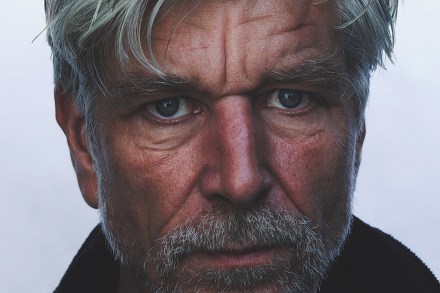
The fourth novel in Karl Ove Knausgaard’s spooky supernatural series differs from the others in that it is a standalone and doesn’t involve previous characters. Gone, too, are the multiple narrators; and there is only the briefest mention of a new star in the sky – which in the other three books coincided with all sorts of inexplicable occurrences. But it is no less compelling. This is the story of an arrogant young Norwegian, Kristian Hadeland, who arrives in London in 1985 to study photography at a prestigious art college. Though enthusiastic about his subject, he finds it hard to accept the constructive criticism of his lecturers.

Down with freshers

Now that the autumn term is well underway at universities and freshers’ week has removed its leering, spotty face from the calendar for another year, may I talk about how ghastly it is? Impressionable young people who believe they are completely mature adults but still have another decade or so of brain remodelling to go arrive at an unfamiliar place for the first time. Once any relatives who lugged their bulging suitcases packed with stuff to make them seem grown-up have disgorged the final single sock from the family car and driven off, hiding their tears, the young person is on their own. I remember being 19 and arriving at Edinburgh University. I took the train up from London and hauled my suitcase to the taxi line at Waverley.

Do you have a Facebook stalker?

We’ve all seen appalling stories of people, usually – but not exclusively – women, being stalked by a spurned suitor, and how this can have terrifying and sometimes life-threatening sequelae. However, the popularity of social media has brought about the advent of the less dangerous but mighty irritating social media stalker – or ‘smalker’, as I like to call them. The smalker is usually a spurned friend who has been chewing her lips with fury since you removed her from your Facebook ‘friends’ list. Sometimes they only requested to be your ‘friend’ in the first place so they could lurk on your page, twisting their face into a sucking-a-wasp grimace: an upside-down smile with a wrinkled nose.

Whatever happened to Caroline Lane? A Margate mystery

Should you search for someone who has disappeared seemingly of their own volition? David Whitehouse, the author of novels that scooped the Betty Trask and Jerwood prizes and were shortlisted for the Gordon Burn and CWA Golden Dagger awards, happened upon a real-life mystery. Having his hair cut in Margate, he was told about a woman who had lived in the neighbourhood and vanished. The story came from a resident of the same block as the missing Caroline Lane. Whitehouse’s interest was piqued. This is the background to Saltwater Mansions, the name of the apartment block from which Lane, a feisty (even grumpy) middle-aged woman had seemingly evaporated with no explanation.

Hot weather is overrated

Having spent more than half my life living in Scotland, I found weather was probably the most common topic of casual conversation with colleagues. This is because Edinburgh, where I worked as a physician, is freezing for 11 months of the year, and Glasgow, where I was a consultant anaesthetist, rains for the same period. Hot weather was as unrequited a desire as George Clooney walking into the surgical theatre coffee room. When we were blessed with the one month that the sun shone weakly down on us for a few minutes, we basked. Never mind that the warmth was so faint we had to take a woolly jumper everywhere – out we would come in our summer garb, turning to the distant orb like sunflowers, insisting on sitting outside in pubs and cafés while shivering.

Glastonbury has become a very posh problem

I’m afraid that when I read that the posh glamping provider for wealthy Glastonbury fans was going into liquidation, I smirked. The company offered yurts that only look luxurious if you compare them with tents – with a beds, a sofa, a loo and a shower, as well as meals. Pretty basic, biatch. The only exclusive thing about it is that guests can access the hospitality area behind the Pyramid tent, like ageing groupies. The company organising the liquidation sent emails to clients who had already paid for this year’s Glastonbury to say that no tickets had been bought so, oops, sorry. Wealthy customers complained vociferously to the media. One woman said that her father had paid £40,000 this year for three yurts and six hospitality tickets.

Michael Gove, Max Jeffery, Paul Wood, Susannah Jowitt and Leyla Sanai

38 min listen

On this week’s Spectator Out Loud: Michael Gove interviews Justice Secretary Shabana Mahmood (1:17; Max Jeffery shadows the police as they search for the parents of three abandoned babies (14:41); Paul Wood asks if this is really the end of the PKK, the Kurdistan Workers’ Party (20:57); Susannah Jowitt reports that death has come to the Chelsea Flower Show (28:55); and, Leyla Sanai reviews Graham Swift’s new anthology of short stories, Twelve Post-War Tales (34:23). Produced and presented by Patrick Gibbons.

Private battles: Twelve Post-War Tales, by Graham Swift, reviewed

When Granta magazine’s list of Best of Young British Novelists first appeared in 1983 it was a cue for me to immerse myself in the work of the named writers. There was the dazzling sardonic humour and knowing intelligence of Martin Amis; Ian McEwan’s twisty psychological thrillers; the cool prose of Kazuo Ishiguro, masking latent pain; and the fantastical, rich threads of Salman Rushdie. Rose Tremain’s anthropological insights and Pat Barker’s harrowing war stories were also transfixing. It took me a while to get to Graham Swift, but when I read Waterland, Mothering Sunday and the Booker-winning Last Orders, I was quietly absorbed. Swift didn’t aim for the pyrotechnics of his literary brothers. If they were strutting peacocks in the aviary of new writers, he was a sparrow.

Who’s the muse? In a Deep Blue Hour, by Peter Stamm, reviewed

The Swiss writer Peter Stamm’s fiction is often enigmatic – unreliable narrators, contradictory behaviour and characters who can’t admit to their emotions. In his latest novel, fortysomething Andrea is in Paris with her cameraman boyfriend Tom, attempting to make a documentary about a celebrated author 20 years older than herself. The subject, Richard Wechsler, appears to like Andrea, but isn’t enthusiastic about the film. His novels generally feature a muse to whom the male character frequently returns, and Andrea becomes obsessed with discovering if this relates to Wechsler’s life. At the same time, she is annoyed if Tom asks Wechsler similar personal questions. (Andrea is easily irritated, ending several relationships when none of them lives up to her exacting standards.

Petroc Trelawny, Gareth Roberts, Tom Lee, Leyla Sanai and Iram Ramzan

28 min listen

On this week’s Spectator Out Loud: Petroc Trelawny reads his diary for the week (1:14); Gareth Roberts wants us to make book jackets nasty again (6:22); Tom Lee writes in defence of benzodiazepines (13:44); Leyla Sanai reflects on unethical practices within psychiatry, as she reviews Jon Stock’s The Sleep Room (19:41); and, Iram Ramzan provides her notes on cousin marriages (24:30). Produced and presented by Patrick Gibbons.

The psychiatrist obsessed with ‘reprogramming’ minds

When the actress Celia Imrie was 14, she was admitted to an NHS hospital where she was given medication intended for delusional, hallucinating, agitated schizophrenics. Though not diabetic, she was regularly injected with insulin, which lowered her blood sugar so that she became shaky, anxious, ravenously hungry and so confused she couldn’t recognise her own family. Yet she was one of the luckier ones. Other patients were given enough insulin to induce a coma caused by dangerously low glucose levels, and some even died.  Why was Imrie subjected to this? Because she was anorexic and had been placed in the care of a notorious psychiatrist who believed in aggressive physical therapy.

The wonder of the human body

Gabriel Weston is an extraordinary writer. An ENT surgeon who now prefers to carry out excisions of skin cancers, she has found a niche in exploring moral dilemmas in medicine. Her first book, Direct Red (2009), examined such clashes as a patient’s need for empathy and a surgeon’s requirement to be steely. A serious problem at the time was how the punishing schedules of junior doctors made it virtually impossible for them to give patients the attention and compassion they so often needed. Weston’s second book, Dirty Work (2013), was a novel – and no less ethically probing. Nancy, its female gynaecologist protagonist, takes on her department’s unpopular abortion lists, telling herself she is performing an essential feminist service.

Boring jobs are good for you

More than one in five people in the UK is out of work at the moment. As lockdowns lifted, many people developed anxiety and depression – most of which can be alleviated by companionship, routine and having your own cash. What I can’t understand is young, fit people not working. From the age of 13, I stood in a cake shop every Sunday, boxing pâtisserie for affluent customers. The old lady who owned the shop would mutter for us to hurry up as there was a queue. It was a knackering job, being on my feet all day, and the owner didn’t trust her charges to work the till. So we had to hand the money to her, she would hand us the change, which we would then pass on to the customer.

The boundless curiosity of Oliver Sacks

Oliver Sacks, who died in 2015, first came to public attention with his descriptions of fascinating neurological conditions in accessible articles and books. He was one of the first doctors to attempt to break down the barriers between the medical profession and the layman by eschewing esoteric jargon and explaining complex brain pathology simply while never losing sight of the patient as a human being. He exuded compassion and honesty. He brought attention to little-known illnesses such as encephalitis lethargica, or sleeping sickness, of which there was an epidemic after the first world war.

A dark satanic cult: The Third Realm, by Karl Ove Knausgaard, reviewed

I finished reading the third volume of Karl Ove Knausgaard’s latest series – no longer a trilogy, perhaps a sextet – in three days. The Third Realm is as unsettling, disturbing and riveting as the previous instalments, and I was even disappointed that it came in at a mere 500 pages – considerably shorter than the others. But all three books are less dense than those in his celebrated My Struggle series. There is a lot of dialogue, and Knausgaard’s skill in capturing conversation makes his characters spring vividly from the page. Ordinary failings, such as insecurity, jealousy, duplicity, lust and irritation, are subtly conveyed through a surly comment, a fleeting mutinous thought, a blurted accusation, a smooth lie.