Lewis M. Andrews

Universal school choice would transform real estate

From our US edition

A new Arizona law which funds all the state’s K-12th grade children to attend a school of their family’s choosing, public or private, has been widely hailed as a landmark education reform, although evidence suggests the benefits will go far beyond academics. Studies by the Manhattan Institute, New Jersey’s E3, and Connecticut’s Yankee Institute all show that subsidizing students to use alternative placements would save any state millions each year. But perhaps the most unexpected promise of universal school choice is the impact it would have on area real estate markets, simultaneously lowering the cost of what families must pay for a desirable home, improving the value of distressed areas, and equalizing the quality of life between rich and poor communities.
The post-Covid mental health crisis

From our US edition

Recent mass shootings have reminded us of just how much gun violence has surged since Covid. The record of 45,222 Americans dying from gun-related injuries in the first year of the pandemic could well be topped in 2022, with more than 12,000 fatally shot since the end of April. Many rightly condemn progressive district attorneys in cities for failing to condemn the increased bloodshed. Yet the uptick in violence has been uniform across the nation, plaguing rural counties as much as urban ones, which is why most psychological experts put the blame squarely on the emotional residue of lengthy Covid lockdowns.

moran

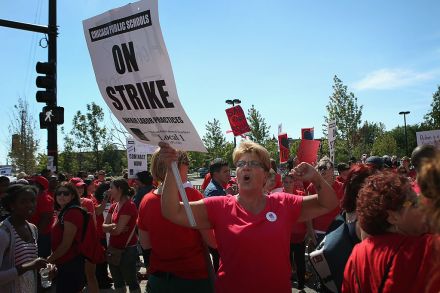
Why are government unions never the bad guys?

From our US edition

If there is such a thing as a formula for making a hit film, it has something to do with giving audiences a new and unusual villain. Over the years, screenwriters have thrown their protagonists up against enemies as thuggish as boss Johnny Friendly in 1954’s On the Waterfront and as smooth as Olivier’s Crassus as in 1960’s Spartacus. “The more successful the villain, the more successful the film,” as Hitchcock himself once put it. Which is why Hollywood’s constant search for new and unusual bad guys has explored almost every conceivable milieu: corporate America (The Big Short), street gangs (The Warriors), hospitals (Coma), prisons (Shawshank Redemption), law firms (The Firm), and even the movie studio itself (The Bad and the Beautiful).

How government overreach bred Covid skepticism

From our US edition

I did not intend for this to read like a cautionary editorial. When the Spectator World asked me to do a piece on the BA.2 Omicron subvariant, I thought I would simply be updating readers on the progress of the latest Covid mutation. And while the BA.2 is fast spreading, it appears to be no more life threatening than earlier versions of the coronavirus. Virus-related hospitalizations in New York state and the rest of the Northeast, where the new variant is especially prevalent, have gone up slightly in recent weeks, but are nowhere near where they have been in previous Covid surges. And according to the data, those who contract BA.2 are not at a higher risk of serious illness. There is no indication that BA.

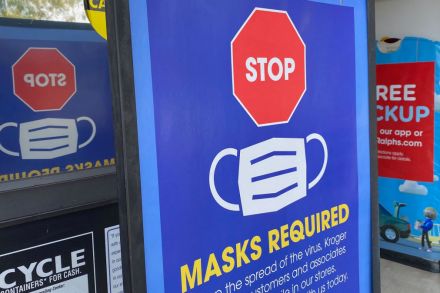
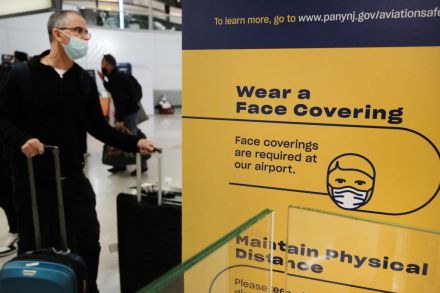
mask

Why a post-Covid world might not be so bad

From our US edition

No one need ask why the strict public health regime to manage Covid — masks, mandates, quarantines, and required inoculations — has begun to collapse. Between angry truckers, unfavorable polling for continued lockdowns, the perception of a Wuhan coverup, changing reports of vaccine effectiveness, and declining hospitalizations, even President Biden and blue state governors realize they have but two options: pretend to be leading a return to normalcy or face an unpredictable grassroots rebellion. The interesting question for Americans is not why the sudden prospect of a return to normalcy but what “returning to normalcy” really means.

How working from home threatens authoritarian regimes

From our US edition

One of the few good things to come out of the pandemic has been the option to work from home (WFH). According to a Stanford University study of 17,000 employees, 50 percent of respondents who stayed at their jobs without commuting wanted to keep working from home at least part-time after Covid. And a September 2021 survey by OwlLabs, a video conferencing platform, found that one in three people who have worked remotely since the outbreak would likely quit if they could not continue to do so. While undoubtedly pressured by the current worker shortage to accept WFH as an employment benefit, companies have come to appreciate how decentralized staffing can improve productivity and substantially lower overhead.

The rise of the second-string left

From our US edition

If a recent Scientific American opinion piece purporting to explain how growing opposition to critical race theory damages public education reveals anything, it is that the real problem with today’s left goes much deeper than its progressive ideology. The co-authors assert that resistance to CRT is based on white supremacy, a refusal to acknowledge history, a rebirth of ‘50s-style anti-communism, and the conservative desire to harden racial divisions. These stunning inaccuracies raise questions not just about the validity of their argument but the competence of the supposed experts making it.

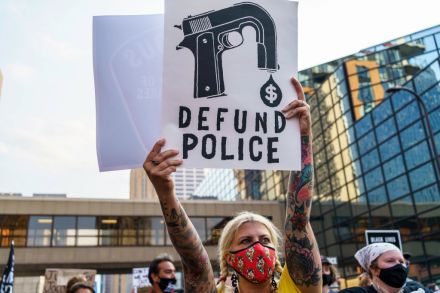
defund

Escaping from South Africa during the Omicron panic

From our US edition

One of the most gripping scenes in the classic film Casablanca is at the very beginning, when many of the characters who would feature in the story are seen together in a busy city plaza. Suddenly silent as a small Lisbon-bound plane passes overhead, they all look up, and the audience can see in their faces the cumulating stress of not knowing when, or even if, they would get out of wartime Morocco and fly to America. I never imagined I would experience anything remotely like that until just a few days ago when my twenty-eight-year-old son Zachary and I were wrapping up a long-planned and, due to the coronavirus, frequently postponed vacation to South Africa.

omicron

The Wuhan cover-up is more typical than you think

From our US edition

The biggest shock amid the COVID-19 pandemic has been the discovery that the virus may have been released during an illegal collaboration on so-called 'gain-of-function' research between the US nonprofit EcoHealth Alliance and the Wuhan Institute of Virology. Recently revealed National Institutes of Health (NIH) documents show that American taxpayers directly subsidized this joint effort, despite a federal government ban on any experiment that might give pathogens the ability to leap species. Even worse was that EcoHealth Alliance President Peter Daszak tried to shut down any debate on whether the coronavirus had been leaked from a lab by getting 27 prominent scientists to endorse a March 2020 letter to the medical journal the Lancet.

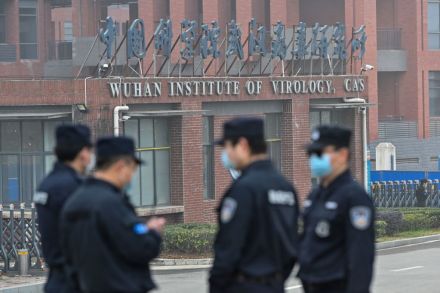
wuhan