Leah McLaren

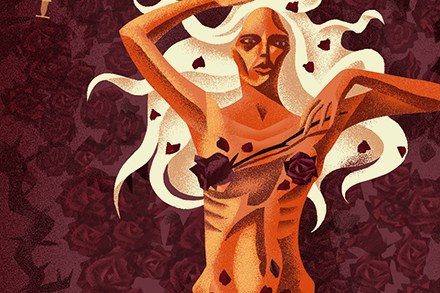
Zombie fillers: the super-rich are plumping themselves up with dead people’s fat

From our US edition

A few years back, I lost a significant amount of weight. It came off entirely by accident following a major unforeseen life crisis that resulted in a prolonged reduction of appetite. Almost overnight I went from being a healthy average-sized middle-aged woman to a thin one. Everyone was very complimentary, of course. But this was in 2022, back when shedding weight still seemed like an accomplishment and evidence of restraint rather than something to be bought and administered via needle and private prescription. I waited for my dress size to rebound to an eight from a four as it had in the past but this time round, for whatever reason, it did not.

zombie fillers

Beautiful interiors can’t guarantee a beautiful marriage

From our US edition

I remember poring over the photos when they first appeared in Architectural Digest in early 2023. Even back then, before Lily Allen wrote what Rolling Stone called “the most brutal album of the year,” I knew in my gut that her marriage to that actor guy she met on Raya – whatshisface? David Strangerbeard? – wouldn’t last. Because looking at the pictures of their house made me feel queasy. There was something off about it. It just wasn’t right. It didn’t bode well. It’s not that the house wasn’t gorgeous. It was – and still is – spectacular. A double-width brownstone in the slouchiest artisanal urban village on Earth: Carroll Gardens, Brooklyn.

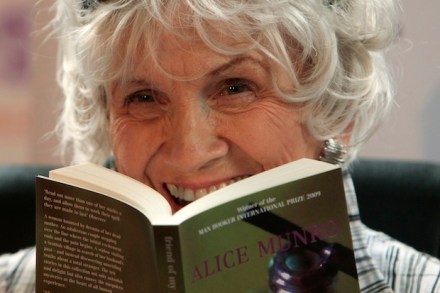
The once-in-a-generation genius of Alice Munro

In the early 2000s, a young Canadian writer who shall remain nameless found herself in the backseat of a car with her hero, the legendary Alice Munro. A local volunteer had picked them both up at the train station and was delivering them to the Eden Mills Festival, not far from Clinton, in rural south-western Ontario, the tiny farm town where Munro lived quietly for decades with her second husband. The volunteer explained she just had one more errand to run – she needed to pick up the samosas for dinner while they were still hot – and then they would all carry on the festival. The younger writer was nervous to find herself suddenly alone in close quarters with her idol. What on earth would they talk about?

Have I been sent mad by goats?

I am on a retreat in the Portuguese mountains outside Faro, a heavenly place called Moinhos Velhos. I have not eaten food in three days. I have practised hours of yoga and meditation. I have swum many cool, slow lengths of a blue-tiled pool and sweated in a wood-fired sauna and walked for miles through a red dirt valley under whispering conifer pines.  Day two is the day you hate everything and want to blow up the world Yesterday I wanted to kill people. Not just the people on the retreat (who are all very calm and friendly and kind, which of course is why I wanted to kill them) but all the living creatures in the world – excluding a small herd of goats and a few obedient wood nymphs to milk them. I wanted exile. The goats got me thinking about chèvre.

Matthew Parris, Dan Hitchens and Leah McLaren

23 min listen

Matthew Parris, just back from Australia, shares his thoughts on the upcoming referendum on the Aboriginal and Torres Strait Islander Voice (01:08). Dan Hitchens looks at church congregations and wonders why some are on the up, while others are in a spiral of decline (08:32), and Leah McLaren describes the delights of audio and tells us why young children should be heard, but not seen (17:57).

The simplicity and joy of recorded conversations

Recently I stumbled across a file of conversations I’d recorded with my seven-year-old son Frank back when he was four. Topics include his travels through wormholes, why he finds planet Earth ‘boring’, the tragic story of how his ‘first family’ died and how he got his ‘laser eyes’. It was only by listening to these voice notes three years later that I understood just how precious audio recordings are, and also how under-used. The conversations I taped illustrate the nuances of Frank’s four-year-old self more vividly than any photo or video could. Anyone attempting to write fiction should take note of the power of audio – conversation and voice are how character is built. A physical description tells you relatively little.

Cindy Yu, Leah McLaren and Hannah Tomes

15 min listen

This week: Cindy Yu discusses Britain’s invisible East Asians (00:51), Leah McLaren discloses the truth about single motherhood (06:02), and Hannah Tomes reads her notes on dining alone (12:08).  Produced and presented by Oscar Edmondson.

The truth about single motherhood

If you believed Hollywood, you’d think the world was madly in love with harried, struggling single mothers. I mean, who doesn’t love Erin Brockovich? Or Renée Zellweger’s character in Jerry Maguire? But in real life, that’s not how it works. In recent months, I have unexpectedly found myself the sole-care single mother to two young sons. This has changed my life in unfathomable ways but the main thing it’s altered is my relationship to work. There’s just way more of it – the unpaid kind. For all our talk of progress and equality, single mums are held to higher account than single dads In October, I went from being a partner, wife and co-parent to the only responsible adult on deck. My parental responsibility doubled, and my resources were halved.

Where does a mother’s history end and a daughter’s begin?

In the grim locked-down winter of 2021, I drove three hours to Wales where I sat in an isolated cottage and wrestled with a memoir I could not figure out how to write. While I was there, my mother sent me a link to a two-page personal essay she’d published in a tiny but venerable magazine called the Literary Review of Canada. It was entitled ‘This Story is Mine’. After a preamble about feminism and #MeToo, she cuts to the chase: ‘In June 1964, a few weeks before my thirteenth birthday I was raped by a man old enough to be my father.’ My mother then went on to tell her life story, or the story she understands to be her life. It’s a story I’d heard many times before, one she’d published other versions of in other places.

James Heale, Leah McLaren, Nicholas Farrell

22 min listen

On this week's episode, we’ll hear from James Heale on the Zac Goldsmiths’ secret shadow cabinet. (00:49)Next, Leah McLaren on Covid in Canada. (07:20)And finally, Nicholas Farrell on the march of the Italian Wolves. (13:58)Produced and presented by Sam HolmesSubscribe to The Spectator today and get a £20 Amazon gift voucher:spectator.

Trudeau vs truckers: a head-on collision

Two-and-a-half centuries ago in 2015 I had a video call with a Canadian friend who lives in my hometown of Toronto. As we spoke, she was putting together a Middle Eastern spice box for the Syrian refugee family she’d sponsored through her daughter’s school, carefully printing the labels in Arabic. Canada had recently committed to accepting 25,000 refugees, compared with the UK’s 10,000, which we both agreed was stingy. I explained to her that although there were lots of charities and refugee initiatives here, the public attitude was different. Not xenophobic, I insisted, just less precious. None of the parents at my son’s school, as far as I knew, were organising welcoming committees for the Syrians, let along putting together spice boxes.

Justin Trudeau’s election gamble is backfiring

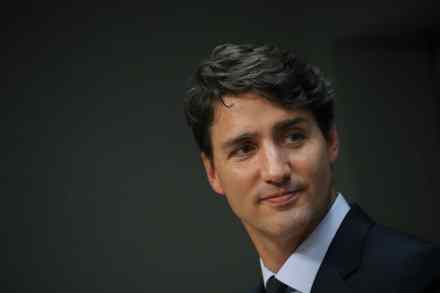
In 1966, a year before Pierre Elliott Trudeau first blazed to power, the bard-poet Leonard Cohen published his second and final novel, Beautiful Losers. The book is a hallucinogenic, stream-of-consciousness steam bath of Catholic allusions, French separatist indignance and extra-marital forest porn with hot indigenous chicks. Needless to say it’s basically unreadable. Back home in Canada though, the book is still widely taught and read. Over half a century on it still sells thousands of copies each year. The reason, as one early critic noted, is that the book, while being an obvious failure, is nonetheless ‘an important failure.’ Which brings me to the matter of our Prime Minister, Justin Trudeau.

The Canadian election is turning into a comedy of cringe

Next week my compatriots will cast their votes in what has arguably been the worst Canadian election ever. By ‘worst’ I don’t mean allegations of voter fraud or political corruption or scenes of civil unrest but a collective release of hot prairie wind followed by a vague sinking sensation — the feeling of a prosperous nation of decent people settling into a new low of political disillusionment. The campaign kicked off with a bang, as Time, a US magazine, humiliated the Canadian press by breaking the story of the year: yearbook images of our dreamboat PM — the thinking non-gender-binary person’s gluten--free crumpet — cavorting in blackface back when he was teacher at a private Vancouver high school. Since then the spiral has continued.

Alice Munro won’t let her Nobel go to her head — that’s why she’s a true Canadian writer

Canadians, like the English, are known for our tendency to apologise. The difference is, we actually mean it. Our modesty is not false. Our inferiority complex is not a polite, self-deprecating joke. We really do feel inferior. And we really are sorry. Sorry for taking up so much space for so few people. Sorry for being so dull and functional compared with our glitzy neighbour to the south. Sorry about Celine Dion. And above all, sorry for failing to produce much of anything great apart from Niagara Falls and the Rockies, which we can’t take credit for anyway.

Parent trap: WhatsApp groups are feeding our fears

The mother of a little girl in my son’s year at school recently committed suicide. On the surface she was a radiant person, smiling and full of light. Devoted to her daughter, successful at work, always good for a laugh at the school gates. No one — save those loved ones who knew her private struggle — saw it coming. For days, waves of confusion and sadness emanated out through our patch of north-west London. This is the way of suicides in social groups. I’ve seen it before. They ripple and reach well beyond where they have any right to. But the peculiar thing about this tragedy was the way the news was disseminated — namely through the popular social media service WhatsApp.

Parent trap

The mother of a little girl in my son’s year at school recently committed suicide. On the surface she was a radiant person, smiling and full of light. Devoted to her daughter, successful at work, always good for a laugh at the school gates. No one — save those loved ones who knew her private struggle — saw it coming. For days, waves of confusion and sadness emanated out through our patch of north-west London. This is the way of suicides in social groups. I’ve seen it before. They ripple and reach well beyond where they have any right to. But the peculiar thing about this tragedy was the way the news was disseminated — namely through the popular social media service WhatsApp.

Too good to be Trudeau

An Italian friend who lives in Rome texted me to ask about the current political crisis in Canada that is threatening to topple the Liberal government of Prime Minister Justin Trudeau. ‘I honestly can’t see what the “scandal” is,’ he said. ‘Is it all just because Justin forgot to say “please” when asking his attorney-general for a deferred prosecution agreement?’ No and yes — and that is also what makes this scandal so uniquely Canadian. In Britain, good manners are often an act of passive aggression, while Canadians are pathologically earnest in their civility. We tend towards well-mannered moderation both in life and politics.

Class war

One thing I love about my adopted country is the widespread cultural contempt for dullness. Unlike North Americans, intelligent British people rarely drone on in a witless or self-aggrandising manner. They deflect, make jokes and generally aim to please. But there is one boring subject no one here ever seems to tire of and that is schooling. ‘So where do your kids go?’ I’ve learned is just as loaded and inescapable a London dinner party question as ‘What do you do?’ or ‘Where are you on Brexit?’ If you choose private, you’d better have a plausible explanation (e.g. ‘We just didn’t want to make our child the social experiment’).

What I learned from arguing about gun control with my Texan uncle

Whenever there’s another mass shooting in America, like the one in Florida yesterday, I think immediately of my Uncle Bill in Texas, a retired military man, practising Catholic, Republican, NRA member, community volunteer and civil libertarian who lives in a gated community with my Aunt Bev (a retired nurse) on the outskirts of Houston. Uncle Bill likes to email me redneck jokes in the hope of getting my progressive Canadian dander up. Here’s a recent one: The premier of Ontario is jogging with her dog along a nature trail. A coyote jumps out and attacks the premier’s dog, then bites the premier. She calls animal control. Animal control captures the coyote and bills the province $200 testing it for diseases and $500 for relocating it. She calls a veterinarian.

Sticking to his guns

Whenever there’s another mass shooting in America, like the massacre in San Bernardino last month, I think immediately of my Uncle Bill in Texas, a retired military man, practising Catholic, Republican, NRA member, community volunteer and civil libertarian who lives in a gated community with my Aunt Bev (a retired nurse) on the outskirts of Houston. Uncle Bill likes to email me redneck jokes in the hope of getting my progressive Canadian dander up. Here’s a recent one: The premier of Ontario is jogging with her dog along a nature trail. A coyote jumps out and attacks the premier’s dog, then bites the premier. She calls animal control. Animal control captures the coyote and bills the province $200 testing it for diseases and $500 for relocating it.