Lara Prendergast

Lara Prendergast

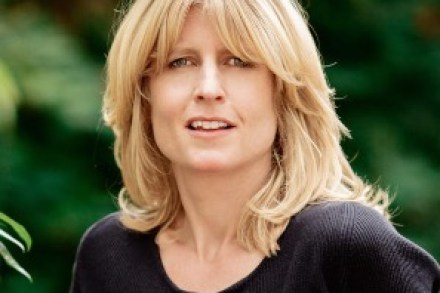
Lara Prendergast is executive editor of The Spectator. She hosts two Spectator podcasts, The Edition and Table Talk, and edits The Spectator’s food and drink coverage.

Prue Leith on her life through food and drink

25 min listen

For our inaugural episode, Livvy and Lara are joined by Prue Leith: chef, restaurateur, broadcaster, journalist, novelist and, of course, Great British Bake Off presenter. They chat about her time in South Africa and Paris, and how that helped shape her attitude to food. She comes clean about some of her cooking mishaps, making sandwiches for both toffs and builders, being the first woman to have a proper restaurant in London, why she hates washing up, and her first cookbook in 25 years, Prue: My All-time Favourite Recipes.

Should we all write ‘feminist’ stocking fillers? | 23 December 2018

I arrived at Waterloo, half an hour before my train departed. Needing to buy a birthday card, I popped into Oliver Bonas, a shop which sells ‘lifestyle gifts’. I came across marble cheeseboards and gin-and-tonic scented candles. If you are looking for a lemon juicer shaped like a cactus, you will find one in Oliver Bonas. The shop also sells ‘gift books’. Most are aimed at women and quite a few have the word ‘feminist’ in their title. There is one called Vajournal: An Interactive Diary for Feminists. It invites the reader to engage with ‘thought-provoking activities’ and describe their ‘worst and best sexual experiences’ as well as any instances of ‘everyday sexism’.

Should we all write ‘feminist’ stocking fillers?

I arrived at Waterloo, half an hour before my train departed. Needing to buy a birthday card, I popped into Oliver Bonas, a shop which sells ‘lifestyle gifts’. I came across marble cheeseboards and gin-and-tonic scented candles. If you are looking for a lemon juicer shaped like a cactus, you will find one in Oliver Bonas. The shop also sells ‘gift books’. Most are aimed at women and quite a few have the word ‘feminist’ in their title. There is one called Vajournal: An Interactive Diary for Feminists. It invites the reader to engage with ‘thought-provoking activities’ and describe their ‘worst and best sexual experiences’ as well as any instances of ‘everyday sexism’.

Mockery is good for the monarchy

Isn’t Meghan fabulous? Hasn’t she totally brought the monarchy into the 21st century? Doesn’t she make Kate look like such a square? We were so bored of Sloaney English roses, weren’t we? Meghan Markle is widely considered to be the best thing to have happened to the royal family — and Britain — in a long time. The newspapers are ecstatic, and not just the patriotic ones. There will be pictures, pictures and more pictures to come. Or fake pictures, if that’s what sells. The Sunday Sport recently ‘discovered’ a fake topless picture of Prince Harry’s squeeze, stuck it on the front page and ran with the headline ‘Harry’s Meghan in nude phone photo shock’.

Table Talk podcast, with the Spectator’s editor Fraser Nelson

On the latest episode of the Spectator’s Table Talk podcast, Olivia Potts and I are delighted to be joined by The Spectator’s editor, Fraser Nelson. Fraser joins us – from his own office at 22 Old Queen Street, where he keeps an impressive collection of Scotch whisky – to discuss his life through food and drink. He reveals why he was called ‘Sandwich Boy’ when he was working at the Scotsman, and tells us about his time serving drunk old men in a Scottish pub. ‘They were some of the wittiest, funniest people I ever met.’ We also chat about the first time he encountered gazpacho at a FTSE 100 boardroom lunch – and he sent it back because the soup was cold.

Introducing Table Talk, a new podcast from Spectator Life

Olivia Potts and I are delighted to be launching Table Talk, a new Spectator Life podcast with Spectator Radio. Each episode, Olivia – who writes the Vintage Chef column – and I will be joined by a guest familiar to Spectator readers. We will discuss their life story, through the food and drink that has come to define it. For our inaugural episode, we’re joined by Prue Leith: chef, restaurateur, broadcaster, journalist, novelist and, of course, Great British Bake Off presenter. We speak to her about her time in South Africa and Paris, and how that helped shape her attitude to food. We hear about some of her cooking mishaps, making sandwiches for both toffs and builders, being the first woman to have a proper restaurant in London and why she hates washing up.

The female gaze | 2 November 2017

Every weekday, I travel by Tube to The Spectator’s office, staring at the posters plastered all over the walls. I like looking at the plays and exhibitions that have recently opened or wondering whether that shampoo really will add more ‘oomph’ to my hair. Often there is a pretty girl on the poster. A picture of a woman can sell almost anything. I’ve rarely thought much about the individuals who produce the posters. But as a new exhibition at London’s Transport Museum called Poster Girls reveals, there is a rich history of female art running through the city’s concrete veins.

The sexual reformation

Nell Minow, an American film critic, recently described how in 2010 she had interviewed the Friends actor David Schwimmer. When the noise in the restaurant grew too loud, he asked her whether she might like to move to a room upstairs with him, and if so, would she like a chaperone present. She praised him for this behaviour. ‘He understood what it is like to have to be constantly on the alert and he wanted to make sure I understood I was safe.’ When I read Minow’s story, my reaction was to think what a patronising arse Schwimmer must be. A woman journalist shouldn’t need a chaperone when she is doing her job. But, in the fallout from the Harvey Weinstein allegations, it has become clear that, for many women, safety is starting to trump liberty.

Was your Halloween costume woke?

Halloween used to be easy. It was a fancy-dress party: you could wear whatever you liked. The idea was to have fun. As teens, my friends and I would dress up as ghouls, spiders or witches, with cones of black paper on our heads. When we became more mature, Halloween turned into a tarty affair. We thought this seemed authentic, somehow all-American. Our costumes became flimsier and more flammable. One girlfriend made a habit of always going dressed as ‘sexy cat’. Inevitably, somebody would dress as a zombie Princess Diana or Amy Winehouse, or another celebrity who had died unpleasantly. The more risqué the better. I was once served a drink by a man with a toy doll tied to his lower half. He had come as Jimmy Savile. But Halloween is changing.

The new narcissism

My friend recently met a man on a dating app and went out for dinner with him. When he arrived, the man announced that he didn’t drink. Nothing unusual about that: plenty of young men are abstemious these days. His next declaration was more surprising: he didn’t eat. Instead, he lived off something called ‘Huel’. Huel — an abbreviation of ‘human fuel’ — is a type of powdered food made of oats, peas, flax and rice. I’ve tried it and it is disgusting — gruel, essentially, in smart packaging. But it’s hugely popular: Huel is now one of the fastest growing companies in Britain. Huel is low in fat and high on principle. ‘We live in difficult times,’ says its evangelical marketing bumf.

The House of Soho

I have a phobia of wedding lists. They always seem very presumptuous. Friends ask for monstrous amounts of things that I’m sure they don’t really want. I look at their lists and my heart sinks. I know I should buy something, but what to choose from all the overpriced paraphernalia? I wonder if the guests of Prince Harry and Meghan Markle felt the same way when their royal wedding invitations arrived. It had been announced that the pair didn’t want presents and instead, donations should be made to seven charities that reflected their ‘shared values’. But then came the news that their ‘private’ wedding list would be held with Soho House. Does a royal couple really need their friends and family to buy them stuff to set them on their way?

The vlogging fantasy

My friend’s ten-year-old daughter has a new hobby. Like many of her school pals, she hopes to become a video blogger — a ‘vlogger’. She has started to record clips of herself for others to watch, share and ‘like’. She showed me a few, then gave me a list of famous vloggers to watch: JoJo Siwa, iJustine, Noodlerella, Zoella. Their names sounded so bizarre. But they are totally familiar to tweenage girls. Like an earnest marketing executive, my friend’s daughter then explained to me that it was all a matter of numbers. If her videos are viewed 40,000 times on YouTube, she can have adverts placed on them; 100,000, and companies would start sending her products to promote. One million and she’d be a bona fide YouTube star.

Blue pill-pushers

In September last year, official figures showed a startling rise in the number of young British men turning up at A&E with painfully persistent erections. The number of admissions for priapism, to use the medical term, has increased by 51 per cent on the previous decade. Medical experts suggested that the cause was young men taking Viagra in combination with other illegal drugs. This may come as a surprise to anyone who assumed that taking Viagra was the preserve of older men who want to keep their sex life going for as long as possible. But now, 20 years after the famous blue pills were first approved, they are a lifestyle drug for young people. A reasonable question to ask is why younger men, in the prime of life, should need Viagra — or want to take it.

Twitter inquisition

A friend of mine at university had a rule: he didn’t want anything to appear online that might ruin a future political career. On nights out, when photos were being taken, he’d quietly move out of the picture. While we were all wittering away to each other on social media, he kept schtum. Strange, I remember thinking. Why so paranoid? I thought of my friend when Toby Young started making headlines. After Toby was appointed one of the 14 non-executive members of the Office for Students, he discovered to his cost that his past — preserved as it is online — could be dredged up by those who wanted to sabotage his advancement. The campaign against him worked. The Twitter-storm gathered such strength that it sucked in newspapers and politicians.

A taste of Taipei

The Taiwanese seem besotted with food. The National Palace Museum in Taipei has almost 700,000 objects in its collection, but the most popular two items are a piece of jade that looks like a pak choi cabbage and a stone which resembles a slice of pork belly. You can judge a nation by what it treasures most — and we only had three days in Taipei, so we decided to let the city’s culinary life dominate our experience. My boyfriend Ed and I arrived at night — hungry and awake. Unlike Bangkok, where we had just flown from, Taipei seemed to be a sleepy city. On a side street, away from the comfort of the Mandarin Oriental, we found a restaurant serving something. It was unclear what, but we ordered two bowls.

Following suit

Why do Tories all look the same? This year, having never been to a party conference before, I went to the Labour one in Brighton, then the Tory one in Manchester. At each, the political weather was what you’d expect. What struck me most, however, was the difference in clothing. In Brighton, I saw women with pink hair and men wearing T-shirts that read ‘Stop the war’ or ‘Never kissed a Tory’; scruffy young Corbynistas rubbing up against nervous-looking Blairites. At the Conservative conference, there was only one tribe — and its uniform was a bland blue suit. I expected to find a mix of styles as at the Labour convention.

The Tories aren’t too white. They’re too blue

Why do Tories all look the same? This year, having never been to a party conference before, I went to the Labour one in Brighton, then the Tory one in Manchester. At each, the political weather was what you’d expect. What struck me most, however, was the difference in clothing. In Brighton, I saw women with pink hair and men wearing T-shirts that read ‘Stop the war’ or ‘Never kissed a Tory’; scruffy young Corbynistas rubbing up against nervous-looking Blairites. At the Conservative conference, there was only one tribe — and its uniform was a bland blue suit. I expected to find a mix of styles as at the Labour convention.

The sinister power of family courts

It’s right that some children are taken into care. One case in point is that of Ayeeshia-Jayne Smith, the toddler who was stamped to death by her violent young mother in 2014. She was known to social services for all of her short life, from the point when her pregnant mother was found living in a garage, but she was never removed. This week, a serious case review found that social workers ‘missed the danger signs’. Danger signs. A nebulous phrase with numerous interpretations. In tragic cases like this one, the danger signs are ignored, possibly because it is tempting for social workers to avoid dealing with the most aggressive and confrontational families.

The Chloe Ayling story masks slavery’s sad truth

Do you believe Chloe Ayling? She is the 20-year-old glamour model whose dramatic story has been all over the newspapers throughout August. She claims to have been lured to a fake photoshoot in Italy, injected with ketamine, stuffed inside a suitcase and shoved into the boot of a car. So far, so just about credible. But the story becomes ever more bizarre. Ayling says she was then driven to a farmhouse, where she was threatened with being sold via an online auction as a sex slave to a man in the Middle East, who – we must assume – has a taste for busty blonde British babes. Not only was he willing to stump up £273,000; he was also prepared to ‘feed her to tigers when he became bored’. In a thrilling twist, Ayling then apparently managed to charm her captor.