Kwasi Kwarteng

Kwasi Kwarteng was chancellor of the exchequer, September to October 2022.

Defending marriage, broken Budgets & the ‘original sin’ of industrialisation

38 min listen

'Marriage is the real rebellion’ argues Madeline Grant in the Spectator’s cover article this week. The Office for National Statistics predicts that by 2050 only 30 per cent of adults will be married. This amounts to a ‘relationship recession’ where singleness is ‘more in vogue now than it has been since the dissolution of the monastries’. With a rising division between the sexes, and many resorting to alternative relationships like polyamory, how can we defend marriage? For this week’s Edition, host William Moore is joined by political editor Tim Shipman, assistant editor – and parliamentary sketchwriter – Madeline Grant and the Spectator’s diary writer this week, former Chancellor and Conservative MP Kwasi Kwarteng.


I sympathise with Rachel Reeves

The British establishment cuts its deals with fish knives. If you want to catch this country’s business leaders and political grandees in their native habitat, go to a seafood restaurant. J. Sheekey in theatreland, Scott’s on Mount Street or Bentley’s off Piccadilly are all natural haunts for power players but the finest sole meunière (off the bone) is served at Wiltons of St James’s. It is the favourite lunching place of Lords Heseltine and Spencer, and Rishi Sunak is a regular too. So when I was enticed there last week by a couple of new business acquaintances, a corporate financier in his late fifties and a city solicitor, it was a pleasure. A rare one for me, as my normal seafood lunch is a Pret tuna baguette.

As special enclaves proliferate, what are the consequences for democracy?

When the British announced the withdrawal of their navy from Singapore in 1967, a Dutch adviser from the United Nations, Albert Winsemius, offered the Singapore government two pieces of advice. The first was to crush the communists: I am not interested in what you do with them. You can throw them in jail, throw them out of the country, you can even kill them. As an economist, it does not interest me; but I have to tell you, if you don’t eliminate them in government, in unions, in the streets, forget about economic development. The second piece of advice was to let the statue of Sir Stamford Raffles, the founder of Singapore, remain standing.

Podcast special: can Britain really become ‘the Saudi Arabia of wind power’?

27 min listen

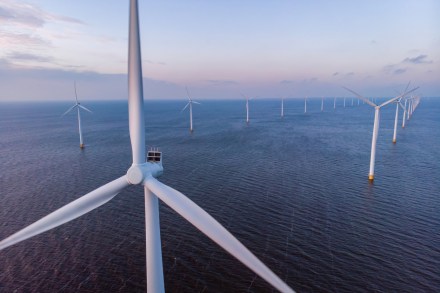
Last month the government released its ten point plan for what it dubs 'The Green Industrial Revolution'. At the top of the list was offshore wind, with a pledge to produce enough power for every home by 2030. Offshore wind currently constitutes over 50 per cent of the renewables in the UK, with costs coming down considerably over recent years. But does offshore wind have its limits? Is it always a good deal for the consumer? And how far can it realistically advance us on our road to Net Zero by 2050? With Kwasi Kwarteng MP, Minister for Business, Energy and Clean Growth; Benj Sykes, VP for UK Offshore at Ørsted; and Sir David King, the former chief scientific adviser to the UK government. Presented by Kate Andrews.Sponsored by Ørsted.

Kicking the can down the road

There has been a lot written about Greece’s elections. The outcome, a narrow victory for the New Democracy party, was the most widely expected result. Paradoxically, this result will lead to even more uncertainty. It is simply, to adopt a common American phrase of the moment, ‘kicking the can down the road.’ To most commentators, the Greek electorate had a simple choice. Do you want to stay in the Euro, or not? In reality, Syriza, the left wing radicals, had always maintained that they wanted to stay within the single currency. They simply wanted to renegotiate the terms of the bailout. It was rather like a madman holding a gun to his head and threatening to blow his brains out in your house, if you don’t give him £1000.