Katy Balls

Katy Balls

Katy Balls is The Spectator’s former political editor.

Is immigration not a priority for Labour?

12 min listen

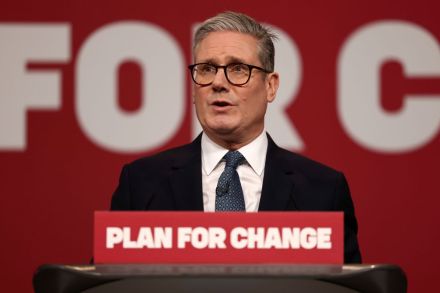
There is a feeling of deja-vu in Westminster today as Keir Starmer unveiled his plan for change and six 'milestones' (not pledges) to turn the country around. They are: raising living standards in every part of the UK; rebuilding Britain with 1.5 million homes and fast-tracking planning decisions on major infrastructure projects; ending hospital backlogs and meeting the standard of 92 per cent of patients being treated within 18 weeks; putting police back on the beat; giving children the best start in life; and securing homegrown energy and putting the UK on track to 95 per cent clean power by 2030. The problem with setting out any list of priorities is that others are conspicuous by their absence, namely immigration.

How twee triumphed, Graham Brady on Tory turmoil & celebrating pigs in blankets

37 min listen

This week: are we drowning in a sea of twee? Gareth Roberts writes the cover article this week, arguing against what he sees as the hideous triviality of our times. ‘The British have lost their aversion to glutinous sentimentality,’ he declares. How did we get here, and who are the worst offenders? Gareth argues that the triumph of twee has left us unable to face serious things with seriousness. Could there be sinister consequences if we don’t take this more seriously? Gareth joined the podcast to make his case, alongside Josh Cohen, psychoanalyst and author of All The Rage (00:49). Then: was Graham Brady the ‘kingmaker’ or the ‘kingslayer’ of the past Tory era? The shadow cabinet member and Conservative M.P.

Labour’s Nigel Farage nightmare

Arriving on stage to accept ‘Newcomer of the Year’ at The Spectator’s Parliamentarian of the Year awards, Nigel Farage gave a warning to the Westminster establishment. ‘I’ve got a bit of a shock for you,’ he said. ‘If you think that I and four other people – the newcomers into parliament this year in the general election – were a shock, I’m very sorry but at the next election in 2029 or before, there will be hundreds of newcomers under the Reform UK label.’ He added: ‘We are about to witness a political revolution the likes of which we have not seen since Labour after the first world war. Politics is about to change in the most astonishing way. Newcomers will win the next election. Thank you very much.

Spectator Awards: Nigel Farage promises a ‘political revolution’

12 min listen

Last night was The Spectator’s Parliamentarian of the Year Awards. Politicians of every stripe were in attendance, with Wes Streeting, Robert Jenrick and Stephen Flynn among those present. There were a number of notable speeches – including a fiery opening monologue from the Health Secretary – but none caused as much of a stir as Nigel Farage’s acceptance speech for Newcomer of the Year. He warned of a ‘political revolution the likes of which we’ve not seen since Labour after the First World War’. How did that go down in the room? Also on the podcast, at PMQs today Kemi Badenoch and Keir Starmer seemed to have settled into a rhythm. Has the Wednesday ding dong become stale and predictable? Oscar Edmondson speaks to Katy Balls and Isabel Hardman.

Is Keir Starmer turning into Rishi Sunak?

11 min listen

The government is trailing a major policy speech ahead of Thursday, in which the Prime Minister will set out key 'milestones' that he wants to hit, in terms of healthcare, living standards, the climate and so on. It's all sounding a little like a previous prime minister... Cindy Yu talks to Katy Balls and James Heale about the opportunities and perils in setting public targets. Produced by Cindy Yu.

Is Keir Starmer turning into Rishi Sunak?

Keir Starmer is only 150 days into his premiership and his team are already planning a reset. Officially, no one in Downing Street is using the R word when it comes to the speech the Prime Minister is due to give on Thursday. But the plan to use the event to signal a new phase for the government – as part of his 'plan for change' – points to how Starmer and his team are trying to turn the page on a torrid start to his premiership. The Prime Minister is expected to set himself a series of new ambitious targets in a bid to show he is listening to the concerns of ordinary voters. These include cutting NHS waiting lists, reducing crime, improving living standards and boosting early years education.

Assisted dying bill passes second reading – what next?

14 min listen

The controversial assisted dying bill has passed its second reading in the House of Commons with a majority of 55 after just hours of debate. It now heads to committee stage for further scrutiny. What does the bill's passing at this stage mean for its likelihood of eventually becoming law? And will Labour's front bench unify behind the bill given the deep-seated opposition from figures such as Justice Secretary Shabana Mahmood? James Heale discusses with Katy Balls and Michael Gove. Produced by Patrick Gibbons and Cindy Yu.

Will the assisted dying bill become law?

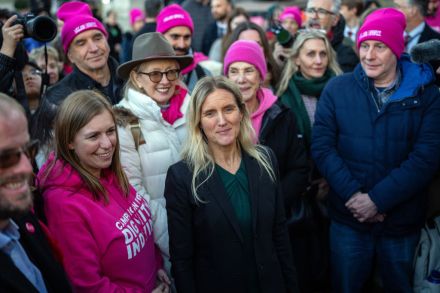
The assisted dying bill has passed its second reading. After an emotionally charged debate, MPs have voted 330 to 275 in support of private members bill – a majority of 55. It means that Labour backbencher Kim Leadbeater will now take her bill to committee stage for further scrutiny as parliament edges closer to giving some terminally ill people the right to end their lives in England and Wales. This comes after weeks of debate and criticism, including within Keir Starmer's own cabinet – with both the Health Secretary Wes Streeting and the Justice Secretary Shabana Mahmood voicing concerns over the bill, which would allow those with just six months to live to seek help to end their own lives.

Louise Haigh’s resignation raises questions for Keir Starmer

11 min listen

In the small hours of this morning Louise Haigh resigned as Transport Secretary following the revelation that she had pleaded guilty to a criminal offence in 2014. Haigh admitted fraud by false representation at a magistrates’ court after she incorrectly told the police that a work mobile had been stolen in 2013. She was then convicted and received a conditional discharge. The incident occurred six months before she became an MP. Haigh had been in hot water just a month ago after her comments nearly cost the government a one billion-pound investment deal with P&O. Is her resignation a little too convenient for the Prime Minister?  James Heale speaks to Katy Balls and Isabel Hardman.  Produced by Cindy Yu and Oscar Edmondson.

Louise Haigh’s resignation raises questions for Keir Starmer

Keir Starmer is one cabinet minister down. This morning Louise Haigh resigned as Transport Secretary following the revelation that she had pleaded guilty to a criminal offence in 2014. Haigh admitted fraud by false representation at a magistrates' court after she incorrectly told the police that a work mobile had been stolen in 2013. She was then convicted and received a conditional discharge. The incident occurred six months before she became an MP. Starmer knew about the conviction prior to the press reports on Thursday Announcing her resignation this morning in a letter to the Prime Minister, Haigh said she remained 'totally committed to our political project' but had concluded it would be 'best served by my supporting you from outside government'.

Boris Johnson on Covid failures, the Nanny State & his advice for ‘Snoozefest’ Starmer

36 min listen

Former prime minister Boris Johnson joins The Spectator’s political editor Katy Balls to divulge the contents of his new book, Unleashed. He reflects on his premiership as PM during the pandemic, describing the time as a ‘nightmare’ for him. He also details how he managed to suppress the force of Nigel Farage, and gives advice to Keir Starmer on how to build a relationship with Donald Trump. Watch the full interview on SpectatorTV: https://youtu.

‘I was much more disposable than I believed’: an interview with Boris Johnson

Boris Johnson is enjoying himself back at The Spectator. ‘My place of former employment,’ the former editor booms as he sits down, stands up, and starts re-ordering items around the wood-panelled office. ‘I like this book-lined air that you’ve given me – very, very grand.’ ‘I found the pandemic a nightmare because I was genuinely uncertain as to the efficacy of what we were doing’ He’s spent the past month flogging his memoir, Unleashed. He hopes to hit 100,000 UK sales well before Christmas. Such is his enthusiasm for his cause that he was kicked off the Channel 4 US election night show for ‘banging on about his book’. ‘I’ve been in the Gulf, where I didn’t sell very many copies, but in Paris I sold a lot,’ he explains. Australia is next.

Kemi’s first policy proclamation

12 min listen

Kemi Badenoch has signalled that she could change her position on the ECHR. At a conference today, she said "we will review every policy, treaty and part of our legal framework - including the ECHR and the Human Rights Act." What could this mean for the Conservatives going forward? Katy Balls discusses with Michael Gove and James Heale.

Can Keir Starmer get Britain back to work?

10 min listen

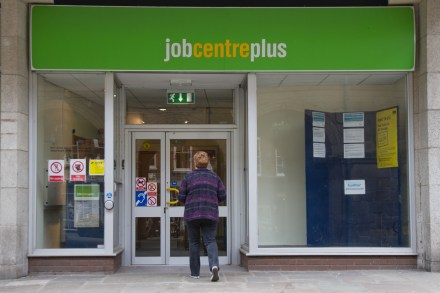
The government have announced their latest effort to get Britons back into work. A series of benefit changes intend to tackle the fact that Britain is the only major economy where the employment rate has fallen over the past five years, largely because more people are out of work due to long-term ill health. Why are the UK's post-pandemic figures so much worse than other countries? And can Labour's plans work? The Spectator's data editor Michael Simmons joins Katy Balls and James Heale.

The election petition reveals Starmer’s Achilles heel

Today the Prime Minister is attempting to get back on the front foot with the publication of an employment white paper, aimed at reducing unemployment in light of the soaring number of Britons out of work since the pandemic. Starmer has declared that his government inherited a country that ‘isn’t working’. However, the question many are asking this week is a slightly different one: is his government working? Keir Starmer has had to bat off questions over a petition – now signed by over two million – calling for an election. The petition says there ought to be an election as Labour have ‘gone back on their promises they laid out in the lead up to the last election’.

Should Starmer be worried about this petition?

13 min listen

Today is the Confederation of British Industry (CBI) conference, at which Rachel Reeves has laid out her plan to 'Get Britain Working' and prove Labour as the party of business ... despite what the recent Budget and the employers national insurance increase might suggest. What's the mood of big business today?  Also on the podcast, a petition has gone viral over the weekend calling for a general election. Various people have signed it, from Nigel Farage to Michael Caine. But should Labour actually be worried? Oscar Edmondson speaks to Katy Balls and Isabel Hardman.  Produced by Oscar Edmondson.

Rachel Reeves faces a frosty reception at the CBI summit

At the beginning of the year, Rachel Reeves was being praised all round for her efforts repairing relations between the Labour party and business. In February, the Chancellor hosted a business conference – attended by leading figures – where she pledged to cap the headline rate of corporation tax at its current rate of 25 per cent if Labour entered government. Since her party's election triumph, Reeves has stuck to her word on that promise – although other announcements from the Chancellor have caught the business community by surprise and led to strain. It means that Reeves will face a frosty reception when she appears at the Confederation of British Industry (CBI) conference today. The No.

Who are Labour’s new working-class voters? An interview with Claire Ainsley

What is a working person? This question dominated the lead-up to Labour's first Budget in over 14 years. After Rachel Reeves stood at the despatch box and announced tax rises for farmers, business owners and entrepreneurs, it’s at least become clearer who Keir Starmer doesn’t mean when he talks about working people. Since then, the Prime Minister has had to deny that he is mounting a class war by targeting private schools and landowners. Yet class is an important part of Starmer's political project – with the work beginning long before he entered Downing Street. ‘I thought people were looked down on for how they voted.

Is the Tory psychodrama over?

17 min listen

Tim Shipman, chief political commentator at The Sunday Times, joins Katy Balls to discuss his new book, Out: How Brexit Got Done and the Tories Were Undone. The final instalment in Shipman's Brexit quartet, the book goes behind the scenes in Westminster to reveal the warring factions at the heart of Boris Johnson's government. Considering all of this, has the Tory party left this era of controversy and backstabbing behind? Or, with a new leader, is there a whole new chapter to come?

Is Keir Starmer really going to arrest Benjamin Netanyahu?

Benjamin Netanyahu faces arrest if he enters Britain. That is the welcome the Israeli leader will receive should he fancy another trip to the UK any time soon. It comes after the International Criminal Court (ICC) on Thursday issued arrest warrants for Israel’s prime minister, along with former Israeli defence minister Yoav Gallant and Mohammed Deif of Hamas, who is thought to be already dead. Justifying the decision to issue warrants for the two Israeli politicians, the court said they shared criminal responsibility for ‘the war crime of starvation as a method of warfare; and the crimes against humanity of murder, persecution, and other inhumane acts.