Katy Balls

Katy Balls

Katy Balls is The Spectator’s former political editor.

Starmer’s Trump charm offensive gets underway

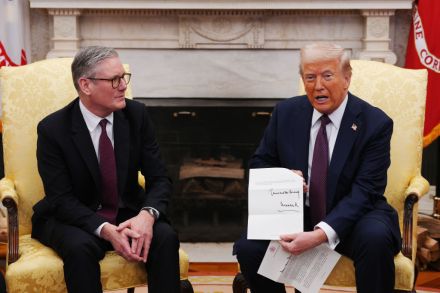
The Trump charm offensive has begun. Keir Starmer has met with Donald Trump in the Oval Office as his first White House visit gets underway. What was initially billed as a short welcome before officially talks turned into a 30-minute question and answer session with the travelling press pack. It made for a wide-ranging discussion as the US president spoke on everything from the future of Ukraine to free speech, the Chagos islands and the positives of the Prime Minister’s wife. In a sign that Starmer’s charm offensive is paying off, the conversation between the two leaders was largely warm. Trump described the Labour leader as a ‘special man’ and the United Kingdom as a ‘wonderful country’.
Inside Nigel’s gang, my day as a ‘missing person’ & how to save James Bond

38 min listen

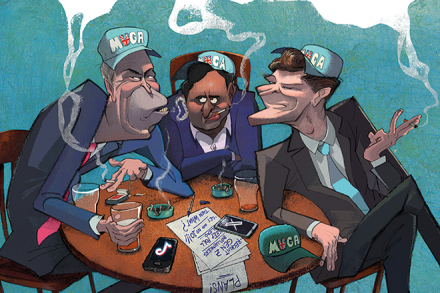
This week: Nigel’s gang – Reform’s plan for power.Look at any opinion survey or poll, and it’s clear that Reform is hard to dismiss, write Katy Balls and James Heale. Yet surprisingly little is known about the main players behind the scenes who make up Nigel Farage’s new gang. There are ‘the lifers’ – Dan Jukes and ‘Posh George’ Cottrell. Then there are the Tory defectors, trained by Richard Murphy, a valued CCHQ veteran, who is described as a ‘secret weapon’. The most curious new additions are the Gen Zers, who include Tucker Carlson’s nephew, Charles Carlson, and Jack Anderton, known as ‘the Matrix’. Katy and James joined the podcast to lift the lid on Nigel Farage’s inner circle.

Is Kemi Badenoch a ‘realist’?

15 min listen

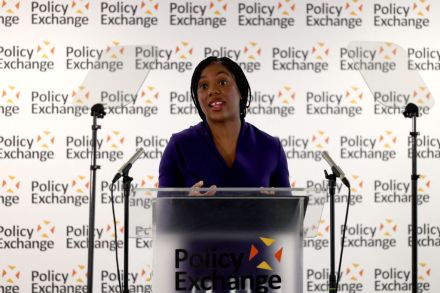
Kemi Badenoch has today given a major speech outlining the Conservatives’ commitment to ‘realism’ in their foreign policy. She said, ‘You cannot help others if you cannot help yourself’, and that the sovereignty and strength of Britain matters 'above all'. She also pressed Keir Starmer to push defence spending north of the 2.5 per cent target and – as if it was all choreographed – the prime minister dutifully has, announcing in the Commons that defence spending will reach 3 per cent of GDP by the end of the next parliament. This will come at the expense of the foreign aid budget, another suggestion that the leader of the opposition made in her speech today. What is realism? Is it right to forgo our commitment to overseas aid?

Ukraine war, three years on

13 min listen

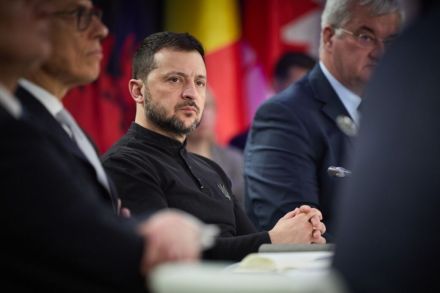
Today marks three years since the start of Russia's full-scale invasion of Ukraine. From early fears of a swift Russian victory to the Kharkiv offensive and the slow war of attrition that has played out since, each stage of this war has been hard to predict. None more so than this stage, with the USA drastically changing tack and tearing up the transatlantic alliance by pursuing back-channel peace talks with Putin. Europe has been left scrambling. Where do we go from here? And with an isolationist USA, the breakdown of the European consensus on Ukraine and the UK's armed forces being hollowed out, who is left to defend Europe? James Heale speaks to Katy Balls and Keir Giles, a senior consulting fellow at Chatham House. Produced by Oscar Edmondson.

Starmer’s Scottish headache

11 min listen

'What does a party get after nearly two decades in office, collapsing public services, an internal civil war and a £2 million police investigation? Re-election again - perhaps with an even bigger majority', writes James Heale in The Spectator this week. He's talking about the SNP, whose change in fortunes has less to do with their leader John Swinney and more to do with the collapse of support for Scottish Labour and their leader Anas Sarwar. Who could benefit from the increased fragmentation of voters in Scotland? Will demands for more time, money and attention cause even more issues for Rachel Reeves? As Scottish Labour meets for its conference in Glasgow this weekend, James and editor Michael Gove join Katy Balls to discuss the dynamics between Holyrood and Westminster.

Can Farage navigate the Trump-Zelensky maze?

9 min listen

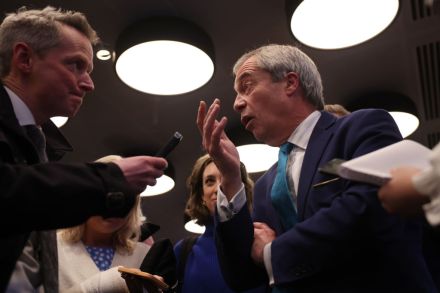
Donald Trump's latest comments on Ukraine and its leader have united the British political spectrum in condemnation – almost. Nigel Farage has tread a careful path given his friendship with the U.S. President, but also the fact that the majority of the British public disagree with Trump's critical attitude towards Ukraine. Can he keep this up? Cindy Yu talks to Katy Balls and James Heale. Produced by Cindy Yu.

Will there be a Tory/Reform pact?

19 min listen

While both Nigel Farage and Kemi Badenoch are quick to talk down speculation of a pact between the Tories and Reform, listeners may be surprised to hear that around Westminster such conversations are already taking place. With every new poll, Conservative MPs grow a little more anxious that by the time they go to the polls, they will have little claim to being the main opposition – and so some sort of agreement starts to make sense. That agreement could be anything from a non-aggression pact to bringing the two warring parties of the right under one leader. How likely is it? Oscar Edmondson speaks to Katy Balls and Gawain Towler.

The inside story of Labour under Starmer

23 min listen

This week saw the publication of Patrick Maguire and Gabriel Pogrund’s new book Get In: The Inside Story of Labour Under Starmer. It’s the second in their tell-all series of books on the Labour Party’s ups and downs and has caused quite a stir in Westminster. From the revelations about Keir Starmer’s voice coach causing a fresh lockdown row to Michael Gove’s secret dinner with Morgan McSweeney, there is a high-density of scoops and disclosures. Can Labour blame the failures of their first 100 days on Sue Gray? And is there such a thing as ‘Starmerism’? Patrick and Gabriel sat down with Katy Balls and Michael Gove to discuss. Produced by Megan McElroy and Oscar Edmondson.

Katy Balls, Alexander Raubo, Damian Thompson, Daisy Dunn and Mark Mason

27 min listen

On this week’s Spectator Out Loud: Katy Balls analyses the threat Reform pose to the Conservatives (1:20); Alexander Raubo talks us through the MAGA social scene and the art collective Remilia (6:42); Damian Thompson reviews Vatican Spies: from the Second World War to Pope Francis, by Yvonnick Denoel (12:27); Daisy Dunns reviews the new podcast Intoxicating History from Henry Jeffreys and Tom Parker Bowles, as well as BBC Radio 4’s Moving Pictures (17:50); and, Mark Mason provides his notes on obituaries (22:46).  Produced and presented by Patrick Gibbons.

From the archives: the Kay Burley Edition

20 min listen

Kay Burley announced her retirement from Sky News this week, after 36 years, having presented more than a million minutes of live television news – more than any other presenter in the world. To mark the occasion, here’s a special edition of Women With Balls – from the archives – when Kay Burley joined Katy Balls in 2019 to talk about how she ‘knocked the rough edges’ off her accent, her love of Jane Fonda, and why the BBC couldn’t afford her these days.

Kemi Badenoch makes her move on immigration

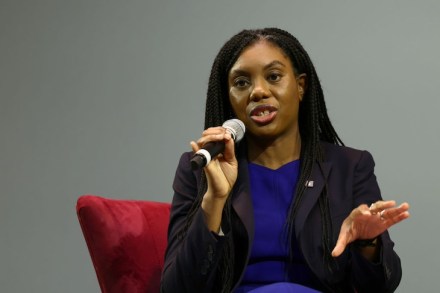
Kemi Badenoch has finally announced a policy. Ahead of the Labour government's Border Security, Asylum and Immigration Bill being debated in Parliament next week, the Tory leader has unveiled her party's latest offering on immigration. The Conservatives say immigrants should only be allowed to apply for British citizenship after 15 years of being in the UK as opposed to the current six. Furthermore, immigrants who have criminal records or who have claimed benefits or social housing should not be granted leave to remain, which sets them on a path to citizenship. Announcing the policy, Badenoch said: 'The Conservative party is under new leadership. We're going to tell the hard truths about immigration.

Could a Tory/Reform pact be looming?

In 1603, James VI managed to do what few thought possible. The self-styled first King of Great Britain succeeded in bringing the ‘auld enemies’ of Scotland and England under one monarch. That union of the crowns is a topic of chatter and inspiration for the British right these days. Admirers of Nigel Farage now talk about the ‘James I model’. The idea is simple: could the two warring tribes of the Conservatives and Reform be brought together under one leader? The next general election may be nearly four years away, but it’s telling that such conversations are already taking place. With every new opinion poll, Conservative MPs grow a little more anxious. The Tories often poll third behind Reform and Labour.

Should Starmer stand up to Trump?

14 min listen

Trump has blown the Overton window wide open. In a press conference yesterday alongside Benjamin Netanyahu, the US president outlined his intention to ‘take over the Gaza Strip’, displacing 1.8 million Palestinians in the process. His plan – if you can call it that – is to build ‘the Riviera of the Middle East’. Many of the countries Trump has earmarked to resettle displaced Gazans have already condemned the takeover. How will the international community respond? Elsewhere, Keir Starmer seems more motivated by a desire to observe the rule of international law than his buddy across the pond. The Chagos deal seems set to be completed in the ‘coming weeks’.

Reform in ‘poll’ position

13 min listen

It's happened. Reform are now ahead of Labour, according to a voting intention poll by YouGov. Reform leads the landmark poll with 25 points, with Labour languishing all the way down in second place on 24 points. Meanwhile, the Conservatives place third on 21 per cent, the Liberal Democrats are on 14 per cent and the Greens on 9 per cent. While there have been a handful of polls to date putting Reform in the lead, they have so far been regarded as outliers. It's a slim lead, but does it point to a long term shift in UK politics – or can it be dismissed as a blip? Does this make a Tory-Reform pact more likely?  Oscar Edmondson speaks to Katy Balls and James Heale.  Produced by Oscar Edmondson.

Reform tops a YouGov poll for the first time

There's reason for cheer at Reform HQ this morning: Nigel Farage's party is leading Labour in a YouGov voting intention poll for the first time. According to the poll, Reform UK leads on 25 points with Labour in second place on 24 per cent and the Conservatives in third on 21 per cent. Meanwhile, the Liberal Democrats are on 14 per cent and the Greens on 9 per cent. While there have been a handful of polls to date putting Reform in the lead, they have so far been regarded as outliers. In response to the poll, Richard Tice, the deputy leader of Reform, said: 'Much more to come as common sense policies welcomed to save Britain and make us better off'. This poll will alarm both the Conservatives and Labour.

Trump vs Europe

15 min listen

Trump's tariff spree continues... After making good on his election promise to opt for another round of tariffs – a 25 per cent tax on imports from Canada and Mexico and a 10 per cent levy on Chinese goods – Trump has now turned his attention to Europe. In an interview with the BBC, the president said that while the UK would likely avoid tariffs, the EU might not be so lucky and described the trade relationship with Europe as an ‘atrocity’. This comes on the day that Keir Starmer is in Brussels and will likely be trying to smooth the road ahead of a post-Brexit ‘reset’. Can Labour continue to play both sides? Katy Balls speaks to Kate Andrews and Charles Grant, director of the Centre for European Reform. Produced by Oscar Edmondson.

Starmer’s Brussels charm offensive is a risky business

How far will the Labour government’s European reset go? This is the question being asked in Westminster as Keir Starmer embarks on a Brussels charm offensive. On Sunday, the Prime Minister met German Chancellor Olaf Scholz, with the pair citing Donald Trump's tariff war (launched over the weekend) as a reason why it's a 'good moment' for the UK and the EU to improve relations. Next, Starmer travels to Brussels today where he will become the first UK prime minister since Brexit to attend an EU summit. Starmer will join for the evening dinner along with 27 leaders. Technically, the meal is being billed as a discussion on defence and security but the general sense is that it is a key meeting as Labour politicians try to push for a new Brexit deal sooner rather than later.

The Tory party’s wannabe comeback kids

When a prime minister leaves No. 10, they usually discover the phone soon stops ringing. But there is at least a brief window when they are more popular with colleagues than they were in office. Why? The resignation honours list. It is a way to curry favour, settle debts and win back friends. While the thank-you list appears after a premiership is over, it can affect how a leader is remembered. While the honours list appears after a premiership is over, it still affects how a leader is remembered In keeping with her premiership, Liz Truss’s list was short – but it still became the subject of fierce debate in her inner circle during their final hours in No. 10.

‘Props to Rachel’

12 min listen

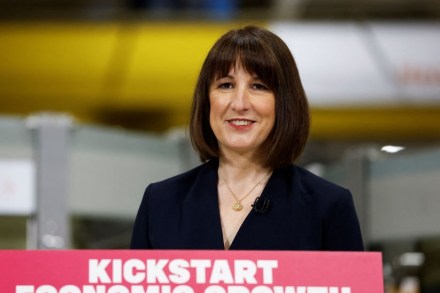
Today was the day for Rachel Reeves, as she delivered her big growth speech in Oxfordshire. This was not this government’s first attempt to pivot towards a more business-friendly, growth-generating narrative, but it was its best effort. The headline announcement is, of course, a third runway at Heathrow, throwing her support behind the ‘badly needed’ expansion. However, a lot of what was announced will sound familiar to recently departed Tories, who laid the groundwork for Labour’s plans to properly connect the South East (or the ‘Oxford–Cambridge Arc’, as it has been repackaged). Will Rachel Reeves get her growth? Katy Balls speaks to Michael Gove and Kate Andrews. Produced by Oscar Edmondson.

Labour’s Richard Hermer problem

13 min listen

Richard Hermer was one of the surprise announcements from Keir Starmer’s first Cabinet, and one of the most controversial since. Starmer’s old pal came with some notable baggage: his former clients include Sri Lankan refugees to the Chagos Islands and ex-Sinn Féin leader Gerry Adams, as well as British-Bangladeshi Isis bride Shamima Begum. In government, Hermer has played a key role in several contentious decisions, such as the government’s withdrawal of the UK’s objections to the International Criminal Court’s arrest warrant for Benjamin Netanyahu, and his involvement in the Chagos Islands deal. And today he admitted that he has had to recuse himself ‘from certain matters’ due to potential conflicts of interest. Is the government hamstrung by Hermer?