Katy Balls

Katy Balls

Katy Balls is The Spectator’s former political editor.

Has Robert Jenrick gone rogue?

12 min listen

Immigration Minister Robert Jenrick, long thought of as one of Rishi Sunak's closest allies in Parliament, hinted yesterday at a row with the Prime Minister. He had a plan to reduce immigration ready ‘last Christmas’, he said. Why didn’t Sunak take it anywhere? Max Jeffery speaks to Katy Balls and Paul Goodman.

What the Elgin Marbles row is really about 

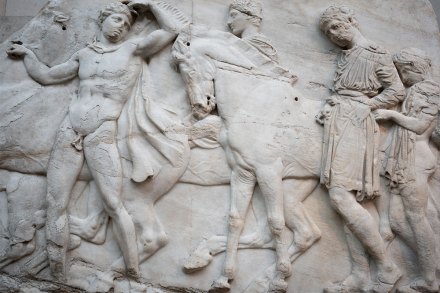
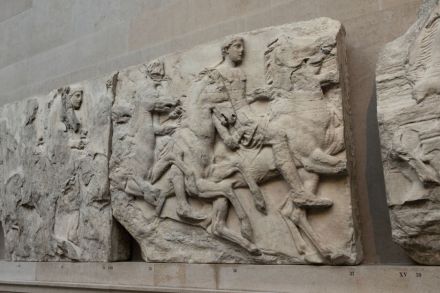
‘The Elgin Marbles should leave this northern whisky-drinking guilt-culture, and be displayed where they belong: in a country of bright sunshine and the landscape of Achilles.’ This view – articulated by Boris Johnson in 1986 when he was studying classics at Oxford – is not shared by Rishi Sunak. On Monday, the Prime Minister caused a diplomatic spat after he called off a meeting with Kyriakos Mitsotakis, his Greek counterpart, hours before it was scheduled to take place. The reason? Mitsotakis gave an interview to the BBC in which he said the Elgin Marbles must be returned to Greece. The current situation, he added, of having some artefacts in London and the rest in Athens was akin to ‘cutting the Mona Lisa in half’.

Has No.10 lost its marbles?

12 min listen

An extraordinary row has broken out between the British and Greek governments over the future of the Parthenon Marbles. Prime Minister Kyriakos Mitsotakis was due to meet Rishi Sunak in London today, but No. 10 cancelled the meeting at the last minute over comments that Mitsotakis made on the Laura Kuenssberg show. Is this whole row all part of a high-culture war, to win back the Red Wall? Or has No.10 lost its marbles?  Natasha Feroze speaks to Katy Balls and James Heale.  Produced by Natasha Feroze and Oscar Edmondson.

Sunak under pressure to curb legal migration

11 min listen

Rishi Sunak is on the defensive over legal migration. After figures late last week revealed net migration hit a record 750,000 in the year to December 2022, the Prime Minister is under pressure from his own side to act. This afternoon James Cleverly will address the House and is expected to lay out a series of proposals the government is considering. Can they shift the dial?  James Heale speaks to Katy Balls and Isabel Hardman.  Produced by Oscar Edmondson.

Sunak under pressure to curb legal migration

Rishi Sunak goes into the week on the defensive over legal migration. After figures late last week revealed net migration hit a record 750,000 in the year to December 2022, the Prime Minister is under pressure from his own side to act. This afternoon James Cleverly will address the House where he is expected to lay out a series of proposals the government is considering. As is becoming a trend, Sunak's former home secretary Suella Braverman has taken the opportunity to accuse her old boss of doing too little. Right on cue, today's Telegraph reports that it has seen 'a copy of the pact' between Braverman and Sunak when she agreed to back him for leader last year.

What happened in Dublin?

11 min listen

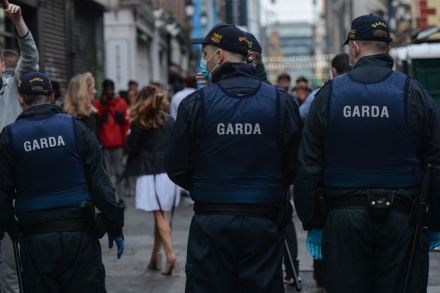
There were riots in Dublin last night. Looters smashed shops, and burnt police cars in a night of unrest in the capital of Ireland. What provoked the angry crowd, and should the police have done a better job at stopping them? Max Jeffery speaks to Katy Balls and Pat Leahy, political editor of the Irish Times.

The Alison McGovern Edition

27 min listen

Alison McGovern sits on Labour’s front bench as the shadow minister for work and pensions but was first elected as an MP in 2010. Growing up in Merseyside, her grandfather was a folk singer who wrote ‘My Liverpool Home’. Her father was a railwayman that campaigned for better working conditions, but it was her mother that sparked her interest in politics. Following a successful career as Labour councillor she went onto win her seat for Wirral South. Alison has led several senior posts for Labour, which began as Gordon Brown’s parliamentary secretary, then Opposition Whip, Shadow Minister for international development, Shadow Education, Shadow Treasury Minister and Shadow DCMS Minister.

Have we seen peak migration?

12 min listen

After much Whitehall spin, the official figures are now in. Net migration in the year to June hit 672,000, down from 745,000 in 2022. A total of 1.2 million people arrived to live in the UK, whilst 508,000 moved overseas. The ONS says it's too early to call this a downward trend, but has migration to the UK peaked?  Katy Balls speaks to James Heale and Kate Andrews.  Produced by Oscar Edmondson.

Has Hunt opened the door to a spring election?

Rishi Sunak wakes up to the most positive front pages his government has had in months. The decision to use the autumn statement to cut personal tax as well as make the largest business tax cut in modern history has led to the press praising the government for easing the tax burden – even if it is still going up. Meanwhile, MPs hope this is just the beginning and it marks a pathway to further tax cuts ahead of the election. Addressing MPs last night at a meeting of the 1922 committee, Hunt said the autumn statement marked a turning point – both for the economy and the party's fortunes. He also told MPs that the party ‘should not pretend that we did not put taxes up’ as they were for a reason – citing the furlough scheme in the pandemic as well as energy support.

The truth about Hunt’s ‘tax cutting’ Autumn Statement

18 min listen

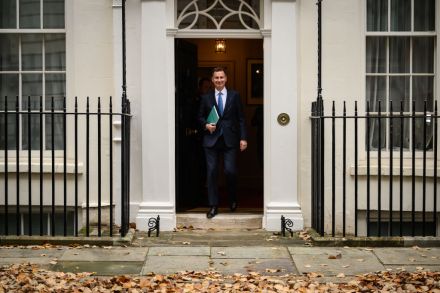
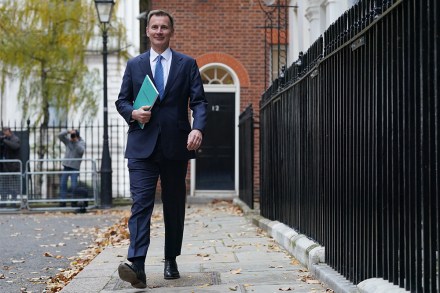
The Chancellor today delivered his fiscal update, branding it as an ‘Autumn Statement for Growth’. In it, he announced a series of tax cuts for both businesses and workers including the decision to make 'full expensing' permanent and a surprise announcement on National Insurance, which has been cut by two percentage points for workers and simplified for the self-employed. Fraser Nelson, Kate Andrews and Katy Balls unpack the details of Jeremy Hunt's Autumn Statement.

The Tories are cutting it fine with their Autumn Statement

Just a year ago, Jeremy Hunt played Scrooge at the despatch box. In an attempt to regain market credibility following Liz Truss’s mini-Budget, Rishi Sunak’s new government announced £30 billion of spending cuts (largely pencilled in for after the election) and £25 billion of tax rises. It was a far cry from the summer leadership contest, when Truss and Sunak promised to lower the tax burden. Sunak’s argument has always been that he would cut tax – but only once some order had been restored to the public finances. Sunak’s reticence has been unpopular with his own side. Boris Johnson attacked him for lacking a ‘grand economic strategy for growth’.

Inside David Cameron’s meeting with Tory MPs

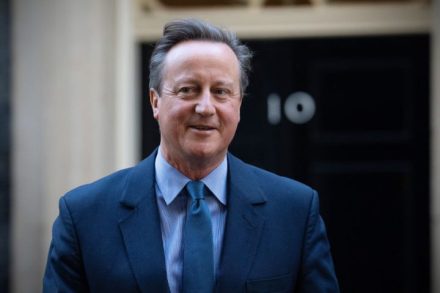
David Cameron addressed Tory MPs this evening at a meeting of the 1922 committee following his shock return to government last week as part of Rishi Sunak’s reshuffle. The impromptu meeting saw around 100 MPs gathered in parliament's Boothroyd room rather than then usual committee corridor room 14. Cameron joked that he was relieved at the location change – as it meant he could avoid his more traumatic memories of addressing the 22’ when he was prime minister. ‘It was nostalgic for a lot of us’, says one attendee. Cameron spoke of his recent trip to meet with President Zelensky As for the purpose of Cameron’s address to MPs, the former Tory leader was keen to emphasise his commitment to the party – after his appointment received a mixed reception.

Sunak changes his tune on tax cuts

Tax cuts are around the corner. That was the message from Rishi Sunak when he addressed hacks this morning in a speech on the economy. Ahead of Wednesday's Autumn Statement, Sunak said that, after he achieved his target of halving inflation, his government is now able to enter 'the next phase' of its plan to grow the economy – and cut taxes. Of course, how much of a role the government really played in bringing down inflation is debatable (it's largely down to global factors outside of Sunak's control). But the practical effect of meeting the target is that Sunak now feels able to begin reducing the tax burden. After a torrid few weeks, Sunak is facing political pressure to please the right of his party and dent Labour's poll lead.

Why has Rishi Sunak made five more pledges?

11 min listen

James Heale, Katy Balls and Fraser Nelson look ahead to the Autumn Statement this week. Will Rishi Sunak commit to cutting taxes? And with barely a year to go before the election, would implementing any policies now be felt in time?

Back to the future: Sunak’s big gamble

45 min listen

On the podcast: It's been a busy week in Westminster. On Monday, Rishi Sunak's first major reshuffle saw Suella Braverman sacked and David Cameron make a surprise return to politics.  Then two days later, the Supreme Court's Rwanda ruling left the government's pledge to 'stop the boats' in tatters. It was meant to be the week in which Rishi Sunak had hoped to stamp his authority on a fracturing party, but it seems to have only added to the narrative of Tory disrepair. Katy Balls writes about Rishi’s last gamble in the magazine this week, and joins the podcast alongside Kate Andrews, The Spectator’s economics editor. (01:01) Also this week:  Svitlana Morenets writes a candid account of the current state of the war in Ukraine for The Spectator.

Should Starmer worry about the ceasefire rebellion?

13 min listen

Fifty-six Labour MPs rebelled last night and voted for an SNP amendment calling for a ceasefire in Israel and Gaza. Keir Starmer had ordered his party to abstain on the vote, and said afterwards that Israel had suffered ‘its worst terrorist attack in a single day’ on 7 October, and that ‘no government would allow the capability and intent to repeat such an attack to go unchallenged’. Is Starmer’s authority now under threat? Oscar Edmondson speaks to Katy Balls and Kate Andrews.

Sunak and Suella clash over Rwanda plan B

For a brief moment this morning it looked as though Rishi Sunak had finally had some good luck. Inflation figures, which came out today, show that the government has met its pledge to halve inflation this year as the rate fell to a two-year low of 4.6 per cent. But that's about where the good news stops for Sunak. Just a few hours later, the Prime Minister and his government were dealt a significant blow when the Supreme Court unanimously ruled that his Rwanda scheme is unlawful. As Alexander Horne explains on Coffee House, the Supreme Court upheld a previous decision from the Court of Appeal that the policy was unlawful.

Back to the future: Sunak’s big gamble

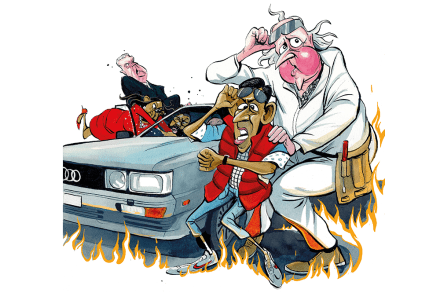
On Remembrance Sunday, former prime ministers are given ceremonial roles. When everyone assembled last weekend, it was a reminder of the recent mayhem within the Tory party. Labour’s 13-year era seemed neat by comparison: Tony Blair, then Gordon Brown. The Tories’ 13 years in power were represented by a more chaotic line-up: David Cameron, Theresa May, Boris Johnson, Liz Truss, Rishi Sunak. If Tory rebels have their way, they might even try to squeeze someone else in before time runs out. ‘I was the future, once,’ the now Lord Cameron said on his last day in office in July 2016. He did himself a disservice: he is the future once more, after being recalled to serve in Sunak’s government in a plot twist that no one saw coming.

Supreme Court rules Rwanda scheme unlawful

11 min listen

The Supreme Court has ruled that the government scheme to deport illegal migrants to Rwanda is unlawful. Why? And how will Rishi Sunak respond? Will he try to take Britain out of the European Convention on Human Rights? James Heale speaks to Katy Balls and Kate Andrews.

‘Your plan is not working’: Suella Braverman goes on the attack

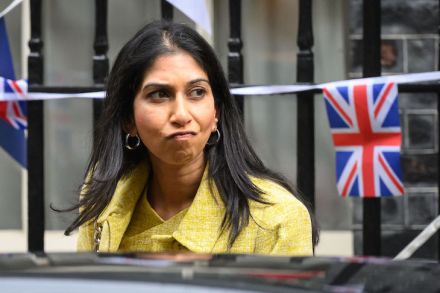
When Suella Braverman was sacked by Rishi Sunak on Monday morning, the departing Home Secretary promised to say more in 'due course'. Well, just over 24 hours later, that time has come. This afternoon, Braverman has shared on social media a scathing resignation letter in which she suggests the Prime Minister needs to 'change course urgently': 'In October of last year you were given an opportunity to lead our country. It is a privilege to serve and one we should not take for granted. Service requires bravery and thinking of the common good. It is not about occupying the office as an end in itself. Someone needs to be honest: your plan is not working, we have endured record election defeats, your resets have failed and we are running out of time. You need to change course urgently.