Kate Andrews

Kate Andrews

Kate Andrews is deputy editor of The Spectator’s World edition.

Will Covid cost less than expected?

It’s no surprise that the bill for Covid-19 keeps racking up. The Office for Budget Responsibility's latest forecast predicts borrowing will reach £355 billion for the financial year: decisions to extend furlough, boosting public sector spending and supporting businesses that have been closed for months at a time all come with a price tag attached. But that doesn’t stop the sums from creating shock and awe each time they’re announced. Today’s update from the Office for National Statistics shows that government borrowing hit £19 billion last month — more than £17 billion from the previous year and the highest borrowing recorded for February since records began in 1993.  Source: ONS.

Andrew Bailey’s note of Covid caution

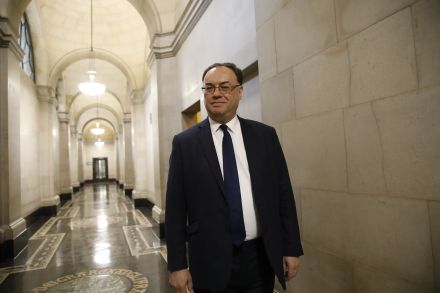
Speaking to BBC Radio 4’s Today programme this morning, Andrew Bailey threw his support behind one of the more optimistic scenarios for a post-Covid economic recovery: that the UK will be back to pre-pandemic levels by the end of the year. The combination of the UK’s hugely successful vaccine rollout combined with increased levels of lockdown immunity – that is, the economic impact of restrictions ‘reducing as we all adapt’ – had the Governor of the Bank of England suggesting that we could see a full recovery by the end of the year (notably earlier than the Office for Budget Responsibility’s Budget forecast of roughly the middle of next year).

The UK economy is suffering worse than most

Last week The Spectator highlighted new data from the OECD that offers a weekly update comparing a country’s current GDP levels to the previous year. It continues to show the UK experiencing some of the highest levels of economic damage. If you factor in lockdown stringency, you can also make out a rough correlation between countries under the strictest lockdowns and countries taking the biggest hits to GDP. Just how reliable are these calculations? A cross-check between the OECD data and the Office for National Statistics' monthly GDP update would suggest it’s pretty spot-on, if not slightly more positive. Today’s update from the ONS shows the economy to be 9.2 per cent below where it was in January 2020.

George Osborne takes a pop at Rishi Sunak’s tax hike

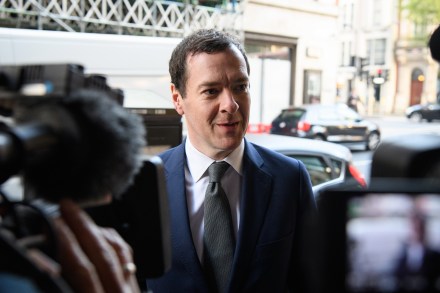
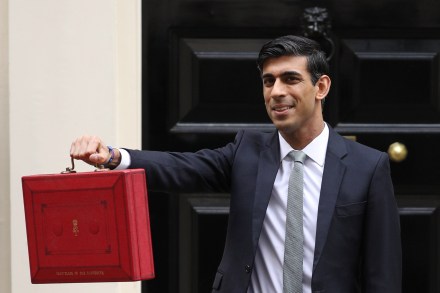
Last week Rishi Sunak presented his second Budget to the House of Commons. Today, three former Chancellors weighed in. Speaking at an online event hosted by the Institute for Government, Norman Lamont, Alistair Darling and George Osborne joined the Institute's director Bronwen Maddox to discuss the state of the UK economy, and how their past experiences lead them to reflect on recent events. There was a surprising amount of consensus from the panel – not on the best way to handle or manage the economy, but about what is politically possible. Fuel duty came up multiple times as an area of policy that doesn’t gel with the government’s stated commitments to a green agenda; yet it was, and continues to be, an area the former Chancellors agreed was off-limits.

The Spectator’s leading article, Kate Andrews and Rod Liddle

23 min listen

This week's episode features a reading of The Spectator's leading article, on how devolution has created a democratic deficit in Scotland (00:50); our economics correspondent Kate Andrews on what keeps the Chancellor up at night (7:00); and Rod Liddle on the real cause of food poverty in the UK. (16:35).

The weekly cost of lockdown

Lockdown has always been a matter of trade-offs. The impact of suppressing the economy to also suppress a deadly virus has had consequences on every aspect of life, from non-Covid health treatment, to rising unemployment, to the impact on children’s education. But these costs can be calculated in something much closer to real time. New data from the OECD, analysed by The Spectator and unveiled in this week’s magazine, shows the weekly difference between a country’s economic activity now and how it compares with the year before.  First, let's look at change in lockdown stringency — as measured by Oxford University's Blatavnik School of Government. When the second wave struck, Britain ended up with the tightest lockdown in the developed world.

The thinking behind Rishi Sunak’s cash grab

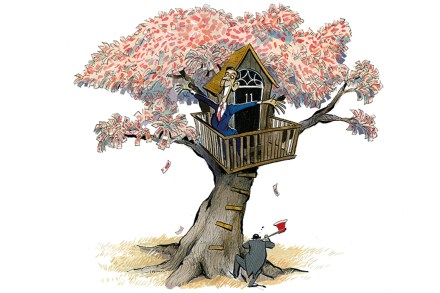
Rishi Sunak’s tax hikes pack a punch: by 2025, over £19bn is estimated to be raised from the freeze to the personal tax threshold, and a staggering £50bn from a new, tiered corporation tax structure. That’s a lot of people out of pocket, and businesses diverting their profits away from workers and consumers and towards the state. Criticisms of the cash grab are splashed across the front pages of the papers today. Across the pond, the Wall Street Journal has lambasted Sunak’s policies: 'Britain’s political class, and especially the governing Conservative party, prides itself on fiscal rectitude. So Mr. Sunak already faces pressure to “pay for” all this relief. We sympathise, but in this instance he would have been better off waiting.

Rishi’s nightmare: Will inflation crush the recovery?

41 min listen

Could a blip in inflation ruin the UK's economic recovery? (00:50) Why is support for the IRA becoming normalised? (12:20) What makes a great diarist? (31:15) With The Spectator's economics correspondent Kate Andrews; economist Julian Jessop; writer Jenny McCartney; politician Mairia Cahill; satirist Craig Brown; and historian, journalist and author Simon Heffer. Presented by Cindy Yu.  Produced by Max Jeffery, Alex Valizadeh, Alexa Rendell and Matt Taylor.

Rishi’s nightmare: will inflation crush the recovery?

At first, it seems to make no sense. Britain is in the middle of the worst economic crash in recorded history, with a Chancellor who is famously keen on low taxes, spending control and sound money. But Rishi Sunak this week presented a Budget that seems inspired, in parts, by Labour’s last manifesto. Debt surging to £2.8 trillion. Public spending up by a quarter in a year. And taxes: soon going up. Corporation tax, freezes to the personal tax threshold. The explanation most Tories comfort themselves with is that Sunak wants to explain to a high-spending Prime Minister that today’s cash splurge is tomorrow’s tax rise. But in truth, Sunak is motivated by something else.

Will Rishi Sunak’s budget give Britain a boost?

14 min listen

Chancellor Rishi Sunak pledged a further £65bn in today's budget, bringing the government's total spending during coronavirus to more than £400bn. But aside from splurges on extending furlough and the Universal Credit uplift, and new 'restart grants' offered to ailing businesses, the first belt-tightening measures were announced. Income tax thresholds will be frozen, and cooperation tax on profitable companies will rise from 19 to 25 per cent in 2023. Katy Balls speaks to Fraser Nelson, James Forsyth and Kate Andrews about what it all means.

Will Rishi Sunak’s Budget give Britain the boost it needs?

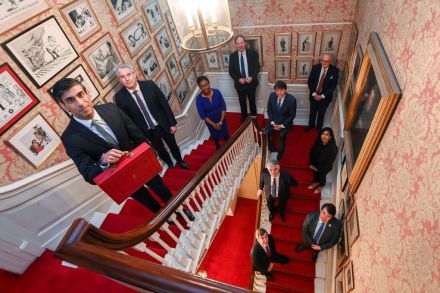
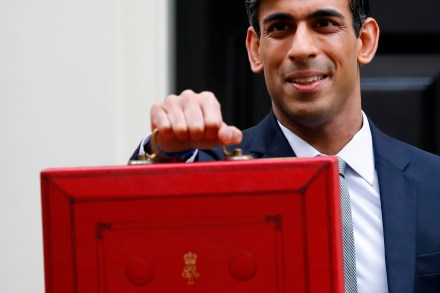
For a man who has only delivered two Budgets, Rishi Sunak is no stranger to fiscal announcements. Last March’s £30bn spending splurge was just the start of hundreds of billions of pounds spent in the fight against Covid-19. Today Sunak pledged another £65bn: furlough and the Universal Credit uplift were both extended; incentive payments for businesses to take on apprentices were doubled; and ‘restart grants’ worth £5bn to help businesses get back on their feet were unveiled. But this Budget wasn’t all giveaways. The Tory Chancellor announced a new, tiered system for corporation tax, which hikes the rate from 19 per cent to 25 per cent in 2023 for the most profitable businesses.

Donald Trump tightens his grip on the Republican party

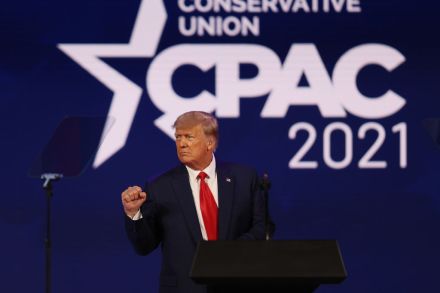
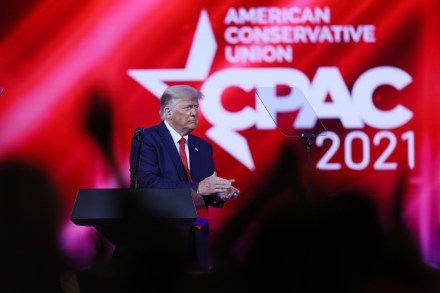
‘Do you miss me yet,’ Donald Trump asked the crowd in his opening remarks at the Conservative Political Action Conference this afternoon: the most important annual conference for the Republican party. The former president was given the keynote address at CPAC, with anticipation that he might have a big announcement to make about his future plans, including the possibility of another run for the White House. In a speech that ran for roughly 90 minutes, Trump never committed himself to a 2024 bid, but he teased it several times. ‘I may even decide to beat them for a third time,’ he said at the start of the speech: the first of many references to what he continues to claim was a ‘rigged’ election, despite having these allegations shot down in the courts.

Labour doubles down on opposition to tax hikes

Rishi Sunak kept his Budget cards close to his chest this morning as he toured the studios for both BBC One’s The Andrew Marr show and Sky News’ Ridge on Sunday. The Chancellor batted away questions about spending and possible tax hikes, repeating over and over again that it’s only ‘appropriate’ to wait until the fiscal event this Wednesday to reveal the details of his plans. There were hints towards areas that have taken the Chancellor’s interest, including a passing comment about ‘business investment’ on Sky News – a bugbear of many on the right, who have long-argued that the UK’s corporate tax rate regime is ungenerous to businesses that would invest money into making their company more efficient.

Are the Tories about to ditch one of their biggest policy achievements?

We already know much of what will be in Rishi Sunak’s Budget next week. Another £30bn for Covid-relief measures: furlough scheme into the summer, stamp duty holiday and the uplift in universal credit (which is also expected to be time-limited, despite pressure from the opposition to make a permanent adjustment). But this year’s spending splurges are becoming a footnote in a Budget dominated by the prospect of tax rises, for which the Chancellor is already receiving backlash from the left and right. Rumours of a corporation tax hike, circling for a week now, have not been denied. There’s also talk of capital gains tax coming under the Treasury’s spotlight, with some saying that Sunak aims to align it with income tax.

Tory nerves grow over Sunak’s budget

14 min listen

The Chancellor is expected to announce tax hikes in next week's budget as he looks to bolster the public purse and reassure markets. With capital gains and cooperation tax in his sights, how will the decision go down with Tory MPs? Katy Balls speaks to James Forsyth and Kate Andrews.

The roadmap paints a grim picture for business

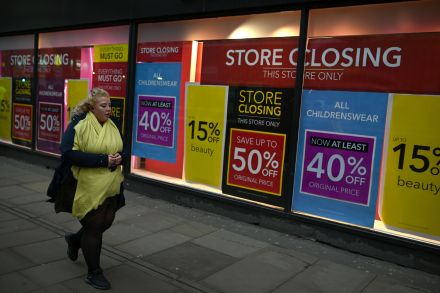
As the Prime Minister announced the details of his government’s ‘roadmap’ out of lockdown in the Commons on Monday, no doubt some will have been cheering on the announcements, which will allow them to keep their pre-planned parties or holidays scheduled in their diaries. But the timeline has painted a grim picture for business in the months to come. According to the timetable, we are nearly two months away from outdoor dining being made legal again, and three months away from a return to indoor dining.

kamalamania kamala wall street

Kamalamania: prepare for President Harris

From our US edition

Kamala Harris was always going to be a most prominent Vice President. When Joe Biden’s campaign called a midmorning ‘lid’ — ending his working day before it really began — Harris would stay out on the trail, addressing car rallies in Pontiac, Michigan; going viral on social media by dancing in the Florida rain. She is significantly younger and more energetic — traits the Biden campaign capitalized on in the campaign. Her fanbase considers her to be a political celebrity: when she’s getting bad press, they rally the #KHive on social media — an online community ready and willing to defend the VP — a spin-off of the #BeyHive hashtag used by Beyoncé’s loyal fans worldwide. The media is overwhelmed by Kamalamania.

kamalamania

The trouble with the media’s Kamalamania

From our US edition

If you’re one of the few countries storming ahead with a vaccination program, you’d think this would be something to cheer. But not all countries see it that way. Both the UK and the US rank in the top five countries for total doses given per 100 residents, according to The Spectator’s vaccine tracker: 27 and 19 respectively. Yet in the UK, the government is set to crawl its way out of lockdown (currently the most restrictive in the developed world), setting out a roadmap today that will see retail, hospitality and ability to socialize take longer to come back than it did last spring, when zero vaccines were on offer. Meanwhile, in America, a game of denial is taking place, with suggestions the country has had very little success at all.

Why Starmer is no modern day Beveridge

15 min listen

Today's speech from the Labour leader was billed to be 'Beveridge-style'. On the podcast, Kate Andrews tells Katy Balls and James Forsyth why it was nothing of the sort, and they strategise what Starmer should have said.