Kate Andrews

Kate Andrews

Kate Andrews is deputy editor of The Spectator’s World edition.

Can the Bank of England inspire confidence?

It has dawned on the government that last week’s mini-Budget might have been a bit too one-sided: £70 billion worth of extra borrowing and not a single mention of spending cuts or efficiency gains has seen borrowing costs spike (up by 0.3 per cent just today). As James Forsyth reports on Coffee House, this afternoon’s announcement that a ‘medium term fiscal plan’ will be announced next month is an attempt by the Treasury to reassure markets – and convince them that fiscal responsibility has not totally disappeared from this government’s agenda. Emphasis is being placed on previous promises to make sure debt falls as a percentage of GDP in the coming years. But what about the other side of the coin?

The miscalculations exposed by Kwarteng and Truss’s Budget

The Chancellor’s first ‘fiscal event’ has revealed two major miscalculations – one by most of the political class and the other by the government. The political class broadly didn’t think Liz Truss’s government would actually push forward with its campaign pledges. It did. The government, for its part, appears to have badly underestimated the sceptical reaction of the markets to its economic agenda. Let’s take these in turn. First, anyone who is shocked by discussion of higher interest rates wasn’t paying attention during the leadership campaign. The attacks on ‘Treasury orthodoxy’ were frequent and explicit.

How worrying is the falling pound?

19 min listen

Following Chancellor, Kwasi Kwarteng's 'mini' budget, the pound has fallen to a record low against the dollar, fueling speculation that the Bank of England will hike interest rates. How worrying are these figures?'I think the pound falling is a bit of a distraction from the real problem' - James ForsythKaty Balls speaks to Kate Andrews and James Forsyth.Produced by Natasha Feroze.

How worrying is the falling pound?

How are markets responding to Kwasi Kwarteng’s mini-Budget? A sharp fall in the pound today has plenty of critics arguing that the tax-slashing announcements have already proved a failure. Sterling fell this afternoon to $1.09, bringing the currency to another 37-year low against the dollar. This is more than a 3 per cent dip in just one day. The euro took a hit too, but a smaller one at 1.5 per cent. It’s difficult to separate this new record low from today’s announcements – but also near impossible to draw direct correlation, as the pound and euro have both been in freefall against the dollar for weeks now.

Kwarteng’s audacious budget

17 min listen

Kwasi Kwarteng has today announced what has been dubbed as his mini-Budget, but looking at the scale of the package it is far from small. The Coffee House Shots team take us through what has been revealed. Who are the winners and who are the losers?Katy Balls speaks to Fraser Nelson, James Forsyth and Kate Andrews.Produced by Oscar Edmondson.

Truss and Kwarteng borrow their way to tax cuts

Levelling Up secretary Simon Clarke described today’s fiscal event as a ‘game changer’ for Britain's economy. Was he right? The announcement from Chancellor Kwasi Kwarteng was not so much an ‘event’ as a major Budget, which ushered in £45 billion worth of tax cuts – the ‘biggest tax cutting event since 1972’, according to the Institute for Fiscal Studies. It’s a remarkable tax-cutting Budget, with praise coming in thick and fast from the free-market think tanks All that was expected was announced: the National Insurance levy brought in for health and social care – which came in back in April – will be scrapped from 6 November.

Why the interest rate rise might frustrate Liz Truss

Rising interest rates is a key pillar of Trussonomics. Liz Truss herself has always stopped short of saying this explicitly, pointing fingers instead at the Bank of England for its failure to curb spiralling inflation. But the economists advising her have made clear, in no uncertain terms, that they think interest rates have been too low for too long.  Right from the start of her leadership campaign, Truss was far more vocal about her criticisms of the Bank; a point made even clearer once she entered No. 10 and her Chancellor Kwasi Kwarteng set up bi-weekly meetings with the Bank’s governor Andrew Bailey. With this new pressure being applied on the Bank, many thought it would make history today by implementing its first 0.

Will Truss’s plans to spend big work?

Big spending announcements tend to come alongside big press conferences. During the pandemic years, furlough announcements, extensions and business support were delivered in front of a podium, with rough figures usually attached to each policy. It was the same for the energy crisis, at the start. But as the costs of the support schemes rose, we started to lose transparency. The £9 billion announcement in February came with a headline figure and a rough breakdown of where the money would come from. The £15 billion announcement in May came with a headline figure, but much of the funding stream was glossed over, assumed to be borrowed.

How far will Truss’s ‘growth plan’ go?

It was only a few weeks ago that Liz Truss was talking about holding an ‘emergency’ fiscal event towards the end of September, mainly to address rising energy bills and how the government would support people through the winter. This targeted approach helped to justify the speed at which her new government would announce some major policy, and even more importantly was used to justify not commissioning analysis from the Office for Budget Responsibility to go alongside it. Energy bills were too time sensitive for the government to wait for the OBR to run all the numbers and produce forecasts, Team Truss’s argument went.

Has inflation peaked?

This morning’s surprise update from the Office for National Statistics shows headline inflation at 9.9 per cent on the year to August, down slightly from 10.1 per cent in July. While consumer inflation remains at a 40-year high, the drop from double digits back into single digits has the optimists whispering: might inflation have peaked? This update is no doubt good news, but this is likely to be a brief moment of calm in an ongoing storm. The slight fall in headline inflation has primarily been driven by easing fuel prices, as the cost of oil has been on a downwards trajectory. That at least is an early sign that global markets are starting to fill in the gaps created by the West’s decision to shun Russia’s crude oil supplies.

Britain is teetering on the edge of recession

One of Liz Truss’s suggestions on the leadership campaign trail was that her economic agenda could avoid recession. But one of the (many) gambles attached to these comments was what had already happened to the economy before she entered No. 10. This morning we got some more insight about how the economy fared over the summer, as the Office for National Statistics revealed that GDP grew by 0.2 per cent in July: a small uptick, following a 0.6 per cent contraction in June. The small, but still positive, growth was mostly a result of a boost to services industries, which fell by 0.5 per cent in June, with the largest contributing sectors including computer programming, consultancy and telecommunications.

Truss chooses price controls to tackle energy bills

When Liz Truss spoke from the steps of Downing Street on Monday, she declared proudly that she ‘campaigned as a conservative’ and would ‘govern as a conservative’. It was a dig at her leadership rival Rishi Sunak, who she beat by 15 percentage points, and who she accused throughout the campaign of having lost his way over tax hikes during his time in the Treasury. He insisted this was the path to fiscal responsibility; she insisted it was the path to recession. Yet Truss’s first policy announcement of her premiership – and quite possibly one of the biggest announcements she’ll make as Prime Minister – is not one you can call ‘conservative’.

Ten graphs that Liz Truss can’t ignore

The new Prime Minister’s honeymoon starts and ends today. Once Liz Truss formally enters Downing Street tomorrow she will be under pressure to tackle the enormous economic crises facing the country, with very little time to announce her policy plans. Truss herself has pledged to reveal her plan for rising energy bills within the first week of her premiership, and her plans to slash tax within the first month. While at the forefront of political discussion, these are but a few of the emergencies that the government must grapple with in the weeks and months ahead. Below are ten graphs that the Truss administration can’t ignore if she and her government are to get the country back on track.

Drama queens: the return of Harry and Meghan

36 min listen

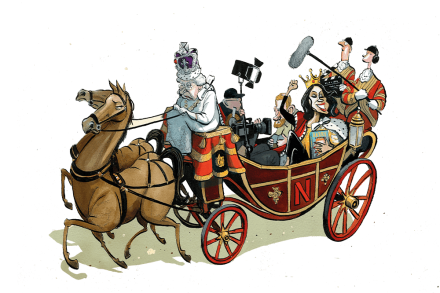
In this week's episode: We look ahead to Harry and Meghan’s UK tour next week, how will they be received? Freddy Gray and Tanya Gold join the Edition podcast to discuss (01:01). Also this week: In the Spectator magazine, our Economics Editor Kate Andrews sat down with the three economists, or 'Trussketeers', that are informing the would-be PM’s economic plan. She joins us along with Julian Jessop, one such economist that has been advising Liz Truss (13:51). And finally: can successful writers be friends with less successful ones? Cosmo Landesman asks this question in the magazine this week and is joined by the author Ian Rankin (27:07). Hosted by Lara Prendergast and William Moore. Produced by Oscar Edmondson.

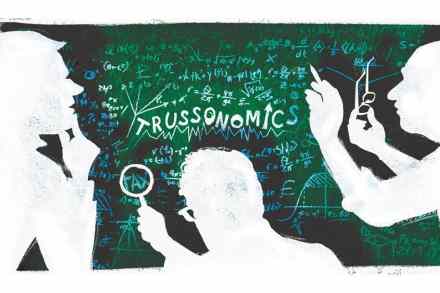
Trussonomics: a beginner’s guide

When polls started to show Liz Truss miles ahead of Rishi Sunak in the Tory leadership contest, her team adopted a cautious campaign strategy. Why gamble on another interview with Nick Robinson when last time she had struggled to name a single economist who backed her economic plans? Eventually she landed on Professor Patrick Minford, an academic at Cardiff Business School and a bullish Brexiteer. Minford went on the record calling for interest rates to rise to 7 per cent, which Truss then had to defend and deflect. But that moment in the Robinson interview, widely reported as a humiliation, turned out to be one of the most helpful points in her campaign. Within days, like-minded economists were grouping together to praise her tax-cutting agenda.

How high will energy prices go?

13 min listen

Today Ofgem announced that household energy bills will climb to an average of £3,549 a year, starting in October. Have the government prepared Brits for how bad the crisis could get? How do Liz Truss and Rishi Sunak plan to reach those that need help the most urgently? Also on the podcast, there are reports that Liz Truss plans to trigger Article 16, suspending parts of the Northern Ireland Protocol. Is now a good time for a trade war? Max Jeffery speaks to Katy Balls and Kate Andrews. Produced by Max Jeffery and Oscar Edmondson.

How high will energy prices go?

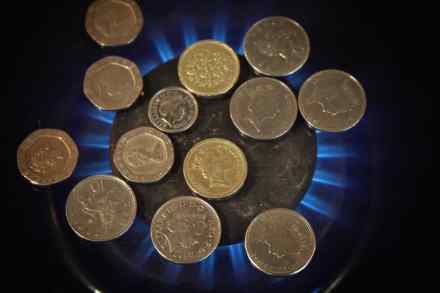
When dozens of energy companies started going bust in 2021, the government knew it had a crisis on its hands. The rise of the energy price cap from £1,277 to £1,971 in April – an increase of nearly £700 – led to not one but two emergency support packages. By the end, £15 billion worth of subsidies and support broadly covered the price rise for Britain's eight million poorest households. This, it now seems, is just the start of what’s needed to get them through winter. Starting in January, the price cap will be updated every three months instead of every six months to better reflect the wholesale price of energy This morning, Ofgem has announced the cap will rise from £1,971 to £3,549: an 80 per cent increase.

Lockdown files: what we weren’t told

42 min listen

In this week’s episode:What has Rishi Sunak revealed about the lockdown decisions made behind closed doors?Fraser Nelson, Katy Balls and Kate Andrews join the Edition podcast to discuss (1.14).Also this week:From aid to trade: when will the West start to deal with Africa on its own terms?Spectator columnist, Aidan Hartley is joined by Degan Ali, founder and principal of DA Global (16.24).And finally: are handsy yoga teachers pushing their pupils away?Rachel Johnson makes this case in the magazine this week. She's joined by Sasha Brown-Worsham who is a yoga teacher and author of the book Namaste the Hard Way (32.32).Hosted by Lara Prendergast.Produced by Natasha Feroze.

Is Rishi heading for political Siberia?

9 min listen

Rishi Sunak has today confirmed that he will stay on as an MP if he loses the leadership contest, and that he will also vote for a Liz Truss budget. Will this help the Tory party heal? Also, Rishi Sunak told The Spectator that scientists had too much power during lockdown. What has their response been? Max Jeffery speaks to Katy Balls and Kate Andrews. Produced by Max Jeffery and Oscar Edmondson.

Is Truss’s social care pledge more borrowing in disguise?

14 min listen

In the latest leadership hustings, Liz Truss promised to take money away from the NHS to put into social care. But as Kate Andrews points out in this episode, given that Truss is also planning on scrapping the National Insurance rise, Truss'll need to find more money in order to fund this latest pledge. On the episode, Kate talks with Fraser Nelson and Katy Balls.'This is the second time in her campaign that she has done something which has made me really doubt whether she's serious about her economic mission. And the other time, of course, was when she announced that she'd do regional pay.' - Fraser Nelson.Produced by Natasha Feroze and Cindy Yu.