Kate Andrews

Kate Andrews

Kate Andrews is deputy editor of The Spectator’s World edition.

Might next year’s economic pain be less than forecast?

This morning’s economic update from the Confederation of British Industry doesn’t make for cheery reading – but it could be worse. The organisation forecasts that the combination of high prices and low business investment will see the UK in recession throughout next year. Having previously predicted a 1 per cent rise in GDP next year, the CBI now expects a 0.4 per cent contraction. Meanwhile, the organisation’s economists expect average inflation over the course of the year to be more than three times the Bank of England’s target of 2 per cent. It’s by no means good news – but compared with other recent forecasts for the UK economy, it’s the closest we might get.

Sunak and Hunt’s energy windfall tax is put to the test

And so it begins. French energy company TotalEnergies SE has become the first out of the gate to announce a change of plans for investment directly linked to the energy profits levy brought in by Rishi Sunak this spring, and expanded by Jeremy Hunt. The company says it will cut back its investment plan by 25 per cent next year, which will see roughly £100 million directed elsewhere. While this is one of the first companies to officially announce investment changes in the North Sea due to the windfall tax, it may not be the last. Shell is making similar noises; the company, so far, has used a loophole which was intentionally worked into the system to allow it to avoid most of the windfall tax by reinvesting its profits instead.

Andrew Bailey’s fighting talk

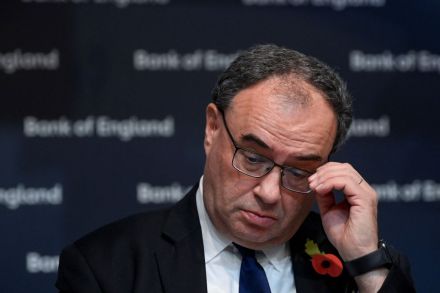
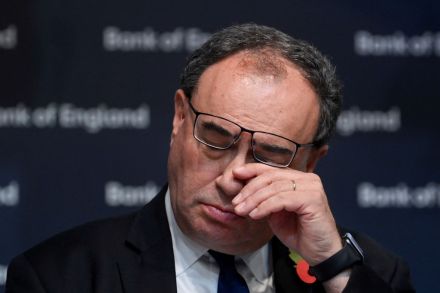
Andrew Bailey this afternoon showed that those who start fights don’t necessarily finish them. Speaking as the only witness at the House of Lords Economic Affairs Committee today, the Governor of the Bank of England landed some rather extraordinary accusations against Liz Truss and Kwasi Kwarteng, suggesting that he was not informed of the details in September’s mini-Budget and that he ‘does not think it was settled’ even the day before it was announced.

Is the NHS in Scotland about to ‘fall over’?

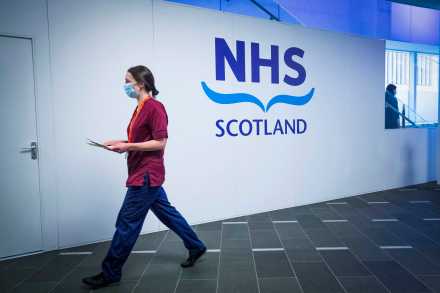
Will NHS Scotland withstand the winter? According to draft minutes of a meeting of CEOs from each health board in September, there is growing concern the health service will not be able to operate normally over the winter months. It ‘is not possible to continue to run the range of programmes’ it reads, before stating that ‘unscheduled care is going to fall over in the near term before planned care falls over’. The warning fits a pattern.

Austerity 2.0: is all the pain really necessary?

34 min listen

It's no doubt a depressing time for the British economy, but how much that is the fault of the government, either for getting us to this stage and/or for not setting out a more optimistic exit route? On this episode, Cindy Yu moderates a debate between Fraser Nelson, James Forsyth and Kate Andrews who battle out their respective views. Produced by Cindy Yu and Matt Taylor.

The squeeze: how long will the pain last?

40 min listen

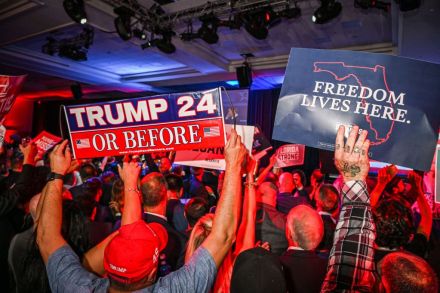
This week: How long will the pain last? The Spectator's economics editor Kate Andrews asks this in her cover piece this week, reflecting on Rishi Sunak and Jeremy Hunt's autumn statement. She joins the podcast with Professor David Miles, economy expert at the Office for Budget Responsibility, to discuss the new age of austerity (00:58). Also on the podcast: After Donald Trump announced that he will be running for office in 2024, Freddy Gray writes in the magazine about the never ending Trump campaign. He speaks to Joe Walsh, 2020 Republican presidential candidate, about whether Trump could win the nomination (18:42). And finally: In the arts lead in The Spectator Mathew Lyons celebrates the bleak brilliance of the Peanuts comic strip.

Jeremy Hunt takes the tax burden to post-war high

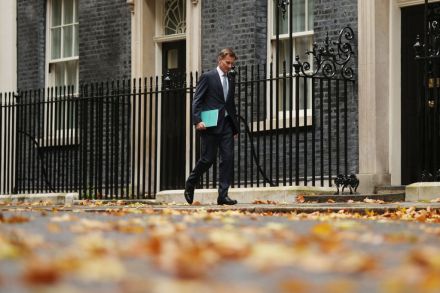
Jeremy Hunt has just announced the most austere fiscal statement since 2010. The Chancellor’s plan to plug the £55 billion black hole in public finances will be achieved with £25 billion in tax hikes and £30 billion worth of spending cuts by 2027-8, taking the tax burden to a post-war high. The economic forecast from the Office for Budget Responsibility suggests the UK is already in a recession, echoing the Bank of England’s predictions for a shallow yet long downturn. The OBR’s forecasts are slightly more optimistic, showing five consecutive quarters of negative growth compared with the Bank’s eight. Still, the OBR’s predictions show the UK experiencing the sharpest economic contraction in Europe next year.

The squeeze: how long will the pain last?

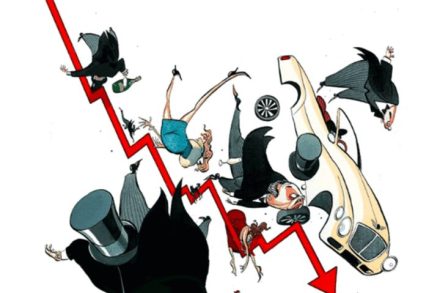
Rishi Sunak has ushered in a new era of austerity, not just Osborne-style spending cuts, but tax hikes as well. His Chancellor, Jeremy Hunt, says the plan is not just to balance the books but to control inflation, and so this will be the theme of the Sunak years: Austerity 2.0. Throughout the leadership campaign, Sunak repeatedly argued that persistent high deficits were no longer an option. Difficult decisions lay ahead, he said, and claims to the contrary were ‘fairy tales’. His critics said this was a safety-first ‘Treasury view’, and Britain had plenty of scope to borrow more. But Sunak was certain that the debt racked up during the pandemic – not just by Britain but countries the world over – guaranteed a wake-up call at some point.

Inflation hits 11.1 per cent

There had been quiet but growing optimism from some economists that inflation in Britain was nearing its peak as the CPI headline rate had fluctuated slightly – in and out of double digits – over the past few months. But that optimism was put on pause this morning when the Office for National Statistic revealed that inflation rose by a full percentage point from September, taking CPI to 11.1 per cent on the year last month. CPI is at its highest level since 1981, and above the Bank of England’s most recent prediction for where inflation would peak. Meanwhile, real-terms wage increases are failing to keep up with price hikes. The latest data shows that the average worker is estimated to be experiencing a 3 per cent real-terms pay cut.

UK workforce falls, vacancies at 1.23 million

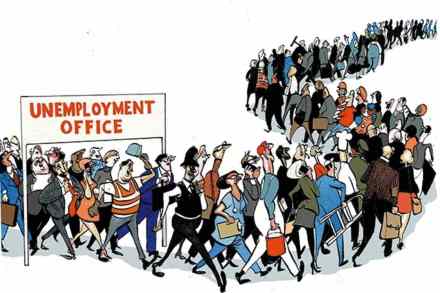
The workforce has not sprung back. According to the latest labour market figures, released by the Office for National Statistics today, the UK workforce is falling, not rising. Employers may be crying out for workers but the number in employment fell by 52,000 in the three months to September, twice what was expected. This was due to a remarkable drop of 249,000 in September alone. Meanwhile, job vacancies still stand near the record high, at 1.23 million – about twice the average seen in the past decade.  Unemployment, by formal definition, has fallen: a dip of 0.2 percentage points on the quarter, down to 3.6 per cent. Very few people seeking work are struggling to find it.

Is Jeremy Hunt bailing out Bailey?

There is a conundrum at the heart of Jeremy Hunt’s comments leading up to the Autumn Statement. Hunt describes inflation as an ‘​​evil’ that ‘erodes the pound in your pocket’: uncontroversial. So Autumn Statement, he says, has been designed by his Treasury to ‘help the Bank of England bring down inflation.’ But controlling inflation is the Bank of England’s remit, so any action will be indirect. By tightening fiscal policy, Hunt is lifting pressure off the Bank to keep pushing raising interest rates. This will be by design on the part of the Treasury.

Was Lord Wolfson right?

26 min listen

Natasha Feroze hosts as Fraser Nelson and Kate Andrews debate Lord Wolfson’s recent BBC interview in which he called for the UK to import more low skilled workers in order to fill the country’s job vacancies.

Is the UK on the brink of recession?

11 min listen

The ONS forecasts reveal that UK output fell by 0.2 per cent between July-September. Whilst not a recession yet, it is increasingly likely the next quarter will see another dip following a surge in interest rates. Will the government's messaging change ahead of the Autumn Statement next week? Also on the podcast, Kate and James discuss Kwasi Kwarteng's interview in The Times as he reflects on his short time as Chancellor.  Isabel Hardman is joined by Kate Andrews and James Forsyth. Produced by Natasha Feroze.

Britain’s economy shrinks again as recession looms

September was always going to be a tough month for economic growth. The additional bank holiday added for the Queen’s funeral, combined with much displaced activity for the days around it, created a consensus amongst economists that we’d see economic contraction that month. And indeed, we have. New figures published by the Office for National Statistics this morning show the economy shrank by 0.6 per cent in September. This was mainly driven by a fall in services – roughly half of the economy's contraction is attributed to business closures due to the events of that month. But it’s not September’s figures that are most worrying this morning.

Midterm madness

37 min listen

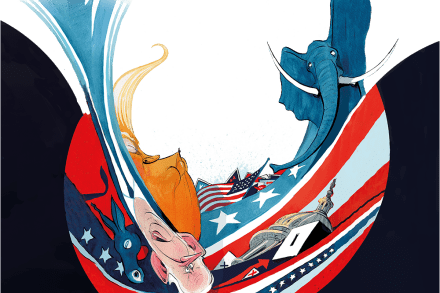
On the podcast: In his cover piece for the magazine, The Spectator's deputy editor Freddy Gray says the only clear winner from the US midterms is paranoia. He is joined by The Spectator's economics editor Kate Andrews to discuss whether the American political system is broken (00:52). Also this week: Isabel Hardman writes that Ed Miliband is the power behind Kier Starmer's Labour. She is joined by former Labour advisor Lord Stewart Wood of Anfield, to consider whether Starmer is wise to lend his ear to the former Leader of the Opposition (12:48). And finally: King Charles III is known for his love of classical music, and Damian Thompson writes in this week's arts lead that he is the most musical monarch since Queen Victoria.

The US midterm results are a wake-up call for the Republicans

There was no ‘red wave’ in America last night. This became obvious fairly early on, when congressional seats the Republicans hoped to pick up in New England failed to flip. Many on the American right had made the assumption that seats won by Democrats by a few percentage points in 2020 would easily turn red. This turned out to be wrong. In fact, there has been very little turnover in the House of Representatives or the Senate in either direction so far. The election map looks stuck in time, a close replica of how politics panned out two years ago, with both Democrats and Republicans holding their seats. Yet much has happened since the last election: mainly economic turmoil. The US, like the UK, is dealing with inflation rates at a 40-year high.

Are we heading for a recession?

11 min listen

Alongside an interest rate hike of 3 per cent, the Bank of England have today warned the economy will 'be in recession for a long period'. How much of the blame can we place on Truss's economic policy? What will this recession look like?  Also on the podcast, Rishi Sunak plans to remove the 'legal but harmful' censorship clause from the Online Harms Bill, what will this mean for online safety? Katy Balls speaks with Fraser Nelson, James Forsyth and Kate Andrews.  Produced by Natasha Feroze and Oscar Edmondson.

A two-year recession has begun, says the Bank of England

Alongside a rather defensive interest rate hike today, the Bank of England unveiled some alarming forecasts for economic growth. The BoE predicts the economy will be in ‘recession for a long period’ – until mid-2024 – with inflation peaking around 11 per cent.  While the Bank is predicting that the recession will be shallower than other contractions, we are looking at the longest recession on record. The Bank thinks recession is already underway (the economy contracted by 0.3 per cent in August –we will get September’s figures next week) and will last for two years. The driving factors for economic contraction, the Bank thinks, will be ‘high energy prices and materially tighter financial conditions’.

Bank of England takes interest rates to a 14-year high

After yesterday’s fourth consecutive 0.75 percentage point interest rate rise from the Federal Reserve, the Bank of England has finally decided to follow suit. This afternoon the BoE announced a rate hike of 0.75 points too, the first rise of this size in 33 years. This takes UK interest rates from 2.25 per cent up to 3 per cent – a 14-year high. A 0.75 per cent increase had been expected by markets – the broad consensus of what the Bank would do after a tumultuous month of interventions, spikes in borrowing costs and inflation returning to double digits. There was general consensus on the Monetary Policy Committee, too, with a vote of 7-2 for the 0.75 percentage point increase (the other two votes were for a softer rise).

Why windfall taxes come at a great cost

There is no such thing as free money. This was learned the hard way last month, when investors made clear after Liz Truss’s mini-Budget that the era of cheap money was over. Mass borrowing for day-to-day spending was going to have a big premium attached: a bill so large that no government would want to pay. Rishi Sunak understood this delicate dynamic, and said so many times over the summer. His willingness to admit the truth – that the government’s many promises can’t be delivered for free – is what, eventually, landed him in No. 10. But now in power, Sunak and his chancellor Jeremy Hunt risk making another ‘easy money’ assumption, albeit a very different one. The massive profits of the energy companies have, once again, caught Sunak’s eye. It’s not hard to see why.