Jonathan Sumption

Jonathan Sumption is an author, medieval historian and former Supreme Court judge

Is politics becoming more religious? With Tom Holland & Jonathan Sumption

39 min listen

Is British politics becoming more religious? Madeline Grant certainly thinks so, arguing – in the Spectator’s cover article – that the next election could be the most religious for decades. Issues like immigration and Islam, assisted dying – and even the establishment of the Church of England are likely to play a role. The current Labour government's ‘most telling divide’, Madeline writes, is between MPs – like Shabana Mahmood and Wes Streeting – who understand religion – and 'those who don’t’. For the Edition’s Easter special, host Lara Prendergast is joined by vicar – and Madeline’s husband – The Rev’d Fergus Butler-Gallie, former Supreme Court justice Jonathan Sumption and the historian and broadcaster Tom Holland.

The Pinochet affair: the pursuit of a Chilean dictator

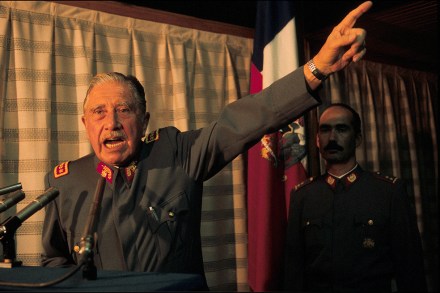
Calle Londres 38 is the address in Santiago of one of the notorious detention centres where the government of the Chilean dictator General Augusto Pinochet tortured and murdered its opponents after the military coup of 1973. This book is mainly about the international row that broke out between 1998 and 2000 when Pinochet, by then retired, visited London for a medical operation and a Spanish judge applied to have him extradited for trial in Spain. There is a parallel narrative about the long and ultimately unsuccessful attempts to bring to justice Walther Rauff, a former SS officer deeply involved in the early stages of the final solution in Germany, who at the end of his life served as a consultant to Pinochet’s infamous security service, the DINA.

LIVE: The Spectator’s Alternative Covid Inquiry

53 min listen

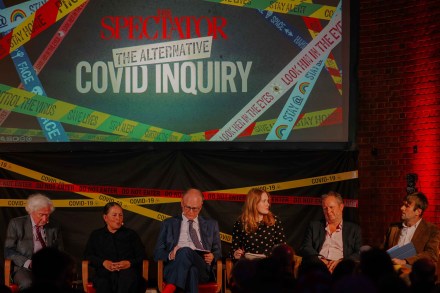
As the official Covid Inquiry comes to an end, the Spectator has convened a panel of our own experts to ask the questions that the Inquiry didn’t – or wouldn’t – answer. The Spectator’s commissioning editor Lara Brown is joined by science writer and Conservative peer Matt Ridley, Oxford professor of theoretical epidemiology Sunetra Gupta, former Supreme Court judge Jonathan Sumption, journalist Christopher Snowdon and science writer Tom Whipple. This is a condensed version of the event. Subscribers can access the full event via Spectator TV and you can find more events from the Spectator here.

LIVE: The Spectator’s Alternative Covid Inquiry

Imposing Christianity on Europe’s last pagans

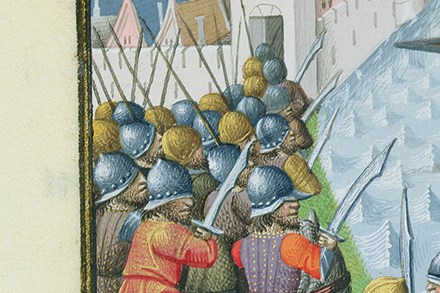
The crusades bring up images of the ancient cities and harsh deserts of the Levant, of Saladin, Richard Coeur de Lion and King Louis IX of France. The crusades to the Holy Land were a consuming obsession of Latin Christianity for four centuries and remain among the most famous episodes of the Middle Ages. Yet, in the perspective of history, they made almost no difference. The crusaders were defeated and expelled, leaving no trace in the life of the Middle East apart from a handful of churches and some spectacular ruined castles. By comparison, very little attention is paid to other crusades – in the Baltic and against the Moors in Spain and Portugal – which were truly transformative.

Why France hates Macron

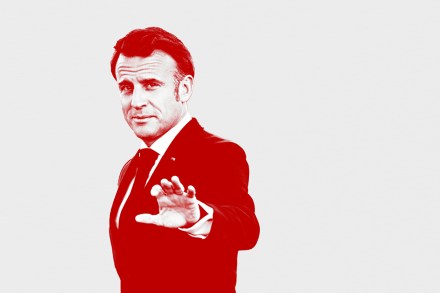
One of the pleasures of spending the summer in France is that I can turn aside from our national problems and concentrate on those of our neighbour. They are similar but gratifyingly worse. You have to know someone quite well before they will open up about their own politics to a semi-outsider. I used to feel the same way when our own politics were chaotic in the aftermath of the EU referendum and French friends would approach me with that characteristic note of smug condescension to ask what on earth was going on. Emmanuel Macron is the ablest President of France since Charles de Gaulle. Yet he is hated across the political spectrum. The young are especially venomous. I once delivered a series of lectures in France on the global response to the Covid pandemic.

What the Quran has to say about slavery

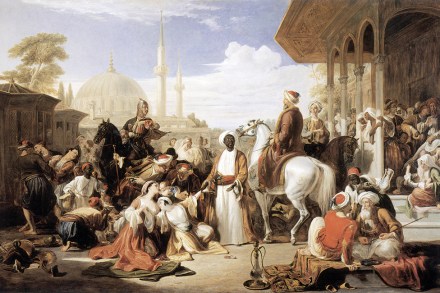
Slavery is one of the oldest and most persistent institutions of humankind. It was already well established four millennia ago when it was mentioned in the Epic of Gilgamesh. Today it has been formally abolished almost everywhere, but there are still reckoned to be some 30 million people living in some form of forced labour. For most of human history slavery was regarded as an economic necessity, one of many relationships of dependence which were accepted as facts of life. The current obsession with British and American involvement has concentrated attention on the Atlantic slave trade. This has masked the involvement of other significant actors. Foremost among them are the Islamic kingdoms of the Middle East. Islamic slavery is poorly documented.

For all its fame, the Great Siege of Malta made no difference to the course of history

Strategically located in the narrows of the Mediterranean between Sicily and Tripoli, with a fine natural harbour, Malta has attracted the attention of successive conquerors for two millennia: Phoenician, Carthaginian, Roman, Byzantine, Arab, Norman, Aragonese, French and finally British. In 1565, the island was occupied by a power that was already beginning to look anachronistic: the Knights of the Hospital of Saint John of Jerusalem. The Hospitallers were an aristocratic order of monk-knights, founded at the end of the 11th century to shelter Christian pilgrims and defend the Holy Land during the brief period when it was part of the crusader kingdoms of the Levant.

Christopher Caldwell, Gus Carter, Ruaridh Nicoll, Tanya Gold, and Books of the Year I

34 min listen

On this week’s Spectator Out Loud: Christopher Caldwell asks what a Trump victory could mean for Ukraine (1:07); Gus Carter argues that leaving the ECHR won’t fix Britain’s immigration system (8:29); Ruaridh Nicoll reads his letter from Havana (18:04); Tanya Gold provides her notes on toffee apples (23:51); and a selection of our books of the year from Jonathan Sumption, Hadley Freeman, Mark Mason, Christopher Howse, Sam Leith and Frances Wilson (27:08).  Produced and presented by Patrick Gibbons.

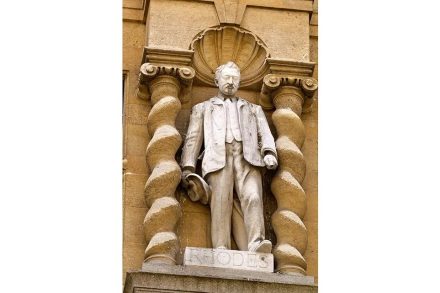
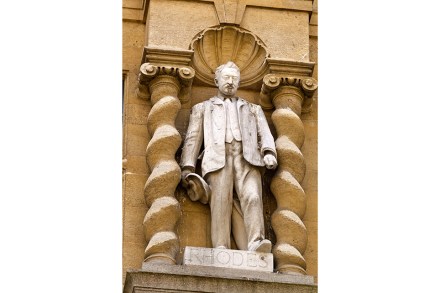
Falsifying history can only increase racial tension

For many years the academic sociologist Frank Furedi has been among the strongest conservative voices in the front line of the culture wars. The target of his latest book is the systematic campaign to discredit the history of the West in the interest of a modern political agenda. The vandalising of statues, the ‘decolonisation’ of institutions and curricula, the recasting of museums and the rearrangement of libraries are all symptoms of something more fundamental. Furedi argues that historical memory is the foundation of western identity and culture. The object of the campaigners is to discredit the West’s ideals and achievements.

In defence of the EU

Eastern Europe is the graveyard of empires. Rome failed on the Danube, Napoleon on the Dnieper. The epic struggle between the empires of Austria, Russia and Turkey in the first world war ended with the destruction of all three and the fragmentation of eastern Europe, giving rise to the word ‘Balkanisation’. Driving through the Balkans today, I am continually reminded that history has no full stops. Every empire leaves its ghosts to haunt its successors. Vienna, like London, is an imperial city without an empire. The ethnic antagonisms of the Balkans, which provoked the first world war, survived to divide Yugoslavia in the second and then destroy it in the 1990s. The region still wears the robes of the past.

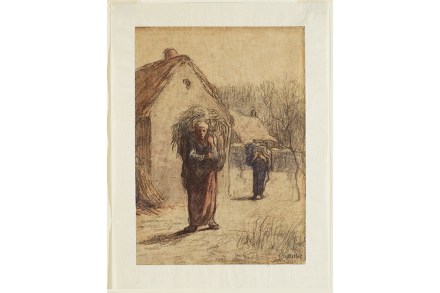
There was nothing remotely pleasant about a peasant’s existence

If we are to remember peasants, we need a definition. Here is an imperfect but workable one. A peasant is a person working on the land in return for a bare subsistence. Patrick Joyce’s peasants are smallholders making just enough to feed their families and pay the rent in a normal year. They are people without status, tied to the land even if they are legally free. They occupy the lowest place in society, people with no ambitions and no future, who come into the light of history only when they revolt against their condition, as they frequently do. Historically, there have been peasants who did not fit this mould. There were rich peasants, like the well-fed revellers in a Brueghel painting.

What lies behind the obsession with race transforming universities?

From our US edition

The first problem about decolonization is the word itself. Colonization is the process of establishing control over a foreign territory and its indigenous inhabitants, by settlement, conquest or political manipulation. But decolonization? It has come to mean much more than the reversal of that process. Today, it refers to an altogether wider agenda, whose central objective is to discredit or downgrade the cultural achievements of the West. Objective truth and empirical investigation are mere western constructs. They are optional ideas which need have no weight beyond the western societies which invented them. But the West has imposed them on the rest of the world by a process akin to the colonial conquests of the past four centuries.

decolonization

Judgment call: the case for leaving the ECHR

42 min listen

On the podcast this week: Lord Sumption makes the case for leaving the ECHR in The Spectator's cover piece. He says that the UK has strong courts and can pass judgement on human rights by itself and joins the podcast alongside Dr Joelle Grogan – legal academic and head of research at UK in a Changing Europe – to discuss whether the Strasbourg has lost its appeal. (01:22). Also this week:  Rory Sutherland takes a look at the rise of dynamic pricing in the magazine, a new trend where prices can surge at peak times and a phenomenon which has now made its way into pubs. He says that it’s not necessarily the cost that matters, but the way it is framed and is joined by Times business columnist Ryan Bourne to debate.

Judgment call: the case for leaving the ECHR

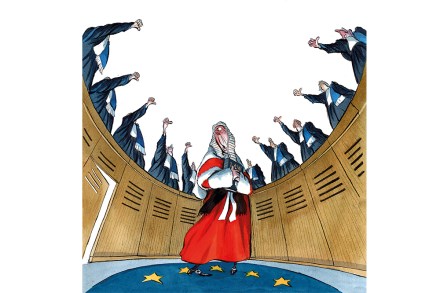
The debate about the European Convention on Human Rights is in danger of being diverted into irrelevant byways. Hostility to the convention has become a trademark of the right wing of the Conservative party, which invites unnecessary partisanship. This is unfortunate, because the United Kingdom’s adherence to the convention raises a major constitutional issue which ought to concern people all across the political spectrum. It is far more important than Suella Braverman’s battles with boat people and ‘lefty lawyers’. Yet so far, the debate has rarely risen above the level of empty slogans, meaningless mantras and misleading claims.

Our academics are attacking the whole concept of knowledge

The first problem about decolonisation is the word itself. Colonisation is the process of establishing control over a foreign territory and its indigenous inhabitants, by settlement, conquest or political manipulation. But decolonisation? It has come to mean much more than the reversal of that process. Today, it refers to an altogether wider agenda, whose central objective is to discredit or downgrade the cultural achievements of the West. Objective truth and empirical investigation are mere western constructs. They are optional ideas which need have no weight beyond the western societies which invented them. But the West has imposed them on the rest of the world by a process akin to the colonial conquests of the past four centuries.

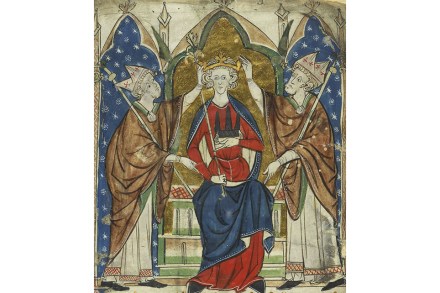
Good man, bad king: a portrait of Henry III

Henry III sat on the English throne for 57 years. Among English monarchs, only George III, Victoria and the late Queen reigned for longer. But they only reigned. Henry’s problem was that he was expected to rule. In medieval England, the role of the king was critical. Public order collapsed without a functioning court system founded on the impartial authority of an active ruler. The scramble for office and influence at the centre quickly turned to civil war when the monarch allowed his vast patronage to be monopolised by a cabal. Contemporaries were satisfied that Henry III was a bad king. But what kind of bad king was he? Some kings were tyrants, who deserved to be deposed. Others were just useless, in which case their powers needed to be transferred to their wiser advisers.

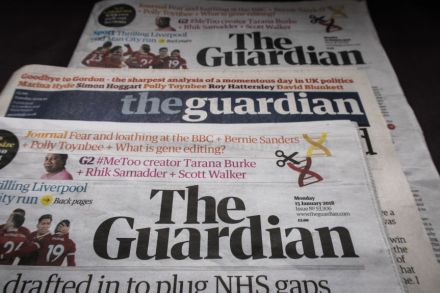
The Guardian’s self-laceration is embarrassing to watch

The Guardian is currently engaged in an orgy of sanctimonious breast-beating. After two years’ research commissioned by its proprietor, the Scott Trust, it has discovered that its founding editor John Edward Taylor and some of his backers had ‘extensive links’ to slavery. This has caused something like a nervous breakdown in the paper’s York Way offices. The editor, Katharine Viner, writes that the revelation made her ‘sick to my stomach’. The paper’s staff are said to be ‘tormented’ by the thought. There have been abject public apologies, promises of amendment, and all the usual apparatus of cringing self-laceration. What is the problem? The Guardian was founded in 1821 as a radical Manchester paper.

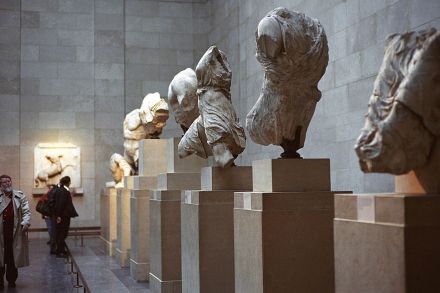
The cringing self-abasement of Britain’s museums

This is National Vandalism Week, and I have been celebrating it in style. First stop – the London Coliseum for the opening night of English National Opera’s inspiring new production of The Rhinegold. The Arts Council says that the ENO is ‘one of the most dynamic and imaginative organisations working in the country’. One can believe it, listening to the orchestra on top form playing Wagner’s spellbinding score. You would never guess that the Arts Council has condemned the company to death. As vandalism goes, this is quite something. The Council has decreed that, in return for a grant significantly less than its current level, ENO must move its base out of London by next year, doing no more than a short season at its home in St Martin’s Lane.

The collectors’ obsession with rare medieval manuscripts

Why do people collect? Cicero said of the Roman governor of Sicily Gaius Verres that his appetite for Greek sculpture was called a passion by himself but a mental illness by his friends. Freud attributed the collector’s mania to bad toilet training. Others claim to have proved that it is due to abnormalities in the medial prefrontal cortex. Psychologists have filled thousands of pages on the subject in peer-reviewed journals. It is safe to assume that Christopher de Hamel has not read any of them. But in this fascinating book he presents 12 case studies of men and women with just one thing in common. They were all obsessed with acquiring, selling, making or in one case forging medieval manuscripts.

Was Nato expansion worth the risk?

This is an important and topical book. Mary Sarotte traces the difficult course of Russia’s relations with Europe and the United States during the decade which followed the fall of the Berlin wall in 1989, a period which saw Russia’s brief dalliance with democracy and Nato’s advance to the frontiers of the old Soviet Union. The story has been told before, but never so fully or so well. In a remarkable historical coup, Sarotte has persuaded the German foreign ministry to open its archives to her, and the Americans to declassify thousands of documents previously closed to researchers. When Vladimir Putin’s spokesman Dmitry Peskov was moved to denounce so much disclosure of confidential diplomatic material, it became obvious that Sarotte was on to something.