Jonathan Miller

Jonathan Miller

The late Jonathan Miller, who lived near Montpellier, was the author of Shock of the News: Confessions of a Troublemaker, Gibson Square.

French election: Macron has been weakened

The polls have closed in France and projections show President Macron on 28.5 per cent with the rightist Marine Le Pen on 24.6 per cent. The ultra-leftist Jean-Luc Mélenchon is in third place on 20.3 per cent and is thus eliminated from round two on 24 April. The result looks dangerous for Macron. The nationalist right has never been so close to power. The President will now attempt to assemble a ‘Republican Front’ against Le Pen. He’s got what he always wanted: Le Pen as his opponent in the second round. But the result shows that his support is narrow. Much may now depend on next Sunday’s televised debate between Macron and Le Pen The rest of the field is distant. A cold shower for Valérie Pécresse on 4.
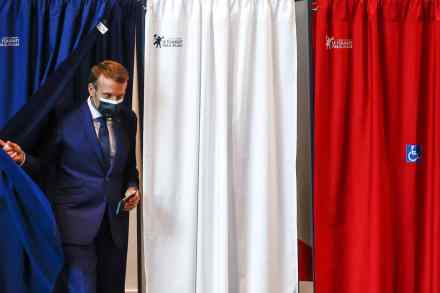
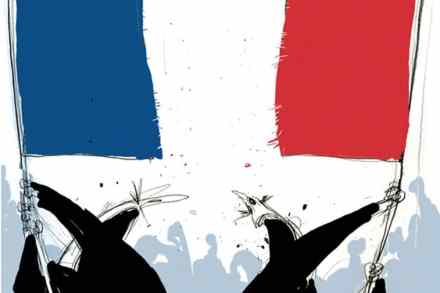
The mysteries and rituals of French democracy

Montpellier I have never voted in an election for president of France, not being French. But as a councillor in my commune, before Brexit brought my promising French political career to a screeching halt, disqualifying me from municipal politics, it was among my duties to count the votes of others. It’s election day in France, the first round of the 2022 presidential race, and there are 12 candidates in the running. The top two will face off in a second round in two weeks. It’s expected that these will be the incumbent, Emmanuel Macron, and Marine Le Pen, in a rerun of the 2017 election that Macron won 66 to 34 per cent. Many here are saying, as they have for as long as anyone can remember, that the elections are fixed.

Is Macron in for a surprise?

14 min listen

Ahead of the first round of France's presidential elections on Sunday, Katy Balls asks whether Emmanuel Macron will be able to justify his apparent distance from the campaign trail. Taking part in the discussion with Katy Balls are Spectator contributor Jonathan Miller, Georgina Wright, from Institute Montaigne, and The Spectator's data journalist Michael Simmons.

Why Macron’s poll lead is dwindling

With eight days to go before the first round of voting in the French presidential election, Emmanuel Macron has just had his worst polling so far. The new numbers show that in the second round of voting, presumed to pit Macron against Marine Le Pen just as in 2017, the president has a lead of only six points (53 per cent to 47 per cent). He famously crushed her 66 per cent to 34 per cent five years ago. Macron has tried to stay aloof from the presidential campaign and position himself instead as the senior European political leader in the Ukraine crisis. His efforts have been clumsy. He’s fired the head of military intelligence for delivering the assessment that Russia was completely incapable of overrunning Ukraine – so would not try.

‘McKinseygate’ won’t bring down Macron

We are in the final stretch before the first round of voting in the French presidential election on 10 April and Macron is still cruising to victory — though perhaps not quite as serenely as he had hoped. ‘McKinseygate’ is the latest scandal that probably won’t change much. Six million fonctionnaires being apparently insufficient to govern France, it transpires that Macron’s government has paid €2.4 billion (£2 billion) to consultants including McKinsey mainly to tell it what to do about Covid. Doubtless a mere bagatelle when the bill is finally totalled for the plague, but embarrassing.

The strange case of the oligarch and the French vineyard

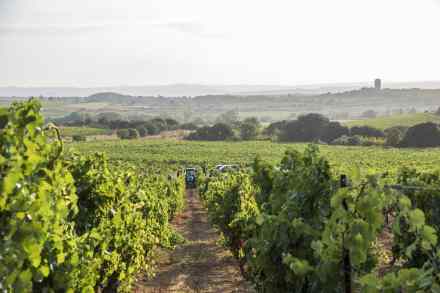
Fancy a dabble in the wine business, at a knock-down price? The Prieuré of Saint Jean de Bébian, a trophy asset owned by a sanctioned Russian oligarch, is set amidst 32 majestic hectares of artfully tended vines nestled in a beautiful corner of southern France. A brand-new climate-controlled production hall has all the mod cons. There’s even a Michelin-starred restaurant on the premises where you might entertain clients. A château within a walled park in a nearby village may be available by separate negotiation. And it’s just 20 minutes away from Béziers airport where you can land your jet.

The Macron Paradox

With just 24 days to go before the first round of French presidential voting, the political landscape has become borderline surreal, a dream state of self-induced hallucinations. The war in Ukraine has utterly overshadowed the vote. Any resemblance to an actual democratic contest might now be regarded as coincidental. If the current polls are right, Macron will enter the second round with Marine Le Pen in a straight replay of 2017, with the same inevitable result. I have my doubts about these polls. But it might not matter much who faces Macron: unloved yet unbeatable. Macron isn’t even campaigning. He’s at 30 per cent in polls for the first round, campaigning through a torrential downpour of electoral bribes.

Macron appears unassailable

Emmanuel Macron, the President of France for whom few voters have expressed much affection, is suddenly the leader of a nation (and by dint of his presidency of the European Council, the EU) in a de facto state of economic war with Russia. He is wiping the floor with his opponents in the forthcoming presidential election, benefiting from the congruence of international events and his refusal to descend into the electoral arena. With 38 days to go before the first round of voting, the oxygen has been sucked out of the campaign. Macron’s efforts to diplomatically defuse the Ukraine crisis plainly failed – yet his approval ratings have skyrocketed, to over 50 per cent in one poll yesterday. His opposition is in danger of being reduced to a state of near irrelevance.

Macron’s posturing as a global statesman will get him re-elected

It is bordering on tasteless amidst the horror of war in Europe to question the political impact of the conflict on the first round of the French presidential election in 44 days. But it’s naïve to imagine that such thoughts are not occurring to the politicians themselves, not least Emmanuel Macron. As I write this on Friday, Macron has still to declare his candidacy for the presidency. He’s been letting his opponents on the right and left fight it out amongst themselves for as long as possible. He could declare tomorrow at the Salon d’Agriculture, where he is scheduled to make the customary presidential appearance. Or maybe not.

Macron’s diplomatic failure in Russia was still a political success

President Emmanuel Macron may or may not have imagined that his mission to Moscow would head off armed conflict in Ukraine. He will nevertheless have calculated that while his mission was an abject diplomatic failure, it was a modest political success. The French pro-Macron media (most of it) bigged up the visit as a triumph of French diplomacy and an affirmation of Macron’s global stature. Plus, all the jetting back and forth gave the President an excuse to further delay announcing his candidacy for the presidential election, the first round of which is in just 47 days. He might have failed to stop Putin’s aggression, but at least he was seen trying. That the deal he claimed with Putin was imaginary wasn’t really important.

Is President Macron’s re-election as safe as it looks?

In February 1995, Jacques Chirac was at 12 per cent in the polls. Two months later he was president. Two months is precisely the time remaining before the first round of voting in the 2022 presidential election. At the moment, President Macron’s advantage looks unassailable: the Economist’s tracker puts his chances of being re-elected at over 80 per cent. But just how unpredictable might this election be? After a few weeks of relative inertia, there are signs that the traditionally volatile French electorate are beginning to rumble. Last weekend, the campaigns shifted into a higher gear, and not necessarily to the advantage of the incumbent.

How democratic are the French elections?

There are just 59 days to go until voters turn out for the first round of the French presidential election and it is not even clear who will make the starting gate. For now, all the pundits and the bookies are predicting the re-election of President Emmanuel Macron. But the real story is about how French democracy operates. General de Gaulle designed the Fifth Republic to keep extremists out of the Elysée. So, to get into the presidential election, a candidate must present the Conseil Constitutionnelle with 500 sponsorships (parrainages) from geographically dispersed senior elected officials. The real story is about how French democracy operates Previously this was not a problem.

France’s election has become a race for second place

This year’s French election campaign is a strangely muted affair. The incumbent, president Emmanuel Macron, has still neglected to declare that he is a candidate, even as he directs the entire weight of the French state towards his re-election. The geometry is highly variable. Pollsters admit privately that they’re struggling to measure abstentionism, or how to weigh up the insurgency of Eric Zemmour, since they’re unable to calibrate their data against any previous election performance by him. Macron looks certain to enter the second round and almost certain to win it. The dynamic question is, who will face him?

Will Le Pen’s niece join Éric Zemmour’s campaign?

Is Marion Maréchal, granddaughter of Jean-Marie Le Pen and niece of Marine, about to emerge from political retirement to support the presidential election campaign of Éric Zemmour?  Normally the answer to any question posed by a journalist is ‘no’ but maybe not this time. Marion could give new momentum to Zemmour’s campaign, which seems recently to be stuck in a rut. Marion could be the right figure to lure National Front voters — who have been disgruntled with her aunt, Marine Le Pen — towards Zemmour.

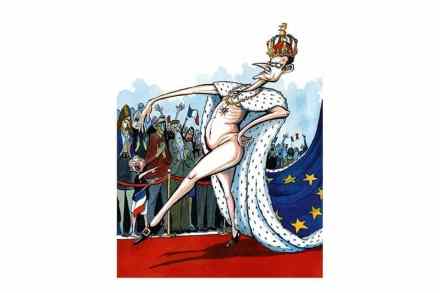
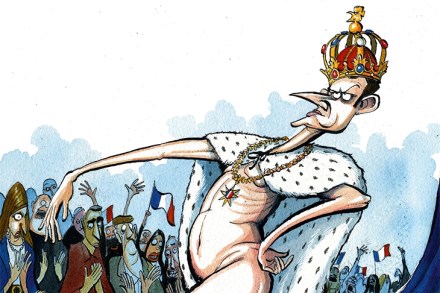
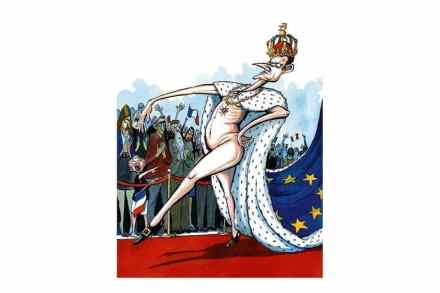
The EU’s new emperor: what would Macron’s second term look like?

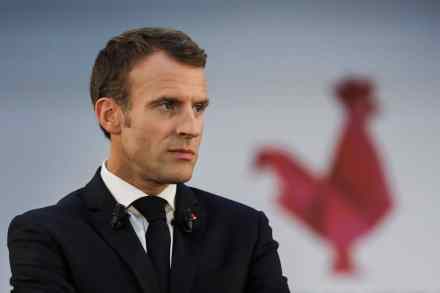
Montpellier Emmanuel Macron, with eagle eyes, is staring at Europe like stout Cortez. Elected president of France almost five years ago aged just 39, he dreams beyond the renewal of his lease on the Élysée Palace in the April election. Now Angela Merkel has left the world stage, Macron’s ambition is to replace her as Europe’s de facto leader and to father a European federation, a United States of Europe, with France and himself at its centre. On New Year’s Day, France assumed the rotating six-month presidency of the European Council, the supreme institution of the European Union, an organisation some might think besieged by unresolved crises and policy conflicts and perhaps best advised to be modest.

Macron’s potty-mouthed outburst is deliberate – and calculated

President Emmanuel Macron’s declaration that he intends to ‘emmerder’ – which loosely translates, excuse my English, as ‘piss off’ – the non-vaccinated has been widely reported this morning as the mother of all political gaffes.  Macron declared, in an interview with Le Parisien, France’s best-selling newspaper:  In a democracy, the worst enemy is lies and stupidity. We put pressure on the non-vaccinated by limiting their access to social activities as much as possible. In fact, almost all people, over 90 per cent, have signed up. It is a very small minority that is resistant. How do we reduce this minority? We reduce them, I'm sorry to say, by annoying them even more.The non-vaccinated, I really want to piss them off.

Most-read 2021: Why I regret buying an electric car

We're closing the year by republishing our ten most popular articles in 2021. Here's number two: Jonathan Miller writing in April about the woes of owning a battery-powered vehicle.  I bought an electric car and wish I hadn’t. It seemed a good idea at the time, albeit a costly way of proclaiming my environmental virtuousness. The car cost €44,000, less a €6,000 subsidy courtesy of French taxpayers, the overwhelming majority poorer than me. Fellow villagers are driving those 20-year-old diesel vans that look like garden sheds on wheels. I order the car in May 2018. It’s promised in April 2019. ‘No later,’ promises the salesman at the local Hyundai dealer. April comes and goes. No car. I phone the dealership. No explanation.

Christmas Special

90 min listen

Welcome to the special Christmas episode of The Edition! In this episode, we look at five major topics that dominated the news this year and the pages of The Spectator. First up a review of the year in politics with our resident Coffee House Shots' team James Forsyth, Katy Balls and Isabel Hardman. We discuss how Boris seemed to make such a strong start to the year through the vaccine rollout, but squandered this goodwill with several own goals. We also touch on some of the big political moments of the year: Partygate, the Owen Paterson affair and of course Matt Hancock. (00:39) Next, we go global and look at three of the major powerhouses that took headlines this year. The EU, who ends the year in a panic over Russia, extreme Covid measures, and upcoming elections.

Will Valérie Pécresse vanquish Macron?

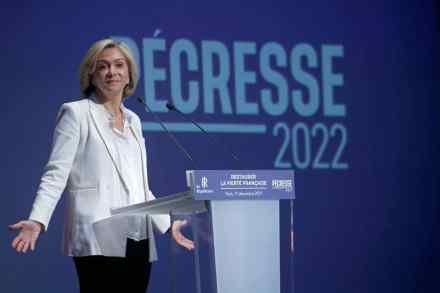
It seems like just minutes ago that Michel Barnier, former Brexit negotiator, centre-right Républicain exiled to Brussels two decades ago, was being widely touted (not least by British correspondents in Paris) as the respectable opposition to President Emmanuel Macron in the 2022 presidential election campaign. As I predicted here and here, he’s subsequently disappeared in a puff of smoke, finishing third in the party’s candidate selection. So meet Valérie Pécresse, 54, the somewhat surprisingly selected candidate of Les Républicains for president of France, and now in her turn being touted as the acceptable face of opposition. She’s certainly more credible than Barnier.

Deaths of despair: how Britain became Europe’s drugs capital

37 min listen

In this week’s episode: Is there any substance to the government’s new drugs agenda?In The Spectator this week Fraser Nelson writes the cover story on the government’s new 10 years drugs plan and finds that while on the surface this seems like a new war on drugs, it might actually have some thoughtful and effective policies buried within it. Fraser is joined on the podcast by Christopher Snowden, the head of lifestyle economics at the Institute of Economic Affairs. (00:52)Also this week: Can Islam save Britain’s churches?Britain has for a long time now has been becoming a more and more secular nation. This has meant that many churches that used to have full pews are at risk of turning into luxury flats or another Tesco Express.