Jonathan Mcaloon

The fitness fetish: The Motion of the Body Through Space, by Lionel Shriver, reviewed

In her 2010 novel So Much for That, Lionel Shriver examined the American healthcare system with a spiky sensitivity. Big Brother (2013) took on American obesity, and The Mandibles (2016) thoroughly imagined a doomsday economy. Shriver’s latest book, The Motion of the Body Through Space, casts the same keen eye over the ‘fetishising of fitness’. Serenata Terpsichore, a voiceover artist in her early sixties living in New York State, has been a compulsive exerciser all her life. When her knees give out, she is deprived not only of an outlet and a private routine but part of her identity. It is at this moment her formerly sedentary husband Remington Alabaster, a one-time civil servant, announces his wish to run a marathon.

Bold venture

In 2017’s Goldsmiths Prize-winning novel H(A)PPY, Nicola Barker strewed pages with multicoloured text. The Cauliflower, her joyful previous offering, employed winky-face emoticons while telling the story of a 19th-century Hindu mystic. In her 13th novel I Am Sovereign, huge fonts careen, in the space of an exclamation, into tiny fonts. Bold and underlined text prickles on the page. Barker has many ways of presenting what one of her characters, an estate agent from Llandudno called Avigail, describes as ‘BASTARD WORDS’. And these bastard words are all that the novel’s three protagonists have when trying to distract themselves from their doubts, or break free from what is holding them back.

A multitude of sins

Approaching her death, and the end of Claire Fuller’s third novel, Frances Jellico — for the most part a stickler for order and rules — admits that ‘the truth isn’t always the right way’. A wasting disease has given her dementia, ‘but is kind enough to leave the summer of 1969 intact’. She dips in and out of her memories in a fugue state of disorientation and, it would seem, sedative-induced dreams. ‘A sharp stab of pain in my arm and once more I am in the attic at Lyntons.’ Lyntons was a Georgian stately home in Hampshire, whose garden architecture, including ‘orangery, grotto, mausoleum and sundry follies’, she was sent to survey for things of value.

Short stories: Life-changing moments

On a recent Guardian podcast, Chris Power — who has written a short story column in the Guardian for a decade — recognises the tendency of reviews of the form to begin with ‘an obligatory paragraph on “The Short Story” in capital letters, rather than talking about the work’. Power’s debut collection is itself a love letter to the form, a survey of it and the culmination of a life’s studious interest. So talking about the work itself doubles as a precis of ‘The Short Story’ and its moment. Happening around the world — often engaged with travelling itself — the ten stories in Mothers take the form’s austerity and turn it into something from which restless characters seek to escape.

Looking back, losing bits

As Roddy Doyle’s 12th novel begins, Victor Forde, a washed-up writer, has returned to the part of Dublin where he was born. He has a tendency almost to romanticise his loneliness, turn it into witticisms. It ‘would have been sad,’ he thinks, ‘a man of my age going back to some wrinkled version of his childhood. Looking for the girls he’d fancied 40 years before. Finding them.’ He is followed by a man who claims to be called Ed Fitzpatrick, and to know Victor from school. ‘Everything about him was abrupt, a bit violent.’ Victor can’t place him.

Life classes

It has taken much of a celebrated literary life for Elif Batuman to produce a novel. At the beginning of her wonderful 2010 book The Possessed —a chimera of memoir, travelogue and literary criticism — she declares: I remember believing firmly that the best novels drew their material and inspiration exclusively from life... and that, as an aspiring novelist, I should therefore try not to read too many novels. Selin, the Turkish-American protagonist of her first novel, is engaged in gathering writerly experience at Harvard, reading novels and falling for Ivan, a Hungarian mathematics student with a girlfriend. The pair begin an online relationship at the dawn of email.

Let’s hear it for the boys

Girls creator Lena Dunham has received criticism from all sides. Detractors on the right see her as an exhibitionist provocateur. Those on the left see her as a privileged narcissist, who can’t help but see feminism through a white middle-class prism — and who unforgivably rooted for Hillary Clinton over Bernie Sanders. The HBO show that made Dunham’s name, which she has written and starred in since her early twenties, is on its final season. It has portrayed the young lives and friendships of four millennial women trying to succeed, or just subsist, in New York, and how their dreams either lose grandeur when they come true or don’t come true at all.

Buffy the Vampire Slayer made me the man I am

Buffy the Vampire Slayer turned 20 yesterday, which will make millennials feel as old as the actors who supposedly passed for teenagers back then. When Buffy came out I was eight. At first I was hooked by the horror aesthetic. Later I began to appreciate how it dealt with adolescent crises through supernatural allegory. But only now do I realise how lucky I was to have grown up with an empowered feminist to look up to (and have my first crush on). For those who didn’t watch Joss Whedon’s show between 1997 and 2003, Buffy Summers (Sarah Michelle Gellar) is a popular cheerleader type who falls in social status after she finds out she is the Chosen One: i.e, the only girl in the world with the power to fight various demons.

Perhaps Michael Gove should get the Turner Prize

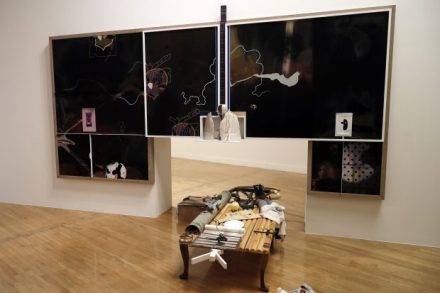
It is a week where you’d imagine most British politicians would be occupied by the Supreme Court ruling over Brexit. But late last night and in the early hours of this, two members of the last government found time for a spat about art on Twitter. Former Secretary of State for Education Michael Gove said the Turner Prize had ‘nothingtodowithJMWTurnersgenius’ and that contemporary art was basically all ‘#modishcrap’, showing off his art expertise by misspelling winner Helen Marten’s name. Former arts minister Ed Vaizey stood up for the prize, and acknowledged that 'brilliant' contemporary artists could and did exist. The argument, of course, is an old one: older than the Turner Prize; older than #JMWTurner.

Murky subjects, misty settings

A short-story renaissance has been promised since 2013. That year Alice Munro won the Nobel, Lydia Davis won the Booker International, and George Saunders’s bestselling collection The Tenth of December won the Folio Prize. The rise of the form was declared, but it is mainly now that we’re reaping the harvest. Established novelists such as Philip Hensher, Mark Haddon and Lucy Caldwell have recently published collections. But perhaps we’d get a better sense of where the form is at present by looking to those who’ve recently announced themselves in it. Twenty-five-year-old Daisy Johnson’s excellent debut is set in the precarious and artificial landscape of the East Anglian fens: marshland that has, against its will, been drained and made hospitable to humans.

Manhattan transfer

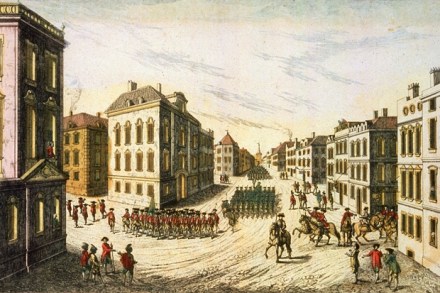
Good historical fiction takes more than research. Henry James once said that writers needed to shed everything that made them modern to feel their way into a completely alien world view — a near impossibility. But this ideal historical novel, bristling with ancient prejudice, would be rather heavy going for a general readership, and successful ones often come populated by dismaying modern stand-ins. Noted non-fiction writer Francis Spufford’s debut novel Golden Hill — an update of 18th-century adventure romps by the likes of Henry Fielding — is successful because it makes us feel entertained and uneasy with the past. In 1746, Englishman Richard Smith arrives at the office of a New York merchant with a bill for £1,000.

The Foyle prize for poetry will restore your faith in arts awards

Those of us who were never destined to be great young poets can probably remember the attempts. I kept my verses from when I was 14 in a pillowcase, which was mercifully put in the wash. Writing poetry is like learning an instrument. You need a disproportionate amount of know-how simply not to sound terrible. But when I spent National Poetry Day at the South Bank Centre for the Foyle Young Poets Awards, there were no bum notes. You could hear a universal page-turning from the audience at certain points, as they all followed the readers on stage in booklet form. Here were a group of young poets who'd discovered the value of art and, what's more, art for its own exploratory sake.

Why boys love Jane Austen

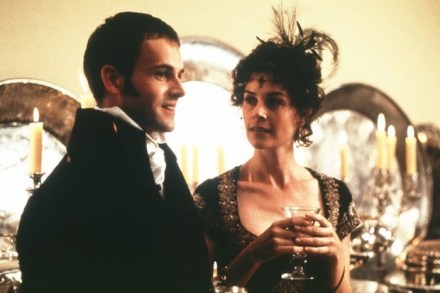
When I first read Jane Austen I had an ulterior motive. I wanted to impress a girl who read her. I didn’t get the girl, but I got the novelist: persuading myself that I was the only 16 year-old boy in Newcastle who had read Jane Austen. Not yet subtle enough to appreciate the extent of how good she was, I was happy loving her heroines, ogling the country houses, trying to emulate the cads, and weeping at the broken hearts and accepted marriage proposals. Repeat this for the films and the endless BBC mini-series. Then I discovered at university that every boy liked Austen - as did the old boys. I got the impression she was used as a beard (or a bonnet) by latently misogynistic readers who were patronising about other women writers.

Sheila Heti: ‘I did worry putting sex in the book would eclipse everything else’

There is a question which writers (and readers) of literary fiction get tired of hearing: which bits really happened? The traditional and respectable answer is that this doesn’t matter. Everything in the book will have been transformed by art, and isn’t something that comes straight from an author’s imagination more autobiographical, more telling, than things that might have happened to them, anyway? But these serious maxims don’t always quell your desire for real-life incident or gossip. Sheila Heti’s How Should A Person Be, subtitled ‘A novel from life,’ had me googling paintings by Margaux Williamson: Heti’s best friend in real life and a character in her book. How Should A Person Be?

Interview with James Wood

James Wood is arguably the most celebrated, possibly the most impugned, and definitely the most envied, literary journalist living. By his mid twenties he was the chief book reviewer for The Guardian. From there he moved to America’s The New Republic, then, as of 2007, The New Yorker. He also teaches at Harvard. There is a tendency, therefore, for critics to spend more time reviewing the superlatives other reviewers have used about him than his books themselves. His previous collections have tilted on an axis of religious belief and philosophy: he writes that our investment and belief when we read fiction is a metaphorical substitute for religious faith because it ‘resembles’ real belief.

Death Comes For The Poets by Matthew Sweeney and John Hartley Williams – review

Death Comes For The Poets is an unliterary book with a highly literary subject. It’s usually done the other way around: exquisite quodrilogies about American car salesmen; towering works about bored wives in French villages. Here we have a thriller, but one written by two eminent contemporary poets in which poets are murdered in correspondent ways to their work. A man who wrote a collection called Stray gets torn apart by dogs. A womaniser who writes about oceans gets lured to his watery death by a beautiful woman. Is the murderer jealous of these poets’ reputations? or is somebody trying to create much needed publicity for the art?

Interview with a writer: Lars Iyer

People call Lars Iyer a ‘cult author,’ which is odd, because almost every paper to have reviewed him from here to Los Angeles has praised him endlessly. The ‘cult’ thing is probably down to people naturally associating innovative, serious and challenging art with the marginal. This no doubt plays up to Iyer’s own theories about the climate of contemporary literature, but the reception of these books tells quite a different story. While his manifesto claims masterpieces cannot be produced in our age, and that no contemporary literature could be as important as anything by Samuel Beckett, critics call his books masterpieces and constantly compare him to Beckett.

Junot Diaz, the new Saul Bellow

Every so often a writer renovates a whole literary landscape from underneath. Armed to the teeth with slang and learning, Saul Bellow reinvented American prose with The Adventures of Augie March in 1953, and it took thirty years for a Martin Amis, a disciple of Bellow, to bring English up to date with Money. But then the language became saturated with people who wanted to sound like Amis and we needed writers from the Commonwealth to infuse English with their idioms to make it new again. (Or was this the other way around?) New prose Messiahs are often announced but rarely stick around.

John Keats by Nicholas Roe – review

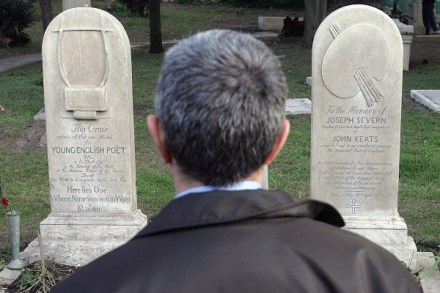
The joke has been made by Jack Stillinger, an American editor of Keats, that there have been so many treatments of the poet’s life that we know him better than his contemporaries did, and better than most people we see every day. This brilliant new biography by eminent Keatsian Nicholas Roe has caused controversy with the claim that Keats was an opium addict. The book’s blurb is certainly angled to capitalise on this, and states that it will ‘[explode] entrenched conceptions of [Keats] as a delicate, overly sensitive, tragic figure.’ But surely, one would think, Keats being a drug addict on top of the tuberculosis and early death should enlarge his tragic currency? Luckily, Roe’s biography is much less sensationalist than the publicity makes out.

Back to the start – Train Dreams, by Denis Johnson

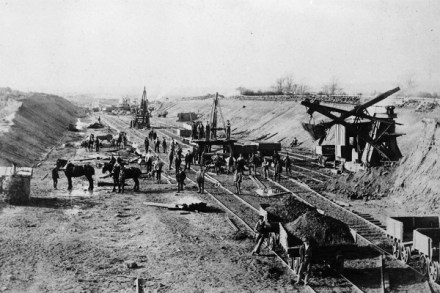
Train Dreams, the Pulitzer nominated novella by playwright, poet and U.S National Book Award winning novelist Denis Johnson, is the life story of Robert Grainer, a man who ‘had one lover... one acre of property, two horses, and a wagon... [had] never been drunk... never purchased a firearm or spoken into a telephone.’ Born at the end of the nineteenth century and dead a year before the Summer of Love, Robert labours in the American West, cutting timber for railroad tracks and then, when he’s too old for that work, carting people’s possessions around the countryside. The book’s chronology is loose, or, rather, Grainer’s whole life comes at us at once.