John Sturgis

John Sturgis is a freelance journalist who has worked across Fleet Street for almost 30 years as both reporter and news editor

How the Ring doorbell is killing journalism

It has been one of the core activities of the jobbing reporter since newspapers came into being. The most direct means of interrogating the subject of any potential story has always been to find out where they live – or, failing that, work – and then approach them there for comment. This is what is known, to use the succinct industry term, as ‘a door knock’. Villains, heroes, ‘pantsdown’ politicians: all fair game for a door knock. But technology has changed this essential journalistic function It became and remained a staple activity of news reporting because it was a shortcut affording immediate and direct access to almost any potential source (barring those who had staff to open their doors for them).

Is this the end of house wine?

We have all become only too used to the surging cost of heating our homes, filling up our cars or doing the weekly shop. But there’s one price increase that hurts me more than all of these combined: the cost of a bottle of wine in a restaurant. Just five years ago, it was rare to find a wine list without at least one bottle under £25; now it’s increasingly common to find one little under £40. We have reached a point where £35 house wine is now normal. Take Maggie Jones in Kensington. I used to eat there regularly in the late 90s and early 00s and recall it being fabulously cheap – a point emphasised by the magnums of house wine on which they’d mark with a pencil how much you had drunk. Often it was quite a lot.

Ice and identity in Lublin, Poland’s forgotten city

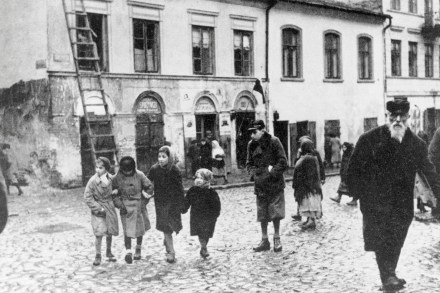
A Real Pain was one of my favourite films of recent years, a tragicomic exploration of family, history, place and identity featuring two Americans in Poland - specifically in Warsaw and Lublin.  My wife was also quite smitten - with Lublin as much as the film - and on the back of this began planning a weekend in the eastern Polish city. I was a little wary of such an overtly fan-like step - this felt one notch down from trying to emulate an influencer, of all the awful modern things. But she’s very good at arranging interesting weekends overseas on a miniscule budget so on this question I relented.

Rediscovering Dylan Thomas, pint by pint

It was the longest pub crawl of my life – visiting numerous boozers across 250 miles over ten days – in homage to one of Britain’s most infamous drinkers, Dylan Thomas. I’m not, I must qualify, a Thomas obsessive, as this enterprise might suggest. If exposed to Thomas at length, I find myself recalling Private Eye’s 1980s characterisation of Neil Kinnock: ‘The Welsh windbag.’ Although, in fairness, even Thomas himself described his own verse as ‘a steaming pile of Welsh whimsy’.

Am I the last man in Europe still wearing a beret?

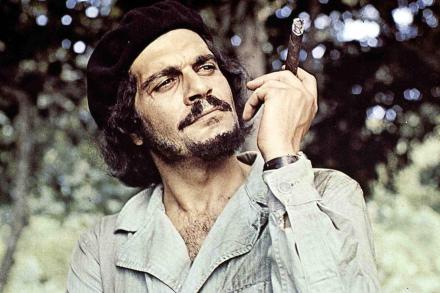
I first wore a beret for a fancy dress competition at my infant school summer fete in June 1975. My mother had entered me in the ‘topical’ category and tapped into the media furore around the nationwide referendum a week earlier over whether or not the UK should join what would become the EU – an issue that has managed to remain topical. My costume consisted of said beret (borrowed) paired with a stripy top, an extravagant moustache drawn on with charcoal from a burned cork and a string of onions hung around my neck. And I was pushing a bicycle.

‘Lazarus pubs’ are a cause for celebration

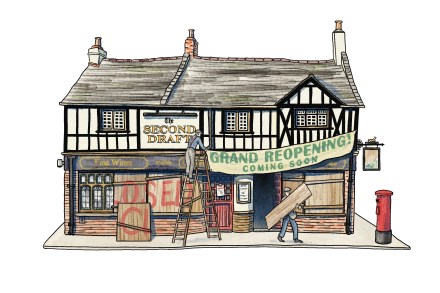
The mood music around pubs lately has felt as if it were being played by the band on RMS Titanic while the industry goes down with the loss of all hands. Even before the body blow of the pandemic, people were generally drinking less, and more of what they did drink was from supermarkets. Then the spike in energy costs was particularly grave for publicans, who need to heat large rooms for 12 hours a day. Most recently, in the last Budget, they faced a hike in employer national insurance contributions, a parallel minimum wage rise and cuts in business rates discounts – with all of this offset by an insulting single ‘penny off a pint’ reduction in draught beer duty.

Second-hand books tell the most surprising stories

It’s relatively common, I find, when opening a newly purchased second-hand book for the first time, for something to fall from its pages. Most likely this will be a branded bookmark or printed stocklisting paper from the dealer who sold it. But it’s not unusual to find something more interesting, something belonging to the book’s previous owner. Apparently the singer Nick Cave donated 2,000 books to an Oxfam in Hove this summer, and new owners of his paperbacks discovered old plane tickets and Post-it notes tucked inside. We serial readers of actual physical books are constantly in need of bookmarks and will grab at anything to hand to use as one.

My Kafkaesque clash with TfL

When is a journey not a journey? The answer to this pseudo-Zen riddle, at least according to Sadiq Khan’s Transport for London, is: when the journey is one that the passenger intends to make but is unable to complete. Have I lost you? Allow me to explain. Recently I experienced yet again one of the regular service failures that haunt the London Underground generally, and its dire Circle line in particular. This saw me forced to abort my train journey at Notting Hill Gate to make the final leg of my intended trip to High Street Kensington on foot. Admittedly this can be a quite pleasant stroll, passing, as it does, the spectacular wisteria on Bedford Gardens, and the lovely Churchill Arms.

Now it’s getting late: on Neil Young, ageing and fatherhood

Neil Young once saved my life. Or at least, that’s how I remember it.  This was at an outdoor show in Finsbury Park in July 1993. I had pushed and squeezed my way almost to the front of a large crowd shortly after being passed something of dubious provenance to smoke. One moment everything was perfect: he was playing that romantic late career hit, ‘Harvest Moon’, the sun was setting, the moon, conveniently, rising, and I was swaying along, rapturous. But then, suddenly – bang… I fainted.  This is the only time in my 45-year gig-going career that this has happened. But I was gone. I was briefly unconscious, then I came to lying on my back on the grass, looking up at dozens of legs all around and above me, almost on top of me.

The peculiar tale of the ‘internet babies’

They already had four children, four cats, four dogs, a number of horses and a pet pig called Philip. But for Alan and Judith Kilshaw, this wasn’t enough. When IVF failed, they decided to try to adopt another child. What happened next would lead to them being pursued by the FBI, as well as a media frenzy, a fraught transcontinental legal dispute and international notoriety. In the spring of 2000, they were simply an eccentric couple living in obscurity in a ramshackle farmhouse with their children and menagerie in the small town of Buckley, north Wales. Unable to conceive again, even with medical assistance, the Kilshaws began looking into the possibility of adoption – only to discover that they were unlikely ever to meet with any success in the UK.

Why Londoners still love Ally Pally

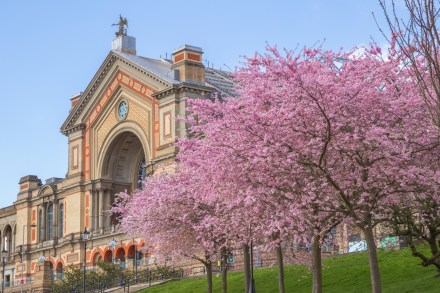
It was conceived as a ‘people’s palace’ – and, as it turns 150 this week, Alexandra Palace continues to fulfil this brief admirably. There is something for everyone, and it’s not too sniffy about who ‘everyone’ describes. Hence the annual mayhem around the winter darts tournament, when everywhere between Muswell Hill and Wood Green is crawling with groups of very drunk men dressed as Smurfs, monks or the cast of Scooby Doo. The Royal Opera House this isn’t. But that doesn’t mean there aren’t more lofty, less populist offerings. I recall when Alexandra Palace’s theatre reopened in 2018 after an £18 million restoration, it debuted with an ENO production of the lesser-known Britten opera Paul Bunyan – hardly an obvious money-spinner.

Recollections of a 1980s indie kid

It is the evening of Monday 23 September 1985. A band called the June Brides are playing a free gig in the bar of Manchester Polytechnic’s Students Union, the Mandela Building (of course) on Oxford Road. I find myself among the audience of freshers’ week first-year undergraduates. I am 18, a small-town boy who’s been living in a big city for just 48 hours.  The place is half empty, the audience awkward. But I am quite taken with the band and the following day go to Piccadilly Records to buy their just-released mini album, There Are Eight Million Stories. The US novelist Dave Eggers would later recall being a teenage Anglophile indie fan in the suburbs of Chicago and cycling 20 miles to get this record that autumn. I could just get the 85 bus from Chorlton.

Should Sepp Blatter really be prosecuted?

It is ten years since Sepp Blatter finally lost control of football’s world governing body, Fifa. But despite his retirement and advanced years – he has just celebrated his 89th birthday – Blatter has not been able to bow out quietly. In a few days, on Tuesday, Blatter will be in court, in Basel, in his native Switzerland, to hear verdicts on allegations of fraud. Last month, Blatter spoke to protest his innocence in this case: ‘When you talk about falsehoods, lies and deception, that’s not me… That didn’t exist in my whole life.’ However, this picture of purity is one few football fans would recognise. Because Blatter is a villain of the old school, an inveterate chancer, an oleaginous schemer, a proper wrong ’un.

The restaurant where time (and prices) have stood still

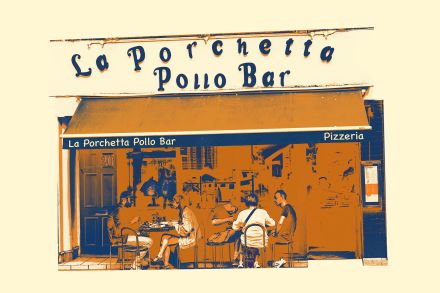
Walking into this crowded and clattering restaurant for the first time in more than 30 years, two things strike me almost immediately: 1) it seems to be largely unchanged and 2) the prices have scarcely risen. I can’t claim to have tried every wine list in Soho, but I can tell you with certainty that this is the first time in a very long time that I have seen a glass of wine for under £5 in the West End. But, incredibly, here it starts at £4.50 – with cocktails from £8.The restaurant is Pollo, as it’s still popularly known, or La Porchetta Pollo Bar as the sign outside calls it. It crams 100 covers on to two floors at the eastern end of Old Compton Street, just behind the Cambridge Theatre, in Soho.

Last orders: farewell to my 300-year-old local pub

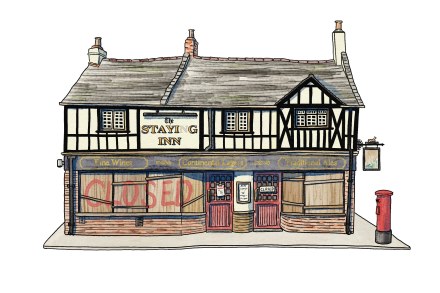
The Cherry Tree on Southgate Green began life as a coaching inn on one of the historic routes from London to York and beyond. It has been trading since 1695, when what are now the north London suburbs were open fields. But the other evening, the pub – my local – rang last orders for the final time. The brewery that owns it is having it refurbished as a brasserie, its pub status coming to an end after 330 years. I went on its final evening for the closing-down party. It was like being in an episode of EastEnders, in the sense that it was a pub full of faces you dimly recognised from events long past, drinking and being jolly, like the Queen Vic at Christmas. Becoming a brasserie seems an unlikely route to financial redemption for the Cherry Tree, though.

Tim Peake makes me cringe

He’s the best-known Briton ever to have boldly gone into space: the first to board the International Space Station, the first to carry out a space walk. Major Tim Peake even ran a marathon while in orbit. So why do I wince every time I hear his name?  When I was growing up, shortly after the Apollo moon landing, the portentous language of that mission – ‘The Eagle has landed’, ‘One small step’ etc – had permeated global consciousness. So when space travel was depicted in popular culture, in music and film, it was often with the atmosphere of an existential psychodrama – in Space Odyssey (Kubrick), Space Oddity (Bowie), ‘Rocket Man’ (Elton).

The key to finding the best pubs in Britain

Entering the New Inn in Llanddewi Brefi in Ceredigion is like stepping back in time. The only pub in the village (since the Foelallt Arms closed down four years ago), The New Inn seems to hail from the 1970s. Its till is a pull-out wooden drawer full of coins and notes. There’s a coal fire in the grate. The bar is littered with eccentric and old-fashioned clutter: a jar of pickled eggs, boxes of Swan Vestas as if smoking in pubs was still the norm, plaques to award the winners of a conker competition long past, sheep farming memorabilia.   The clientele are dressed as if they’ve just got back from marching down Whitehall with Jeremy Clarkson. And, it transpires, these drinkers are waiting to be fed.

London needs the Prince Charles cinema

The suggestion that the Prince Charles cinema in London’s West End could be closed down was the least surprising news of the week. This sort of thing, fuelled by soaring property values, has been happening in Soho and its periphery for three decades now and shows no sign of relenting. The Prince Charles isn’t strictly in Soho, being just south of Shaftesbury Avenue, but it has always felt like it belonged there, with the other left field, misfit and seedy enterprises that gave the place its character and reputation. It was built in 1962 but, on the edge of Chinatown, was just too far off the main drag of Leicester Square to ever really thrive. By the 1970s the Prince Charles was mostly screening soft porn: Emmanuelle and later Caligula.

Keith Jarrett’s accidental masterpiece

Shortly before midnight on the evening of Friday 24 January 1975, at Cologne Opera House on the banks of the Rhine, a wiry 29-year-old from Pennsylvania walked onto the stage in front of a crowd of 1,400 people and began to play the piano, alone. The 50th anniversary of what followed is being celebrated with a number of events and documentaries across the world this week. A recording of Keith Jarrett’s performance that night, released on 30 November 1975, went on to become the best-selling solo piano record of all time. The record was produced by ECM (Edition of Contemporary Music), a prog jazz label that was at its peak in the mid-1970s, with The Köln Concert its crowning achievement.

The worst hangover in the world

I awoke in the early afternoon of 31 December 1995 face down on the carpeted floor of a mansion house flat in Notting Hill with the worst hangover I have ever had.  It is customary when writing about hangovers to quote the best description of the condition – by Kingsley Amis: ‘A dusty thudding in his head made the scene before him beat like a pulse. His mouth had been used as a latrine by some small creature of the night, and then as its mausoleum. During the night, too, he'd somehow been on a cross-country run and then been expertly beaten up by secret police. He felt bad.’ And there’s also, of course, P.G.