John Steele Gordon

Trump is playing a high-stakes game of international poker

From our US edition

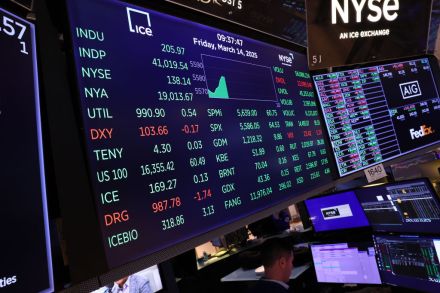
On what he called “Liberation Day,” President Trump announced a new tariff schedule. While the markets had been up in anticipation, they are down sharply, with the Dow dropping 2,200 points, perhaps surprised by the extent of them. Basically, Trump has laid tariffs equal to about half what other countries charge on US exports, inviting them to lower theirs in exchange for reciprocity. What the final result will be is anyone’s guess, for the Trump tariffs are chips in a high-stakes game of international poker. They have already had an effect. Canada has promised retaliatory tariffs while Israel has dropped all tariffs on US goods. A tariff is a tax laid on goods passing through a port.

trump
trump

Trump is playing a high-stakes game of international poker

On what he called “Liberation Day,” President Trump announced a new tariff schedule. While the markets had been up in anticipation, they are down sharply, with the Dow dropping 2,200 points, perhaps surprised by the extent of them. Basically, Trump has laid tariffs equal to about half what other countries charge on US exports, inviting them to lower theirs in exchange for reciprocity. What the final result will be is anyone’s guess, for the Trump tariffs are chips in a high-stakes game of international poker. They have already had an effect. Canada has promised retaliatory tariffs while Israel has dropped all tariffs on US goods. A tariff is a tax laid on goods passing through a port.

Recession? What recession?

From our US edition

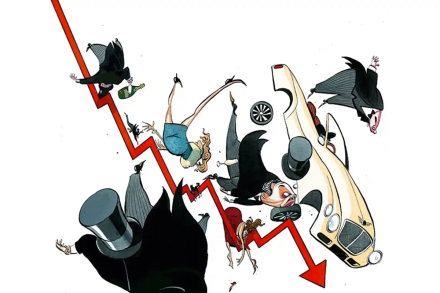
The stock market, traditionally a leading indicator, entered correction territory last week. But does that indicate that a recession is coming? Well, it’s an old saying on Wall Street that the market has predicted ten of the last three recessions. Markets hate uncertainty, and no one knows how President Trump’s efforts to use American tariffs to force our trading partners to lower theirs will turn out. But foreign trade is increasingly important to all countries, so it’s likely that, after some political Sturm und Drang, deals will be struck and international trade will continue the strongly upward path it has been on since the end of World War Two. By definition, a recession is two consecutive quarters of contraction.

shares

How Elon Musk changed the world

From our US edition

Technological revolutions can only change the world when the new technology becomes cheap enough for it to be widely applied. Just ask Elon Musk. The rocket age began with Germany’s V-2 in 1944, but the single-use technology was so expensive that it required state resources to utilize. Then, last Sunday, SpaceX’s Starship rocket booster, the most powerful ever launched, returned from space and was secured by its gantry for reuse. Thus it became, in the words of the New York Times, “more like a jetliner than a rocket.” It is estimated that reusable rockets will reduce the cost per pound of launching things into space by at least an order of magnitude and a new space age can now begin.

elon musk

Lloyd Austin’s secret surgery was unusual, but not unprecedented

From our US edition

Secretary of defense Lloyd Austin underwent an elective surgical procedure, still unspecified, at the end of December. Because complications, also unspecified, developed, he was hospitalized on Monday and spent three days in intensive care. He is still in the hospital as of Monday, January 8. What is remarkable about this episode is that the public was not informed that the man who is in charge of national defense and sixth in the line to the presidency was seriously ill. But neither was the White House itself. President Biden did not learn that his defense secretary was, well, hors de combat, until Thursday, and the public did not learn of it until Friday. Austen’s deputy apparently didn’t know either as she was on vacation in Puerto Rico.

The rise and fall of US Steel

From our US edition

US Steel, which came in with a bang in 1901, is going out with a whimper. It has agreed to sell itself to Japan’s Nippon Steel for $14.1 billion, $55 per share in an all-cash deal. While steel is still an indispensable commodity (world production has doubled in the last twenty years, to 1.951 billion tons, about half produced in China), it has long ceased to be the iconic measure of industrial power that it was in the late nineteenth century. Steel — iron with a carefully calibrated amount of carbon added — has been known since ancient times. But it could be made only in small batches, and thus was so expensive to produce that it was almost a semi-precious metal, its use reserved for razors, sword blades and surgical instruments.

A potted history of impeachments

From our US edition

Article II, Section Four, of the Constitution provides that “The President, Vice President, and all civil Officers of the United States shall be removed from Office on Impeachment for, and Conviction of, Treason, Bribery, or other high Crimes and Misdemeanors.” Other sections give the House of Representatives the sole power of impeachment and the Senate the power to try impeachments and to convict with a two-thirds vote of senators present. But impeachment has been very rarely used in this country. Indeed the House has voted to impeach a federal official only twenty-one times in the 234 years the Constitution has been in effect.  No official has ever been accused of treason and only three of bribery, all federal judges.

impeachment

The last banking crisis and its architects, Dodd and Frank

From our US edition

The Dodd-Frank law, enacted in 2010 following the financial crisis of 2007-08, was named for two of its chief architects, Senator Chris Dodd, Democrat of Connecticut, and Representative Barney Frank, Democrat of Massachusetts. It's ironic that both had been involved, politically or personally, in exactly what had caused the financial crisis in the first place. In the 1930s, only about 10 percent of American non-farm families owned their own homes. But that began to change with the New Deal. The Federal Housing Administration was established in 1934 to guarantee mortgages, making banks much more willing to initiate them.

SVB was more interested in virtue-signaling than sound banking

From our US edition

Even by the standards of bank runs, the collapse of Silicon Valley Bank was remarkable. In February, Forbes magazine had put it on its Best 100 Banks list. Yet on Thursday, depositors withdrew $48 billion. That’s $14 million a second. Lines formed outside the bank’s various branches, reminiscent of the Great Depression. California banking authorities shut it down and turned it over to the Federal Deposit Insurance Corporation (FDIC) for sale or liquidation. So what happened? Silicon Valley Bank had grown very quickly over the past few years, In early 2020, it had a deposit base of $55 billion. A mere two years later, its deposits had reached $220 billion. But that was more money than it could put into lending to its narrow base.

svb silicon valley

Here comes the next recession

From our US edition

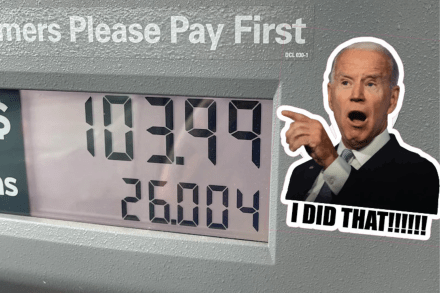
There is no shortage of reasons to feel gloomy about the American economy right now. First, there’s inflation. In 2021, the Biden administration claimed that the cost of a summer barbecue had declined by 16 cents from the year before. It probably now wishes it hadn’t made that claim. This summer, the cost of that barbecue is up not 16 cents but 17 percent. Hot dogs are up 37 percent over a year ago. This is the highest inflation in forty years, with the consumer price index up 8.6 percent from a year ago. Some necessities, such as gasoline and food, have risen even more sharply, with gas having gone from $2.18 a gallon when Biden was inaugurated to $5.

Biden’s energy policy is sending us toward recession

From our US edition

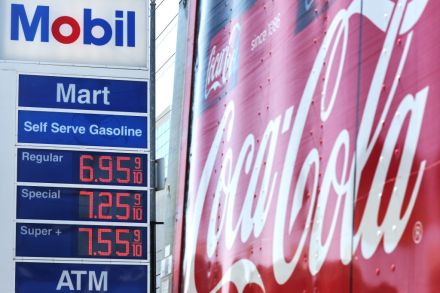
With the travel-heavy Memorial Day weekend upon us, the fast-rising cost of gasoline is getting a lot of attention. Last week, gasoline rose above $4 a gallon in all fifty states. That’s the first time that has happened. Some are predicting gas could reach $6 a gallon this summer. If that comes to pass, the average American family could see a major impact on their budgets. (It might be noted as well, that the price of home heating oil has nearly doubled this year. If that continues, the economic impact next winter, especially in the northeast, where a high percentage of homes are heated by oil, will be considerable.) The threat of a recession is rising thanks to fuel shortages. Why has the price of gasoline risen so far so fast?

gas

Inflation is here to stay

From our US edition

Inflation last month increased to 8.5 percent over a year ago. That’s up from 7.9 percent just last month. It’s the sixth straight month that inflation has been over 6 percent, and the highest it’s been since 1981. The Fed will almost certainly be raising the funds rate steadily for the rest of the year, perhaps by fifty basis point increments instead of the usual twenty-five basis points. The trick, of course, is to rein in the inflation without causing a severe recession. The price of gasoline rose a staggering 18.3 percent in March alone. But even if you take out the cost of fuel and food, which tend to be much more volatile than other commodities, the “core inflation” was 6.5 percent, again the highest in decades.

Did Biden’s energy policy lead to high gas prices?

From our US edition

The price of petroleum products is inherently cyclical, rising and falling over time due to natural and ineluctable economic forces. This has been going on since the dawn of the petroleum industry 163 years ago. The reason is that exploration for and development of petroleum resources are extremely capital intensive activities. Thus when prices are low, there is little incentive to increase production by taking the risks inherent in looking for and developing new supplies. But then, as the world economy expands over time, the demand for petroleum products increases, and prices rise. This increases the incentive to go look for more oil and gas, and the rig count goes up. New fields are located and new technologies (such as fracking) come on line.

gas

The inevitable return of inflation

From our US edition

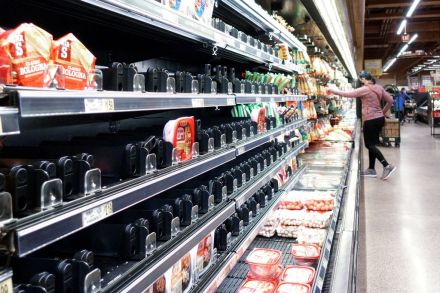
The Labor Department reported this week that the December inflation rate hit 7 percent on an annualized basis, the highest since 1982. That was when the country was just beginning to recover from the inflation of the 1970s, the highest peacetime inflation in the nation’s history. The inflation rate for the last three months of 2021 was 9.1 percent. The price of gasoline is up almost 50 percent over a year ago, used cars are up 37 percent and furniture is up 17 percent. Shortages cause by supply-chain disruptions are partly responsible for the upsurge (supermarket shelves have been notably empty in recent days). As grocery and food workers return to work after the latest surge of Covid, those prices should begin to drop.

inflation

The wealth explosion

From our US edition

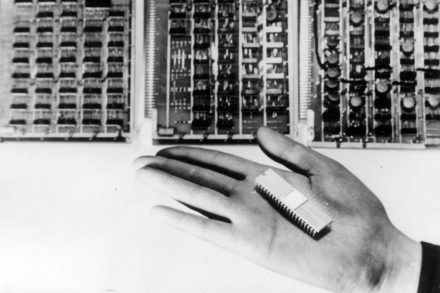
Not all inventions change the world. But some do — and they do it by greatly lowering the cost of a fundamental economic input. This inevitably causes an economic revolution that brings about a new political and social order by opening previously impossible economic opportunities,  creating vast new wealth in the process. We are in the middle of such a revolution today, thanks to the microprocessor, which first came to market in 1972 and really took off with the introduction of the personal computer in the early 1980s. The microprocessor, a dirt-cheap computer on a chip, hugely reduced the cost of storing, retrieving and manipulating information. Computing power that cost $1,000 in the 1950s today costs a fraction of a cent.

microprocessor

The trouble with unrealized capital gains taxes

From our US edition

No one knows what will come out of the sausage making now going on up on Capitol Hill, but let’s take a look at one proposal to raise money to pay for some of the cost of the reconciliation bill. At the moment, capital gains are taxed only when the asset is sold or the owner dies. (The estate tax is just a tax on capital that is triggered by death rather than by sale.) Oregon senator Ron Wyden proposes that they be taxed every year whether sold or not. Unrealized capital gains are certainly a tempting target. After all, for people like Bill Gates and Jeff Bezos, practically their whole, vast fortunes are capital gains, the cost basis of their stock in Microsoft and Amazon is, at most, a few cents a share.

ron wyden unrealized capital gains tax

Who’s targeted by the $600 IRS reporting requirement?

From our US edition

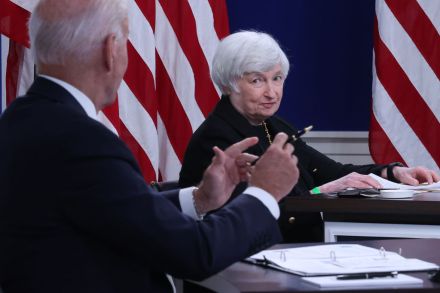
Tucked away in the reconciliation bill now bogged down in Congress is a requirement that banks report the annual deposits and withdrawals from every bank account that has activity of more than $600 a year. It would not list individual transactions, just the total money flow in and out. Ostensibly, this is to catch rich people who have been under reporting income. Secretary of the Treasury Janet Yellen gave as an example: “High-income individuals with opaque sources of income that are not reported to the IRS, there's a lot of tax fraud and cheating that's going on.” Wages, salaries and fees are already reported to the IRS through W-2 forms. So is investment income. That sort of income is what a large majority of American families depend on.

irs

Will the Pandora Papers change anything?

From our US edition

On October 3, the International Consortium of Investigative Journalists, based in Washington DC, released a huge trove of 11.9 million leaked documents pertaining to the wealth of hundreds of world leaders, public officials, and billionaires. Like the Panama Papers that were leaked in 2016, the Pandora Papers detail vast offshore holdings, perhaps as much as $32 trillion, that have allowed the beneficiaries to avoid taxes that would have been due had the wealth been held at home. For instance, a United Kingdom company controlled by Cherie Blair, the wife of former prime minister Tony Blair, acquired a £6.45 million ($8.8 million) property in London not directly but by purchasing a British Virgin Islands company.

pandora papers

The next real estate crisis could come from China

From our US edition

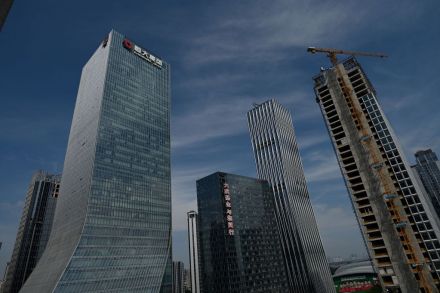
Debt is as much a part of the real estate business as bricks and mortar. And as the great New York builder William Zeckendorf once famously remarked, 'it’s better to be alive at 20 percent than dead at the prime rate.' But the Evergrande Group, the second largest real estate company in China, has taken corporate debt to new heights, with liabilities of a staggering $310 billion, to finance its breakneck growth. In 2010, it had revenues of $7.3 billion and assets totaling $16.7 billion. In 2020, the figures were $81 billion and $368 billion. To be sure, it is a huge company, with 1,300 projects in more than 240 cities in China and 200,000 employees. This year alone, it began 77 new projects.

evergrande

Biden’s dismal jobs report

From our US edition

The Bureau of Labor Statistics issued its August jobs report this morning and the numbers are pretty dismal. While the unemployment rate dropped 0.2 percent to 5.2 percent, the number of new jobs created was only 235,000, far below expectations of about 700,000. In June the number was 962,000 and in July a whopping 1.1 million. And the unemployment was not spread evenly across the population. Unemployment went down for adult men and whites, but black unemployment went up significantly, from 8.2 percent in July to 8.8 percent in August. The surge in the Delta variant of the coronavirus is widely thought responsible.