John Connolly

John Connolly

John Connolly is News Editor of The Spectator

‘It’s my job to challenge the government’: Andy Burnham interviewed

Less than three weeks after Andy Burnham was elected mayor of Greater Manchester three years ago, the city was hit by the terrorist attack that claimed 22 lives at an Ariana Grande concert. Now Burnham is facing a very different sort of crisis as corona-virus sweeps through the north-west. Manchester is about two weeks behind London in the epidemic curve. We had first met in his office to talk about the city and its politics. But that was at the start of last month — my questions, and his answers, were quickly overtaken by events. When we speak again, this time over Skype, much has changed.

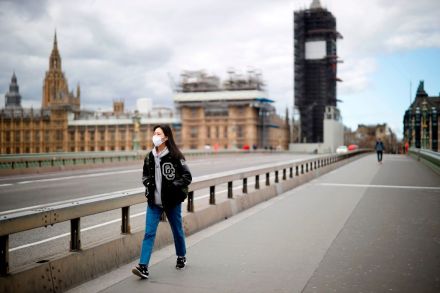
Has the UK ignored its own expert advice on facemasks?

The use of facemasks in the fight against coronavirus has become a contentious topic in recent weeks, as different countries have debated how much difference they make when worn by the general public. After flirting with the idea of recommending the widespread use of masks, the WHO this week stuck with its guidance, which says that only healthcare workers, people who are sick and showing symptoms, and people caring for the potentially infected should wear masks. The UK has taken a more hard-line approach. Since the beginning of the outbreak, it has said that even sick people showing symptoms shouldn’t wear masks at home, as they are most effective when used by healthcare workers and in hospitals. The government says its stance is backed by the science.

Breaking: Alex Salmond cleared of all sexual assault charges

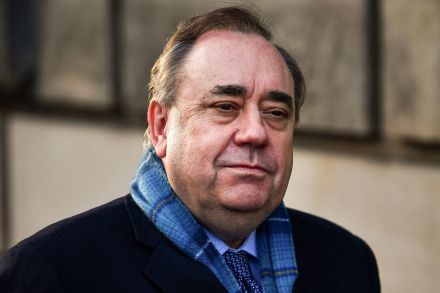
Alex Salmond, the former first minister of Scotland and leader of the SNP, has been cleared of all charges of sexual assault. The former first minister had been charged with 13 offences against nine women, including indecent assault, sexual assault and intent to rape. A further charge of sexual assault against a tenth woman was dropped by the prosecution earlier in the trial. Salmond has denied all the charges.  Today, at the High Court in Edinburgh, a jury found Salmond not guilty of 12 of those offences, and declared that the 13th offence was ‘not proven’. The 'not proven' verdict is unique to the Scottish courts, and leaves the accused innocent in the eyes of the law.

The unanswerable question on coronavirus

13 min listen

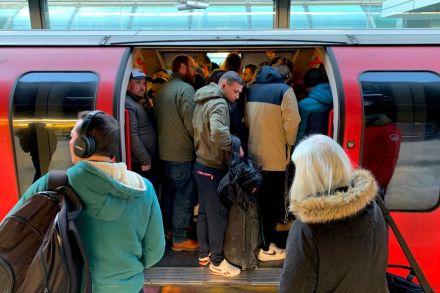
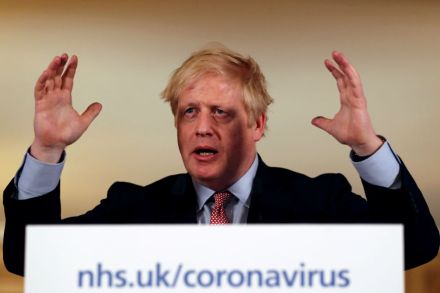
The government today announced that schools will be closed come this Friday. Boris Johnson wasn't able to answer when they will resume, but James Forsyth says in today's Coffee House Shots podcast that this is only the beginning of stricter social measures, some of which could become compulsory in the not distant future. Rumours abound today that London is days away from a city-wide lockdown, and on the podcast, James points out that Boris Johnson could be considering this even though it is against his liberal political instincts. Anyone watching Prime Minister's Questions today will be in no doubt that we are living in extraordinary times. The normally packed chamber was sparse, as only MPs who had questions were allowed in.

Could freeports help ‘level up’ the north?

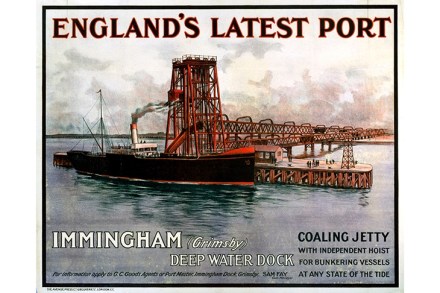
It’s hard to think of a place more deserving of a post-Brexit boom than Grimsby. In the 1950s it had the largest trawler fleet in the world, brought in hundreds of tonnes of cod a day, and you could cross its harbour by walking over ships in the dock. But the Cod Wars were lost and the EU’s Common Fisheries Policy began to bite. Now Grimsby is one of the most deprived areas in the country, and its long road down to the docks is littered with shuttered shops. Simply put, it’s exactly the kind of place the Tories are hoping to ‘level up’ and win over before the next election. In 2016, along with Hull and much of the rest of the Humber, it voted to leave the EU and it elected its first Tory MP in 75 years in December.

Starmer and Long-Bailey fail to impress on Andrew Neil

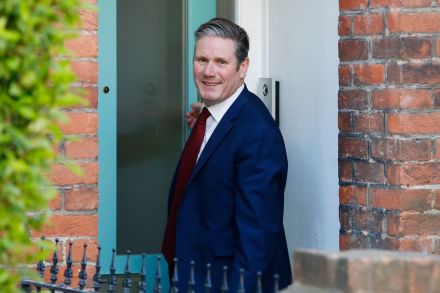
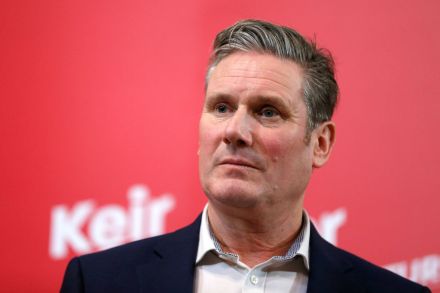
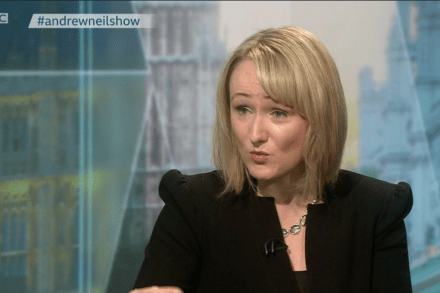
At the beginning of the year Lisa Nandy became the first Labour leadership candidate to subject herself to a grilling by Andrew Neil. It took almost two months, but this evening the two other candidates left in the race, Keir Starmer and Rebecca Long-Bailey, finally appeared on the show as well. And while both survived the encounter, neither particularly impressed. Keir Starmer appeared to have trouble defining his political relationship with Jeremy Corbyn. The Holborn and St Pancras MP admitted that Corbyn was a major issue on the doorstep at the last election, but then unconvincingly denied there were any rifts between him and the Labour leader over the party’s Brexit policy last year.

What impact did the Brexit party have on the general election result?

When the general election was called by Boris Johnson over a month ago, one truly unpredictable factor in the race was the Brexit party. Would Nigel Farage's movement end up splitting the Leave vote across the country, thereby denying the Tories a majority? Or would the party mainly damage Labour's chances, and manage to scoop up scores of seats in dyed-in-the-wool red areas where a Tory candidate would never have a chance? In the end, neither extreme scenario came to pass. Nigel Farage's decision to stand down candidates in seats the Tories were defending against Labour meant any splits in the Leave vote were limited. Meanwhile, the Conservatives managed to secure a 'stonking' majority of 80, by ploughing through the 'Red Wall' of Labour heartlands in the North and the Midlands.

Jo Swinson to Laura Pidcock: the seven biggest scalps from election night

It's been a remarkable election night. The Tories have won a big majority in the House of Commons and stormed the so-called 'Red Wall' of Labour seats in the North and Midlands, which have voted red for decades. As expected after such a tumultuous election, there have been some high-profile casualties along the way. Here are the seven biggest names to lose their seats: Jo Swinson Jo Swinson's loss of her East Dunbartonshire seat will be viewed as the ultimate 'Portillo moment' of the 2019 election campaign, made all the more noteworthy because of Swinson's own grand rhetoric when the election was called. Swinson started the campaign in November saying she would be the next PM. She ended it not even being able to say she was an MP.

Ten bellwether seats to watch on election night

It's easy to imagine prime ministers on election night, either nervously grinning or groaning in despair when the results for Dartford are announced. In every election since 1964, the London constituency has voted for the party which went on to win nationwide. It, along with nine other constituencies (such as Watford, Reading West and Worcester) are the true bellwether seats, which have predicted the national mood since the 1980s. This election though, it’s harder to know if these seats will accurately reflect the final election result. Boris Johnson’s Tories are hoping to flip the electoral map, abandoning their old heartlands and affluent Remainers in favour of Northern and Midland Labour strongholds which voted Leave in 2016.

14 ‘Portillo moments’ to look out for on election night

At around 3am on election night in 1997, the Conservative leading-light Michael Portillo suffered at shock defeat when he was ousted from his seat in Enfield Southgate by Stephen Twigg. Ever since, the surprising departure of a high-profile politician on election night – and their disbelieving face as the result is declared – has been dubbed a 'Portillo moment'. The unpredictable nature of this election, and the potential upending of traditional voter loyalties means there are unusually large number of potential 'Portillo moments' to watch out for this week, as Cabinet Ministers, Corbyn allies, and even party leaders are vulnerable to being spectacularly dethroned. Below are the high-flying candidates who could be booted from the Commons on Thursday night.