Joanna Pocock

On the road, high society style

In 1949, aged 26, the bright, well-connected Judy Montagu (first cousin of Mary Churchill and friend of Princess Margaret) criss-crossed the United States on a Greyhound bus. The Greyhound Diary is a vivid and often humorous account of the three months she spent on the road. Montagu’s life, like her diary, reflects a specific time, place and atmosphere – that of postwar optimism, the disappearing shreds of aristocratic influence and a burgeoning interest in New Deal America. She was the epitome of the socialite whose sarcasm could be wielded like a scythe. At a luncheon in the American South, she meets a woman who tells her that she had once been married to an Englishman: ‘I used to drink beer with him – I hoped it would fatten me up, you see’ (coy smirk).


Joanna Pocock: Greyhound

36 min listen

Sam Leith's guest for this week's Book Club podcast is Joanna Pocock, whose new book Greyhound  describes two trips she took across America by Greyhound bus in 2006 and 2023. They talk about the literature of the road, that distinctively American and usually distinctively male genre, and the meaning of travel – and Joanna tells Sam how the America you see from a Greyhound differs from the one you see on television; and how dramatically it has changed even over the last couple of decades.

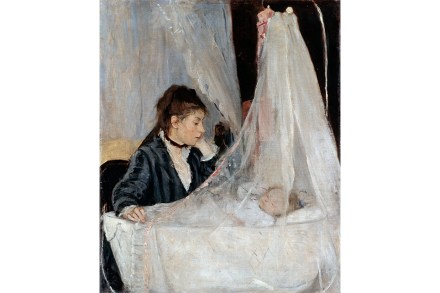
Portrait of the artist and mother

On reaching the end of Hettie Judah’s Acts of Creation, I felt somewhat overwhelmed. At 272 pages, the book isn’t particularly large, but the time span it covers, from prehistoric goddess figures to Laure Prouvost’s 2021 cyborg-octopus installation ‘MOOTHERR’, is enormous. The trajectories, practices and obsessions of the artists discussed range far and wide. Written to coincide with a touring exhibition of the same name, this ambitious book is more of a survey – a highly illustrated, annotated and well-researched one – than a traditional narrative. Judah’s energetic text displays the hunger of someone after a fast who can’t decide where to start at the buffet.

A mother-daughter love story

In Splinters, the American novelist and essayist Leslie Jamison leaves behind the issue of her addiction and recovery – the subject of her previous memoir, The Recovering (2018) – and takes us through her pregnancy, experience of childbirth, marriage, divorce and post-separation dating life. Each stage of her journey is related with the author’s trademark love of the telling detail: On the postpartum ward my window ledge filled up with snacks from friends: graham crackers, cashews, cheddar cheese, coconut water, oranges with tiny green leaves. Someone hands her a form to fill out. ‘Did I want bone broth?’ We can assume she does, as bone broth appears later on. Much of Splinters recounts her marriage to the author Charles Bock – referred to throughout as ‘C’.

Robyn Davidson explores yet another foreign country – the past

Robyn Davidson never set out to become a writer. ‘It did not form my identity,’ she tells us early on in her memoir Unfinished Woman. ‘In my own mind I had simply pulled another rabbit out of a hat. As I had done all my life with everything.’ The rabbit, in this case, is the ability to capture an exciting and complex life with insight and humour. When she decided to leave the underworld, she was sexually assaulted at knifepoint Born in 1950 on a cattle station in Queensland, Australia, Davidson was the second daughter of a handsome war hero from a privileged background. Home was a place full of ‘dust and wide verandas, comfortable old chairs and good horses, though never adequate cash’.

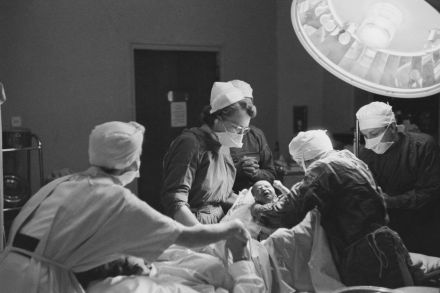
Labour of love? What women need to know about childbirth

‘The birthing mother is surrounded by the dusts of death,’ reads an inscription on a 3,000-year-old clay tablet, thought to be an ancient Assyrian incantation to ward off death in childbirth. There have been pressings of beads into clay, writings on vellum or cave walls and singing and making art about childbirth and motherhood for as long as small humans have been emerging from women’s bodies. Yet contemporary depictions of the process of becoming a mother – known as ‘matrescence’ – can be misleading or simply absent.

Scaling the heights: a woman’s experience of mountain climbing

In her memoir Time on Rock, Anna Fleming charts her progress from ‘terrified novice’ to ‘competent leader’ as she scales rocky vertical routes with names such as the ‘Inaccessible Pinnacle’ and the ‘Savage Slit’. There is poetry in the vocabulary of climbing, with its gritstone, gabbro and basalt and its slopers, arêtes, underclings, heel hooks and, my personal favourite, the thrutch — a kind of hip wiggle that can get a climber out of a tight squeeze. ‘There is nothing elegant in a thrutch,’ we are told. One element of the book that distinguishes it from most climbing literature is its female perspective.

The many contradictions of modern motherhood

There are few certainties in life. Death and taxes are the ones regularly trotted out. However, there is another that rarely gets mentioned: the fact that every single human who has ever existed has come out of a woman’s body. This act of creation, while being a marvel, has also become banal. In Motherhood, Eliane Glaser deftly juggles the wonder and boredom, the joy and pain and the many profound contradictions that attend modern motherhood. Philosophers, child psychologists and anthropologists from Jean-Jacques Rousseau to Donald Winnicott and Margaret Mead provide cultural and social contexts for how our attitudes towards motherhood have changed throughout history.

Finder and keeper: two family memoirs reviewed

What can we ever know about our family’s past? How do we love those closest to us when doing so brings us to the edge of insanity? Nicole Chung’s All You Can Ever Know and Sam Mills’s The Fragments of My Father explore both of these questions. Chung’s memoir takes on a sleuth-like quality as she describes the process of uncovering her birth family. Born weeks premature, she was put up for adoption by her Korean-American parents, who feared she wouldn’t survive. Throughout her childhood, the reasons behind her adoption were presented as solid and comforting: ‘The doctors told them you would struggle all your life.

A love letter to San Francisco’s mean streets

Recollections of My Non-Existence is the Rebecca Solnit book I have been waiting for. I was born four years after the American writer, and on the same continent, and much of what she describes in Recollections feels very familiar: the flamboyant gay scene of the 1980s, swiftly followed by the devastation of the Aids epidemic, the navigation through second-wave feminism, the men who constantly told us ‘what to do and be’ while they scrutinised our bodies. When Solnit was young, ‘nearly everyone who held power and made news was male’. I was fist-pumping by the time I got to: ‘We were trained to please men, and that made it hard to please ourselves. We were trained to make ourselves desirable in ways that made us reject ourselves and our desires.