Jamie Kirchick

Germany’s war on Barbie

‘I embrace Barbie because I’m not threatened by her,’ says my friend Pippa, an early 40-ish antiques dealer from London who lives in Berlin. We are standing inside the ‘Barbie Dreamhouse Experience’, a 2,500-square metre Barbie museum; a pink monstrosity erected last month in a parking lot near Alexanderplatz. Inside, one can bake imaginary cupcakes, saunter down a fashion runway and gawk at the contents of Barbie’s hall of shoes. It’s a little out of place in the midst of the communist-era Plattenbau (pre-fabricated, council-style) apartment blocks that surround it. In 1989, East German activists gathered not far from this spot to welcome the downfall of socialist dictatorship.

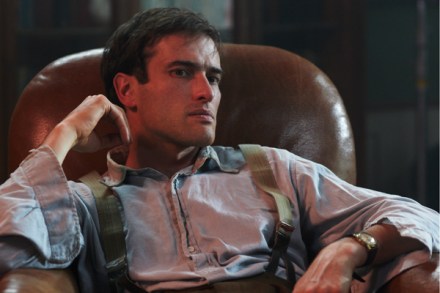
Our shameful treatment of Alan Turing, the man behind the Enigma Code

Alan Turing, the man who developed the Enigma code that saved the Allied war effort, was not merely disregarded by his country. A homosexual, he was convicted of ‘gross indecency’ in 1952 and chemically castrated via forced oestrogen injections. Under unimaginable duress, he committed suicide. That it took until 2009 for the British government to apologise only compounds the scandal. Turing’s story is told in Codebreaker, a docudrama that combines reenactments of conversations between Turing, played by Ed Stoppard (above), and his psychiatrist (the German Jewish refugee Franz Greenbaum), and interviews with experts on his life and work. One after another, they attest to Turing’s brilliance as the man who created modern computing.