James Walton

James Walton is The Spectator’s TV critic

Sumptuous and very promising: A Suitable Boy reviewed

Nobody could argue that Andrew Davies isn’t up for a challenge. He’d also surely be a shoo-in for Monty Python’s Summarise Proust competition. After turning both War and Peace and Les Misérables into satisfying, unhurried six-part drama series, he’s now taken on Vikram Seth’s 1,300-page novel A Suitable Boy. The first episode started with a wedding that immediately established the programme’s visual sumptuousness, while also serving as a handy introduction to the main characters. The groom’s rebellious brother Maan, for example, chafed at the idea that he was supposed to be next.

Michaela Coel’s dazzling finale reminds me of Philip Roth: I May Destroy You reviewed

It might seem a bit of a stretch to see deep similarities between Michaela Coel (young, female, black and currently very fashionable indeed) and the late Philip Roth (increasingly discredited as an embodiment of all those phallocentric white guys who once ruled American fiction merely because they were great writers). Nonetheless, this week’s television made it hard not to. On Tuesday night, as an adaptation of Roth’s The Plot Against America began on Sky Atlantic, Coel’s I May Destroy You was serving up a dazzling final episode that confirmed how Rothian the series has been.

The Sixties vibe: Utopia Avenue, by David Mitchell, reviewed

There aren’t many authors as generous to their readers as David Mitchell. Ever since Ghostwritten in 1999, he’s specialised in big novels bursting with storytelling in all kinds of genres — most famously Cloud Atlas, where six very different novellas were immaculately intertwined. Not only that but, as he’s said, ‘each of my books is one chapter in a sort of sprawling macro-novel’, with many of the same characters and events being either updated or given fuller backstories. At its best, this generosity has resulted in some of the most lavishly satisfying fiction of recent times.

A documentary about the M25 that will make your heart soar

When a 90-minute documentary is introduced with the words ‘This is the M25’, you’d be within your rights not to feel your heart soar. Nor would you necessarily expect what follows to be full of wonders of all kinds — natural, historical, literary and scientific. Yet this is exactly what happened in BBC Four’s The Hidden Wilds of the Motorway, presented by Helen Macdonald. Macdonald is best known for her 2014 bestseller H is for Hawk, which mixed memoir and falconry with a biography of the author T.H. White. In Tuesday’s programme, she was on similarly genre-blending form as she set off on a television journey that, in a rare twist, was an actual journey: clockwise around the M25 from junction one in Kent.

A fine, even rather noble drama: BBC1’s The Salisbury Poisonings reviewed

This week, BBC1 brought us a three-part dramatisation of an ‘unprecedented crisis’ in recent British life. Among other things, it featured a lockdown, an extensive tracking and tracing programme, much heroism from people on the front line, and much confusion among scientists as to how to provide the facts when they didn’t really know them. The Salisbury Poisonings (Sunday–Tuesday) was presumably made well before you-know-what. Yet watching the programme in the current circumstances, it wasn’t easy to decide whether the timing was good or bad luck for the makers. The obvious parallels did lend a haunting, drone-note resonance to proceedings. On the other hand, they sometimes threatened to overshadow what was a fine, even rather noble drama in its own right.

Another drama about how women are great and men are rubbish: C4’s Philharmonia reviewed

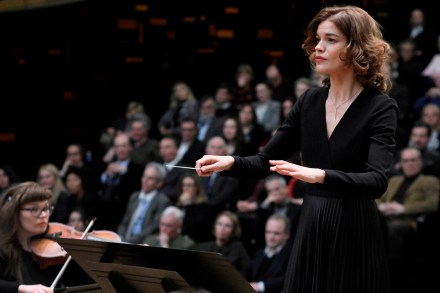
On the face of it, a French-language drama about a Parisian symphony orchestra mightn’t sound like the most action-packed of TV watches. In fact, though, Philharmonia (Sundays) is pretty much Dallas with violins. The first episode began with the eponymous orchestra blasting out a spot of what Shazam assured me was Dvorak, before its elderly conductor dropped his baton and collapsed to the floor, never to rise again. Cue a pair of Gallically elegant female lower legs making their way through the airport as one Hélène Barizet arrived from New York to take over the role. David was left in a tartan bag in Belfast; Helen was discovered in a tartan bag in a Dundalk phone box Not that her appointment was universally welcomed.

One of the more disturbing films I’ve seen: Arena’s The Changin’ Times of Ike White reviewed

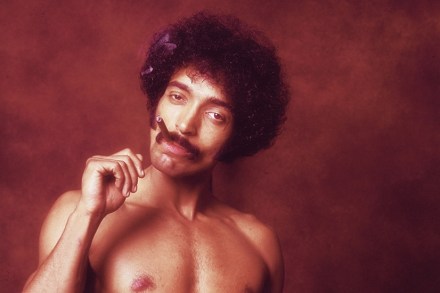
Arena: The Changin’ Times of Ike White (Monday) had an extraordinary story to tell — but one that, halfway through the documentary, already seemed to be complete. So, you might well have thought at that point, how would it fill the rest of the time? The answer, it transpired, was by taking an even more jaw-dropping turn. In the 1970s, Ike White was serving life for murder in a Californian prison when reports of his musical talent reached the record producer Jerry Goldstein. A prodigy on guitar, bass, drums and keyboards, White had until then been making most of his music in the prison’s gas chamber, which he was allowed to use as a rehearsal room.

Not merely funny but somehow also joyous: Sky One’s Brassic reviewed

Danny Brocklehurst, the scriptwriter for Sky One’s Brassic, used to work for Shameless in its glory days — although if you didn’t know that already you could probably guess. For a start, the central characters are another close-knit group of ducking-and-diving working-class northerners not overburdened with a social conscience. But there’s also the fact that, no matter what they get up to, they’re clearly supposed to be lovable — coupled with the rather more mysterious fact that they are. However dark the storylines theoretically become, the programme presents them with such an infectious swagger, and such a thorough blurring of realism and wild imagination, that the result is not merely funny but somehow joyous.

Classic tangled thriller: Sky’s Gangs of London reviewed

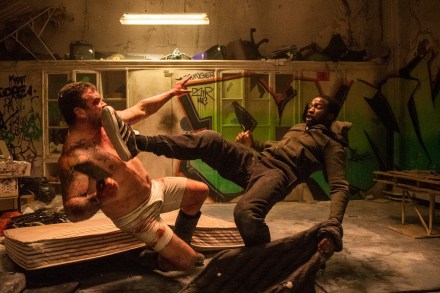
There were plenty of TV shows around this week designed to cheer us up. Sky Atlantic’s Gangs of London, however, wasn’t one of them. After decades of desensitisation, it’s not easy for any film or television programme these days to make its screen violence genuinely horrifying. Yet, by my reckoning, Thursday’s first episode managed to do it at least twice before the opening credits had even rolled. By the time they did, it was clear that two terrified Welsh lowlifes from some kind of travellers’ camp had been tricked into carrying out a hit on Finn Wallace (Colm Meaney), London’s most powerful criminal boss — rather than, as they’d fondly imagined, ‘just some paedo’. But that was clear only to us.

An extraordinary tale: BBC2’s The Countess and the Russian Billionaire reviewed

There can’t be many programmes that bring to mind quotations from both Henry Kissinger and Boney M., but BBC2’s The Countess and the Russian Billionaire was one of them. While Kissinger’s idea that ‘power is the ultimate aphrodisiac’ may be a little out of fashion in the #MeToo age, it was hard not to think it played a part in the eye-popping events that Wednesday’s documentary laid out with some relish. As for Boney M., rarely has ‘Oh, those Russians’ from ‘Rasputin’ felt so penetratingly insightful. The programme began filming in 2015, with the apparent aim of providing a ringside seat at a fight between an excitingly wealthy British-based couple and the Russian government.

Riveting documentary about a remarkable man: Harry Birrell Presents Films of Love and War reviewed

First shown on BBC Scotland, Harry Birrell Presents Films of Love and War (BBC4, Wednesday) was the documentary equivalent of a William Boyd novel, showing us a 20th-century life shaped by 20th-century history. The programme was made by Harry’s granddaughter Carina, who’d been eight when he died, and known him only as ‘a lovable, frail, blind old man’. But then she came across 400 carefully labelled reels of film in the family shed, together with an equally well-organised collection of diaries. Exactly — or even vaguely — when this discovery took place was one of many details that Carina tantalisingly failed to disclose. (Now and again, we did see her dusting off old cannisters with a look of surprise, but this felt distinctly like re-enactment.

The creators of Breeders are locked into a game of How Far Can You Go

Sky One’s Breeders (Thursday) bills itself as an ‘honest and uncompromising comedy’ about parenting. To this end, the opening scene featured Martin Freeman as Paul trying to do some work while his two children under seven made a bit of noise a couple of rooms away. Having given himself a little pep talk about not screaming at them, Paul then screamed at them — bursting in on their blameless fun to yell: ‘Jesus fucking Christ! How many times do I have to tell you to be quiet?’ He further informed them that he was going to leave home and they should ‘tell mummy that daddy’s gone cos he couldn’t stand the fucking noise anymore.

Marina Lewycka’s The Good, the Bad and the Little Bit Stupid is completely bonkers

Faced with Marina Lewycka’s new novel, it’s tempting to say that The Good, the Bad and the Little Bit Stupid is also a pretty serviceable description of its contents. Yet, in the end, that feels far too neat a formulation for a book that goes well beyond the uneven into the realms of the completely unhinged. For one thing, its elements — among them suburban social comedy, the horrors of Brexit, money laundering, geriatric sex and the international trade in human organs — seem not so much disparate as random. For another, they’re never remotely blended, but simply allowed to co-exist.

Sharp family saga with a thriller uneasily attached: ITV’s Flesh and Blood reviewed

As in many thrillers, the characters on display in Flesh and Blood (ITV, Monday to Thursday) often seemed locked in a fierce competition as to which of them we could trust the least. The early front runner was Mark (Stephen Rea), a retired surgeon whom the not-long widowed Viv (Francesca Annis) introduced to her three grown-up children as her new boyfriend. But was Mark all he appeared to be? And if not, was this necessarily a bad thing — given that what he appeared to be was spectacularly shifty? Soon, though, the grown-up children had plenty of other people to worry about, including themselves, as they messed up their lives in an impressive variety of ways.

Odd but gripping: BBC1’s The Pale Horse reviewed

Not much was clear in the opening scenes of The Pale Horse (BBC1, Sunday), which even by current TV standards were admirably committed to confusing us with a series of baffling fragments. One thing that did seem apparent, though, was that Mark Easterbrook (Rufus Sewell) wasn’t having much luck with the ladies. In one fragment, he cradled the corpse of his new wife who’d just electrocuted herself in the bath. A few fragments later — some of them featuring an old woman lying in bed with her hair falling out — he woke up in a Soho starlet’s flat to find a rat dead in the sink and the starlet dead in the bed.

Understated, unashamedly patriotic and heartbreaking: The Windermere Children reviewed

One of the many astonishing things about the BBC2 drama The Windermere Children (Monday) was that the real-life story it told isn’t better known already. In August 1945, 300 Jewish children, who just a short time before had been starving in Nazi concentration camps, arrived at a converted seaplane factory in the Lake District. None, as far as they knew, had any family left, and none could speak any English. Waiting to welcome them was Leonard Montefiore of the Central British Fund for Jewish Relief who’d raised the money to turn the factory into a carefully thought-out rehabilitation centre — and amid the wreckage of Eastern Europe had liaised with the Red Cross, the RAF, the Czech authorities and the British Home Office to fly them in.

Undeniably eye-popping: BBC2’s Louis Theroux – Selling Sex reviewed

Victoria, a single mother in her early thirties, is getting her children ready for school — ensuring an equitable distribution of toast and issuing a series of determinedly patient instructions. (‘Listen to Mummy, you need to put your socks on.’) Once they’re gone, she then heads to a hotel to meet the first man that day who’ll be paying her £250 for sex. ‘It’s the perfect job for me,’ she explains cheerfully. ‘Very flexible.’ Victoria was one of three women featured in Louis Theroux: Selling Sex (BBC2, Sunday) for which Louis furrowed his familiar brow, adopted his finely honed bemused expression and set off to investigate transactional sex in digital-age Britain.

Did everyone in punk sell out?

For many people of a certain age (full disclosure: mine), punk has been a weirdly persistent presence. These days, we may not often be tempted to sit down with a glass of wine and an album by the Cortinas, Chelsea or Eater. We may even have belatedly realised that the most revolutionary record of 1977 — the year punk officially conquered Britain (and, incidentally, the country’s five bestselling singles were by Wings, David Soul, Julie Covington, Leo Sayer and David Soul again) — was Donna Summer’s ‘I Feel Love’. Nonetheless, the sight of Joe Strummer barking out a load of heartfelt if incomprehensible lyrics while the Clash thrash away in the foreground still somehow feels like a thrilling homecoming. But what to make of the whole business 42 years on?

Why on earth did Glenda Jackson give up acting? BBC1’s Elizabeth is Missing reviewed

Watching BBC1’s Elizabeth Is Missing made one of the more puzzling decisions of recent decades seem more puzzling still. Entirely her call of course, but why on earth did Glenda Jackson give up acting (something she was better at than pretty much everybody else in the world) to become an unremarkable Labour MP (something that any number of people could surely have done just as well) for more than 20 years? Whatever her thinking, though, Jackson’s first TV role since 1992 was an overwhelmingly powerful and therefore quite sad reminder of what we’ve been missing.

Is the patriarchy as all-powerful as it’s cracked up to be? The Baby Has Landed reviewed

Anybody who watched the opening episode of The Baby Has Landed (BBC2, Wednesday) might have found themselves wondering if the patriarchy is quite as all-powerful as it’s cracked up to be. The programme follows ‘six families over six life-changing weeks’ as they welcome a new member — and on the whole features women who radiate authority and men who do what they’re told. The most experienced parents are Nigel and Helen Pierce, first seen embarking on a lengthy quest for shoes as they tried to get their four children under five out of the house so that Helen could go to hospital and have a fifth. As old hands, they passed the time during labour doing crosswords. (‘Breed of hunting dog? You have your contraction and get back to me.