James Walton

James Walton is The Spectator’s TV critic

Amazon’s Lord of the Rings series is brimming with ponderous aphorisms

From our US edition

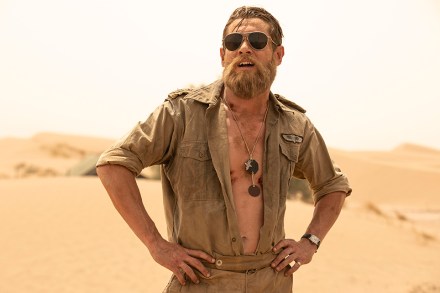
Amazon’s much-heralded Tolkien prequel The Lord of the Rings: The Rings of Power began by answering a question that has puzzled humankind — and possibly elves — these many millennia. Why is it that a ship floats and a stone doesn’t? The reason apparently is because "a stone sees only downward," whereas a ship has "her gaze fixed upon the light that guides her." And this, I’m afraid, set the tone for much of the dialogue that followed in the two episodes released so far — as, to their credit, the characters managed to exchange an endless series of ponderous aphorisms without giggling.

lord of the rings

Will you be able to get through the ponderous aphorisms without giggling? The Lord of the Rings: The Rings of Power reviewed

Amazon’s much-heralded Tolkien prequel The Lord of the Rings: The Rings of Power began by answering a question that has puzzled humankind – and possibly elves – these many millennia. Why is it that a ship floats and a stone doesn’t? The reason apparently is because ‘a stone sees only downward’, whereas a ship has ‘her gaze fixed upon the light that guides her’. And this, I’m afraid, set the tone for much of the dialogue that followed in the two episodes released so far – as, to their credit, the characters managed to exchange an endless series of ponderous aphorisms without giggling.

The fiasco of Operation Yewtree: C4’s The Accused – National Treasures on Trial reviewed

At 4.38 a.m., one morning in October 2013, the radio presenter Paul Gambaccini was understandably asleep when the doorbell rang. He was then arrested for sexually assaulting a minor on what proved to be the word of a drug addict with a history of making false accusations. The trouble for Gambaccini, though, was that this wasn’t proved for another 11 months. In the meantime, the allegations were all over the news, he was dropped by the BBC, lost around £100,000 in earnings and started having panic attacks. And Gambaccini, of course, wasn’t alone in being arrested and publicly named like this – not merely without being charged, but before any investigation had taken place.

Who are these pathologically liberal rozzers? Channel 4’s Night Coppers reviewed

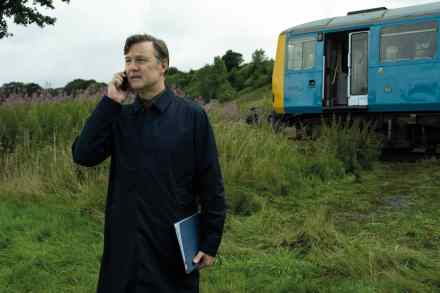
Grizzled police officers of the old school should probably avoid Channel 4’s Night Coppers for reasons of blood pressure. Like most documentary series with close access to the police, this one paints them in a light so favourable as to be almost comically sycophantic. The trouble for those grizzled types is that – the times being as they are – what’s now considered favourable is to make the rozzers who patrol Brighton after dark all seem like that pathologically liberal Dutch cop played by Paul Whitehouse in the late 1990s. https://twitter.com/C4Press/status/1546908729370632192?

A very classy thriller indeed: C4’s The Undeclared War reviewed

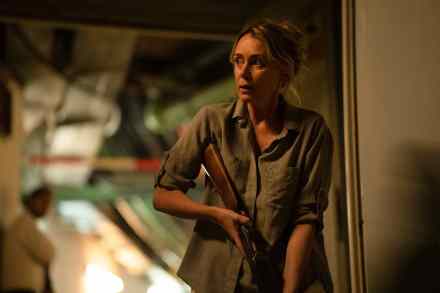
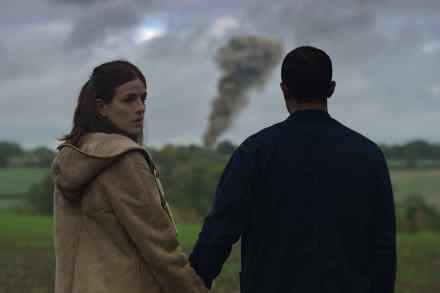
The Undeclared War has many of the traditional signifiers of a classy thriller: the assiduous letter-by-letter captioning of every location; the weirdly precise time-checks (‘Sunday 09.47’); above all, the frankly baffling opening scene. In it, a young woman walked around a deserted fairground, broke into a beach hut that turned into a gym and spotted a door in the ceiling which led into a stately home. https://www.youtube.com/watch?v=jIqRL3xIypY Gradually, the fact that the first episode interspersed this with the same woman typing computer code made it clear what was going on: writer/director Peter Kosminsky was making a plucky attempt to solve his main challenge here.

A masterclass in evenhandedness: James Graham’s Sherwood reviewed

James Graham has made his considerable name writing political-based dramas of a highly unusual type: non-polemical ones. And this certainly applies to his television work as well as his stage plays. Coalition (about the 2010 Conservative-Lib Dem alliance) and Brexit: The Uncivil War (which gave Dominic Cummings the signal honour of being played by Benedict Cumberbatch) both went so far as to suggest that most politicians try to do the right thing. Even when he abandoned politics to supply the lockdown hit Quiz, Graham’s unfashionable commitment to centrism remained. Rather than taking sides on the ‘coughing major’ scandal, he extended sympathy and understanding to all involved.

On the brink of delivering something special: Sky’s The Midwich Cuckoos reviewed

A youngish couple leave London and drive off excitedly to make a fresh start in more rural surroundings. They demonstrate their happiness by laughing all the way to their new town, where a cheery sign on the outskirts reads: ‘Welcome to Midwich’. So what could possibly go wrong? In fact, even for viewers unfamiliar with John Wyndham’s famously spooky 1957 novel, from which Sky Max’s modern-day version of The Midwich Cuckoos has been adapted, it’s clear that something soon will. After all, a pre-credit sequence, set five years later, had shown the same couple cowering in fear before their five-year-old daughter.

A gentle soap opera with nudity and book chat: Conversations with Friends reviewed

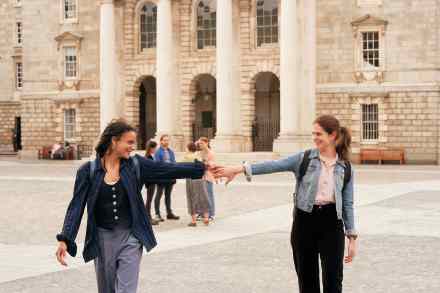
It’s official: television has a new genre. Its features include leisurely half-hour episodes, plenty of literary chat, several scenes set in libraries, not much humour and lots of close-ups of the thoughtful faces of clever young Irish women. It would also have presented a serious dilemma for teenage boys growing up before the internet, in that there’s not a great deal of exciting incident but there is a reliably high quotient of sex. The genre in question is, of course, the Sally Rooney adaptation – which, having laid the groundwork in 2020 with Normal People, has now cemented its new-genre status with Conversations with Friends.

Lacks the bite and bracing malevolence of Call My Agent!: Amazon’s Ten Percent reviewed

In theory, it should be a perfect match. John Morton – the man behind the brilliantly assured sitcom W1A which so gleefully skewered the BBC – gets to give us the English version of Call My Agent!: the brilliantly assured French lockdown hit which so gleefully skewered the Parisian showbusiness world. In practice, at least judging from the first two episodes, Ten Percent feels surprisingly uncertain of what kind of programme it wants to be. At first, it looked as if we were in for a straight remake, using the same plots and characters and with the original cast replaced by British lookalikes (except, oddly, that the French agent who looked exactly like Roger Allam is played by Jack Davenport).

The chief characteristic so far has been nervousness: Chivalry reviewed

Chivalry – written by and starring Sarah Solemani and Steve Coogan – is a comedy drama about post-#MeToo Hollywood life. It’s perhaps not surprising, then, that the show’s chief characteristic so far has been nervousness. Somewhere inside it, you feel, lurks an impulse to really let rip. But if so, Thursday’s first two episodes successfully resisted it. Now and again, we did get some jokes that might just frighten the admittedly neurotic horses of the new Moral Majority. The overall effect, though, was of a game of How Far Can You Go? in which the contestants’ answer was a firm ‘not very’. Still, even this level of unorthodoxy seemed unlikely when the programme began.

An impeccably rule-observing programme from the BBC: Art That Made Us reviewed

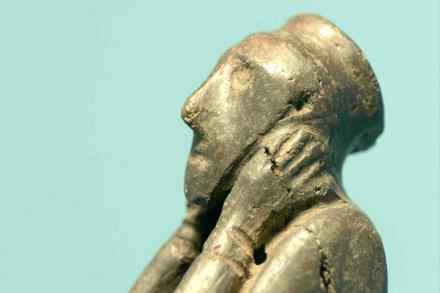
Art That Made Us is an ambitious new series, firmly in the ‘history of something in a load of different objects’ category. That the something in question is Britain duly means that we get the BBC’s usual, and perhaps even very British, mix of deep patriotism on the one hand and deep suspicion of patriotism on the other. The opening episode tackled the era formerly known as the Dark Ages, which the narrator felt duty-bound to remind us yet again was actually a period of great creativity and innovation. (Not that you could blame him.

Relentless and shouty: BBC2’s Then Barbara met Alan reviewed

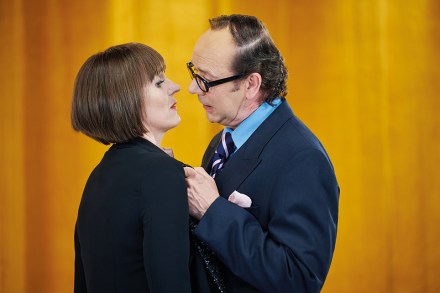
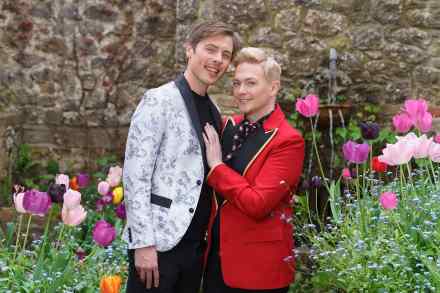
BBC2’s one-off drama Then Barbara Met Alan (Monday) told the true story of how two disabled performers on the cabaret circuit of the 1990s fell in love and campaigned together successfully for disability rights. Most of the cast and a lot of the crew were people with disabilities themselves, and the programme provided a startling reminder of how recently Britain was still a country that made little provision for the disabled – and, even more startlingly, of how controversial the idea of such provision then seemed. The central performances were rivetingly good, and the overall sense was of a heartfelt tribute being paid to a couple who did much to improve the lives of many thousands of people.

Unhurried and accomplished whodunit: ITV’s Holding reviewed

A couple of years ago, I happened to read Graham Norton’s third novel Home Stretch. Rather patronisingly, perhaps, I was surprised by how accomplished it was, especially in its sympathetic but melancholy portrait of life in a West Cork village. Yet, judging from ITV’s new adaptation of his first novel Holding, this was something he’d pulled off before – because, here again, it’s pretty clear both why Norton would want to write kindly about the kind of place he grew up in, and why he would have wanted to leave it. Monday’s first episode efficiently established the rural-Irish setting with shots of fields, cows and wind turbines. We then saw the village policeman P.J.

What’ll happen next – or what’s happened so far – is anybody’s guess: The Ipcress File reviewed

ITV’s new version of The Ipcress File began with a close-up of a pair of black-rimmed glasses just like those worn by Michael Caine in the 1965 film. They were then put on by their owner (Joe Cole), thus transforming him into Harry Palmer – but also neatly establishing the kind of show we were in for. Sunday’s first episode did a fine job of setting up an impeccably twisty (i.e. confusing) Cold War plot. It spared no effort in its quest to show us that the Britain of 1963 was on the Brink of Social Change. And yet, neither of these things really got in the way of its main aim: to be as cool and stylish as the 1960s films and TV it was paying tribute to.

For all its absurdity, it delivers the goods: BBC2’s Louis Theroux’s Forbidden America reviewed

In the latest episode of Louis Theroux’s Forbidden America, Louis asked a rapper called Broke Baby if ‘it’s important to keep it real’. ‘You have to play your role,’ replied Broke by way of apparent agreement. Given how stoned he was, this neat paradox — that you keep it real by pretending to — mightn’t have been wholly intended. Either way, however, it was hard not to apply it to Louis himself. More than 20 years into his TV career, does anybody know for sure whether his familiar schtick is genuine or faked? Certainly not, I’d suggest, Louis — whose elaborate stage-English courtesy, wide-eyed bemusement and spectacular naivety are now so practised as to have become completely ingrained.

The medical equivalent of The Responder: BBC1’s This is Going to Hurt reviewed

According to the makers, This is Going to Hurt is intended as ‘a love letter to the national health service’. If so, however, it’s certainly not a soppy one. Few non-British people who watch it will, I suspect, find themselves wishing they had an NHS of their own — where the mission statement could easily read: ‘We Aim to Muddle Through Somehow, Despite Everything.’ Adapted by Adam Kay from his own phenomenally successful memoir of life as a junior doctor, the programme opened with Adam (Ben Whishaw) realising he’d slept in. On the plus side, his journey to work wouldn’t take long, given that he’d woken up in his car outside the hospital, having been too tired to drive home the night before.

Shades of Tony Soprano: BBC1’s The Responder reviewed

Older readers may remember a time when people signalled their cultural superiority with the weird boast that they didn’t watch television. These days the same mistaken sense of superiority is more likely to rely on the equally weird one that they don’t watch terrestrial television. So now that the BBC and ITV find themselves in the historically improbable role of plucky underdogs, it’s pleasing to report that this week saw the launch of two terrific new terrestrial shows — one of which already looks set to be as good as anything on Netflix, Amazon or Disney+ (except for Get Back of course). The programme in question is The Responder.

A cut above TV’s usual #MeToo fare: BBC1’s Rules of the Game reviewed

As you may have noticed, it’s something of a golden age for TV shows about how invisible middle-aged women are — except perhaps, in all those TV shows about how invisible middle-aged women are. At first sight, Rules of the Game — a crime drama set in a northern sportswear company — seemed a fairly standard example. The company in question, Fly Dynamic, has a management style that some might consider a little sleazy, run as it is by a group of men who’ve never met a 16-year-old girl they didn’t want to ply with booze and drugs. Meanwhile their neglected wives amuse themselves as best they can with cheese evenings.

Tells us more about today than the early 1960s: BBC1’s A Very British Scandal reviewed

For people who like a good upper-class scandal (or ‘people’, as they’re also known), 1963 was definitely a vintage year. Even before the Profumo affair came along, the divorce of the Duke and Duchess of Argyll offered plenty to enjoy, with its courtroom tales of her 80-odd lovers and that famous Polaroid of her pleasuring a titillatingly anonymous man while still wearing her pearls. All of which presented something of a problem for BBC1’s three-part dramatisation, A Very British Scandal — and not just because it had to pretend not to be titillated itself.

Some jolly TV artifice and a rare moment of authenticity: C4’s Miriam and Alan – Lost in Scotland reviewed

Thanks to Covid, the days are gone — or at least suspended — when a TV travel programme meant a thespian in a Panama hat wandering around souks and bravely trying some funny foreign food. Instead, we now have shows in which the presenters, often operating in pairs, drive around picturesque parts of Britain cranking up the bantz, with plenty of aerial shots of their car bowling along an abnormally empty road. Take Miriam and Alan: Lost in Scotland — by my reckoning approximately Exhibit P. The premise here is that Alan Cumming and Miriam Margolyes are seeking to reconnect with their proud Caledonian roots, which is why the first stop was a Glasgow front door behind which Miriam’s father lived as a boy in 1901.