James Walton

James Walton is The Spectator’s TV critic

The quest for the perfect guitar riff is a noble one – if not quite the key to unlocking the mysteries of the universe

A few weeks ago, my eight-year-old son, who’s taken up the guitar, announced that he’d learned something new. He then played a sequence of chords — approximately, Duh-duh-duuh, Duh-duh-da-duuh — that I’ve been hearing from all guitarists since I was about eight myself. ‘It’s called “Smoke on the Water”,’ he informed me, unnecessarily. Of course, any sign that the world hasn’t changed as much as we thought is always welcome to the middle-aged man. Yet when I showed him Deep Purple performing the whole track on YouTube, he was both slightly bored and rather mystified. Not only had he no idea that ‘Smoke on the Water’ came with a song attached, but he couldn’t understand why it needed one.

A tribute to the King – or a compendium of journalistic bad habits?

With Elvis has Left the Building, the longstanding editor of GQ has inexplicably written a book that could serve as a handy, if perhaps overly comprehensive, compendium of bad journalistic habits: from the over-arching flaw of failing to decide what you want to say to such specifics as the excessive use of the phrase ‘American dream’ and wildly random scene-setting. (In the lengthy section on 1977, the year of Presley’s death, we learn that ‘five days before Luciano Pavarotti made his first appearance on American television, the rings of Uranus were discovered’.

The Honourable Woman could have done with some help from an overpaid executive in a suit

BBC2’s The Honourable Woman (Thursday) began with a rather portentous voice-over bringing us the unsurprising news that ‘We all have secrets. We all tell lies just to keep them from each other and ...pause to indicate psychological profundity ...from ourselves.’ Luckily for the viewer, this was accompanied by the sight of man in a restaurant being stabbed to death by a waiter in front of his young son and daughter. As it turned out, this would set the tone for much of what followed — an hour of drama that combined memorable set-pieces with slightly too transparent an insistence on its own significance.

The girl who had sex with dolphins

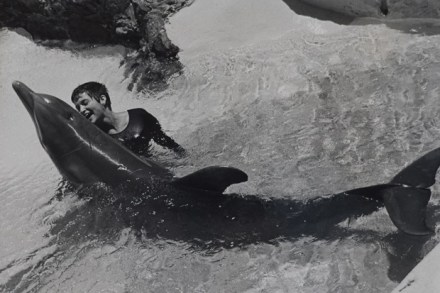
BBC4’s The Girl Who Talked to Dolphins (Tuesday) began with the overstated-sounding claim that it would be tackling ‘perhaps the most remarkable period in the history of animal science’. In fact, though, the longer the programme went on, the more convincing this claim felt — even if the word ‘period’ should possibly have been replaced with ‘episode’, and ‘remarkable’ with ‘bonkers’. At times, the story seemed almost too neat a microcosm of the 1960s, as well meant if not necessarily practical ideas about transforming life on earth — and beyond — gave way to something much darker. At others, it brought to mind that hippie Californian scientist in The Fast Show.

Those weren’t the days

If you wanted a brief epigraph for Linda Grant’s recent fiction, then five words from Dorothy Parker might well do the trick: ‘Time doth flit/ Oh shit.’ Certainly, there aren’t many writers who seem so astonished, even affronted, by life’s tendency (admittedly a strange one) to pass by more quickly than you ever imagined. Her previous novel, We Had It So Good, followed a group of students from the Oxford of the late 1960s to the present day, where they were bewildered to find themselves in the unthinkable position of being quite old. Now her new one does the same with a group of students from the York of the early 1970s. Inevitably, then, the two books do have similar themes, as youthful ideals come up against the annoyingly intractable world.

Is BBC1’s Quirke bravely unhurried – or too slow?

The work of John Banville — Booker-winning novelist and impeccably high-minded literary critic — might seem an unlikely source for a primetime crime series. But since 2006, under the telling pseudonym of Benjamin Black, he’s also published a series of Celtic-noir novels set in 1950s Dublin about a pathologist-sleuth known, even to his intimates, only as Quirke. To the understandable annoyance of full-time crime writers, Banville describes these books as ‘a kind of relaxation’, banging them out at a brisk 2,000 words a day compared with the Flaubertian 200 he manages for his more serious fiction. Yet, if this led any viewers to hope for an action-packed thrill-fest from Quirke (BBC1, Sundays), they’ll have been disappointed.

So Dylan Thomas was a drunk: does this TV drama have anything else to say?

According to its executive producer Griff Rhys Jones, A Poet in New York (BBC2, Sunday) sought to rescue Dylan Thomas from the ‘forces of sanctity and hagiography that now hover over his shade’. Instead, we’d be reminded that he was ‘a hollering bohemian roustabout’ — which is presumably Griff’s longhand for ‘a drunk’. By that measure, the programme was a triumphant success, even if fewer people may have been startled by the revelation of Thomas’s booziness than Griff seems to think. As a piece of television, though, it suffered badly from the decision to concentrate on Thomas’s alcohol-laden final days in New York, which inevitably led to a lack of dramatic variety.

Jack Bauer hits, er, West Ealing

Whatever worries Kiefer Sutherland may have had about reprising the role of Jack Bauer in 24: Live Another Day (Sky1, Wednesday), learning his lines for episode one won’t have been one of them. After a four-year break, the show returned with its trusty digital clock standing at 11.00 a.m. — and, as ever, the events took place in real time. Yet it wasn’t until around 11.43 that Jack spoke his first words. Not that, after four years of being hunted by the authorities for saving the world in too maverick a way for those pen-pushers in Washington, he was having an uneventful day.

John Crace digested – twice

Fiction ‘So how come we’re in the same book?’ Paul from The Stranger’s Child asked Florence from On Chesil Beach. ‘Apparently,’ replied Florence looking up from the introduction to The 21st Century Digested, ‘the parodies of new books that John Crace has been doing in the Guardian since 2000 are now so popular that 131 of them have been turned into a hardback collection.’ ‘Impressive,’ murmured Paul. ‘But one thing worries me. Once even Crace’s fans see them all together, won’t they be forced to realise that he relies on the same handful of tricks for almost every novel he takes on?’ ‘You mean, like simply having the characters point out what’s wrong with the book in their dialogue?

Caught between a New Age rock and a theory junkie hard place

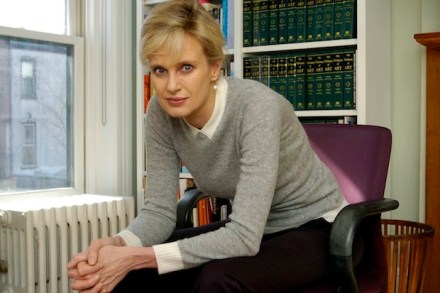
Siri Hustvedt’s new novel isn’t exactly an easy read — but the casual bookshop browser should be reassured that it’s nowhere near as punishing as the opening pages might suggest. In the ‘editor’s introduction’ we’re told that what follows is an anthology of writings by and about the late artist Harriet Burden — known to friends as Harry — with her own contributions taken from a series of notebooks labelled by letters of the alphabet: Notebook H, on Edmund Husserl, has pages on Husserl’s idea about ‘the intersubjective constitution of objectivity’ and the consequences of such an idea on the natural sciences… Q is devoted to quantum theory and its possible use for a theoretical model of the brain.

The Windsor Faction, by D.J. Taylor – review

In both his novels and non-fiction, D. J. Taylor has long been fascinated by the period between the wars. Now in The Windsor Faction, he brings us a counterfactual version. What would have happened in 1939 if Mrs Simpson had conveniently died three years earlier, leaving Edward VIII free to stay on the throne?  Would he have prevented war with Germany — perhaps even by treacherous means? Taylor explores these questions from a variety of perspectives. In big London houses, groups such as the Nordic League and the White Knights of St Athelstan meet to campaign against Britain’s involvement in a ‘Jewish war’, convinced that they have the king’s unspoken support.

Lion Heart by Justin Cartwright – review

Justin Cartwright is famously a fan of John Updike — and here he seems to owe a definite debt to one of his hero’s lesser known novels. In Memories of the Ford Administration, Updike interwove the sexual adventures of a 1970s history professor with substantial chunks from the professor’s notes on President James Buchanan, a man whose life Updike had earlier researched for his only play. In Lion Heart, Richard Cathar, an Oxford postgraduate and somewhat solemn philanderer, provides similarly lengthy extracts from his investigations into Richard I and the fate of the True Cross — which were also the subjects of a 2001 TV documentary by Justin Cartwright.

The People’s Songs, by Stuart Maconie – a review

For Stuart Maconie fans, this book might sound as if it’ll be his masterpiece. In his earlier memoirs and travelogues, he’s proved himself a fine writer: sharp, funny, tender and thoughtful — often all at the same time. In his previous book to this, Hope and Glory, he made a creditable if slightly heart-on-sleeve attempt at British social history. And, as anybody who’s listened to his radio shows will know, few people combine such a serious knowledge and love of pop music with such a refreshing lack of snootiness about it. Not only that, but in the introduction here he tells us that he’s always wanted to write ‘a reliable, authoritative one-volume history of British popular music that would avoid rehashing the received wisdom’.

The Spinning Heart, by Donal Ryan – review

Despite being so short, The Spinning Heart certainly can’t be accused of lacking ambition. Over the course of its 150-odd pages, Donal Ryan’s first novel introduces us to no fewer than 21 narrators living in or around the same small town in the west of Ireland. One by one, they reflect on their lives, past and present. Between them, though, they also tell us the story of a local kidnap and then of a local murder. This plot element is handled with considerable deftness — the various clues, perspectives, overlaps and contradictions duly coalescing into a single, comprehensible account. Yet, in the end, it only ever seems a handy framework (or completely acceptable excuse) for Ryan’s real concerns. For one thing, this is firmly a novel of the Irish crash.

And the Mountain Echoed, by Khaled Hosseini – review

The American comedian Stephen Colbert once joked that when he publicly criticised the novels of Khaled Hosseini, his front garden was invaded by angry members of women’s books groups. They were carrying flaming torches in one hand and bottles of white wine in the other. It’s a joke that neatly sums up two significant facts about Hosseini’s status as a writer. First — and not to be underestimated, of course — it proves that he’s famous enough to make jokes about. But it also reminds us that his fame has been driven by ordinary book-lovers rather than literary professionals. His two previous novels, The Kite Runner and A Thousand Splendid Suns, have sold around 38 million copies.

Why David Bowie is still underrated

Is it just me, or is there quite a lot being written about David Bowie at the moment? Of course, there’s the fact that the V&A’s blockbuster exhibition has coincided with the totally unexpected appearance of his first album for ten years. (While putting the exhibition together, the curators could never have dreamed that on the day it opened, a new Bowie album would be number one in 40 countries.) Yet for some cynics on the internet — never hard to find — the recent outbreak of Bowie mania is a simple question of demographics: the media is now run by people who grew up with him, and apparently never get bored of banging on about it. Seeing ‘Starman’ on Top of the Pops!

Whatever happened to dear Aunt Jane?

In 1818, an unknown critic in Blackwood’s Edinburgh Magazine went out on something of a limb. One day, he claimed, Jane Austen would be among the most popular of English novelists. By the middle of the century, with George Henry Lewes complaining that she’d been unjustly forgotten, this claim must have seemed even more unlikely than it did at the time. Only with the 1869 publication of A Memoir of Jane Austen by her nephew James Edward Austen-Leigh did the tide begin to turn, and her books to be more widely read. But, as we now know, that anonymous critic turned out to be a master of understatement. These days, you can trumpet your love of Austen with key rings, mugs, calendars and fridge magnets.

Crying and laughing about it all

For many biographers of popular musicians, the obvious problem is that the only interesting bit comes when your subjects are in their brief creative pomp. For Sylvie Simmons, the situation is rather different — and not just because Leonard Cohen has been somewhere near his pomp for nearly 50 years. The real trouble is that every other aspect of his life is fascinating too. To do the man justice, you first need to know about the wealthier parts of Jewish Montreal in the 1930s, where the new-born Cohen arrived home from hospital in a chauffeur-driven car.

Still Waters run deep

T.C. Boyle is not one of those authors who can be accused of writing the same novel again and again. Over the past 30 years, his subject matter has ranged from 18th-century Africa to the California of the future, from Mexican immigration to the sex life of Frank Lloyd Wright. Even so, what has tended to unify his work is verbal extravagance, dark comedy and a taste for satire that sometimes borders on contempt. All of which makes San Miguel his most unexpected book yet. A historical novel of almost heroic restraint, its prose remains resolutely unflashy, and its tone is sympathetic to the point of genuine warmth.

Over-cooked

Starting with Lemprière’s Dictionary — an unexpected worldwide hit in the early 1990s — Lawrence Norfolk has never been a man for the slim novella. Complicated of plot and huge of cast, his books generally serve up a combination of almost obsessively researched history and somewhat arcane mythology. Now, 12 years since his last one, comes John Saturnall’s Feast —  a novel, I think it’s fair to say, that doesn’t mark a radical change of direction. The year is 1625, and in the Oxfordshire village of Buckland the puritans are on the march. For 11-year-old John Saturnall, this is particularly worrying, because his mother Susan is widely (and, it would seem, accurately) regarded as the local witch.