James Walton

James Walton is The Spectator’s TV critic

Between a rock and a hard place

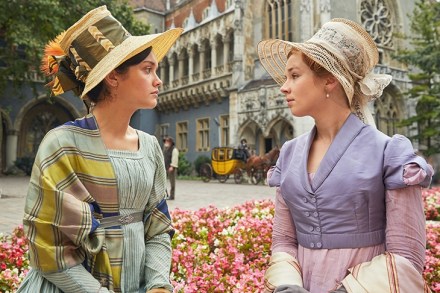
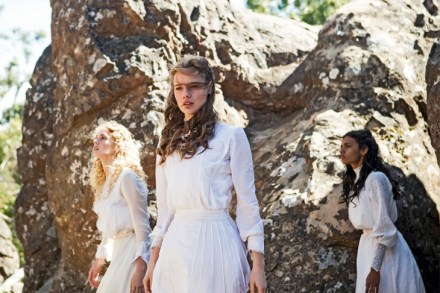
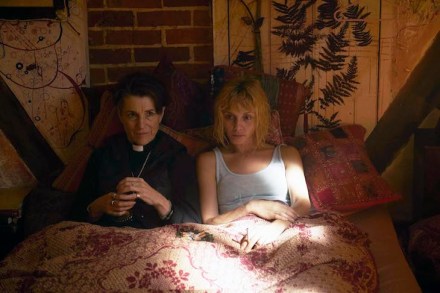
According to the opening captions in Picnic at Hanging Rock (BBC2, Wednesday), ‘the infamous events’ it depicts ‘began whena mysterious widow purchased a mansion out in the Australian bush’. The first few scenes, set in the late 19th century, were then dedicated to proving quite how mysterious she was: Hester Appleyard (Natalie Dormer) wasn’t merely veiled, but also filmed largely from behind and — just to be on the safe side — in the dark. What she might not be, though, is a widow. As she explored her new house, her voice-over dropped a series of dark hints that her mourning dress was a cunning disguise — and that she was in hiding from someone or other after doing somethingor other.

Coming up Trumps

Back when his country was controlled by the USSR, the Czech writer Milan Kundera pointed out that ‘Union of Soviet Socialist Republics’ was ‘four words, four lies’. It’s a strike rate that even the current US president has yet to match. Nonetheless, at one stage in Reporting Trump’s First Year: The Fourth Estate (BBC2, Sunday) we did see him pull off an impressive three-sentences, three-lies sequence in a speech about — inevitably — the mainstream media, including the New York Times. ‘They have no “sources”,’ said Trump baldly. ‘They just make ’em up. They are the enemy of the people.

Unintelligent design

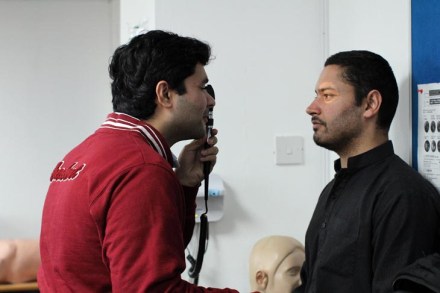
On Wednesday, BBC Four made an unexpectedly strong case that the human body is a bit rubbish. Our ill-designed spines, for example, guarantee that many of us will suffer from chronic back pain. Our joints wear out long before we do. Our skin even gets damaged by sunlight. So what can be done about it? Obviously the answer is not much — but that didn’t prevent Can Science Make Me Perfect? With Alice Roberts from pretending to give it a go. The premise was that Roberts would draw on other, less incompetently constructed life forms to create an improved version of herself — the way she’d be if evolution hadn’t cocked things up so badly. As befits someone whose name appears in programme titles, Roberts clearly relished her God-like role.

Fresh and wild | 31 May 2018

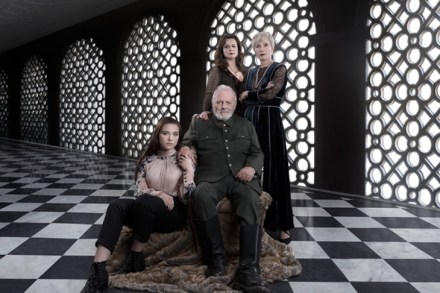
I recently came across a theory of the American poet Delmore Schwartz’s that Hamlet only makes sense if you assume from the beginning that all the characters are drunk. Given Schwartz’s own fondness for booze, this idea perhaps smacks of drunken hyperbole itself. But it certainly sprang to mind while watching BBC2’s King Lear (Monday), where Anthony Hopkins spent quite a lot of the first half swigging enthusiastically from a hipflask.

Women on the warpath | 31 May 2018

In a 2013 interview with a Canadian newspaper, Rupert Thomson acknowledged the strange place he occupies in the literary world. ‘If I had a dollar,’ he mused, ‘for every time I’d heard someone say, “Why aren’t you more well known?...”’ Looking back on his reviews, you can certainly see what he means. For more than 30 years, virtually all his novels have been not only warmly acclaimed; they’ve also been greeted with the sadly inaccurate declaration that now, at last, he’s bound to achieve the wider fame he deserves. But, as Thomson also acknowledges, in the past decade those missing dollars have taken on a less metaphorical significance.

Sins of the father | 17 May 2018

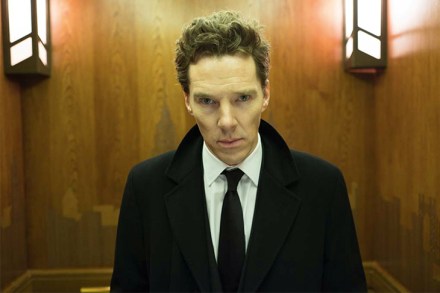
Warning: if you haven’t seen it yet, the first episode of the much-anticipated Patrick Melrose (Sky Atlantic, Sunday) contains scenes of drug-taking. Further warning: it contains an awful lot of them. The series is adapted from the five justly celebrated autobiographical novels by Edward St Aubyn, which trace the long-term effects on Patrick of an upper-class childhood in which his psychotic father intersperses horrifying emotional cruelty with regular bouts of rape. By his early twenties, Patrick is a full-blown drug addict, and even when he marries and settles down, what he settles down to is mostly depression and alcoholism. All of which might make the books sound punishingly grim.

Recipe for success | 3 May 2018

From time to time, a TV show comes along which is so thrillingly original, so wildly imaginative, that you can’t even begin to think where the makers got the idea. Britain’s Best Home Cook (BBC1, Thursday) isn’t one of them. Nevertheless, it has a serious claim to being the most important new programme of the week — if only to the BBC which, despite the failure of The Big Family Cooking Showdown (whose title I just had to check via Google), clearly hasn’t given up on the possibility of finding a way to replace The Great British Bake Off. But in fact there’s another series that some viewers might feel is lurking in the background here — and that’s W1A.

Obsession and obfuscation

The target audience for David Peace’s new novel appears almost defiantly niche. Certainly, any readers in the embarrassing position of not being entirely up to speed on the life and works of the Japanese writer Ryunosuke Akutagawa (1892–1927) seem destined — even intended — to find Patient X a less than alluring combination of the tediously baffling and the bafflingly tedious. Peace’s fact-based fiction has always demanded a fair amount of patience and concentration, with obsession serving as both his subject matter and his method.

The great pretenders | 19 April 2018

For a while now, the Korowai people of Western Papua have been the go-to primitive tribe for documentary-makers. The Korowai were unknown to the outside world until the 1970s — but they’ve certainly made up for it since, with their Stone Age tools, jungle treehouses and penis gourds becoming almost as familiar to TV viewers as Brian Cox on top of a mountain. No wonder, then, that Will Millard’s introduction to My Year with the Tribe (BBC2, Sunday) smacked of mild desperation as he sought to distinguish his new series from its many predecessors. (No fixers laying on anything in advance! Not just one snapshot of Korowai life, but four over 12 months!) In the event, however, he needn’t have worried.

Friday night refreshment

BBC2 has a new drama series for Friday nights. The main character is a world-weary middle-aged police inspector with an unshakeable commitment to smoking. His work partner is a feisty female officer in her twenties who combines salt-of-the-earth irreverence with being a damn good cop. Between them, they’re investigating the murder of an attractive young woman who their colleagues immediately assumed was a prostitute, and whose death reminds the inspector of a previous investigation that continues to haunt him — which is why his boss is constantly trying to take him off the case. But if this makes you think that The City & The City is yet another identikit crime drama, then you couldn’t be more wrong.

Sunday best

For as long as I can remember, Sunday nights have been the home of the kind of TV drama cunningly designed to warm the sternest of heart cockles. Think, for example, of Robert Hardy cheerfully bellowing his way through almost every scene of All Creatures Great and Small (‘PASS THE SALT, JAMES!’). Or of Pop Larkin’s impressive commitment to chuckling indulgently in The Darling Buds of May. Or of Heartbeat somehow racking up 372 episodes. Even so, ITV has now taken this tendency to surprising new lengths, with not one but two Sunday-night dramas that run consecutively and contain such traditional elements as gorgeous sun-dappled scenery, cute animals, gruff old-timers with hearts of gold and any number of lovable eccentrics. First up, at 8 p.m.

Fashion victim

By common consent, including Bafta’s, The People v. O.J. Simpson: American Crime Story was one of the best TV dramas of 2016. Produced by Ryan Murphy, it laid out the story in a beautifully clear, largely chronological way that made us appreciate, all over again, just how strange the whole O.J. business was — not least thanks to the wider social forces at work. Now, we’ve got The Assassination of Gianni Versace: American Crime Story (BBC2, Wednesday), also produced by Ryan Murphy and also tackling an event from the 1990s that manages to seem both shockingly particular and neatly revealing of more general trends. At which point, all similarities end, because here Murphy (who also directed the first episode) takes a far more fragmented and less viewer-friendly approach.

Losing the plot | 22 February 2018

ITV’s Marcella (Monday) represents another triumphant breakthrough in the portrayal of female cops on television. Of course, thanks to more or less every other crime show around, we already know that women in their forties can be senior police officers. But what Marcella makes even clearer than, say, Vera or No Offence is that so can women in their forties who are entirely unsuited to being senior police officers. For a start, the eponymous heroine suffers from regular mental collapses during which she often turns violent before handily forgetting — and forgiving herself for — anything bad she may have done. She also seems to specialise in cases where she hasa deep personal involvement that might cause a lesser woman to worry about a conflict of interests.

Girls on film

To mark the 100th anniversary of women’s suffrage — if a little oddly — Channel 4 on Tuesday brought us a special girls-only edition of The Secret Life of Five-Year-Olds. The cast were a mix of new faces and old hands from previous series: among them Jet who, like a primary-school version of a traditional Hollywood actress, has been playing a five-year-old on the show since 2016. Still, you can see why the producers keep calling — because, by now, Jet has got the tomboy role required of her down pat. ‘It’s hard to make friends with just girls,’ she declared early on, hitting the word ‘girls’ with exactly the right degree of scornful emphasis.

Old hat | 25 January 2018

These days, when it comes to people who used to be on the telly, the answer to the classic newspaper question ‘Where are they now?’ tends to be a fairly predictable one: they’re still on the telly — if, that is, you look carefully enough. They’re also quite likely to be travelling abroad with a few of their peers while wearing a large hat. The BBC started the trend — possibly even the genre — with The Real Marigold Hotel. ITV has provided the weirdest example so far, with Gone to Pot, in which the likes of Christopher Biggins and Pat Butcher from EastEnders investigated the legalisation of marijuana in California by smoking bongs and giggling a lot.

Thinking outside the box

These days a genuinely controversial TV drama series would surely be one with an all-white, male-led cast that examined the problems of a bunch of middle-class people. (Just imagine the Twitter outrage!) But while we await that — possibly for a while yet — we’ve now got two highly promising new shows of the more approved ‘controversial’ kind: where racial issues are tackled in a thoughtful and scrupulously responsible way. Kiri (Channel 4, Wednesday) has the distinct advantage of starring Sarah Lancashire, whose character Miriam proves that TV mavericks needn’t always be doctors, lawyers or cops. They can, it seems, also be social workers. So it was that Miriam was first seen adding something a little stronger to her breakfast coffee.

Men behaving badly | 13 December 2017

BBC1’s The Miniaturist (26/7 December) is a lavish two-part adaptation of Jessie Burton’s bestseller. It’s also further proof that almost any geographical and historical setting can be conscripted to tell us what’s apparently the only story we’re interested in these days: an alliance of plucky and unfailingly virtuous black people, gay people and women taking on the repressive forces of straight white blokes. The main character, Nella (Anya Taylor-Joy), is ostensibly a young 17th-century Dutchwoman who’s been married off to a rich Amsterdam merchant. On closer inspection, though, she turns out to be a 21st-century feminist who’s somehow been transported back in time to show our benighted forebears the error of their patriarchal ways.

Easy on the hard stuff

It’s one of the more mysterious features of human history that people of every era and in almost every place have regularly striven to reduce their intelligence, impair their reflexes and generally ensure that everything about them functions far less well. So what is about getting drunk that we love so much? According to Mark Forsyth’s breezy new book, the best answer comes from somebody not often thought of as a classic roisterer: William James, the American philosopher and brother of Henry. ‘Sobriety,’ James wrote, ‘diminishes, discriminates, and says no; drunkenness expands, unites, and says yes.’ And the way Forsyth tells it, drink has caused us to say yes to an awful lot.

Living dolls

This week on Channel 4, we watched a cheery 58-year-old American engineer called James going on a first date. He was meeting Harmony, an extravagantly shapely blonde who was obliging enough to be wearing a low-cut crop top and tiny shorts, and who greeted him with a charming smile. After a spot of small talk and a dumb-blonde joke, she then alternated between assuring him how great he was and inviting him to masturbate over her. ‘You’re awesome,’ a visibly smitten James declared — apparently not at all bothered that Harmony was a robot.

Adult entertainment | 16 November 2017

Any readers of the Sun who excitedly tuned in to Howards End on Sunday night with their pause button at the ready will, I fear, have been in for a disappointment. Before the programme went out, the paper had assured them that this new BBC1 adaptation would ‘do a Poldark’, with ‘a hot cast’ providing ‘a sexed-up remake’ of the 1992 Merchant Ivory film. (The sub-editors may have missed a trick by not headlining the piece, ‘It’s E.M. Phwoar-ster!’) In the event, what they got was a quietly thoughtful exploration of Edwardian intellectual life. The first episode, in fact, didn’t differ very much from the non-sexed-up film version — and when it did, it was generally by being even more faithful to the book.