James Kanagasooriam

James Kanagasooriam

Coffee House Shots Live with Maurice Glasman, David Frost and James Kanagasooriam

70 min listen

Join Katy Balls, Michael Gove, Lord Glasman, Lord Frost and pollster James Kanagasooriam as they unpack the highly anticipated Spring Statement and its implications for national policy and global security. Listen for: Michael’s plan for how to deal with the Donald, and why the Treasury is not fit for purpose; Maurice on his influence in the White House, and what's wrong with the current political class; David’s reflections on why Brexit was ahead of its time; and James’s explanation for Britain’s lost sense of community.

US election: how did the polls get it so wrong?

18 min listen

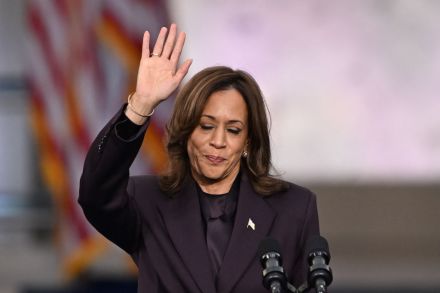
The post–mortem has begun on the US election with the Democrats desperately trying to figure out what just happened. To make sense of the result, Katy Balls is joined by Kate Andrews and James Kanagasooriam, chief research officer at Focaldata. On the podcast they discuss: how an election that seemed to be on a knife–edge ended in a landslide; how the Democrats misjudged the issues that matter to their core voter coalition; how global election trends and the ‘incumbency problem’ played a part; and how the term ‘asymmetric realignment’ can describe the voting patterns we saw yesterday. Produced by Oscar Edmondson.

Will there be an election upset on Thursday?

12 min listen

Tomorrow, voters will head to the polling booth to cast their vote in the 2024 general election. Will there be any surprises in store? So far, there has been little movement when it comes to the gap in vote share between Labour and the Tories. However, there's still plenty of uncertainty across the parties as to what the exit poll will say at 10 p.m. on Thursday night. James Heale speaks to Katy Balls and James Kanagasooriam, chief research officer at Focaldata.

Who will survive?

14 min listen

It's another bad day for the Conservatives. Rishi Sunak has withdrawn support for the Tory candidates involved in the general election betting scandal. What has led to the timing of this decision? Also on the podcast, James Kanagasooriam, Chief Research Officer of Focaldata, explains their latest poll that suggests a 250-seat Labour majority. He joins Katy Balls and James Heale.

The Dunkirk Strategy

13 min listen

The Conservatives have unveiled a new pensions policy: the 'Triple Lock Plus'. What does it mean and what's the thinking behind it? Will it help shore up the Tories' core vote?   Katy Balls and Focaldata's James Kanagasooriam join Natasha Feroze to discuss.  Produced by Natasha Feroze and Patrick Gibbons.

Is the Labour lead as big as it seems?

13 min listen

Both major party leaders are hitting the road today and campaigning in Scotland, which will be a major battleground in the coming election. Labour looks comfortably in the lead, but is that number accurate to what's happening on the ground? Cindy Yu and Katy Balls talk to Focaldata's James Kanagasooriam about their latest analysis. Produced by Cindy Yu.

Coronavirus and the new world

The West’s failure to reap economic benefit from its greater levels of personal and political freedom has broken what I call the 'Fukuyama Curve' and its confidence. Given one parent was Sri Lankan and the other Singaporean, a commonly-cited stat in my childhood home was that both countries had similar GDPs back in the early 1970s (turns out this is true). The question of how countries diverge economically and culturally over time isn’t just theoretical to me. The current Covid-19 pandemic provides a moment to pause and reflect on the divergence of reactions to the crisis between different states, and on how different states have developed over the past thirty years. The tenor of Western society is anxious and uncertain.

The margin between a Tory landslide and defeat is tiny

In next week's election, it feels like voters would elect a Conservative president and a centre-left parliament if they had the choice. Denied those options they are muddling their way to a conclusion. But what will they decide? Firstly, it's worth remembering that Corbynomics is popular. YouGov generically polled Labour policies and they were popular. But being likeable or popular is different to being credible or possible. Corbynomics has been partially neutralised by the Tories shifting sharply to the left on economics. Secondly, Boris Johnson's favourability ratings have endured against Corbyn in a way that Theresa May's did not.

Why Tories should think carefully before backing Boris

In my old job as an investment banker, there were two schools of thought about how to get the best return. Long-term funds – where money was invested over a number of years; and short-term ones – which sought quick returns wherever it could be found. The Conservative party now finds itself facing a similar dilemma: wondering whether to make the short term bet – aping the Brexit Party’s push for no deal in the hope of an immediate recovery from its dire position. Or whether to take the long view: make for the centre ground while still delivering Brexit. The latter is a strategy that is riskier in the medium term but could represent better long-term success. So what should the Tories do?

The Tories are stuck in the middle with May. Here’s what they should do next

The Tories have a debate on their hands about what direction they should go in. Do they return to the politics of the Cameron coalition? This delivered majority government, won over a greater percentage of AB (better off) voters, won more university towns, more professionals but fewer rural areas. Or should the Tories double down and become the Brexit party, moving towards what Nick Timothy says is the “National” party, with a rural, less affluent base led by someone like Boris Johnson? The choice is far from straightforward and there are five big considerations for the party to take into account on this issue before deciding which path to take: Demographic parameters: which demographic groups will get larger or smaller over time?

Eight reasons why young voters are turning away from the Tories

It's plain to see that the Conservative party has a youth problem. Millennials are turning away from the party in their droves. But what is actually causing this dire Tory performance among young voters? There are eight reasons, any of which on their own would present a problem. Together, their combination is creating a conveyor belt towards oblivion for the party. Part of the reason why youngsters are not voting Tory can be explained by the higher number of them who come from an ethnic minority. Only two in 100 voters aged 85 or over are black or ethnic minority; this compares to around 20 per cent of those aged 29 or under. Such voters tend not to back the Tories.

Eight reasons why young voters are turning away from the Tories | 9 April 2019

It's plain to see that the Conservative party has a youth problem. Millennials are turning away from the party in their droves. But what is actually causing this dire Tory performance among young voters? There are eight reasons, any of which on their own would present a problem. Together, their combination is creating a conveyor belt towards oblivion for the party. Part of the reason why youngsters are not voting Tory can be explained by the higher number of them who come from an ethnic minority. Only two in 100 voters aged 85 or over are black or ethnic minority; this compares to around 20 per cent of those aged 29 or under. Such voters tend not to back the Tories.

Why Remainers were shocked by the referendum result, but Leavers less so

When I quit investment banking in search of daylight in 2014 I thought my life was going to be little easier crunching numbers for political campaigns. It wasn’t to be. Over the last few years, I’ve worked on the Scottish independence referendum in 2014, the 2015 general election, the Scottish Holyrood election in 2016, the EU referendum and the 2017 snap election. What I’ve never been able to wrap my head around through all these campaigns is why we’ve seen so many political upsets. Just why has the political consensus been wrong so often these past five years? When I worked on the Remain campaign, the upending of the consensus – against my own expectations – was a painful experience.

The Brexit paradox that spells doom for the Independent Group

When I quit investment banking in search of daylight in 2014 I thought my life was going to be little easier crunching numbers for political campaigns. It wasn’t to be. Over the last few years, I’ve worked on the Scottish independence referendum in 2014, the 2015 general election, the Scottish Holyrood election in 2016, the EU referendum and the 2017 snap election. What I’ve never been able to wrap my head around through all these campaigns is why we’ve seen so many political upsets. Just why has the political consensus been wrong so often these past five years? When I worked on the Remain campaign, the upending of the consensus – against my own expectations – was a painful experience.