James Forsyth

James Forsyth

James Forsyth is former political editor of The Spectator.

The way out: what is the Prime Minister’s exit strategy?

37 min listen

James Forsyth writes in this week's cover piece that the government 'is going to go South Korean on the virus'. In other words, test, track, and trace. But as James points out, this raises the obvious question of why we weren't doing this already. On the podcast, Cindy Yu talks to James and the Economist's Adrian Wooldridge. Adrian argues that the West is too slow at learning the lessons of elsewhere in the world, a costly mistake as Asian states like Singapore offer instructive lessons in governance. As this global pandemic lays bare the differences of national approaches, it's a timely discussion.

Can a South Korean approach help Britain defeat coronavirus?

The government now has a plan for how it intends to get out of this crisis. It is, as I say in the magazine this week, to drive the coronavirus transmission rate down as low as possible and then stay on top of it through a ‘track, trace and test’ approach. In other words, the government is going to go South Korean on the virus. For this approach to work, you need accurate data – something which has been sorely lacking to date. But the hope in Whitehall is that clarity is on the way. The Office for National Statistics is undertaking a mass random testing programme that should provide the government with regular data on how many Covid cases there are and which demographics are particularly at risk.

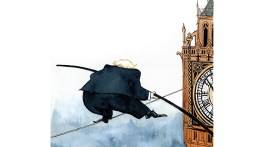
Boris Johnson’s cautious path out of lockdown

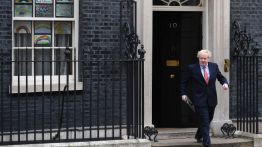
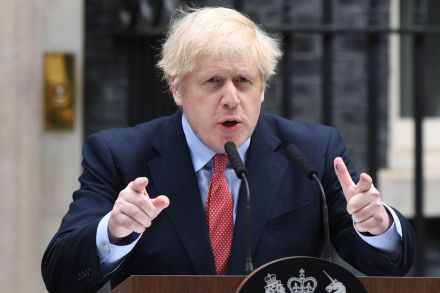
Ever since Boris Johnson was admitted to hospital on 5 April, the government has been in a holding pattern. No big decision could be taken without the Prime Minister, but he was in no position to make one. He is now back at work, though, and has a plan for what to do next. Put simply, it is to drive the coronavirus transmission rate — the reproduction number, or ‘R’, which shows the expected number of infections directly generated by one case — down as low as possible and then stay on top of it through a ‘track, trace and test’ approach. In other words, the government is going to go South Korean on the virus. This raises the question: why wasn’t this the strategy all along?

Why shouldn’t Cummings attend SAGE?

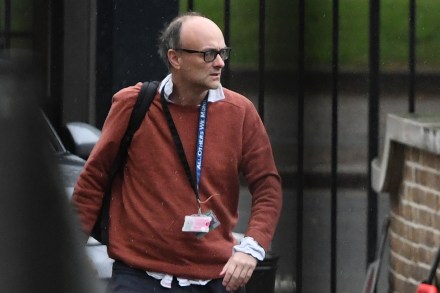
One of the key committees advising the government is SAGE — the Scientific Advisory Group on Emergencies. At the weekend, there was a rumpus after the Guardian reported that Dominic Cummings had been present for some of its meetings; though given the enormity of what was being discussed there would have been problems if no one from Downing Street was at these meetings. Last night, Bloomberg reported on the SAGE meeting of 18 March. Alex Morales and Suzi Ring wrote that Dominic Cummings had at that meeting raised questions, including asking ‘why a lockdown was not being imposed sooner’.

The complicated question of Boris’s paternity leave

Earlier this month Boris Johnson was in hospital fighting for his life, this morning he was there for the arrival of new life: his partner Carrie Symonds gave birth to a healthy baby boy this morning. David Cameron took paternity leave when his daughter Florence was born in 2010 and Tony Blair took a ‘paternity holiday’ when his son Leo arrived in 2000. But the timing of this birth, in the middle of a national crisis, undoubtedly complicates the question of Prime Ministerial paternity leave. This is particularly the case given that Boris Johnson’s rapid return to Downing Street post-hospitalisation was driven, in part, by frustration that things weren’t happening at what he thought was the necessary pace in his absence.

Will coronavirus make politicians fix social care?

14 min listen

Social care has always been a difficult issue for incumbent governments in recent years. The coronavirus pandemic brings this to the fore. As ONS figures show that more than 5,000 deaths have happened in UK care homes in April, Cindy, James, and Katy discuss what this means for future social care policy on the podcast.

Britain’s bid to become China’s best friend in the West is over

One consequence of this crisis is that nearly everyone in the Tory party has become a China hawk. Tomorrow sees the launch of a new China Research Group of Tory MPs. The CRG will examine Beijing’s industrial policy, its approach to technology and its foreign policy. But perhaps the most striking thing about the group is its membership. Its chair is Tom Tugendhat, chair of the Foreign Affairs Select Committee, its Secretary is Neil O’Brien, a former adviser to George Osborne. Other members include former Cameron SPAD Laura Trott and Boris Johnson’s old economic adviser Anthony Browne.

Can Boris unite the Cabinet?

15 min listen

The Telegraph reports this morning that Boris Johnson is planning to be back at work by Monday next week. He couldn't come back sooner - with the Prime Minister laid up, the Cabinet has split over the question of easing the lockdown (as James Forsyth writes this week). So can Boris unite his team behind one coronavirus strategy?

The 10,000th

40 min listen

This week, the Spectator commemorates its 10,000th edition. On the podcast, Cindy Yu speaks to David Butterfield and Fraser Nelson about the magazine's two centuries of history, finding out about how the publication started, discussing whether it is still the same now as it was originally intended, and hearing about what David calls its 'industrial drink culture'. Find out more about the history of the magazine with David's new book, 10,000 Not Out. Also on the podcast, Cindy speaks to James Forsyth and former Director of Comms at No 10, Craig Oliver. As James writes in the issue this week, when Boris Johnson comes back to work, he returns to a split Cabinet and a difficult decision - how and when to ease the lockdown?

What’s Nicola Sturgeon’s exit strategy?

15 min listen

The Scottish government's document 'Looking Beyond Lockdown' tries to do what it says on the tin. But it comes at an inconvenient time for the government in Downing Street, just as it is facing accusations that it hasn't been clear enough with the public about what is needed to end the lockdown. On the podcast, James and Katy reveal the pressures that the devolved governments' actions put on the national government, in general and in this crisis, and we also discuss the new test, track, and trace approach.

Squabbling scientists have shocked ministers

The government’s response to criticism of its approach to this pandemic is that it has been ‘guided by the science' throughout. When Keir Starmer accused the government of being slow to introduce a lockdown at PMQs yesterday, Dominic Raab shot back to ask whether Starmer was really saying that he knew better than the chief medical officer and the chief scientific adviser. The government’s defence is a reasonable one: just imagine the row if it turned out that the Prime Minister had been overruling the advice of his top medical and scientific advisers. But, as I say in the magazine this week, in private, there is an admission that there was, perhaps, a belief early on that the science was more definitive than it actually is.

Boris’s difficult decision: When should lockdown be lifted?

When Chequers was donated to the nation, the accompanying Act of Parliament was explicit about the intended effect. ‘The better the health of our rulers, the more sanely will they rule,’ it said. Prime ministers need time to think, as well as recuperate, and as Boris Johnson continues his convalescence there, he will be in need of that help. Not only is he still recovering from several days in intensive care, he is also facing a policy problem without precedent — and without good answers. Whatever solution he opts for will determine his premiership, the public’s faith in the British state and this country’s future standing in the world. In the absence of the optimist-in-chief, an air of depression has settled on the government.

Most of the cabinet want a significant easing of the lockdown in May

Coronavirus has created two different cabinets: an inner cabinet involved in the key discussions about how to handle the pandemic and an outer cabinet. Last week’s meeting reinforced this point, when some in the outer cabinet were acutely aware that the real decision had been taken by the inner cabinet before the whole cabinet Zoomed in for their meeting. The outer cabinet tends to be very keen on a significant easing of the lockdown. One minister’s assessment is that two-thirds of the total cabinet favour a substantial reduction in restrictions at the next review in a few weeks' time. As I say in the magazine, out tomorrow, Boris Johnson is at Chequers wrestling with the question of what to do. There are no good answers to the problem.

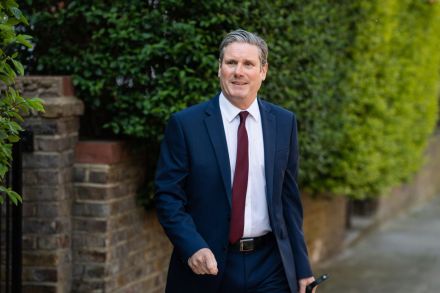
PMQs: Starmer poses the question that ministers are asking in private

Today’s PMQs was more political than I had expected. But that is a good thing, challenge and accountability are the great strengths of the Westminster system and lead to better government. Keir Starmer is never going to be an exciting parliamentary performer, but his questions were detailed and he followed up on Dominic Raab’s answer. He will be far more effective at scrutinising the government than Jeremy Corbyn was. Keir Starmer will be far more effective at scrutinising the government than Jeremy Corbyn was Starmer went on testing and the question of why half of the current capacity isn’t being used, a question that lots of people in government are asking too.

Is Matt Hancock the government’s ‘fall guy’?

14 min listen

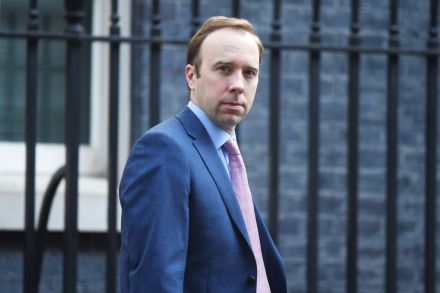
Is Matt Hancock the government's 'fall guy'? As Katy Balls details on Coffee House, the Health Secretary's 100,000 target has rubbed up some in government in the wrong way, with the Daily Telegraph's front page today reporting that an insider close to No 10 has dubbed it 'irrational' and 'arbitrary'. So what's going on behind the scenes?

What will the Zoom Parliament change?

Parliament will return today, albeit in a very odd way. There will be some MPs in the chamber and others Zooming in. It will not be parliament as we are used to. This hybrid model will mean that debate will be stilted, but it is better than nothing. It is also essential that parliament sits in some form given the powers that the executive has taken on to deal with this crisis. One thing that the Zoom Parliament will change is that it will give an indication of where parliamentary opinion is on the lockdown. I have been struck talking to Tory MPs over the past week or so by how many of them want the government to set out a much clearer exit strategy.